European Federation of Journalists

IFJ-EFJ Regional Development Fund

Czech Republic


The European Federation of Journalists (EFJ) signed an agreement on 18 December 2014 with the Union of Journalists and Media Workers of Czech Republic (OSNPM) in order to investigate the working conditions of Czech journalists and media workers. The project is implemented with the cooperation of Judith Reitstatter, from the Austrian union GPA-djp.

The online survey was launched on 19 May 2015. Around 2,500 journalists and media workers were invited to participate to the survey. The EFJ, OSNPM and GPA-djp analysed together the main outcomes of the survey during a round table conference, on 19 August 2015, in Prague.

The questionnaire focus mainly on labour rights. “This area is underestimated by the Czech media, journalists themselves and their employers as well,” explains Zdeněk Kučera, chairman of OSNPM.

“Over the past 25 years, journalists’ attention was focused primarily toward freedom of speech, access to information, relations with media ownership and the development of media houses. These are very serious topics. However, journalists’ status remained grossly underrated. A specific problem is the status of freelance journalists, which are increasingly numerous, particularly in regional media.”

The main findings of the survey are available on the EFJ website, here.
FOCUS EFJ

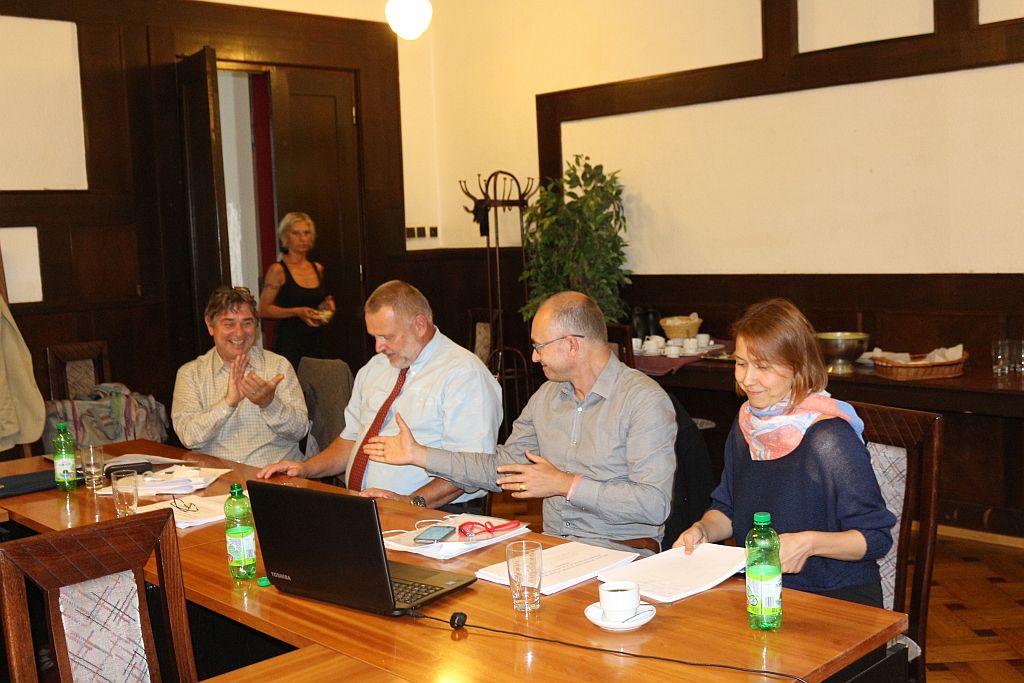
Side event of our project: a high school magazines national competition (Nejinspirativnější středoškolský časopis 2015). Here are the winners (picture credit: F. Cakl):

Czech

Contact details: OSNPM, e-mail: odborovy-svaz-novinaru@seznam.cz, website: http://www.odborovysvaznovinaru.cz


Slovakia

The European Federation of Journalists (EFJ), its Austrian union GPA-djp and the Slovak Union of Journalists (Slovenský syndikát novinárov) organized a meeting in Vienna, on 30 October 2014. Trade unionists and media students from both countries met in GPA-djp offices, in Vienna. The discussion on media convergence was launched by Dr. Roman Hummel, from the university of Salzburg.

Contact details: Judith Reitstaetter, judith.reitstaetter (at) gpa-djp.at


Estonia

The European Federation of Journalists (EFJ), the Estonian Union of Journalists (Eesti Ajakirjanike Liit, EAL) and the Union of Journalists in Finland (Suomen Journalistiliitto, UJF) agreed on 6 February 2015 to jointly implement the project “Workshops to Strengthen Journalists’ organisation in Estonia”.

The main objective of the project is to strengthen journalists’ organisation in Estonia, through three activities:

  • a freelance workshop in Helsinki,
  • a radio & TV negotiators workshop in Helsinki,
  • an authors’ rights seminar in Tallinn.

An action plan will be proposed for the next period.

Contact details: Juha Rekola, Juha.Rekola (at) journalistiliitto.fi, and Helle Tiikmaa, helle (at) eal.ee

 

Actions

EU conference on digital sector: policymakers and citizens join forces to shape digital future

A High Level Conference “Shaping our digital future” brought together around 600 participants including MEPs, ministers and citizens to discuss challenges and opportunities of the digital sector on 25 April in Brussels. The event was jointly organised by the European Parliament and the European Commission in the light of the rapidly changing digital landscape to enter into a dialogue with policy makers and citizens about Europe’s digital future. Four panels discussed the following topics: Investing in connectivity and the data economy infrastructure (5G, High Performance Computing, Artificial Intelligence) and avoiding a digital divide Innovation in the digital age based on…

Whistleblower directive: the European Commission takes “an important step” but improvement on public reporting yet to be made

On 23 April, the European Commission issued a proposal for a directive on the protection of persons reporting on breaches of Union law. This is an important step in acknowledging the crucial importance of the protection of whistleblowers against intimidation and retaliation in European democracies. The proposed directive emphasises the important role of whistleblowers as journalistic sources for investigative journalism, allowing the industry to fulfil its ‘watchdog’ role. It also acknowledges that sufficient whistleblower protection is needed to ensure the freedom of expression as well as the public’s right to access information and media freedom. This is indeed crucial as…

Resolution calls for protection of investigative journalists in the wake of murders of Ján and Daphne

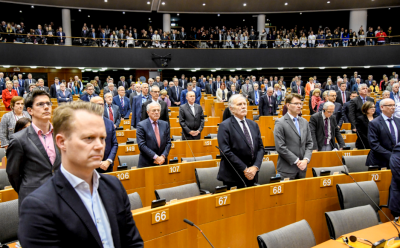
A resolution on the protection of investigative journalists in Europe, passed by Members of the European Parliament (MEPs)  on 19 April 2018 during the plenary session in Strasbourg, calls for better protection of investigative journalists and whistle-blowers. In the wake of the murders of investigative journalists Daphne Caruana Galizia and Ján Kuciak, MEPs demand better protection of journalists who are regularly subject to lawsuits intended to censor their work a permanent financial EU scheme to support independent investigative journalism a draft EU directive to protect whistle-blowers the Commission to address challenges to media freedom and pluralism in the EU better monitoring of media…

Enforce moral rights to fight misinformation

Everyone needs reliable information and ways to fight misinformation – and that requires sound protection of authors’ moral rights, say the International and the European Federation of Journalists (IFJ and EFJ) ahead of World Book and Copyright Day, 23 April. A large part of today’s discussions on the media focus on fighting disinformation and so-called “fake news”. But – so far – there is little discussion of legislation or of improved media practices to enhance and defend the authenticity of journalistic works through the reinforcement of journalists’ moral rights. “In the ‘cut-and-paste’ logic of online news our stories can be…

Report calls on EU states to collaborate with journalists’ unions for gender equality

A report on “Gender Equality in the Media Sector in the EU”, passed by Members of the European Parliament (MEPs) during the plenary session in Strasbourg on 17 April 2018, calls on Member States and the European Commission to collaborate with journalists’ trade unions and media organisations to promote co-regulation in the media sector through codes of conduct. In order to safeguard and ensure gender equality, media companies are urged to draw up codes of conduct and self-regulation systems together with representatives from journalists’ trade unions. This aims to allow preventive action and impose sanctions regarding gender-based discrimination in media productions. The…

Trade secrets: the Danish union secured protection for journalists and whistleblowers

The Danish Union of Journalists (DJ) welcomed the recently adopted law to protect companies from the disclosure of business secrets. An exception clause has been added to ensure that it is not a criminal offence to reveal a business secret that is in the public interest. Denmark has transposed into national law the directive 2016/943/EU ‘on the protection of undisclosed know-how and business information (trade secrets) against their unlawful acquisition, use and disclosure’, adopted by the European Parliament and Council on 8 June 2016. The bill, which aims to protect the confidential information of companies, sets out the remedies that may be applied…