European Parliament calls for respect for media freedom in Poland

In the European Parliament plenary sitting in Strasbourg, 15 November 2017, the European Parliament called on Poland to respect the rule of law concerning media freedom, independence of the judiciary, freedom of assembly, sexual and reproductive rights, and asylum-seekers’ access. The Socialists & Democrats (S&D) group president, Gianni Pitella, called on Poland to improve its situation of media freedoms and criticised the government’s interference on media organisation. State limitations of media freedom in Poland have been recognised by the European Federation of Journalists (EFJ). Last December, mass demonstrations took place in Warsaw against government plans to restrict journalists’ access to parliament. In July…
Italian journalists protest against mafia attack on journalists

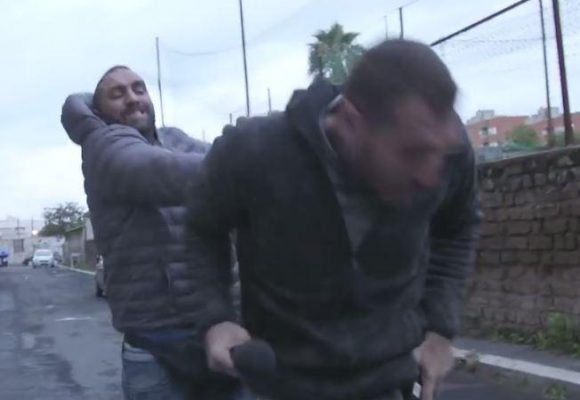
Today, 15 November 2017, the Italian Secretary of State for the Interior, Marco Minniti, has met with leaders of the National Federation of Italian Press (FNSI), a member of the European Federation of Journalists (EFJ) to discuss journalists’ concerns for press freedom. Daniele Piervincenzi, a journalist for Italian TV RAI, was assaulted by Roberto Spada, the brother of a mafia boss, when he approached him for an interview about the local elections in Ostia, on 7 November 2017. Following the report from FNSI, the EFJ condemn the assault and filed a complaint to the Council of Europe Platform to protect the safety of…

Incentivising media rights and plurality by supporting good practices in Western Balkans and Turkey

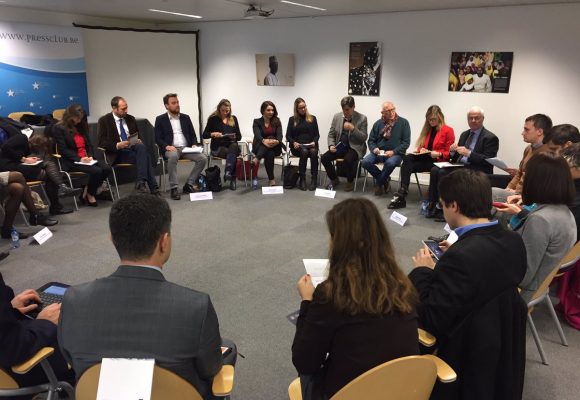
“How to improve the precarious state of journalism in South East Europe and Turkey” was the topic of a press conference held by the European Federation of Journalists (EFJ) on 14th November 2017 at the Press Club Brussels. The press conference took place in the framework of the EFJ project, Building Trust in Media in South East Europe and Turkey – a project supported financially by UNESCO and the European Union. Andris Kesteris, principal advisor at DG for Neighbourhood and Enlargement Negotiations (NEAR) at the European Commission and Tarja Turtia, UNESCO Programme Specialist, attended the event to hear representatives of…

European Parliament: fighting racism and xenophobia in the media

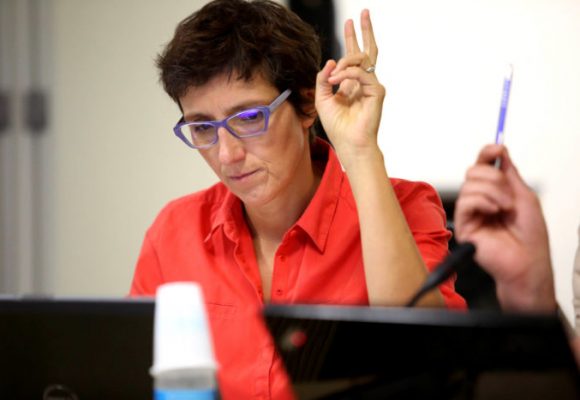
‘Race, racism and xenophobia in a global context III’ was the topic of  conversation on 9th November, in a conference organised by Italian Member of the European Parliament (MEP), S&D Cecile Kyenge in collaboration with New York University (NYU). EFJ director Renate Schroeder attended the conference, to speak about the ever more challenging role of journalists in an age of increased racism and hate speech. Opening the conference, the organisers addressed the representations of people of colour in public space and the media. Speaker Debora Spini from NYU Florence argued that right-wing media portrays a racialized narrative of Islam, in which people of colour and ethnic minorities pose a dangerous threat to Western women. Representations…

Contracts and collective bargaining for all: “Social Europe”

The European Federation of Journalists (EFJ), along with the European Trade Union Confederation (ETUC) and other European trade union organisations, submitted on 6 November its position on the 2nd phase consultation on the revision of the Written Statement Directive (931/55/EC) trying to extend the right for a written contract and social protection to self-employed workers. The EFJ, along with the ETUC, request in their response that Member States should ensure that all workers (including self-employed workers) have the right to fair remuneration in accordance with national law, collective agreements or practice at the appropriate level in conformity with national industrial…

Studies find precarious employment tied to digitalisation and the gig economy

The grey area between employment and self-employment, symptomatic in the media sector, has been highlighted by two recent studies focusing on online work and the “gig economy”. The separate 2017 studies, one by Eurofound (the European Foundation for the Improvement of Living and Working Conditions) and the other by Heyes and Hastings from the University of Sheffield, suggest a precarious status of employment for ever more workers. This precarity is tied to digitalisation and the “gig economy”. The study by Eurofound focuses on digital platform work. The most reliable estimate of this type of work among European Union member states is from the United Kingdom, where…

EFJ issues alert as Croatian reporter receives death threat

The European Federation of Journalists (EFJ) has released an alert to the Council of Europe, concerning a death threat against Croatian reporter Maja Sever. Sever is a journalist from the Croatian Television (HRT, public media service), and received a threat on October 29 via Facebook in response to her story about Nigerian refugees. The private Facebook message was racially charged, stating that “if you want to live with N***ers, go live in England, France or USA, but do not promote that Freemason’s multicultural politics in Croatia”. The aggressor also called Sever a “whore” and a “Yugoslav – mason whore”, according…

“Stop Hate, Stop Impunity”: EFJ Vice President writes letter from Russia

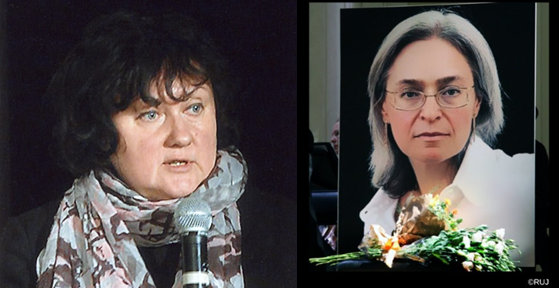
On 2 November 2017, the EFJ Vice President Nadezda Azgikhina wrote a letter from Russia. The letter focused on fighting against hate and impunity towards journalists. Here, the EFJ publishes this letter: The first conference devoted to Impunity in Russia took place just before the Moscow IFJ Congress in 2007. It focused mainly on the assassination of Anna Politkovskaya, the journalist murdered on 7 October 2006, and focused on other colleagues who were murdered too. For the first time, a list of deceased Russian journalists, prepared by Glasnost Defense Foundation, was presented to the international professional community. It consisted of…

Serbia: Journalists from Magločistač web portal receive death threats

On 4 September 2017, journalists and media workers working for the Serbian Subotica Magločistač news portal received explicit death threats because of an article entitled “We are all Gosa workers, and all the rulers are Labans” (Svi smo mi radnici Goše, a vladari Labani). Following the publication of this article, the team of journalists were threatened with harsh words in the comments section. The article referred to the death threats made by Bogdan Laban, the mayor of Subotica, directed against one of his party colleagues, Magločistač news portal reported about that event. The European Federation of Journalists (EFJ) strongly condemns the death threats…

What is the future of financing digital journalism?

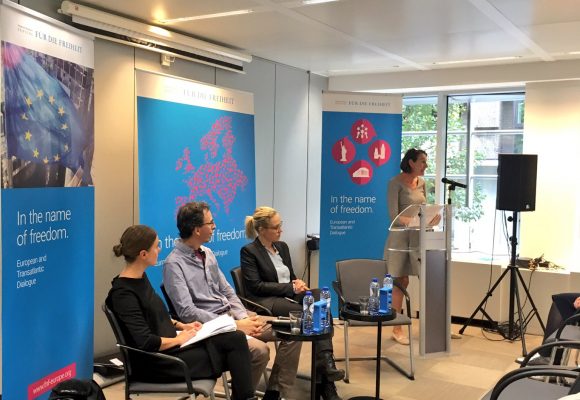
The media environment is becoming increasingly digital, mobile and more and more people consume news directly on social media. Which innovative financing tools will make quality journalism sustainable in the future and how can we preserve a lively news environment that informs citizens and scrutinizes societal power hubs? Those were the main questions of the debate, organised yesterday (07/09/2017) by the Friedrich Naumann Foundation (FNF) in cooperation with the European Federation of journalists (EFJ). It was moderated by Caroline Margaux Haury, European Affairs Manager at the FNF. Renate Schroeder, director of the EFJ, gave opening remarks. “The evolution of the…

European parliament discusses the political and legal challenges for fake news

Fake news have become an unavoidable term when talking about (digital) media. They are seen as an effective tool of manipulating political discourse, a way for content creators to generate revenue from advertising and are easily widespread on the social media. The parliamentary group of social democrats in the European Parliament organised on Wednesday (06/09/2017) a conference to tackle the political and legal challenges linked to fake news and invited Ricardo Gutiérrez, General Secretary of the European Federation of Journalists, as an expert to the panel. Arnaud Mercier, professor of political communication at Panthéon-Assas University in Paris, said that fake…

How to ensure editorial independence in the newsroom?

Journalists are facing increasing economic and political pressure hampering editorial independence in the newsrooms, concluded 20 journalists who attended the two-day workshop on Promoting editorial independence in the newsrooms. It was co-organised by the European Federation of Journalists (EFJ) together with the European Trade Union Institute (ETUI) on 29 & 30 August with the financial support of the European Union. The workshop was also supported by the Association des journalistes Professionnels (AJP, Belgium) alongside their yearly Summer School for young journalists in Belgium. Journalists coming from 13 European countries (including Austria, Belgium, Croatia, Estonia, France, Finland, Macedonia, Montenegro, Lithuania, Russia,…

Bosnia and Herzegovina: journalist Dragan Bursać receives death threats

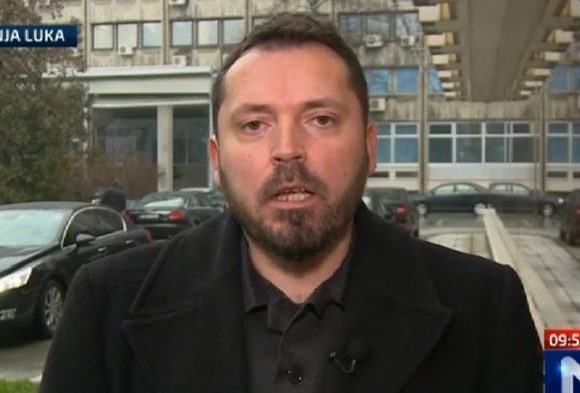
The European Federation of Journalists (EFJ) is supporting the Western Balkans Regional Platform for Advocating Media Freedom and Journalists’ Safety in condemning recent death threat against Dragan Bursać, a journalist from Banja Luka, who was threatened because of his article “I was silent while Bihać was shelled” (Šutio sam dok je Bihać granatiran). The EFJ  welcomes the swift reaction of the Ministry of Internal Affairs of Republika Srpska, who arrested the person who threatened him. In the article, Bursać recalls memories of the three-year siege of the town Bihać that was surrounded by two Serbian armies and the action Storm…

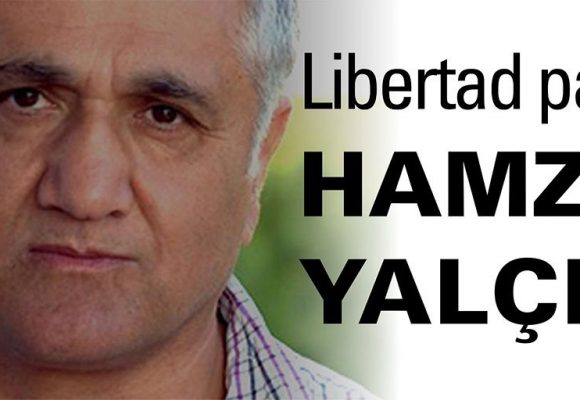
Spain must release Swedish-Turkish journalist #HamzaYalçin!

UPDATE (24/08/2017):  Hamza Yalçin publishes letter in El Periodico criticising his arrest in Spain The International and European Federation of Journalists (IFJ and EFJ) together with its affiliates in Spain and Sweden have strongly condemned the continued imprisonment of Swedish-Turkish journalist Hamza Yalçin by Spanish authorities since 3 August 2017. “It turns out that Tayyip Erdogan declared me a terrorist because I have written and spoken against him and he warned Interpol to capture me and deliver me. The Spanish authorities, therefore, detained me and imprisoned me. I would hope that the Government of Sweden, a country to which I came…

Public service media in Bosnia and Herzegovina closer to sustainable funding

Public service media in Bosnia and Herzegovina (BiH) has signed an agreement with the electric company Elektroprivreda – JP EP on the collection of TV license fee through the electricity bills starting this month. With this agreement, the Radio and Television of Bosnia and Herzegovina (BHRT) will be provided with a steady income of independent funding and will be able to start investing in new technology and programming. The other domestic electric companies will be offered the same contract and the BHRT expects a positive outcome. The European Federation of Journalists (EFJ) along with the European Broadcasting Union (EBU) welcomes…

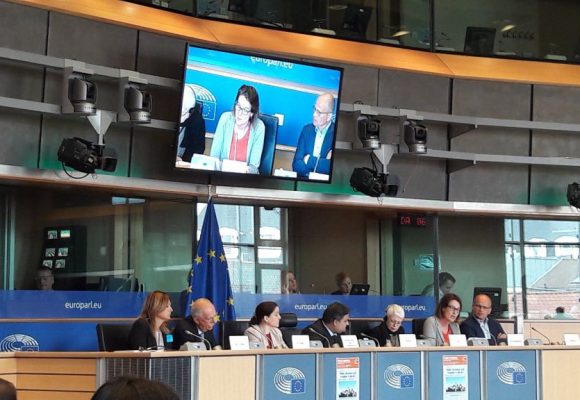
EP hearing: “Media pluralism essential element for democracy”

Citizens’ fundamental rights to freedom of expression and information can only be guaranteed through media freedom and pluralism. Even though that is enshrined in Article 11 of the Charter, the reality is different. “Since our last report in 2013, plurality has just gotten worse,” stressed Italian MEP Barbara Spinelli in her opening remarks at the “Media Pluralism and Freedom in the EU” hearing, which took place in the European Parliament on Tuesday (11/07/2017). Organised by the Civil Liberties, Justice and Home Affairs (LIBE) Committee, it reflected the media situation in EU, with the experts presenting the most alarming issues. Spinelli…