#ECPMF conference e-book: how to improve freedom of expression

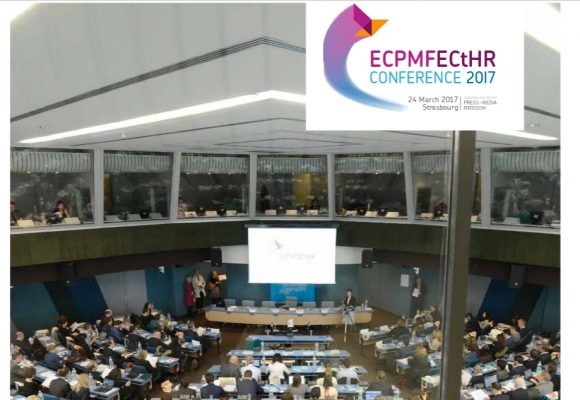
The European Centre for Press and Media Freedom (ECPMF) issued an e-book with proceedings and conclusions of their recent conference, organised on 24 March in Strasbourg. Carried out with the support of the Council of the Europe (CoE), the event promoted the dialogue between the European Court of Human Rights (ECtHR) and media freedom groups, especially on the ECtHR’s recent case law relating to freedom of expression, media and journalism. The speakers at the conference presented their views on three main themes, now summed up in the e-book: defamation, privacy and the processing of personal data; investigative journalism in relation…

German parliament adopts controversial law on social media threatening media freedom

The German parliament voted last Friday on 30 June a law on social media forcing online platforms like Facebook and Twitter to remove illegal hate speech posted by users. The European Federation of Journalists (EFJ) expressed concerns regarding the adoption of the law warning that the law would lead to widespread online censorship and limit media freedom. The law on “respect of the law by social network” has raised criticism regarding the excessive and hardly controllable infringement to freedom of speech. In April, the EFJ together with its German members (DJV and dju in ver.di) protested against the draft law and…

Which are the challenges and solutions for public service media?

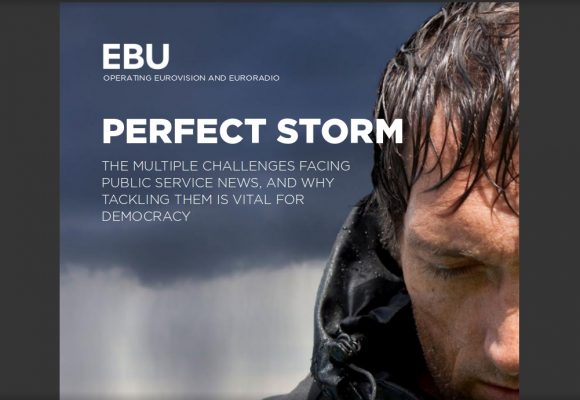
Politicians with an agenda, managements on tight budgets and industry competitors under existential threats to malicious disseminators of falsehoods – it is a “perfect storm” of challenges for today’s public service news providers. The European Broadcasting Union (EBU)’s new study addresses those changing demands, much of which were researched during a rapid tour of small group of European broadcasters in the spring 2017. The report highlighted some key trends. Economic pressure Broadcasters have to reallocate resources for new platforms in order to stay relevant, but at the same time their public funding is being squeezed. Pressure can be also put on…

How is gender equality represented in the media in EU?

The Committee for Women’s Rights and Gender Equality (FEMM) organised on Monday (26/06/2017) a hearing on gender equality in the media in the European Union. The main goal was to provide information for the upcoming own-initiative report, which will be written later on in the year. The rapporteur is Czech MEP Michaela Šojdrová. Lenka Vochocová from Media Studies at the Faculty of Social Sciences in Prague, Donatella Martini, the director of DonneinQuota and Martine Simonis, General Secretary at the Belgian Association of Journalists (AJP) talked about the current situation of women at different positions in the media sector and analysed…

#HesaMag debate: Today’s and the future of journalism is precarious

Multitasking in a 24-hour rush, selling articles for five or ten euros and the increase of burnouts is a reality for too many journalists nowadays. This decline in working conditions is also the main topic of the latest issue of HesaMag, titled “Journalism, an increasingly precarious profession”. The European Trade Union Institute (ETUI) organised yesterday (26/07/2017) a debate on the subject and presented the magazine, which was carried out in collaboration with the European Federation of Journalists (EFJ). The debate was moderated by Willy De Backer, Head of Communication and Publications at the ETUI. #HesaMag event with @renatemargot @AntonisRepanas @WillyDebacker…

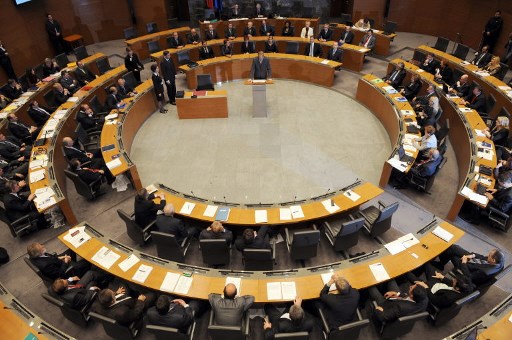
Slovenia to reform labour laws enforcing contractual obligations

The Slovenian government has recently introduced two draft labour laws on employment and labour inspection. The main changes concern giving the labour inspectors more authority to act, especially when the employer fails to pay the salary of employees, accelerate the process whereby the unemployed take up employment again and make employment contract termination more flexible. “Precarious conditions are becoming more and more common, not just in Slovenia, but also in Europe,” said Anja Kopač Mrak, the Slovenian minister of Labour, Family, Social Affairs and Equal Opportunities at the voting session of the draft labour laws at the beginning of this…

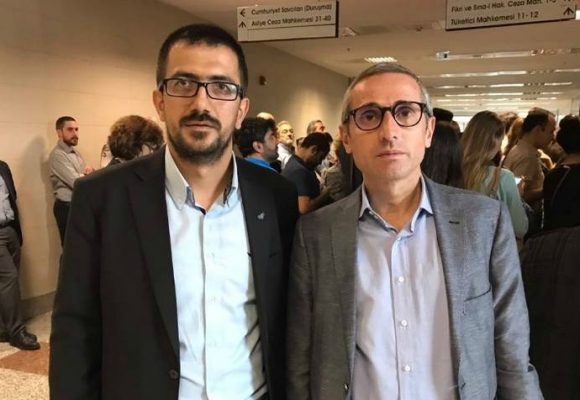
Turkey: first criminal trial against journalists over attempted coup

The International and European Federations of Journalists (IFJ and EFJ) yesterday sent an observer to Istanbul to monitor the first trial against journalists accused of participating in the 15 failed coup of last July. The trial, which may shed light on how the courts will approach numerous cases concerning the right to freedom of expression and the right to a fair trial under the state of emergency, has amplified international concerns over press freedom in Turkey. Raffaele Lorusso, General Secretary of the affiliate Federazione Nazionale della Stampa Italiana (FNSI) and an IFJ Executive Committee member, yesterday attended the trial of…

Call for key experts for public broadcast reform in Western Balkans tender

The European Federation of Journalists (EFJ) together with the consortium leader, International Federation of Journalists  (IFJ), is preparing a proposal to the European commission Tender for Technical Assistance to Public Service Media in the Western Balkans. As part of the bid they are looking for two key experts to manage the programme for 30 months starting November 2017. The candidates must be prepared to be located in one of the beneficiary countries. – KE1 : Team leader (550 days) – KE2 : Senior Broadcast Management Expert, Deputy Team Leader (440 days) Interested candidates are asked to send their CV using…

EFJ Focus June 2017

The EFJ newsletter, EFJ Focus, is available in English and German. EDITORIAL EU moving forward on journalists’ rights protection When the EFJ was established twenty five years ago, one of its aims was to lobby EU institutions for the interests of journalists. Currently, the EFJ is making progress on influencing: the proposed EU copyright directive the protection of whistleblowers the consultation to provide social protection and equal rights for freelance journalists We have built alliances with authors’ organisations to ensure the protection of authors’ rights in the EU copyright directive while maintaining our cooperation with publishers on common topics. We…

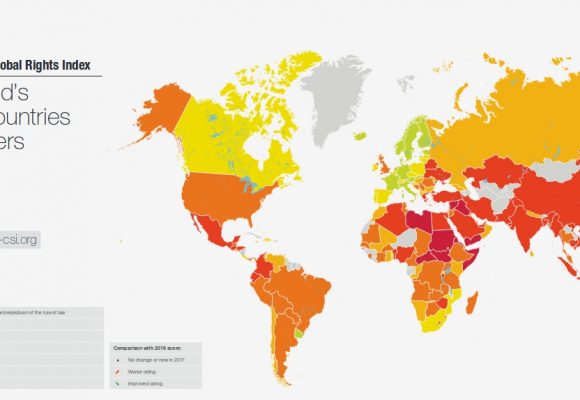
Global Rights Index 2017: Europe shows greater respect for trade unions

The International Trade Union Confederation (ITUC) released this year’s Global Rights Index report, providing an insight into workers’ rights violations around the world. It rates 139 countries from one to five according to 97 indicators to determine where workers’ rights are best protected in law and in practice. Following the report, the worst countries for workers in Europe are Turkey, Belarus, Greece, Ukraine, Bosnia and Herzegovina, Romania, Serbia and the United Kingdom. The number of countries experiencing physical violence and threats against workers has risen by 10 percent in just one year. In Europe, however, trade unions have greater respect…

European Parliament discusses democracy and challenges in journalism

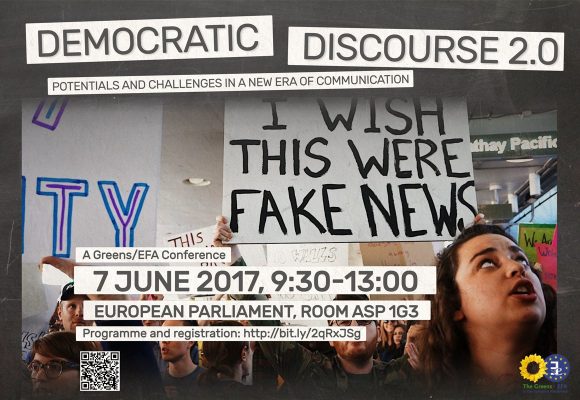
The future role of media is under question – new online media companies are emerging, print advertising is in decline and there is more and more talk about ‘fake-news’, which contributes to losing readers’ trust. The Greens in the European Parliament organised on Wednesday (07/06/2017) a Democratic Discourse with experts discussing the new trends in the digital news landscape and how journalists and media outlets are living up to them. “The majority of professional journalism is still funded by newspapers – 69 % of the funds for professional journalism came from newspaper companies in the UK in 2012,” pointed out…

Azerbaijan: exiled journalist abducted, detained and faces charges

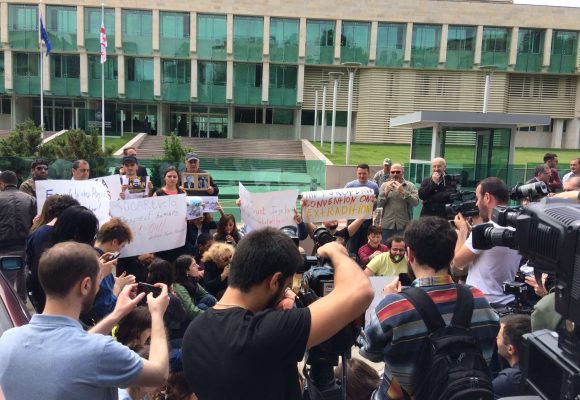
The European Federation of Journalists (EFJ) is supporting its affiliate, the Independent Association of Georgian Journalists (IAGJ), in calling to Georgian Government to take all possible measures to free Azeri journalist Afqan Mukhtarli. He was abducted by special services on May 29 in Tbilisi and secretly taken to Baku prison. The missing of Mukhtarli was reported by his wife Leyla Mustafayeva who, according to Eurasianet, said that her husband last called her on the evening of 29 May just a few blocks away from their home and then did not show up. The next day the Georgian police stated that a search…

Call on BiH authorities to save national public service media

The Bosnia and Herzegovina public service broadcaster (BHRT), the EFJ affiliate, the Bosnia -Herzegovina Journalists Association (BHN), the European Broadcasting Union (EBU), the European Federation of Journalists (EFJ), and the South East Europe Media Organisation (SEEMO) call on Bosnia and Herzegovina authorities to undertake urgent measures to save national public service media (PSM) in BiH. The above mentioned organisations urge BiH authorities to ensure political consensus about the importance of existing independent and professional national PSM in BiH, to find sustainable solutions for the funding of PSM, to undertake immediate amendments of the existing legislation and support the national public…

What is the future of freelancing?

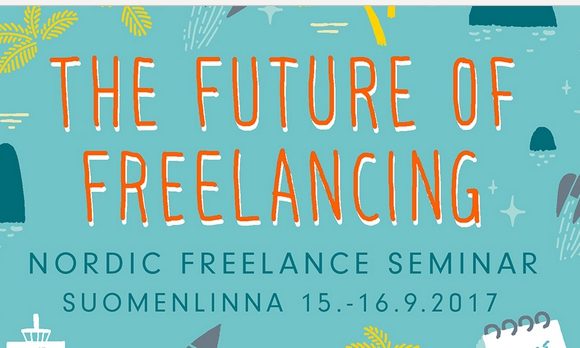
What kind of journalism will be done in the future, what sorts of platforms will be used and where will the money come from? What will be the role of freelancers and entrepreneurs in this changing situation? Those are some of the questions that will be discussed at the Nordic Freelance Seminar on 15–16 September in Helsinki at the UNESCO World Heritage Site of Suomenlinna island. It is hosted by the Finnish Freelance Journalists Association (Suomen freelance-journalistit ry) and aimed at Nordic freelancers only. Participants will also talk about new skills freelancers and entrepreneurs should learn, the relationship between the…

#MPM2016: No country free of risk on media pluralism, shows report

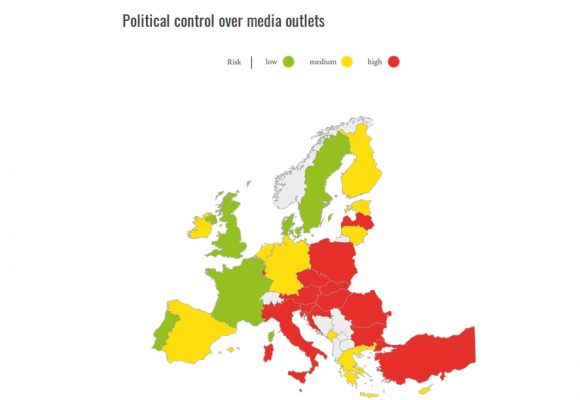
In 2016, the Media Pluralism Monitor (MPM) examined media freedom and pluralism indicators in 28 European countries as well as in Montenegro and Turkey, two applicant countries. The Centre for Media Pluralism and Media Freedom (CMPF) released on Friday (19/05/2017) the report which shows alarming trends, in particular when it comes to journalistic profession including working conditions, safety, protection of sources, access and the role of unions and associations in protecting journalists. The report especially emphasized that no country is free from risks when it comes to media pluralism. The risks were examined under different aspects and potential threats, related to…

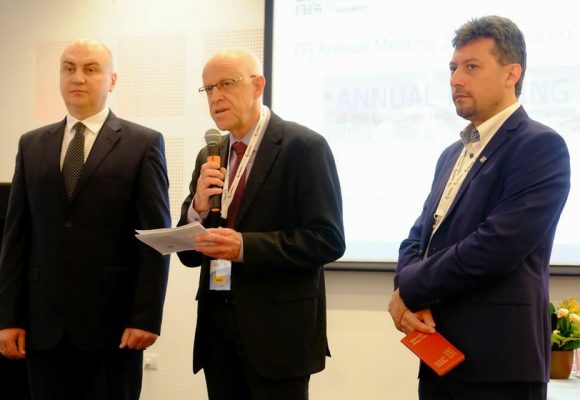
President’s speech at the EFJ Annual Meeting 2017, Bucharest

Speech by Mogens Blicher Bjerregård (EFJ President) Journalism in Europe is facing critical times. Media and politics are in an increasing conflict across Europe. More than ever, the fundamental pillar of our democracies, credible – high quality – investigative – journalism is crucial for the citizens. Journalism including all media-workers providing content. Across Europe we have three big challenges: Safety of journalists and journalism How to counter the increasing conflict between media and politics Build social dialogue Being innovative in finding new business models Three journalists have been killed in Europe since our general meeting in Sarajevo – in Ukraine, Turkey and…