The CoE adopted resolution on attacks against journalists

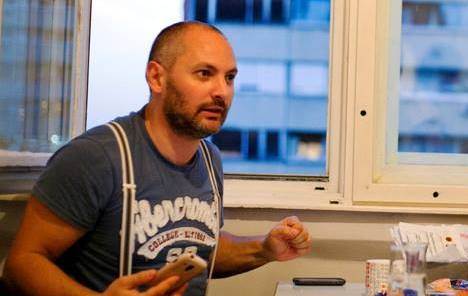
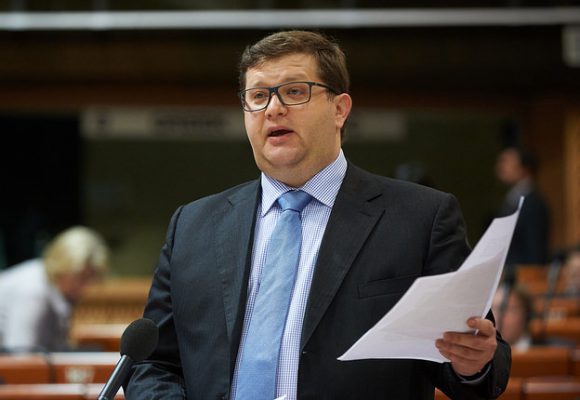
The Parliamentary Assembly of the Council of Europe on Tuesday discussed the rising levels of violence against journalists, particularly in Turkey, Russia and Azerbaijan. Ukrainian MP Volodymyr Ariev (EPP/CD), pictured above, presented the report, where he drew attention to the death of 16 journalists and the arrest of 150 media employees since January 2015 in member States. Mr. Ariev spoke about the deterioration of media freedom in Turkey and called for “release from detention all journalists who have not been indicted for actively participating in terrorist acts”. He also raised concerns on the media situation in Crimea and eastern parts of Ukraine.…
OSCE Representative condemns deterioration of media freedom in conflict-affected parts of Ukraine

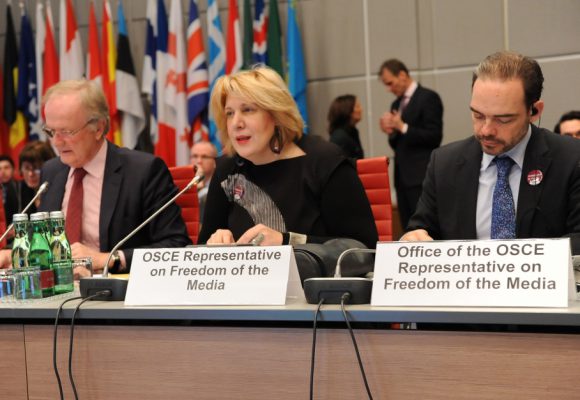
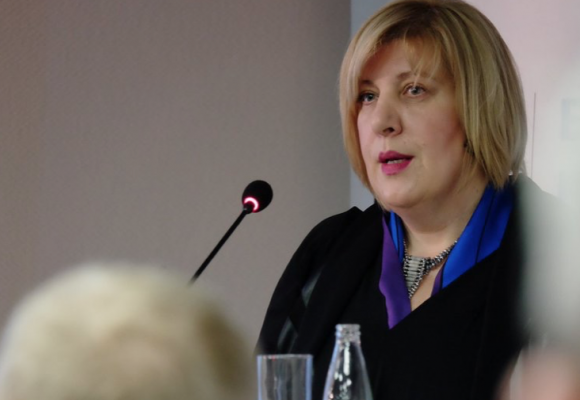
The Representative on Freedom of the Media Dunja Mijatović condemned today the worsening situation with media freedom and safety of journalists in areas not controlled by the Ukrainian government. This comment followed the recent report by OSCE Chief Monitor, Ambassador Ertugrul Apakan, where among others he spoke about the limitation of freedom of expression in the region. The OSCE Chief Monitor mentioned ban of over 350 websites and restrictions against Ukrainian media outlets. Mijatović noted that threats and intimidation of media workers along with the arrest of bloggers Eduard Nedelyaev and Gennadiy Benitskiy are particular worrying cases. She added: Access…

Republika Srpska President’s office limits access for selected media

The European Federation of Journalists backs the Bosnia-Herzegovina Journalists Association (BHJA) in condemning the discriminatory actions by Republika Srpska (RS) President Milorad Dodik against selected media. On January 18 a news crew from N1 Television was denied access to a press conference in Banjaluka on the grounds that they didn’t have accreditation to enter the venue. The TV channel was also removed from the mailing list of the President’s office, which meant no further access to official newsletters or accreditation information that are necessary for the news coverage. BHJA  called these actions unreasonable discrimination against the well-known critical media outlet.…

Verbal attacks against Macedonian journalists

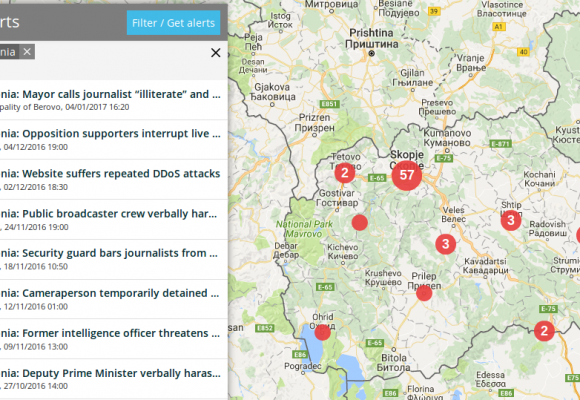
The European Federation of Journalists backs Association of Journalists of Macedonia (AJM) in condemning verbal abuses by the authorities against journalists. Such actions are damaging for the freedom of expression and are limiting the public access to the information. One of the major political parties in Macedonia VMRO-DPMNE accused Fondation Open Society Macedonia for corrupting the journalists and urged to “clean” the “media of Soros”. AJM calls these claims “a pure spin of the government” and finds it very dangerous to call for violence against journalists, as such comments might have negative consequences in the future. The full announcement by…

Facebook blocked RT account on the eve of Donald Trump inauguration

On Wednesday 18, during the streaming of Barack Obama’s press conference, Facebook temporary blocked RT account on the grounds of a copyright complain. According to the social network the originally 72 hour ban happened due to the copyright notification, which they received from Current Time TV, a Russian-language media jointly owned by Radio Free Europe and the Voice of America. Russian broadcaster RT, previously known as Russia Today, claimed that they used AP direct feed, which they officially subscribed to. They believed that there might be other reasons for such actions, as this blockage wouldn’t let the media channel to…

Azerbaijan: Survey about the social conditions of journalists

The Journalists’ Trade Union of Azerbaijan published a report on social conditions of journalists in the country in 2016. Overall 51 media outlets took part in the survey, among them national newspapers, information agencies, news portals and TV channels. One of the big issues stated in the report was the lack of individual labour contracts in Azerbaijan.  The media companies prefer to sign short-period contracts, in the best cases 60% of employees had labour contracts, whereas 40-45% had no legally binding documents and relied on verbal agreements. The application of health insurance is extremely low (less than 5% ). The…

#Media Against Hate: EFJ launches a Europe-wide campaign to counter hate speech in the media

The European Federation of Journalists (EFJ) has today launched together with partners ARTICLE 19, Media Diversity Institute (MDI), Croatian Journalists’ Association (CJA), Cooperazione per lo Sviluppo dei Paesi Emergenti (COSPE), Community Media Institute (COMMIT), Community Media Forum Europe (CMFE) a Europe-wide campaign Media Against Hate, to counter hate speech and discrimation in the media. The media and journalists play a crucial role in influencing both policy-making and societal opinion on migration and refugees. As hate speech and stereotypes targeting migrants and refugees proliferate across Europe, balanced and fair media reporting is needed more than ever. Despite some good journalism practices…

Croatia: Journalist Domagoj Margetić beaten in Zagreb city centre

The European Federation of Journalists (EFJ) is backing its affiliate, the Croatian Journalists’ Association (CJA), to denounce the attack against the journalist Domagoj Margetić, in Zagreb (Croatia) city centre, on 13 December. According to the testimony given by phone to the Croatian Journalists’ Association, Margetić said he was approached by a man. He thought he wanted to ask him something, but the man shouted he would “silence” him, adding “You will never write again”. He went on with threats and started to beat him. Domagoj Margetić is a journalist investigating crime and corruption in Croatia and is editor of „No censorship“ show at TV…

Kosovo: media banned from entering the court

The European Federation of Journalists (EFJ) is joining its affiliate, the Association of Journalists of Kosovo (AJK), to denounce the ban on media to cover the initial hearing of the so-called “Land Fraud” case involving senior politicans and judges. In a press release, AJK expressed its disagreement with the reasoning of the president of this panel, Arcadius Sedek, who justified the ban by the technical nature of the hearing. “We would like to draw attention to the judge that this session is of public interest” one can read in AJK press release. This is the third court case where Kosovo courts decide to ban…

Intimidation against journalists in San Marino

The European Federation of Journalists (EFJ) is joining USGI, its Sammarinese affiliate, to denounce the attempt to censor journalists in San Marino. During the year 2016, two civil lawsuits were engaged against journalists associated with USGI, claiming damages following articles considered by the plaintiff as damaging his image. The plaintiff, a lawyer who has a leading position in the banking and financial world of the Republic of San Marino, is claiming 250.000 and 300.000 euros as damages after the publication of articles concerning the case. USGI highlighted in a press release the quality of the journalistic works in question and expressed great concerns…

Social media need “self-regulation, education and literacy, not new restrictions”, says Dunja Mijatović in a report

The Representative on Freedom of the Media of the Organization for Security and Co-operation in Europe (OSCE), Dunja Mijatović, published today her regular report to the Permanent Council from March 2016. She expressed great concerns about the safety of journalists and fake news on social media. Here are some excerpts. On the safety of journalists: As you all know, unfortunately safety of journalists continues to dominate my agenda. Impunity for killings, attacks and threats prevails. This must stop. In order to assist the participating States in monitoring progress on fighting impunity for killings of journalists my Office has prepared a…

The Russian Union of Journalists committed to stop gender-based violence in Russia

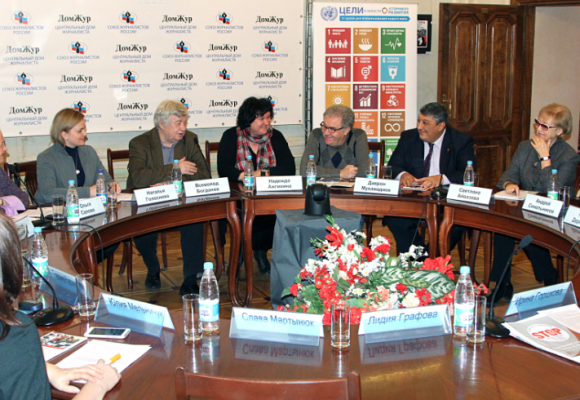
On November 28, the Russian Union of Journalists (RUJ), together with the United Nations agencies in Russia and the Centre for gender and media studies of Moscow State University, organised a round table focused on “Russian journalists in UN: Combating gender-based violence”. This event took place in the Moscow Journalist Club and gathered experts, journalists and human rights activists. It followed the International Federation of Journalists action to mark UN Day for the Elimination of Violence Against Women and Girls on 25 November. Nadezda Azhgikhina, vice-president of the European Federation of Journalists (EFJ) and member of the IFJ Gender council, presented a…

Panama: EFJ-IFJ urge to release Dutch journalist detained over fraud and corruption reports

The European and International Federations of Journalists, IFJ and EFJ, together with their affiliate the Dutch Journalists Association (NVJ), have called for the immediate release of a Dutch journalist who faces a 20-month jail sentence. Dutch journalist Okke Ornstein was detained and arrested upon arriving at Panama’s Tocumen International Airport on 15 November. He is facing a 20-month sentence for libel and slander in relation to articles he posted on his blog about the alleged dubious business activities of a Canadian citizen, Monte Friesner, in Panama. The unions claim the libel and slander claims are baseless. The substantive aspects of the case…

UK Investigatory Powers Bill threatens journalistic sources and whistleblowers

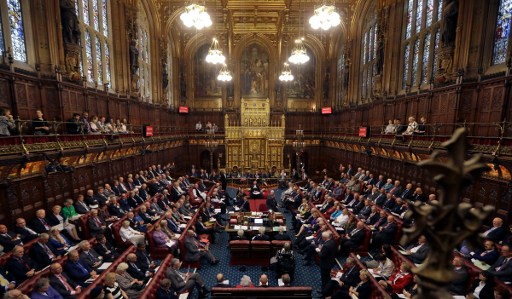
The International and European Federation of Journalists, (IFJ) and (EFJ), joined their UK affiliate, The National Union of Journalists (NUJ), in strongly condemning the Investigatory Powers Bill, which threatens the right to privacy, freedom of expression and investigative journalism, giving the Government sweeping spying powers. The new law gives the UK one of the most extreme spying powers in the developed world whose impact will be felt around the world. Under the “national security” pretext, the bill, which was passed by the House of Lords on 17 November will force internet and phone companies to store their users’ browsing data…

Majority of EU citizens think media lack independence

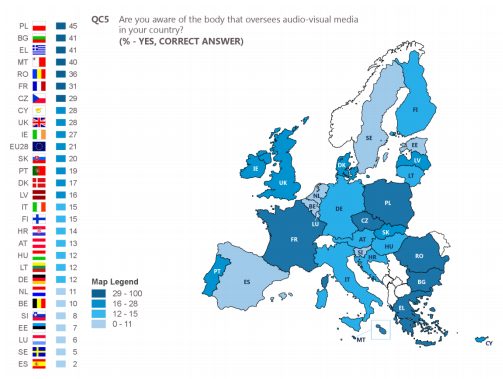
The results of the 2016 Eurobarometer survey on “Media pluralism and independence” published today (17/11/16) – just in time with the EU Annual Colloqium on Fundamental rights on “Media pluralism and democracy” – show two worrying trends: a majority of EU citizens believe that the media in their countries lack independence ; and 75% of the respondents have experienced hate speech on social media. This survey aims at representing the state of media pluralism and independence across the European Union. The results highlight that, according to the Europeans, there is much work to be done in ensuring the independence of national media – a vital cornerstone of…

Commissioner for Human Rights Nils Muižnieks reiterates his commitment on media freedom

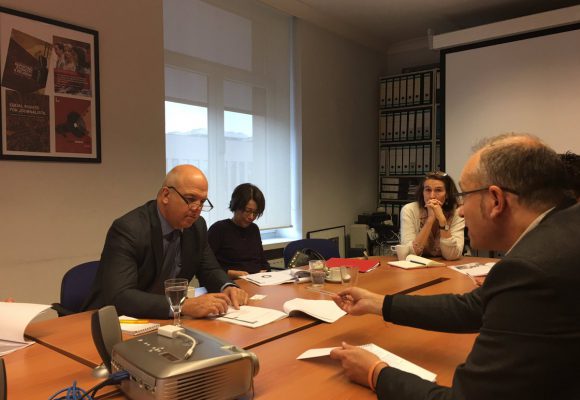
The European Federation of Journalists (EFJ) held a meeting on 9 November with the Council of Europe’s Commissioner for Human Rights Nils Muižnieks and his team at the EFJ headquarters in Brussels. The two teams discussed current threats to media freedoms in Europe especially the situation in Turkey and abuses of defamation laws against journalists in EU countries. EFJ General Secretary Ricardo Gutiérrez presented the main challenges and projects the EFJ is currently working on, namely the independence and the strengthening of public service broadcasting in Eastern Europe and the Balkans, the oppressive emergency situation in Turkey and the increase of self-censorship and hate speech in the…