MFRR Monitoring Report 2025: 1,481 press freedom violations across 36 European countries

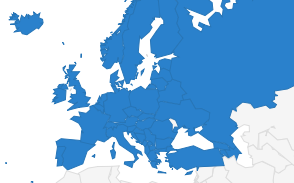
The Media Freedom Rapid Response (MFRR) partners today publish the Annual Monitoring Report for 2025, which documents 1,481 press freedom violations affecting 2,377 journalists or media-related entities in 36 European countries between January and December 2025. The report was compiled by the European Centre for Press and Media Freedom (ECPMF), the European Federation of Journalists (EFJ), and the International Press Institute (IPI). Journalists and media outlets across Europe faced sustained threats throughout 2025, according to the latest Monitoring Report. Based on verified cases recorded in the Mapping Media Freedom database, the report provides a comprehensive overview of the main threats facing journalists across the 27 EU Member States and nine candidate countries.…

Opening Speech of Marijana Camović, President of Trade Union of Media of Montenegro

Annual meeting, Budva, Montenegro Opening speech by Marijana Camović, President of Trade Union of Media of Montenegro and host The level of media freedom in Montenegro can best be described by the meagre number of media professionals who are left in the job. Working conditions in the media have never been worse before. Since the beginning of this year, four media outlets have been closed. Among them, only the smallest one which employed a small team compensated their employees. In other media outlets workers were laid off without compensation. Around 15 media outlets have their bank accounts blocked by the…

President’s speech, EFJ Annual Meeting 2015, Montenegro

Safety, rights and jobs Mogens Blicher Bjerregård EFJ President Safety, rights and jobs have been and will be our three keywords in the European Federation of Journalists these years. In solidarity we will work within that framework Safety as has been more an IFJ topic has also become an EFJ issue. I addressed it last November at the annual meeting in Moscow. Unfortunately, we see more journalists killed in Europe than ever, journalists are jailed for doing their job. Journalists are beaten and the digitization challenges protection of sources. Rights: Labor rights, rights to organize without being expelled from the…

EU copyright reform needs to address fairness in creative sector

The European Federation of Journalists (EFJ) represented by President, Mogens Blicher Bjerregård, told EU policy-makers to address the unfair contractual practices in the media and creative sectors in a meeting organised by the European Parliament working group on intellectual property rights and copyright reform in Strasburg. Addressing members of the working group, Blicher Bjerregård says, “The biggest challenge facing journalists today is the unfair contractual practices that deprived the right of journalists from receiving fair payment for their work. “The imbalance in negotiation power between media organisations and individual journalists allows this to happen.” You can read the full speech…

TTIP: EFJ complains to the EU Ombudsman

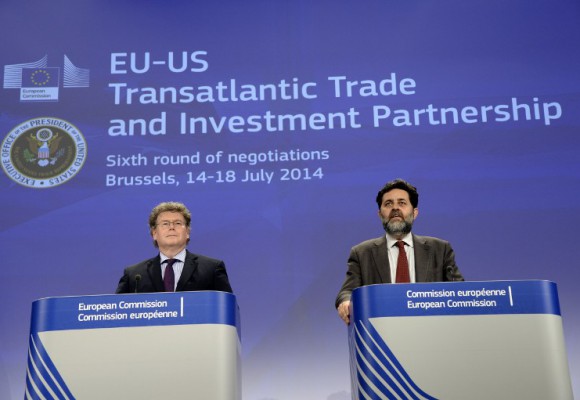
On Monday, the European Federation of Journalists (EFJ), ClientEarth, the European Environmental Bureau, Friends of the Earth Europe, and the Corporate Europe Observatory jointly submitted a complaint to the EU Ombudsman regarding maladministration by the European Commission in relation to access to documents relating to the Transatlantic Trade and Investment Partnership (TTIP). The complainants note, and welcome, the own-initiative investigations launched by the European Ombudsman in relation to the transparency of the TTIP negotiations and the public consultation, and the decision published on 6 January 2015. We furthermore note the publication by the Commission of additional documents on its website on…

Charlie Hebdo: Free speech under attack

Wednesday, 7 January 2015 is the darkest day in journalism in Europe. The brutal attack on the satirical magazine Charlie Hebdo in Paris was also an attack on all of us. Our thoughts are with the victims, their families, friends and colleagues. It is hard to believe that such a horror could happen in Europe. The attack confirms that we must continue to safeguard and defend freedom of expression and press freedom as the fundamental pillars of our democracy. This was a direct attack on our freedom and the fundamental values that we hold dearly in our societies. The attack…

Mission Report – Ukraine 2014

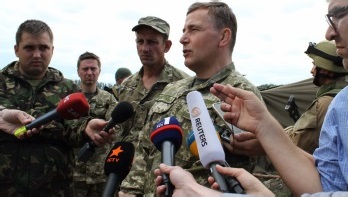
(20.11.2014) The European Federation of Journalists (EFJ) has carried out a mission to Ukraine on 6 – 8 November to investigate the situation facing journalists reporting in conflict areas. Yannis Kotsifos, a member of the EFJ Steering Committee has visited the EFJ affiliates (NUJU and IMTUU) in Kiev to understand the challenges they face in protecting their journalists. ” Since the political crisis in Ukraine broken out in November 2013, journalists have been at the heart of these events covering violent demonstrations, clashes and armed conflict. They have been shot at, assaulted, kidnapped, arrested, abused and killed. They have been…

EFJ Study Confronting Austerity 2014

Confronting Austerity in Journalism

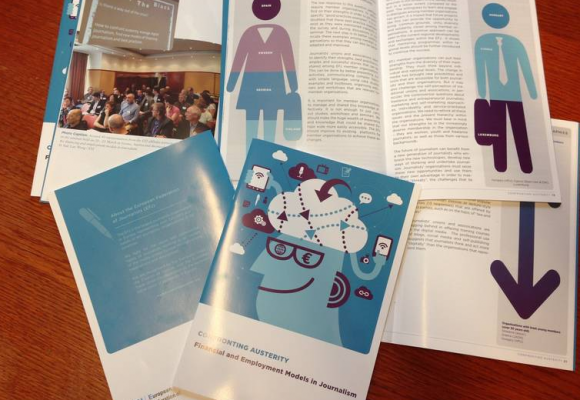
(2014) ‘‘Journalists’ and their organisations must be the driving force for the future of journalism’’ – this is the notion highlighted in the study published by the European Federation of Journalists (EFJ) today about finding ways to sustain quality journalism. Authored by Andreas K. Bittner, the study on Confronting Austerity: Financial and Employment Models in Journalism was the result of a one-year project carried out by the EFJ to find out how journalists and their organisations can confront the crisis and respond to / take advantage of the rapidly changing media landscape.  Responses collected from 42 EFJ affiliates across Europe…

Media under attack: Balkans and former Soviet Union press freedom review, January 2011- December 2013

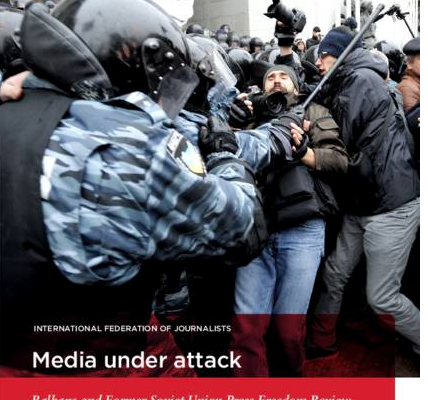
Media Under Attack has been compiled by the IFJ and the affiliated unions in Armenia, Azerbaijan, Belarus, Georgia, Moldova, Russia and Ukraine where we have  just completed a 3 year programme of press freedom and safety campaigning for journalists. The report provides an overview of the media situation for each country, details press freedom violations recorded since 2011 and outlines the continuing challenges facing journalists unions and their members. Further contributions have been made from Croatia, Macedonia, Montenegro, Serbia and Turkey. Read the report HERE

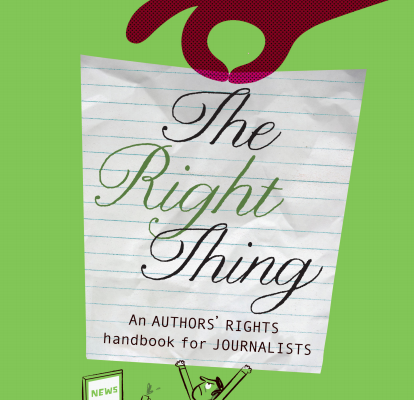
The right thing – An authors’ rights handbook for journalists – English and French

This is a manual for journalists in Europe, on authors’ rights. Authors’ rights laws provide the legal foundation for charging money for journalists’ work – as the law of ownership of physical property is the foundation for the business of a shoe-maker or a pin-factory. In other words, authors’ rights are in economic theory what gives journalists’ essentially non-physical product, words and pictures, value in the market. Labour rights laws intervene to give journalists the right to be paid for their time and first use of their work. Read in English or French  

Mapping changes in employment

In 2012 the EFJ and EURO-MEI carried out a joint project on mapping changes in employment in the media and journalism industry. The project assessed the impact of employment changes on the media and journalism industry on journalists and media workers. It analyzed the employment changes and illustrated how these changes impact on trade union representation and organizing. The survey focuses on two case studies, France and the U.K, but also takes into consideration other countries. Please click HERE to read the final report. The EFJ is the European group of the International Federation of Journalists The EFJ represents over 260,000…