European Federation of Journalists

openMedia, investigating press freedom

Title of the project : openMedia, investigating press freedom
Lead Applicant
: openDemocracy

Partner organisations : EFJ, Index on censorship, King’s College London

The recently launched openMedia project aims to investigate and expose commercial interference in editorial decisions. The project is run by openDemocracy with the European Federation of Journalists (EFJ) as a partner alongside the Index on Censorship and King’s College London.

The project believes that there has not been enough of a concerted, ongoing spotlight on the extent and effects of commercial influence over the media, despite the dangerous consequences it poses for press freedom. For now, the project focuses on 47 countries across Europe but also has ambitions to expand.

Despite the recent launch, the project is adamant that it is not a response to the “fake news” hype of the past year or so. Rather, the project responds to scandals of commercial sponsors influencing media content; for example the Daily Telegraph’s suppression of investigations into its advertiser HSBC; and allegations that Buzzfeed deleted articles which advertisers found unfavourable.

According to the project, this power dynamic can suppress investigations of banks, pharmaceuticals, agriculture, fossil fuel giants, energy companies and other big businesses.

In addition, the project recognizes how for many readers, “sponsored content” is difficult to distinguish from genuine news content. The project therefore aims to clarify the commercial interests apparent in media to readers, and as part of the project, King’s College London will develop digital tools to help readers be better informed about news sources.

The findings of the project will be used to campaign for greater transparency and press freedom in news organisations and to empower journalists to advocate for transparency.

In order to do this, openMedia is currently conducting a confidential and anonymous survey of journalists across Europe, asking about their own working practices and experiences of commercial pressure inside newsrooms. The survey is available in English here and in many other languages here.
Actions

Russia: “Foreign Agents” Bill threatens journalists

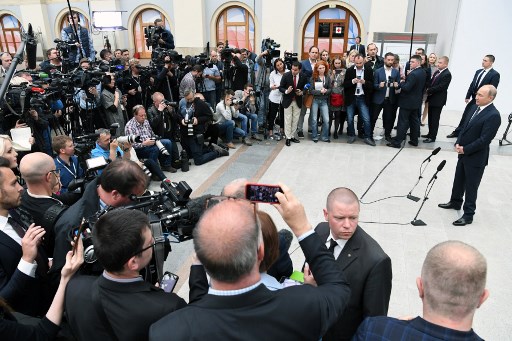
The State Duma on 21st November adopted a law that expands the status of “foreign agents” to private persons, including bloggers and independent journalists: 311 MPs out of 315 voted in support of the initiative, no one voted against, four abstained. The bill now has to be approved by the parliament’s upper chamber, the Federation Council, before President Vladimir Putin signs it into the law. Russia’s legislation on “foreign agents” already covers nongovernmental organisations and media outlets that receive any amount of funding from foreign sources. It requires them to indicate their ‘foreign agent’ status in publications, and creates reporting…

Malta: Daphne Caruana Galizia’s family calls for further investigation after new arrest

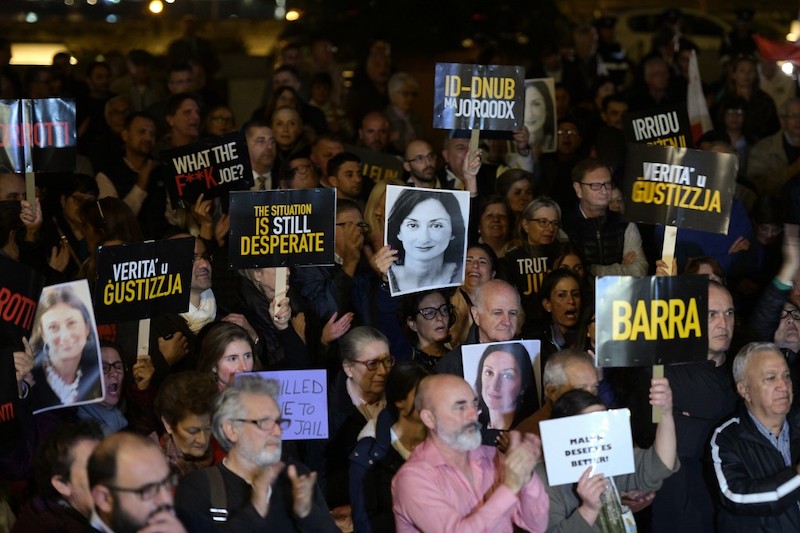
Prominent businessman Yorgen Fenech was arrested on 20 November in connection with investigations into the murder of Maltese journalist Daphne Caruana Galizia. Fenech was aboard a yacht, apparently trying to leave the country. Maltese prime minister, Joseph Muscat, described Fenech as a “person of interest” in the case and said there was nothing pointing towards the involvement of members of his administration in the murder. He was released on bail on Thursday evening. Daphne Caruana Galizia’s family welcomed the arrest, saying it was “overdue” and added: “we now expect the authorities to continue investigating the links our mother uncovered between…

Launch of the Stars4Media pilot project – One year to innovate and gain skills!

The European Federation of Journalists (EFJ) is a partner of the new Stars4Media pilot project, starting in November 2019. Together with Fondation Euractiv, Vrije Universiteit Brussel and WAN-IFRA (World Association of newspapers and publishers), the EFJ will put young journalists from Europe with 2-10 years of experience in contact with media outlets in order to organise an exchange programme of 4-12 weeks. WHY: Addressing the crisis of the Media sector Disinformation disorder, falling trust and readership, unprecedented challenges in their business models, shifting skills and technology. The media sector is going through a deep multifaceted crisis. Solutions for a healthy…

Italy: Journalist Mario de Michele survived gun attack

Italian journalist and editor of the Campania Notizie news website, Mario de Michele, survived a gun attack on 14 November. The journalist escaped uninjured despite 10 bullets – six of which hit the car – shot by two unknown individuals while driving in the town of Gricignano d’Aversa. “It is a miracle he is alive”, the Italian journalists’ union Federazione Nazionale della Stampa Italiana (FNSI) said in a statement. The European Federation of Journalists (EFJ) stands in solidarity with the journalist and alerts about the very worrying decline when it comes to journalists’ safety in Italy and Europe. The event…

Russia: investigation about Ivan Golunov classified

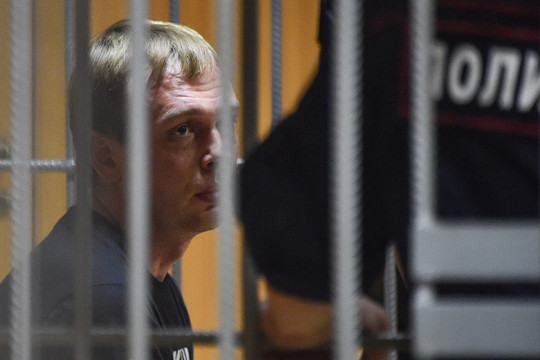
Investigation about Russian journalist Ivan Golunov‘s arrestation was declared ‘classified’ by Russia’s Federal Investigative Committee (SK) on 11 November. The European Federation of Journalists and the Russian Journalists’ and Media Workers’ Union (JMWU) denounced this decision considered as an attempt to intimidate all the journalists investigating Russian politics and corruption. Golunov has been arrested on 6 June and accused of drug-dealing – the drugs were tossed by someone into his backpack and into his apartment. Such a practice is becoming more and more common for the intimidation and imprisonment of disturbing investigative journalists. After an unprecedented mobilisation campaign by civil…

The European Parliament debates on the end of impunity of crimes against journalists

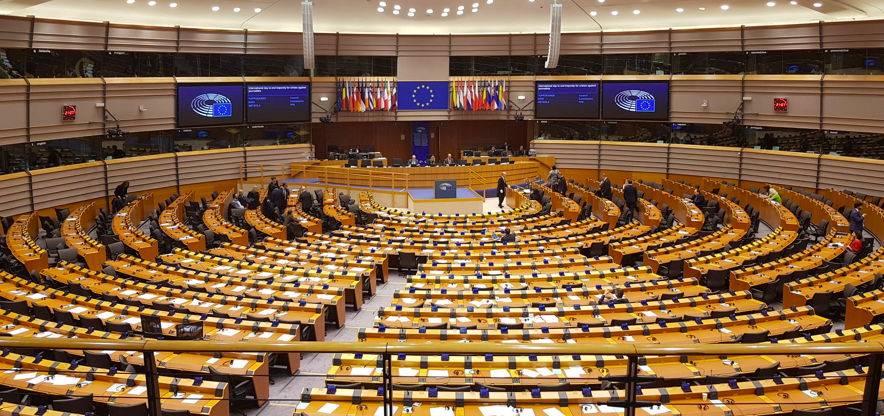
In the plenary session of 13 November, few members of the European Parliament debated about the impunity of crimes against journalists and the importance of protecting journalists in order to have a solid democratic system. In their interventions, all the MEPs agreed to condemn the violence against journalists and the need to find the murderers of the crimes against journalists that remain unsolved in the EU. Although some of them referred to the situation in regions like Latin America or Africa, all of them are aware that journalists are in danger in Europe too. In this sense, they all agreed…