European Federation of Journalists

openMedia, investigating press freedom

Title of the project : openMedia, investigating press freedom
Lead Applicant
: openDemocracy

Partner organisations : EFJ, Index on censorship, King’s College London

The recently launched openMedia project aims to investigate and expose commercial interference in editorial decisions. The project is run by openDemocracy with the European Federation of Journalists (EFJ) as a partner alongside the Index on Censorship and King’s College London.

The project believes that there has not been enough of a concerted, ongoing spotlight on the extent and effects of commercial influence over the media, despite the dangerous consequences it poses for press freedom. For now, the project focuses on 47 countries across Europe but also has ambitions to expand.

Despite the recent launch, the project is adamant that it is not a response to the “fake news” hype of the past year or so. Rather, the project responds to scandals of commercial sponsors influencing media content; for example the Daily Telegraph’s suppression of investigations into its advertiser HSBC; and allegations that Buzzfeed deleted articles which advertisers found unfavourable.

According to the project, this power dynamic can suppress investigations of banks, pharmaceuticals, agriculture, fossil fuel giants, energy companies and other big businesses.

In addition, the project recognizes how for many readers, “sponsored content” is difficult to distinguish from genuine news content. The project therefore aims to clarify the commercial interests apparent in media to readers, and as part of the project, King’s College London will develop digital tools to help readers be better informed about news sources.

The findings of the project will be used to campaign for greater transparency and press freedom in news organisations and to empower journalists to advocate for transparency.

In order to do this, openMedia is currently conducting a confidential and anonymous survey of journalists across Europe, asking about their own working practices and experiences of commercial pressure inside newsrooms. The survey is available in English here and in many other languages here.

Actions

Lithuania

    LITHUANIAN JOURNALISTS’ UNION (LŽS) Address Jogailos g. 11, Vilnius 01116, Lithuania President Audrys Antanaitis – pirmininkas@lzs.lt; audrys.antanaitis@lzs.lt Phone + (85) 212 2805 Email info@lzs.lt Website http://www.lzs.lt/   LITHUANIAN ASSOCIATION OF PROFESSIONAL JOURNALISTS (ZPA) Address Jazminy g. 15, Purmaliy k., LT-92444 Klaipèdos, Lithuania President Chair of the Board Birutė Davidonytė – birute@redakcija.eu Jurate Damulyte – j.damulyte@gmail.com Phone +37 0612 77 817 Email lzasociacija@gmail.com Website https://www.facebook.com/profile.php?id=61552577721568  

Global media competition: Reporting fairly on labour migration

Update (18/12/2015): The ILO received a total of 258 entries from contestants in 68 countries. Follow this link to discover the winners. ———————- Recent debates on the migrants and refugees crisis have put media under spotlight raising the question of fair and ethical reporting. The International Labour Organisation (ILO) has launched its first-ever global competition for the media, entitled ‘Reporting Fairly on Labour Migration’ to recognise exemplary media coverage on the topic. The winner will be announced on the International Migrants Day on 18 December and he/she will receive $1,000. The work of the winner will be promoted widely as an example of good practices worldwide. The competition is organised…

Journalists will not give in following the Paris attacks

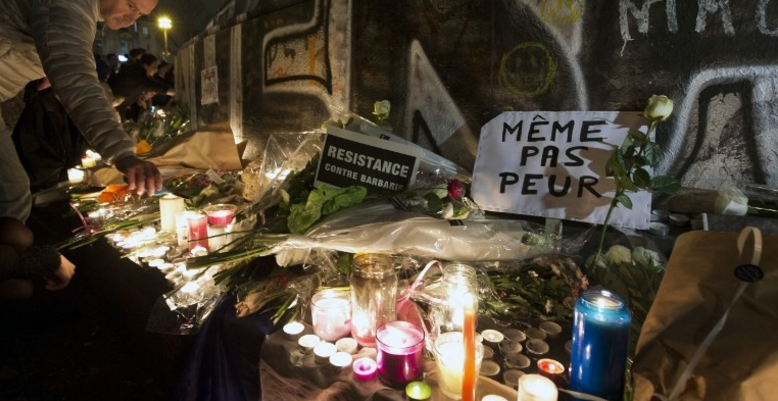
In wake of the Paris attacks, the European Federation of Journalists (EFJ) has expressed its solidarity with the families and friends of the journalist Guillaume B. Decherf and cameraman Mathieu Hoche, as well as all citizens who are affected by the attack on Friday 13 November. “The French people has responded admirably to the terrorists by declaring loudly that they were not afraid. So as the journalists who are working round the clock bringing citizens information about the attack,” said the EFJ General Secretary, Ricardo Gutierrez. “Journalists will not give in. As they have done it in the aftermath of…

Free Dawit Isaak

Imagine you are being locked away in a prison for 14 years without trial for crimes you have not committed? On Sunday 15 November, you can experience the injustice facing the Swedish-Eritrean journalist, Dawit Isaak, who has been detailed Eritrea for 14 years now. To share the solidarity with Dawit, you will be put in a  four square metres of pitch dark and stifled surroundings symbolize Dawit Isaak’s prison cell for 15 minutes. The European Federation of Journalists (EFJ) will join a campaign launched by the Belgian branch of the world association of writers, PEN, to highlight the struggle of…

Trade Secrets: Legitimate use for journalists or not is still the question

In view of the ongoing trilogue negotiations, informal tripartite meetings attended by representatives of the European Parliament, the Council and the Commission on reaching the proposal for an EU directive (also know as trade secrets directive) “on the protection of undisclosed know-how and business information against their unlawful acquisition, use and disclosure”, journalists’ and media organisations expressed their concern regarding a potential damaging impact on press freedom. A letter has been sent to the rapporteur, shadow-rapporteurs, members of the European Parliament of the Legal Committee, the Permanent representatives of the EU member states (COREPER) and relevant  contacts in the European…

Serbia must avoid creating hostile environment for investigative journalists #BIRNunderFire

The European Federation of Journalists (EFJ) has received worrying reports concerning a smear campaign against independent and investigative journalists working for the Balkan Investigative Reporting Network (BIRN), the Centre for Investigative Journalist (CINS) and the Crime and Corruption Reporting Network (KRIK) in Serbia. According to BIRN Serbia, the Serbian Prime minister Aleksandar Vucic publicly supported “the theory that independent investigative centres in Serbia are paid by foreign donors to destabilise the government” and the prime minister “is using his position to dismiss opponents, qualifying them as mobsters, thieves and criminals despite no evidence or opportunity for them to defend themselves. This creates an…