European Federation of Journalists

Freelance

The importance of cooperation between freelancers across borders in Europe has increased over the years. Colleagues inspire each other; union workers share ideas and experiences.

Contracts and fees, training, authors’ rights, and professional standards are all key issues for the growing – and ever more precarious- freelance community of journalists. Innovative financing models, which can give freelance journalists new possibilities/niches in media, are being explored by the EFJ and its affiliates.

The European Federation of Journalists (EFJ) Authors’ Rights Expert Group (AREG) and the Freelance Experts’ Group (FREG) strive to defend and to promote freelance rights. We say to our staff colleagues: in order to defend your rights and conditions of work, you can do nothing more effective than to promote the highest standards for freelances.

The Freelance Experts’ Group’s focus for the coming years’ is based on the EFJ’s working programme:

  • collective bargaining for all, including freelancers;
  • ensure competition law does not undermine the right to collective bargaining;
  • organising and training for freelances including on safety.

Links to freelance sites of our unions

Members: Erik Back, Marta Barcenilla, Michele Catanzaro, Baptiste Cessieux, Victoria da Silva, Renate Gensch, Michael Hirschler, Laura Jõgar, Ajdin Kamber, Andrus Klikunou, Vânia Maia, Maria Markus, Oddrun Midtbø, Andrea Milat, Jelena L. Petković, Céline Pierre-Magnani, Claudio Silvestri, Heini Hietikko (reserve), Ana María Martinez (reserve), João Miguel Rodrigues (reserve).
Actions

Council of Europe Culture Committee asks governments to strenghten the status of journalists

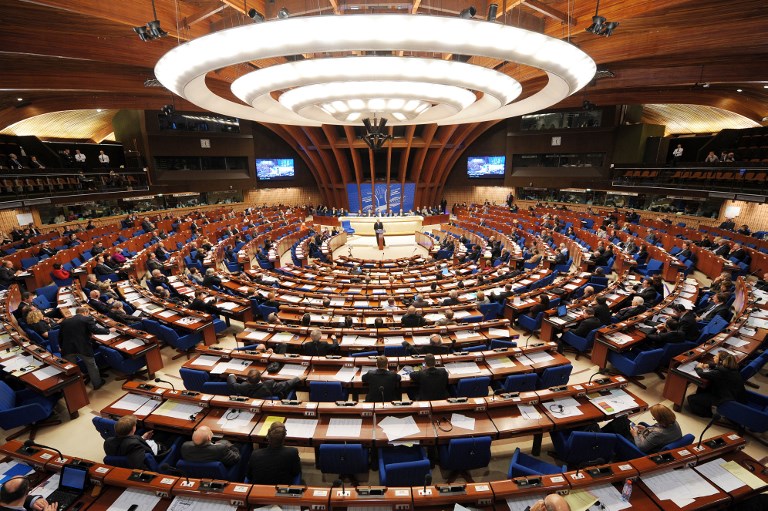
The Culture Committee of the Parliamentary Assembly of the Council of Europe (PACE) has adopted a draft resolution asking European governments to do more to protect media professionals, revising laws if necessary, as they state that media freedom is a “key prerequisite for the existence and development of a democratic society”. At a meeting in Bucharest on 4 December 2017, PACE Committee recognised the precarious nature of the current journalism profession, and the threats to journalistic values and freedoms. In response, PACE Committee unanimously adopted the draft resolution, asking governments of member states to assume their obligation to protect media professionals, to…

European Court: holiday pay for freelancers and bogus self-employed

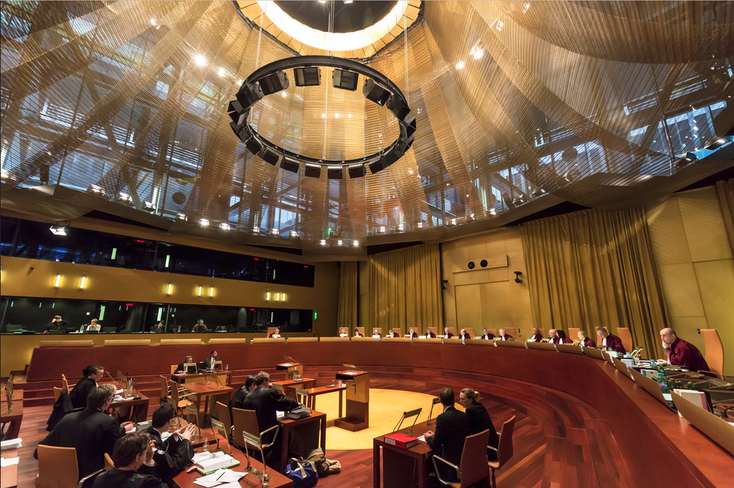
On 29 November 2017, the European Court of Justice ruled in favour of paid annual leave for self-employed and bogus self-employed workers. Now, anyone who has been bogus self-employed can demand additional payment for annual leave. Article 7 of Directive 2003/88/EC of the European Parliament and Council of 4 November, 2003, provides 4 weeks of paid annual leave for every worker, and the European Court has said that this must not be thwarted by employers. The case came to the European Court after a British case in which Mr King, retiring after 13 years of employment, sought to recover payment…

Study recommends EU action to protect atypical workers

A recent study explored ‘Temporary contracts, precarious employment, employees’ fundamental rights and EU employment law‘, commissioned by the European Parliament’s Policy Department for Citizens’ Rights and Constitutional Affairs at the request of the Committee on Petitions. The findings have implications for journalists, as atypical and precarious employment has been tied to media industries and digitisation. The study emphasises that precarious employment is a fundamental rights issue of enormous weight and significance within the EU’s normative order. Some groups, such as women and younger workers, are more affected by precarious employment. Self-employment, which affects many freelancers and journalists, is discussed in…

Contracts and collective bargaining for all: “Social Europe”

The European Federation of Journalists (EFJ), along with the European Trade Union Confederation (ETUC) and other European trade union organisations, submitted on 6 November its position on the 2nd phase consultation on the revision of the Written Statement Directive (931/55/EC) trying to extend the right for a written contract and social protection to self-employed workers. The EFJ, along with the ETUC, request in their response that Member States should ensure that all workers (including self-employed workers) have the right to fair remuneration in accordance with national law, collective agreements or practice at the appropriate level in conformity with national industrial…

Studies find precarious employment tied to digitalisation and the gig economy

The grey area between employment and self-employment, symptomatic in the media sector, has been highlighted by two recent studies focusing on online work and the “gig economy”. The separate 2017 studies, one by Eurofound (the European Foundation for the Improvement of Living and Working Conditions) and the other by Heyes and Hastings from the University of Sheffield, suggest a precarious status of employment for ever more workers. This precarity is tied to digitalisation and the “gig economy”. The study by Eurofound focuses on digital platform work. The most reliable estimate of this type of work among European Union member states is from the United Kingdom, where…

Today is the World Day for Decent Work!

Today is the World Day for Decent Work! A new survey from the International Federation of Journalists (IFJ) shows that unions have helped winning higher pay, saving jobs and securing new collective agreements over the past twelve months. The survey of 60 IFJ affiliates from every continent – released to coincide with World Day for Decent Work – shows that attacks on collective bargaining, low pay and a lack of rights for freelances are threatening to further undermine working conditions for journalists across the globe. A significant majority of unions surveyed highlighted a lack of collective bargaining, a lack of…