European Federation of Journalists

IFJ-EFJ Regional Development Fund

Czech Republic


The European Federation of Journalists (EFJ) signed an agreement on 18 December 2014 with the Union of Journalists and Media Workers of Czech Republic (OSNPM) in order to investigate the working conditions of Czech journalists and media workers. The project is implemented with the cooperation of Judith Reitstatter, from the Austrian union GPA-djp.

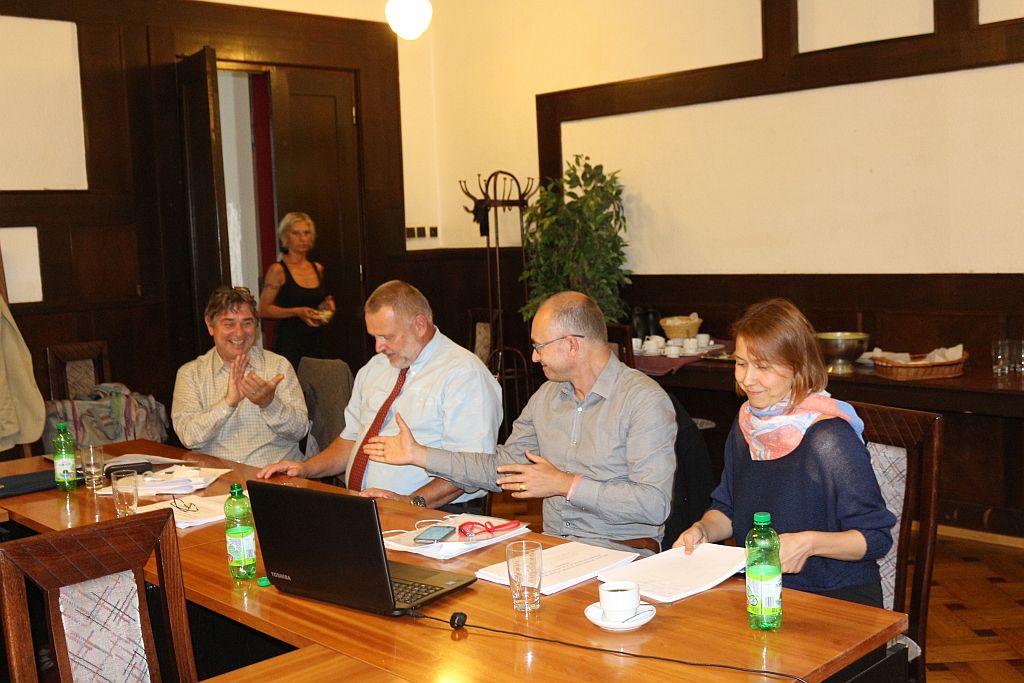
The online survey was launched on 19 May 2015. Around 2,500 journalists and media workers were invited to participate to the survey. The EFJ, OSNPM and GPA-djp analysed together the main outcomes of the survey during a round table conference, on 19 August 2015, in Prague.

The questionnaire focus mainly on labour rights. “This area is underestimated by the Czech media, journalists themselves and their employers as well,” explains Zdeněk Kučera, chairman of OSNPM.

“Over the past 25 years, journalists’ attention was focused primarily toward freedom of speech, access to information, relations with media ownership and the development of media houses. These are very serious topics. However, journalists’ status remained grossly underrated. A specific problem is the status of freelance journalists, which are increasingly numerous, particularly in regional media.”

The main findings of the survey are available on the EFJ website, here.
FOCUS EFJ

Side event of our project: a high school magazines national competition (Nejinspirativnější středoškolský časopis 2015). Here are the winners (picture credit: F. Cakl):

Czech

Contact details: OSNPM, e-mail: odborovy-svaz-novinaru@seznam.cz, website: http://www.odborovysvaznovinaru.cz


Slovakia

The European Federation of Journalists (EFJ), its Austrian union GPA-djp and the Slovak Union of Journalists (Slovenský syndikát novinárov) organized a meeting in Vienna, on 30 October 2014. Trade unionists and media students from both countries met in GPA-djp offices, in Vienna. The discussion on media convergence was launched by Dr. Roman Hummel, from the university of Salzburg.

Contact details: Judith Reitstaetter, judith.reitstaetter (at) gpa-djp.at


Estonia

The European Federation of Journalists (EFJ), the Estonian Union of Journalists (Eesti Ajakirjanike Liit, EAL) and the Union of Journalists in Finland (Suomen Journalistiliitto, UJF) agreed on 6 February 2015 to jointly implement the project “Workshops to Strengthen Journalists’ organisation in Estonia”.

The main objective of the project is to strengthen journalists’ organisation in Estonia, through three activities:

  • a freelance workshop in Helsinki,
  • a radio & TV negotiators workshop in Helsinki,
  • an authors’ rights seminar in Tallinn.

An action plan will be proposed for the next period.

Contact details: Juha Rekola, Juha.Rekola (at) journalistiliitto.fi, and Helle Tiikmaa, helle (at) eal.ee
 

Actions

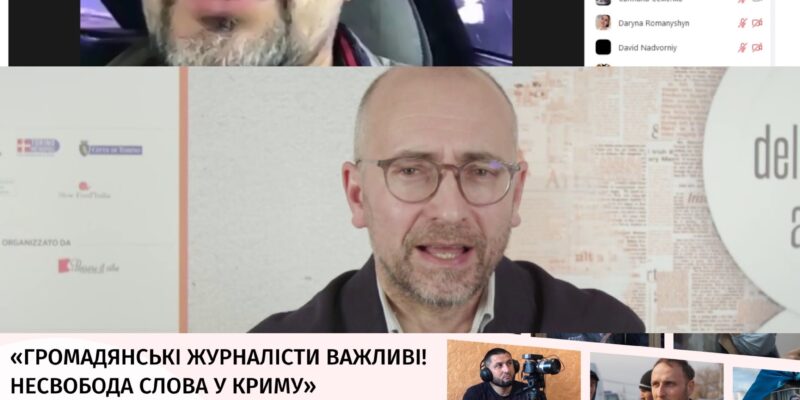
EFJ calls for the immediate release of Crimean journalists

Ten journalists are currently detained in Crimea and another five have short-term administrative arrests, according to the National Union of Journalists of Ukraine (NUJU). The European Federation of Journalists (EFJ) joined its affiliate in Ukraine in calling for their immediate release. A solidarity action was organised on 3 December 2021 by the NUJU during a special online meeting. Almost 300 journalists, public figures, human rights activists, students and lecturers in journalism universities showed support to the imprisoned journalists, as part of the online course for journalists “In Focus – CRIMEA”. They are citizen journalists, most of them are representatives of…

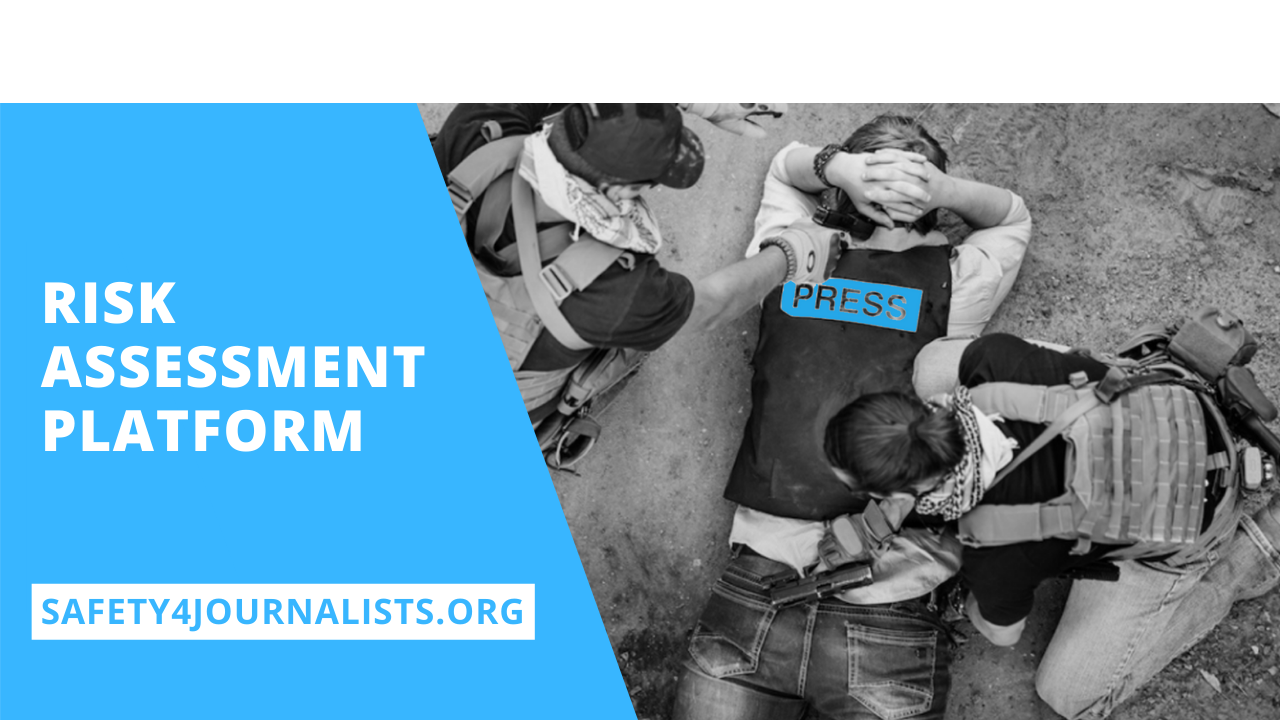
Takeaways from webinar on safety of journalists

The Center for Media Pluralism and Media Freedom (CMPF) organised a webinar with the School for Journalists and Media Practitioners on the safety of journalistson 6 December 2021. EFJ Director Renate Schroeder moderated the debate on “Ensuring the Safety of Journalists: a constant battle”, with Audrius Perkauskas, deputy head of unit “Audiovisual and Media Services Policy” at the European Commission’s Directorate-General for Communications Networks, Content and Technology (CONNECT), Urška Umek, Head of Media Unit at the Council of Europe’s Information Society Department,  Mária Žuffová, research associate at the Center for Media Pluralism and Media Freedom at the European University Institute,…

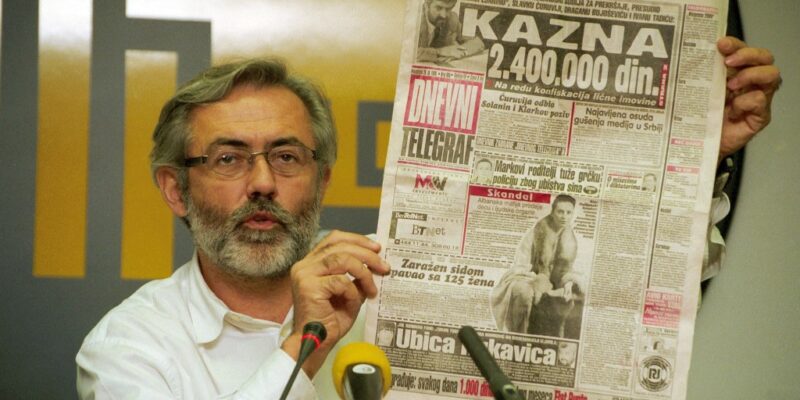
Serbia: MFRR welcomes renewed convictions for murder of Slavko Ćuruvija

Guilty verdicts in retrial: an important step in long fight for justice The European Federation of Journalists (EFJ) today joined the partners of the Media Freedom Rapid Response (MFRR)  in welcoming the confirmed guilty verdicts handed down to four former officials in the Serbian state security services for the murder in 1999 of leading journalist and editor-in-chief Slavko Ćuruvija. The decision by the Higher Court in Belgrade to reaffirm the convictions in the retrial is an important victory for the family and all those involved in the long fight for justice for his assassination and represents another important milestone in the fight…

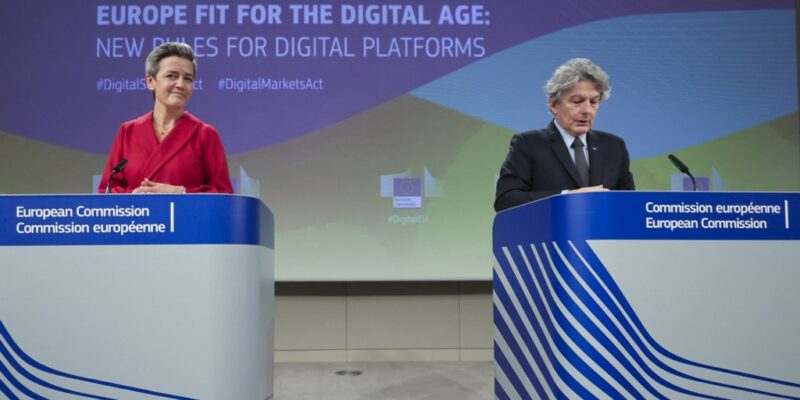
EU Digital Services Act: journalistic content must be protected from interference by online platforms

Updated (03/12/2021) The European Federation of Journalists (EFJ) welcomed the proposed EU Digital Services Act as a long overdue and crucial tool to create a safer, fairer and more accountable online environment. The journalists’ community believes that the DSA must be stronger in order to guarantee a digital media ecosystem based on trust and audience engagement, in particular in the fight against disinformation. Today the platforms determine who sees when and what – based on their content recommendation systems, algorithms and terms and conditions. The power of the big platforms and gatekeepers has contributed to the market failure we face…

Serbia: Penal Code amendments require an open and comprehensive debate

The Media Freedom Rapid Response (MFRR) and the Independent Journalists’ Association of Serbia (IJAS) express concern over the limited time and space available to openly debate various amendments of the Penal Code proposed by the Ministry of Justice of Serbia. While well intentioned, the amendments are problematic from a freedom of expression perspective. Our civil society organisations call for a broader and open consultation that comprehensively integrates the implications of the amendments on the exercise of human rights in Serbia.  We recognise that journalists in Serbia face numerous threats to their physical safety and are often the target of harassment…

Belarus: the government intensifies its crackdown on independent journalists and media

Belarusian authorities arrested and searched the houses of several independent journalists across the country for simply doing their job on 1 December. The European and International Federations of Journalists (EFJ-IFJ) join their Belarussian affiliate, the Belarusian Association of Journalists (BAJ), in solidarity with the journalists affected and condemn the government’s systematic harassment of independent journalists. The Belarusian police arrested at least four journalists in three different locations across the country on charges of “funding anti-government protests”. The officers also confiscated some of their equipment. According to BAJ, journalists Valeryia Lepeshava and Siarhei Niarouny were detained by the Belarusian police in the eastern…