European Federation of Journalists

IFJ-EFJ Regional Development Fund

Czech Republic


The European Federation of Journalists (EFJ) signed an agreement on 18 December 2014 with the Union of Journalists and Media Workers of Czech Republic (OSNPM) in order to investigate the working conditions of Czech journalists and media workers. The project is implemented with the cooperation of Judith Reitstatter, from the Austrian union GPA-djp.

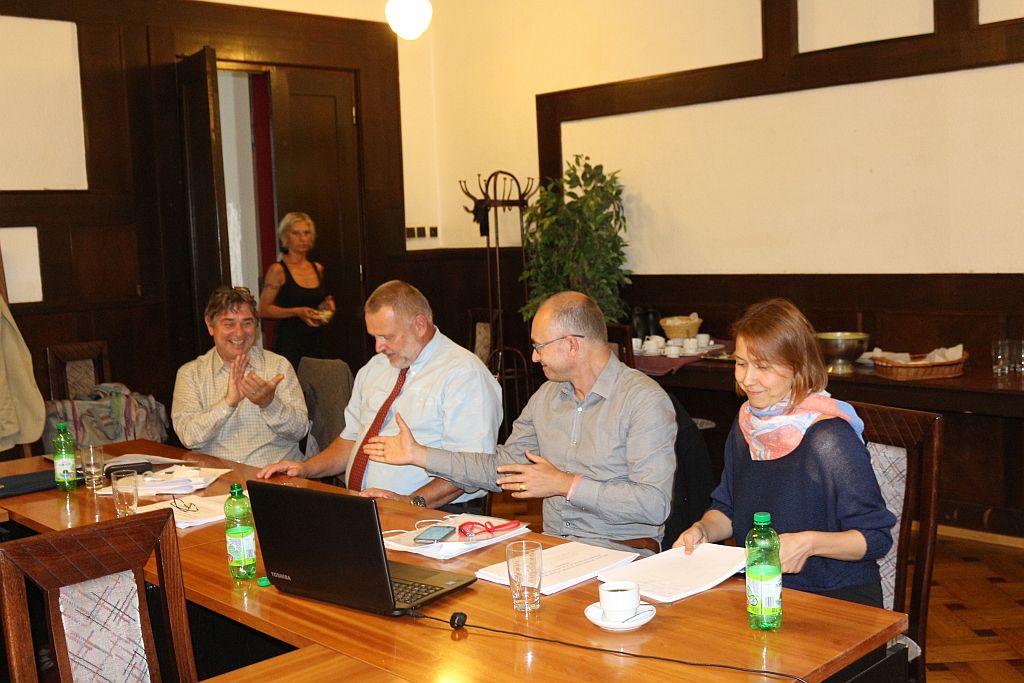
The online survey was launched on 19 May 2015. Around 2,500 journalists and media workers were invited to participate to the survey. The EFJ, OSNPM and GPA-djp analysed together the main outcomes of the survey during a round table conference, on 19 August 2015, in Prague.

The questionnaire focus mainly on labour rights. “This area is underestimated by the Czech media, journalists themselves and their employers as well,” explains Zdeněk Kučera, chairman of OSNPM.

“Over the past 25 years, journalists’ attention was focused primarily toward freedom of speech, access to information, relations with media ownership and the development of media houses. These are very serious topics. However, journalists’ status remained grossly underrated. A specific problem is the status of freelance journalists, which are increasingly numerous, particularly in regional media.”

The main findings of the survey are available on the EFJ website, here.
FOCUS EFJ

Side event of our project: a high school magazines national competition (Nejinspirativnější středoškolský časopis 2015). Here are the winners (picture credit: F. Cakl):

Czech

Contact details: OSNPM, e-mail: odborovy-svaz-novinaru@seznam.cz, website: http://www.odborovysvaznovinaru.cz


Slovakia

The European Federation of Journalists (EFJ), its Austrian union GPA-djp and the Slovak Union of Journalists (Slovenský syndikát novinárov) organized a meeting in Vienna, on 30 October 2014. Trade unionists and media students from both countries met in GPA-djp offices, in Vienna. The discussion on media convergence was launched by Dr. Roman Hummel, from the university of Salzburg.

Contact details: Judith Reitstaetter, judith.reitstaetter (at) gpa-djp.at


Estonia

The European Federation of Journalists (EFJ), the Estonian Union of Journalists (Eesti Ajakirjanike Liit, EAL) and the Union of Journalists in Finland (Suomen Journalistiliitto, UJF) agreed on 6 February 2015 to jointly implement the project “Workshops to Strengthen Journalists’ organisation in Estonia”.

The main objective of the project is to strengthen journalists’ organisation in Estonia, through three activities:

  • a freelance workshop in Helsinki,
  • a radio & TV negotiators workshop in Helsinki,
  • an authors’ rights seminar in Tallinn.

An action plan will be proposed for the next period.

Contact details: Juha Rekola, Juha.Rekola (at) journalistiliitto.fi, and Helle Tiikmaa, helle (at) eal.ee
 

Actions

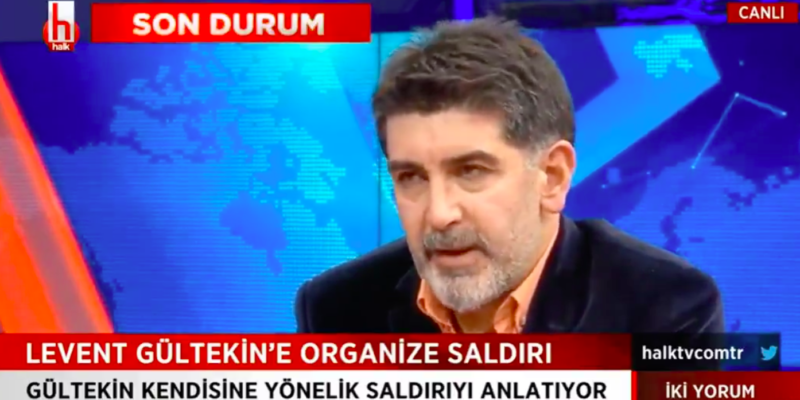
Turkey: Journalist Levent Gültekin assaulted in front of TV Halk station

In the afternoon on 8 March, journalist Levent Gültekin was attacked by a group of around 20 people just metres away from his workplace at the Halk TV station in Bakırköy, Istanbul. The European Federation of Journalists and its Turkish affiliates, the Journalists’ Union of Turkey (TGS), the Journalists’ Association of Turkey (TGC), the Journalists’ Association (GCD) and the Broadcast and Printing Press Workers Union, strongly condemn this brutal aggression and call for thorough investigations. The roots of such attacks, namely hatred-stirring, politically motivated online threats and insults, must also be addressed. The attack took place when Gültekin was on his way to the station as…

EFJ calls on the UN Human Rights Council to create an accountability mechanism on Belarus

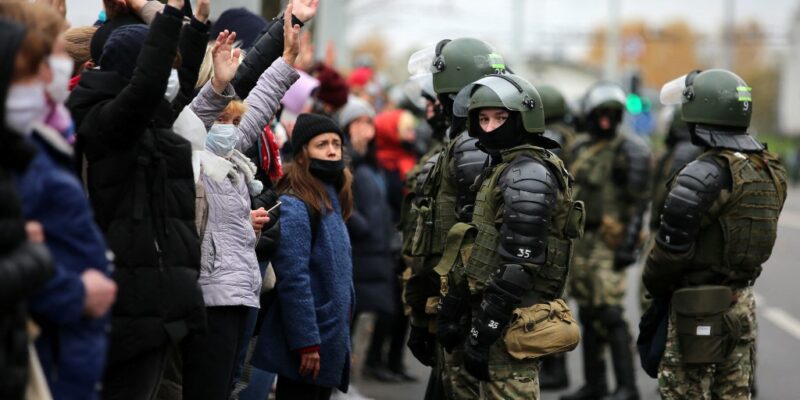
Belarus’ human rights situation has deteriorated further in recent weeks. The European Federation of Journalists (EFJ) believes this deterioration should be viewed in the context of the grave and systemic human rights violations the authorities committed in the run-up to the 2020 fraudulent presidential election and in its aftermath, for which there has been no accountability. The EFJ joins Amnesty International, the International Federation for Human Rights and Article19 in demanding action by the UN Human Rights Council to establish a new mechanism assisting the process of accountability for human rights violations in Belarus. Developments in recent weeks mark a…

European Union must act on media freedom in Poland, Hungary and Slovenia

Ahead of a major debate at the European Parliament on efforts by governments to silence free media, the European Federation of Journalists (EFJ) joined 18 other organisations in calling on the European Union to take decisive action to defend independent journalism and media freedom in Hungary, Poland and Slovenia. —————– Statement to Members of the European Parliament ahead of the March 10 debate: ‘Government’s attempt to silence free media in Poland and in Hungary’ Dear Members of the European Parliament, Article 11 of the European Union’s Charter on Fundamental Rights is under threat as media freedom and media pluralism deteriorates alarmingly…

Russia: journalist Ilya Azar sentenced to 15 days for allegedly organising protests

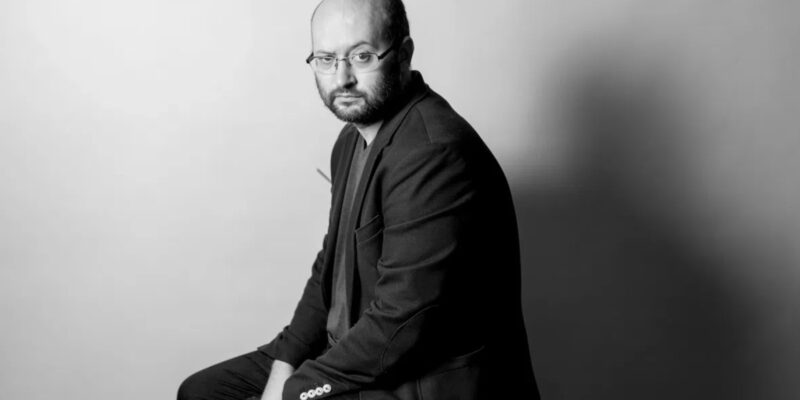
On March 3, 2021, the Tverskoy District Court in Moscow, Russia, sentenced journalist Ilya Azar, a special correspondent for the Russian newspaper Novaya Gazeta, to 15 days of detention and a fine of 150,000 rubles (1,680 euros) for allegedly organising illegal protests on Facebook. On March 5, the Moscow City Court rejected Azar’s appeal and said it would keep him in custody to serve his detention, according to the Russian Union of Journalists (RUJ). The court ruled that two of Azar’s posts on his Facebook page – one from March 2020, supporting a rally against constitutional amendments to allow President…

International Women’s Day: More support for female journalists as Covid sets back gender equality 

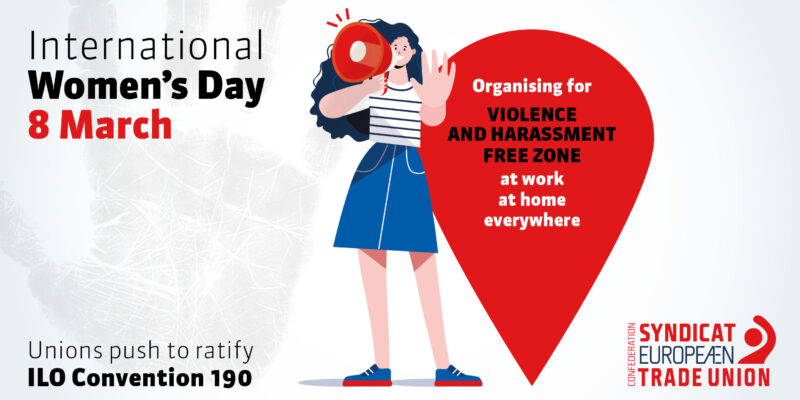
On 8 March International Women’s Day, the European Federation of Journalists (EFJ) calls for more vigorous actions to be made by governments and employers’ organisations to improve gender equality as the Covid crisis has deepened gender inequality.  Members of the EFJ experts groups on labour rights and freelances have looked at the working conditions of journalists during this period and noticed that working-from-home and lockdown policy has had a much greater impact on female journalists.  In Germany, according to a study from the Hans-Böckler Stiftung, women spend 1.7 hours more on work concerning family duties, since men tend to work…

Employers & governments not doing enough to tackle violence and harassment at work

The European Federation of Journalists (EFJ) joins the European Trade Union Confederation (ETUC) in calling on employers, legislators and law enforcement bodies to take action to tackle violence and harassment at work. Carried out January-February 2021, the ETUC survey of women union leaders in 21 European countries found that only 16% say that employers have updated their policies to address online harassment associated with telework; 23% thought that employers did enough to tackle violence and harassment at work, including online; 16% think their national laws are strong enough to tackle violence and harassment at work, including online; 17% believe their…