European Federation of Journalists

IFJ-EFJ Regional Development Fund

Czech Republic


The European Federation of Journalists (EFJ) signed an agreement on 18 December 2014 with the Union of Journalists and Media Workers of Czech Republic (OSNPM) in order to investigate the working conditions of Czech journalists and media workers. The project is implemented with the cooperation of Judith Reitstatter, from the Austrian union GPA-djp.

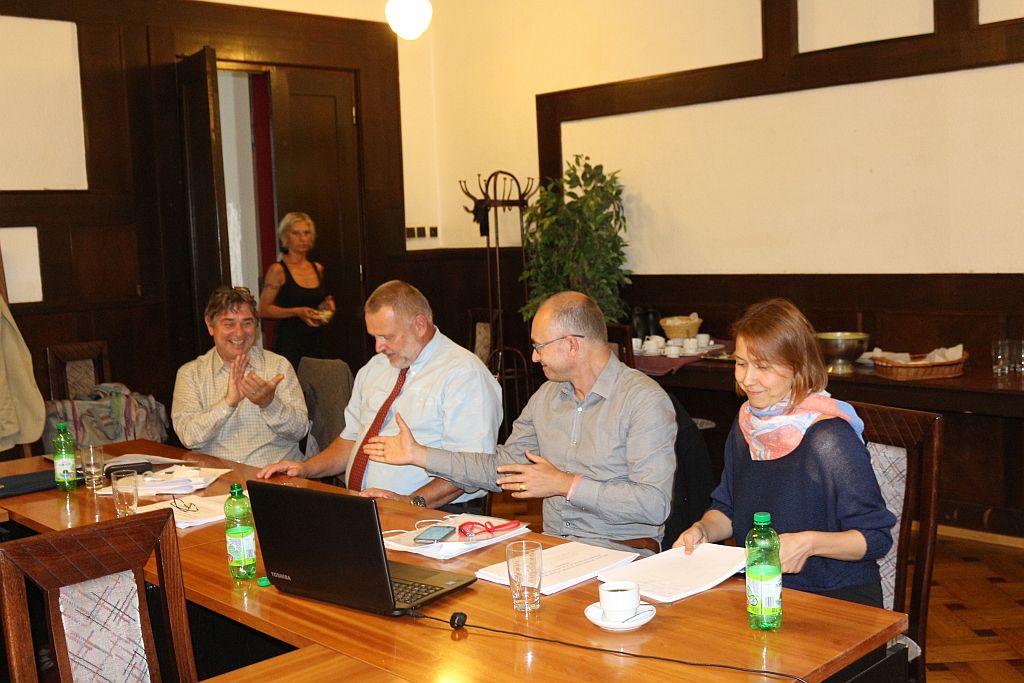
The online survey was launched on 19 May 2015. Around 2,500 journalists and media workers were invited to participate to the survey. The EFJ, OSNPM and GPA-djp analysed together the main outcomes of the survey during a round table conference, on 19 August 2015, in Prague.

The questionnaire focus mainly on labour rights. “This area is underestimated by the Czech media, journalists themselves and their employers as well,” explains Zdeněk Kučera, chairman of OSNPM.

“Over the past 25 years, journalists’ attention was focused primarily toward freedom of speech, access to information, relations with media ownership and the development of media houses. These are very serious topics. However, journalists’ status remained grossly underrated. A specific problem is the status of freelance journalists, which are increasingly numerous, particularly in regional media.”

The main findings of the survey are available on the EFJ website, here.
FOCUS EFJ

Side event of our project: a high school magazines national competition (Nejinspirativnější středoškolský časopis 2015). Here are the winners (picture credit: F. Cakl):

Czech

Contact details: OSNPM, e-mail: odborovy-svaz-novinaru@seznam.cz, website: http://www.odborovysvaznovinaru.cz


Slovakia

The European Federation of Journalists (EFJ), its Austrian union GPA-djp and the Slovak Union of Journalists (Slovenský syndikát novinárov) organized a meeting in Vienna, on 30 October 2014. Trade unionists and media students from both countries met in GPA-djp offices, in Vienna. The discussion on media convergence was launched by Dr. Roman Hummel, from the university of Salzburg.

Contact details: Judith Reitstaetter, judith.reitstaetter (at) gpa-djp.at


Estonia

The European Federation of Journalists (EFJ), the Estonian Union of Journalists (Eesti Ajakirjanike Liit, EAL) and the Union of Journalists in Finland (Suomen Journalistiliitto, UJF) agreed on 6 February 2015 to jointly implement the project “Workshops to Strengthen Journalists’ organisation in Estonia”.

The main objective of the project is to strengthen journalists’ organisation in Estonia, through three activities:

  • a freelance workshop in Helsinki,
  • a radio & TV negotiators workshop in Helsinki,
  • an authors’ rights seminar in Tallinn.

An action plan will be proposed for the next period.

Contact details: Juha Rekola, Juha.Rekola (at) journalistiliitto.fi, and Helle Tiikmaa, helle (at) eal.ee
 

Actions

“Information Disorders”: Council of Europe committee discusses recommendations to tackle fake news

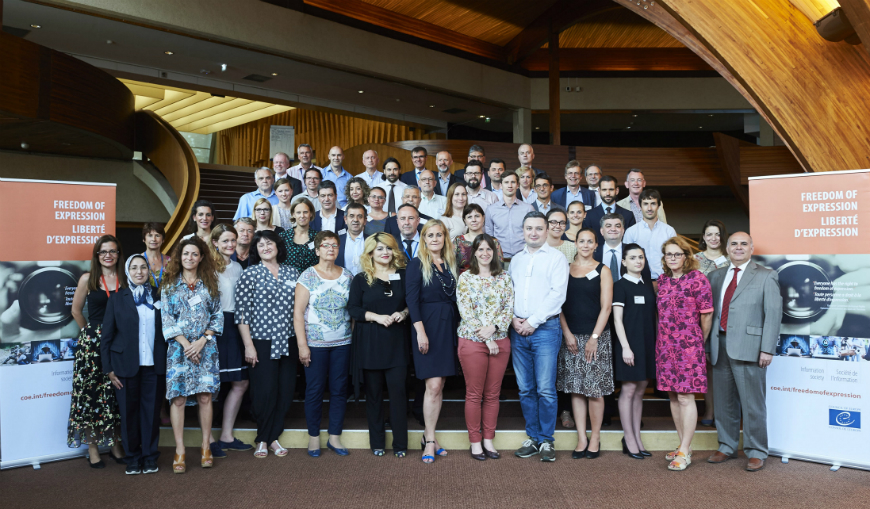
At the meeting of the Council of Europe Steering Committee on Media and Information Society (CDMSI), from 5 to 8 December 2017, participants discussed a series of documents and recommendations currently relevant for journalists and media workers. A study by Claire Wardle and Hossein Derakhshan, commissioned by the Council of Europe, highlighted the various aspects of what the authors call “Information Disorders” (not “fake news”). These information disorders come in three forms: misinformation, disinformation and malinformation. Information disorders can be organised or unorganised, and are emotional, visual and repetitive. To counter information disorders, the authors recommend action by content providers…

Republic of Macedonia: High time to protect Media Freedom

Report on the April 2017 Joint International Mission In a joint mission, the European Centre for Press and Media Freedom (ECPMF), the European Federation of Journalists (EFJ), the South East Europe Media Organisation (SEEMO), and the Osservatorio Balcani e Caucaso Transeuropa (OBCT) observed the situation of journalists and media workers in the Republic of Macedonia. The on-site research in Macedonia in April 2017 was motivated by the deterioration of the safety of journalists through the increasing number in verbal and physical attacks. This report indicates that through complex set of mechanism the previous government, as well as authorities, gave their…

Greece: journalists’ union ESIEMTH and two municipal media attacked in Thessaloniki

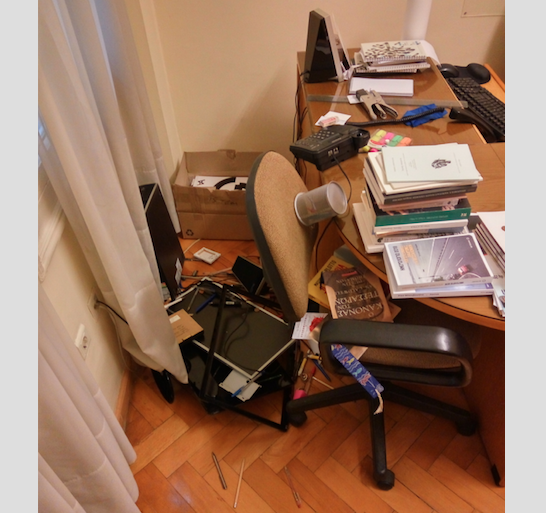
The European and International Federation of Journalists (EFJ/IFJ) condemn the attacks that took place in Thessaloniki (Greece) on 20 and 21 December 2017, against the Journalists’ Union of Macedonia and Thrace Daily Newspapers (ESIEMTH) and two municipal media. Today at noon, the ESIEMTH headquarters were attacked by around ten hooded assailants. The staff were threatened and asked not to move as the intruders said that “an intervention (was) about to take place”. They destroyed two PCs, a TV set and other material such as chairs and a printer before leaving the office. ESIEMTH told the EFJ that the police has launched an investigation. Yesterday, what…

EU directive on transparent and predictable working conditions

Responding today to the European Commission’s proposal for a Directive on Transparent and Predictable Working Conditions, Esther Lynch, ETUC Confederal Secretary, welcomed some important improvements, although this reform is not the game-changer unions needed or expected. “Many of the provisions in this new measure, replacing the Written Statement Directive, represent a significant improvement. For example, all workers will be entitled to a written statement from the first day of employment. This means seasonal agriculture, domestic, on-demand, intermittent, voucher-based and platform workers will be effectively covered. And the Directive goes further in proposing very helpful provisions to ensure that online platforms…

Eurobarometer survey shows whistleblowing is seen as difficult and dangerous

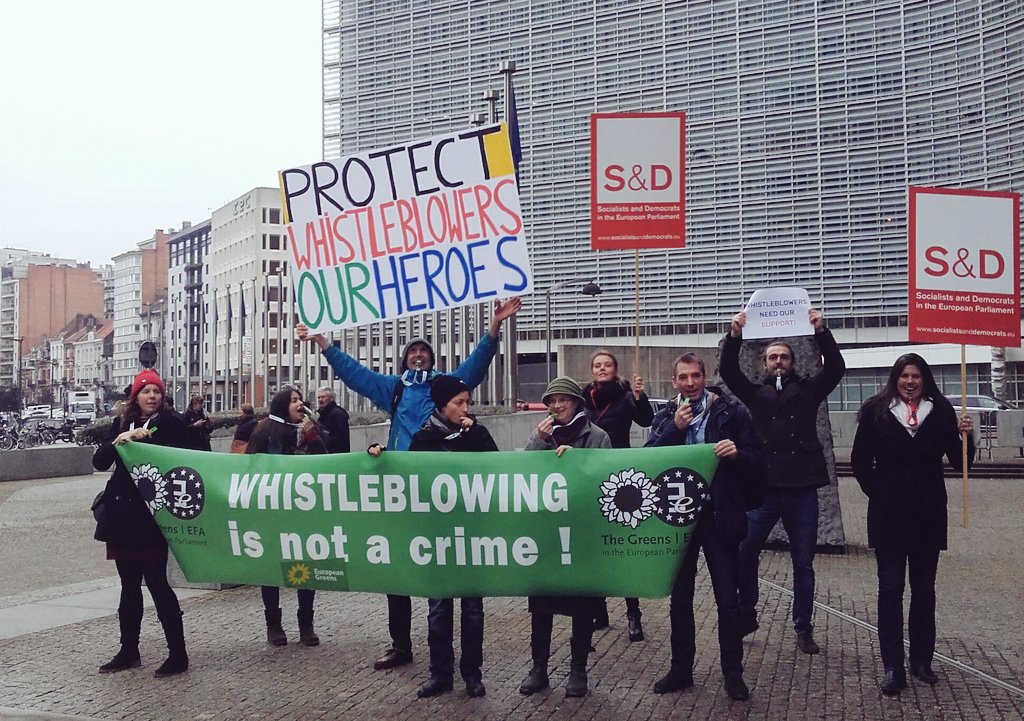
The latest Special Eurobarometer on Corruption, published on 19 December 2017, shows a widespread perception that whistleblowers across Europe face a difficult and dangerous situation. This collection of surveys across 28 European Union member states, conducted by the European Commission, focuses on corruption, giving a clear overview of the state of corruption in Europe. According to the results, more than two thirds (68%) of Europeans think that corruption is widespread in their country. This number has fallen by 8% since 2013, however the majority of Europeans (73%) still believe that there is corruption in national public institutions, and that the…

Council of Europe Culture Committee asks governments to strenghten the status of journalists

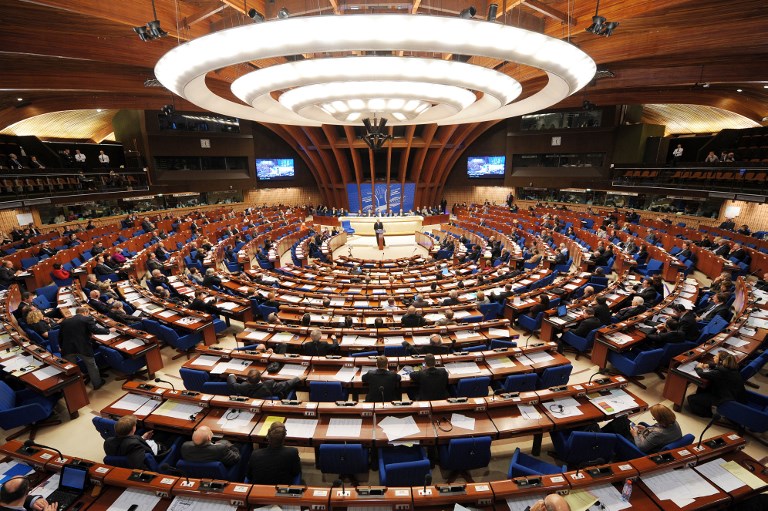
The Culture Committee of the Parliamentary Assembly of the Council of Europe (PACE) has adopted a draft resolution asking European governments to do more to protect media professionals, revising laws if necessary, as they state that media freedom is a “key prerequisite for the existence and development of a democratic society”. At a meeting in Bucharest on 4 December 2017, PACE Committee recognised the precarious nature of the current journalism profession, and the threats to journalistic values and freedoms. In response, PACE Committee unanimously adopted the draft resolution, asking governments of member states to assume their obligation to protect media professionals, to…