European Federation of Journalists

IFJ-EFJ Regional Development Fund

Czech Republic


The European Federation of Journalists (EFJ) signed an agreement on 18 December 2014 with the Union of Journalists and Media Workers of Czech Republic (OSNPM) in order to investigate the working conditions of Czech journalists and media workers. The project is implemented with the cooperation of Judith Reitstatter, from the Austrian union GPA-djp.

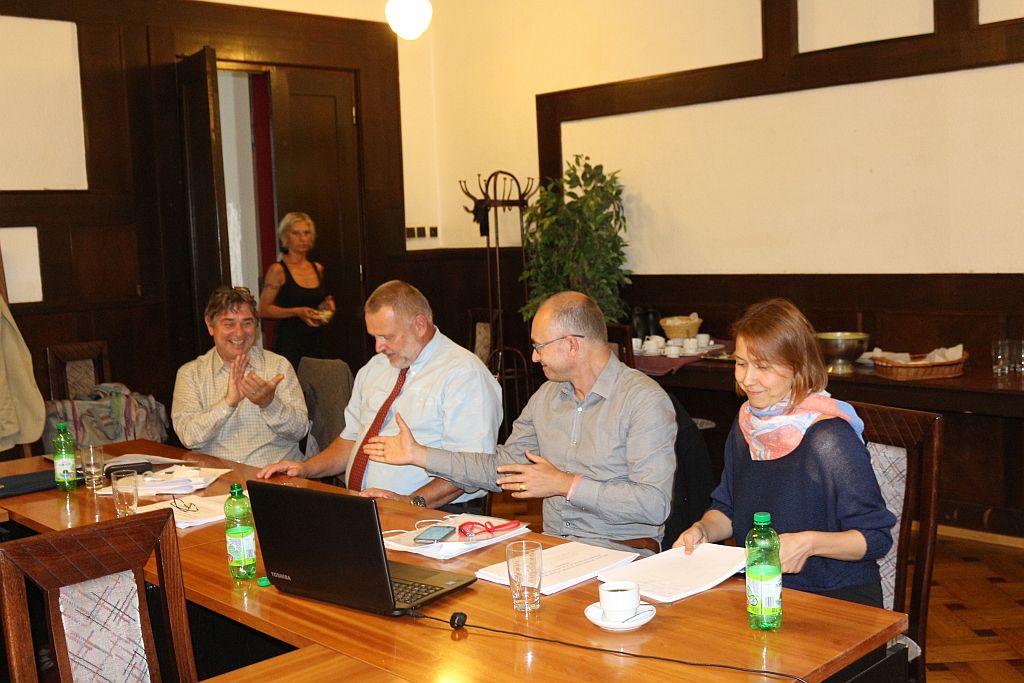
The online survey was launched on 19 May 2015. Around 2,500 journalists and media workers were invited to participate to the survey. The EFJ, OSNPM and GPA-djp analysed together the main outcomes of the survey during a round table conference, on 19 August 2015, in Prague.

The questionnaire focus mainly on labour rights. “This area is underestimated by the Czech media, journalists themselves and their employers as well,” explains Zdeněk Kučera, chairman of OSNPM.

“Over the past 25 years, journalists’ attention was focused primarily toward freedom of speech, access to information, relations with media ownership and the development of media houses. These are very serious topics. However, journalists’ status remained grossly underrated. A specific problem is the status of freelance journalists, which are increasingly numerous, particularly in regional media.”

The main findings of the survey are available on the EFJ website, here.
FOCUS EFJ

Side event of our project: a high school magazines national competition (Nejinspirativnější středoškolský časopis 2015). Here are the winners (picture credit: F. Cakl):

Czech

Contact details: OSNPM, e-mail: odborovy-svaz-novinaru@seznam.cz, website: http://www.odborovysvaznovinaru.cz


Slovakia

The European Federation of Journalists (EFJ), its Austrian union GPA-djp and the Slovak Union of Journalists (Slovenský syndikát novinárov) organized a meeting in Vienna, on 30 October 2014. Trade unionists and media students from both countries met in GPA-djp offices, in Vienna. The discussion on media convergence was launched by Dr. Roman Hummel, from the university of Salzburg.

Contact details: Judith Reitstaetter, judith.reitstaetter (at) gpa-djp.at


Estonia

The European Federation of Journalists (EFJ), the Estonian Union of Journalists (Eesti Ajakirjanike Liit, EAL) and the Union of Journalists in Finland (Suomen Journalistiliitto, UJF) agreed on 6 February 2015 to jointly implement the project “Workshops to Strengthen Journalists’ organisation in Estonia”.

The main objective of the project is to strengthen journalists’ organisation in Estonia, through three activities:

  • a freelance workshop in Helsinki,
  • a radio & TV negotiators workshop in Helsinki,
  • an authors’ rights seminar in Tallinn.

An action plan will be proposed for the next period.

Contact details: Juha Rekola, Juha.Rekola (at) journalistiliitto.fi, and Helle Tiikmaa, helle (at) eal.ee
 

Actions

New report analyses journalism education in South East Europe

A new report “Back to the Drawing Board: Crafting the Ideal Journalism Education Curricula for South East Europe”, published in November 2017, analysed the current state of journalistic education in Albania, Bosnia and Herzegovina, Kosovo, Macedonia, Montenegro and Serbia. The main goal of the research is to create a set of indicators to evaluate study curricula in journalism across the SEE region. These indicators are to assist journalism faculties in ascertaining whether their curricula in journalism correspond to the overall state of the media in their countries and whether they enable students to acquire adequate journalism skills to help them maintain high professional…

Contracts and collective bargaining for all: “Social Europe”

The European Federation of Journalists (EFJ), along with the European Trade Union Confederation (ETUC) and other European trade union organisations, submitted on 6 November its position on the 2nd phase consultation on the revision of the Written Statement Directive (931/55/EC) trying to extend the right for a written contract and social protection to self-employed workers. The EFJ, along with the ETUC, request in their response that Member States should ensure that all workers (including self-employed workers) have the right to fair remuneration in accordance with national law, collective agreements or practice at the appropriate level in conformity with national industrial…

Studies find precarious employment tied to digitalisation and the gig economy

The grey area between employment and self-employment, symptomatic in the media sector, has been highlighted by two recent studies focusing on online work and the “gig economy”. The separate 2017 studies, one by Eurofound (the European Foundation for the Improvement of Living and Working Conditions) and the other by Heyes and Hastings from the University of Sheffield, suggest a precarious status of employment for ever more workers. This precarity is tied to digitalisation and the “gig economy”. The study by Eurofound focuses on digital platform work. The most reliable estimate of this type of work among European Union member states is from the United Kingdom, where…

EFJ issues alert as Croatian reporter receives death threat

The European Federation of Journalists (EFJ) has released an alert to the Council of Europe, concerning a death threat against Croatian reporter Maja Sever. Sever is a journalist from the Croatian Television (HRT, public media service), and received a threat on October 29 via Facebook in response to her story about Nigerian refugees. The private Facebook message was racially charged, stating that “if you want to live with N***ers, go live in England, France or USA, but do not promote that Freemason’s multicultural politics in Croatia”. The aggressor also called Sever a “whore” and a “Yugoslav – mason whore”, according…

“Stop Hate, Stop Impunity”: EFJ Vice President writes letter from Russia

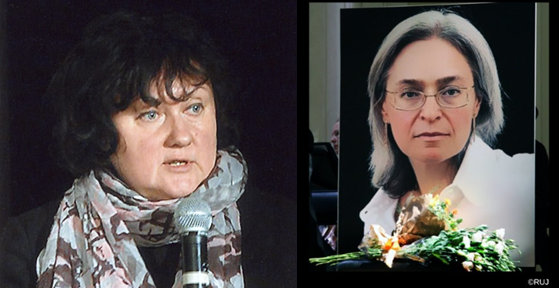
On 2 November 2017, the EFJ Vice President Nadezda Azgikhina wrote a letter from Russia. The letter focused on fighting against hate and impunity towards journalists. Here, the EFJ publishes this letter: The first conference devoted to Impunity in Russia took place just before the Moscow IFJ Congress in 2007. It focused mainly on the assassination of Anna Politkovskaya, the journalist murdered on 7 October 2006, and focused on other colleagues who were murdered too. For the first time, a list of deceased Russian journalists, prepared by Glasnost Defense Foundation, was presented to the international professional community. It consisted of…

There can be no press freedom where journalists work in fear, end impunity!

Impunity is when threats, attacks and crimes against journalists go unpunished. It results in a high level of fear, intimidation, censorship and self-censorship that undermines press freedom, the public right to know and leaves victims and their relatives powerless. The European Federation of Journalists (EFJ) joins the International Federation of Journalists’ (IFJ) campaign to #endimpunity, which aims at holding governments and de facto governments accountable for their impunity records and denouncing any crimes targeting journalists that remain unpunished. Murder is the highest form of these crimes but all attacks targeting journalists that remain unpunished must be denounced. In Europe, the EFJ…