European Federation of Journalists

IFJ-EFJ Regional Development Fund

Czech Republic


The European Federation of Journalists (EFJ) signed an agreement on 18 December 2014 with the Union of Journalists and Media Workers of Czech Republic (OSNPM) in order to investigate the working conditions of Czech journalists and media workers. The project is implemented with the cooperation of Judith Reitstatter, from the Austrian union GPA-djp.

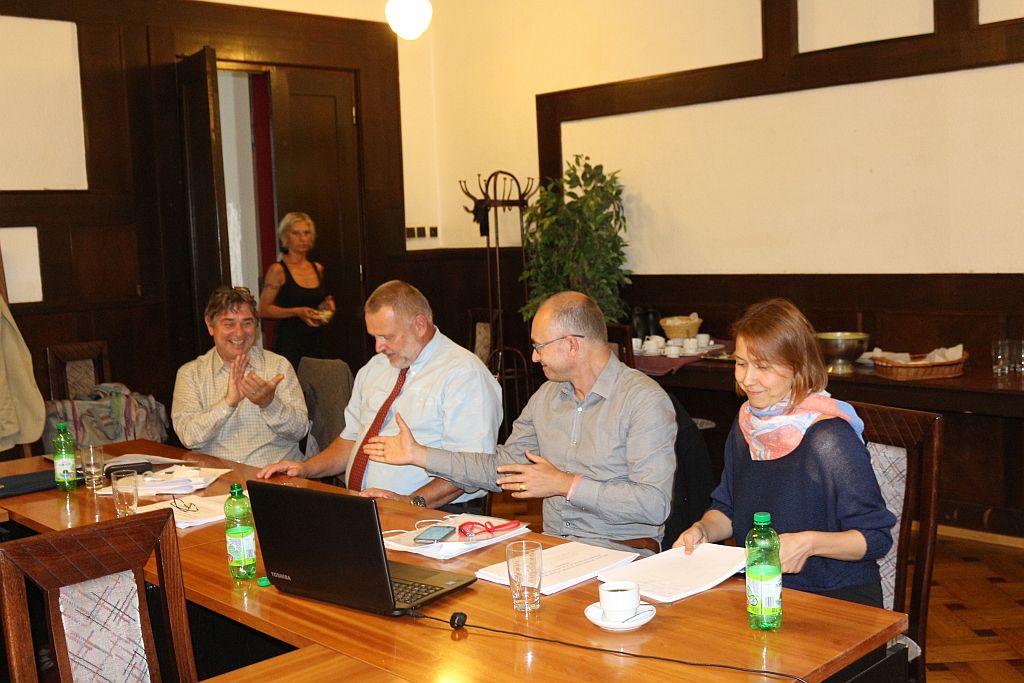
The online survey was launched on 19 May 2015. Around 2,500 journalists and media workers were invited to participate to the survey. The EFJ, OSNPM and GPA-djp analysed together the main outcomes of the survey during a round table conference, on 19 August 2015, in Prague.

The questionnaire focus mainly on labour rights. “This area is underestimated by the Czech media, journalists themselves and their employers as well,” explains Zdeněk Kučera, chairman of OSNPM.

“Over the past 25 years, journalists’ attention was focused primarily toward freedom of speech, access to information, relations with media ownership and the development of media houses. These are very serious topics. However, journalists’ status remained grossly underrated. A specific problem is the status of freelance journalists, which are increasingly numerous, particularly in regional media.”

The main findings of the survey are available on the EFJ website, here.
FOCUS EFJ

Side event of our project: a high school magazines national competition (Nejinspirativnější středoškolský časopis 2015). Here are the winners (picture credit: F. Cakl):

Czech

Contact details: OSNPM, e-mail: odborovy-svaz-novinaru@seznam.cz, website: http://www.odborovysvaznovinaru.cz


Slovakia

The European Federation of Journalists (EFJ), its Austrian union GPA-djp and the Slovak Union of Journalists (Slovenský syndikát novinárov) organized a meeting in Vienna, on 30 October 2014. Trade unionists and media students from both countries met in GPA-djp offices, in Vienna. The discussion on media convergence was launched by Dr. Roman Hummel, from the university of Salzburg.

Contact details: Judith Reitstaetter, judith.reitstaetter (at) gpa-djp.at


Estonia

The European Federation of Journalists (EFJ), the Estonian Union of Journalists (Eesti Ajakirjanike Liit, EAL) and the Union of Journalists in Finland (Suomen Journalistiliitto, UJF) agreed on 6 February 2015 to jointly implement the project “Workshops to Strengthen Journalists’ organisation in Estonia”.

The main objective of the project is to strengthen journalists’ organisation in Estonia, through three activities:

  • a freelance workshop in Helsinki,
  • a radio & TV negotiators workshop in Helsinki,
  • an authors’ rights seminar in Tallinn.

An action plan will be proposed for the next period.

Contact details: Juha Rekola, Juha.Rekola (at) journalistiliitto.fi, and Helle Tiikmaa, helle (at) eal.ee
 

Actions

Albanian journalist Elvi Fundo attacked in Tirana

The European Federation of Journalists (EFJ) strongly condemns the attack perpetrated against Elvi Fundo, director of Citynews.al online portal and Radio Best, on Wednesday 8 March 2017 in Tirana, Albania. According to media reports, Elvi Fundo was beaten up by unidentified assailants near the train station. He was later sent to the hospital. He declared to Balkan Insight, the news portal of Balkan Investigative Reporting Network: “Two individuals attacked me near my office at 10.30 am, causing injuries (…) I don’t believe it’s a political attack but the work of criminals financed by corrupt media clans tied to drug-trafficking.” Albanian…

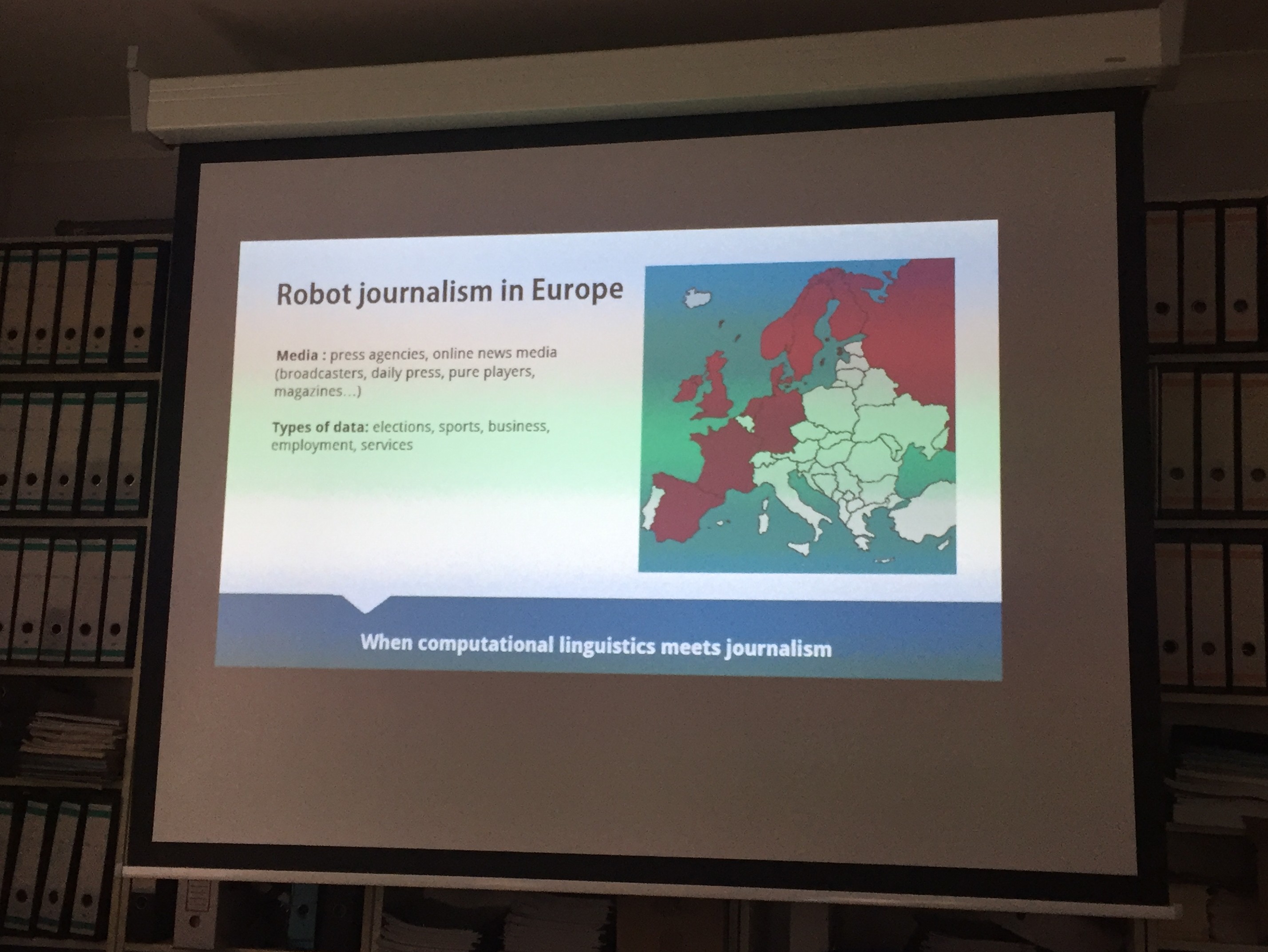
The ethical aspect of “robot” journalism

“Any human being, who is involved in a natural language generation (NLG) process, such as programmers or linguists, must take into account the ethical dimensions governing journalism” concluded Laurence Dierickx, a specialist in Computational Journalism, who was invited to the EFJ Digital Expert Group meeting, that took place on March 8 in Brussels. She explained that the computer scientists and start-up companies, who are heavily involved in the NLG, are not hold under the same ethical standards as journalists. Also in cases with automatically generated content, there is not always a mention that the article is written by a computer, which…

Launch of a new project to advance gender equality in media industries

A multidisciplinary European consortium comprising the Universities of Newcastle (UK), Padova (Italy) and Gothenburg (Sweden), the European Federation of Journalists (EFJ) and the Permanent Conference of the Mediterranean Audiovisual Operators (COPEAM) has just been awarded a grant by the European Commission’s Directorate –General for Justice and Consumers to develop an action project to advance gender equality in media industries. The project will bring journalism, media and communication students together with media professionals so as to foster a gender equality perspective within both journalism and media education and professional journalism practice, and bridge the transition between education and employment. The project…

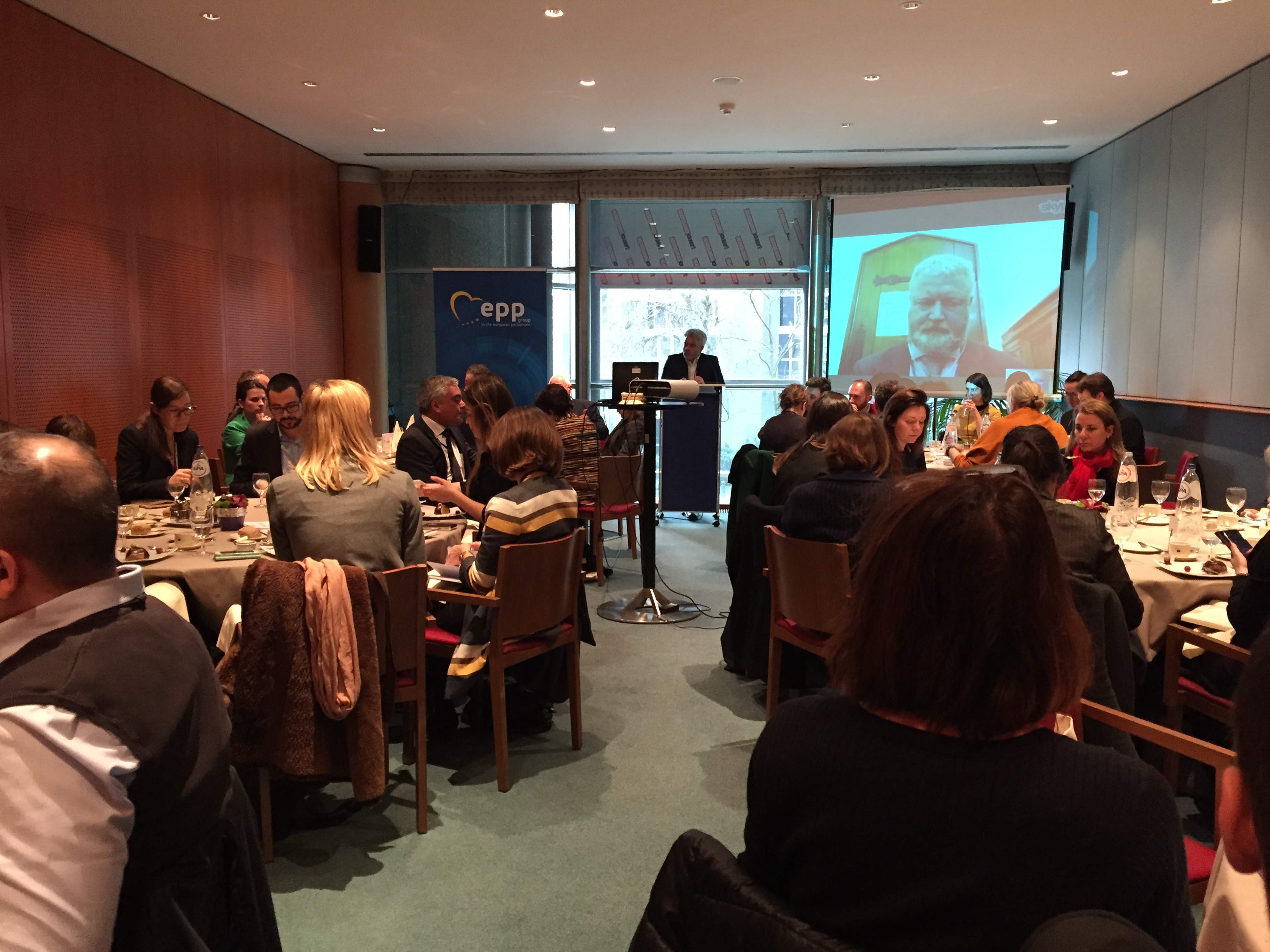
How to deal with fake news? Debate in European Parliament

MEP Michal Boni (EPP, Poland) together with The Guardian Media Group launched a discussion ”News: fact or fake?” on March 7 in the European Parliament. During the meeting experts, moderated by a senior editor from the Guardian – Dan Roberts, discussed how the new technologies change the business model of news reporting and how the fake news and filter bubbles do impact  democracy. Michal Boni stated at the beginning of the meeting that it is important to understand how to react to fake news. He explained: “We don’t need censorship tools, instead we need to promote the better understanding of fake…

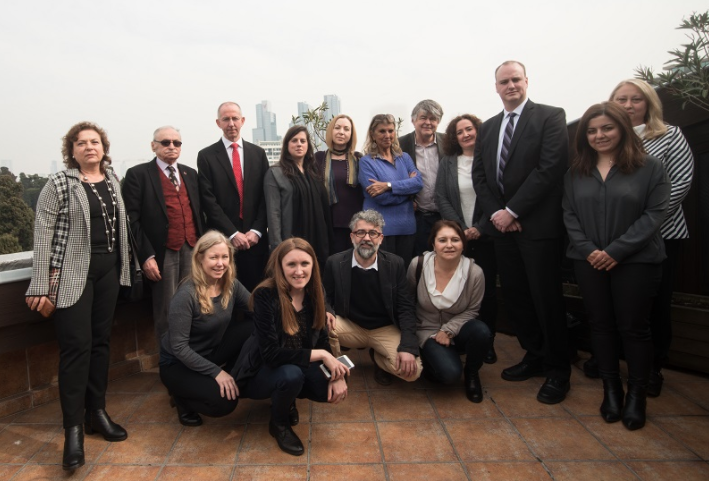
Declaration of March 2017 joint mission to Turkey

Türkçe Following an international press freedom mission to Turkey on 7 February to 2 March 2017, the undersigned participants, representing six international free expression watchdog organisations, express severe concern about media freedom and respect for human rights and warn that the country’s democracy is under threat. The mission came in response to an ongoing purge by Turkey’s government in the wake of a failed 15 July 2016 coup attempt that traumatized the country. Hundreds of thousands have been dismissed from jobs or detained under wide-ranging emergency powers granted after the coup attempt. This includes some 155 journalists and media workers…

Ukraine: about 100 jobs at risk following revocation of Radio Vesti’s licenses

The National Council for Television and Radio Broadcasting of Ukraine revoked license of the Ukrainian broadcasting company “Radio Vesti” in Kharkiv city. The council also refused to extend the radio’s license in the capital, Kyiv. Radio Vesti, the largest national professional radio channel in the country, insists they sent the required documents on time in order to renew the licenses, which expired in February. Despite this, the National Council decided to revoke the licenses out of concerns that the ultimate beneficiary of the station was the former Minister of Revenue and Fees, Oleksandr Klymenko. Reports said that as a result,…