European Federation of Journalists

IFJ-EFJ Regional Development Fund

Czech Republic


The European Federation of Journalists (EFJ) signed an agreement on 18 December 2014 with the Union of Journalists and Media Workers of Czech Republic (OSNPM) in order to investigate the working conditions of Czech journalists and media workers. The project is implemented with the cooperation of Judith Reitstatter, from the Austrian union GPA-djp.

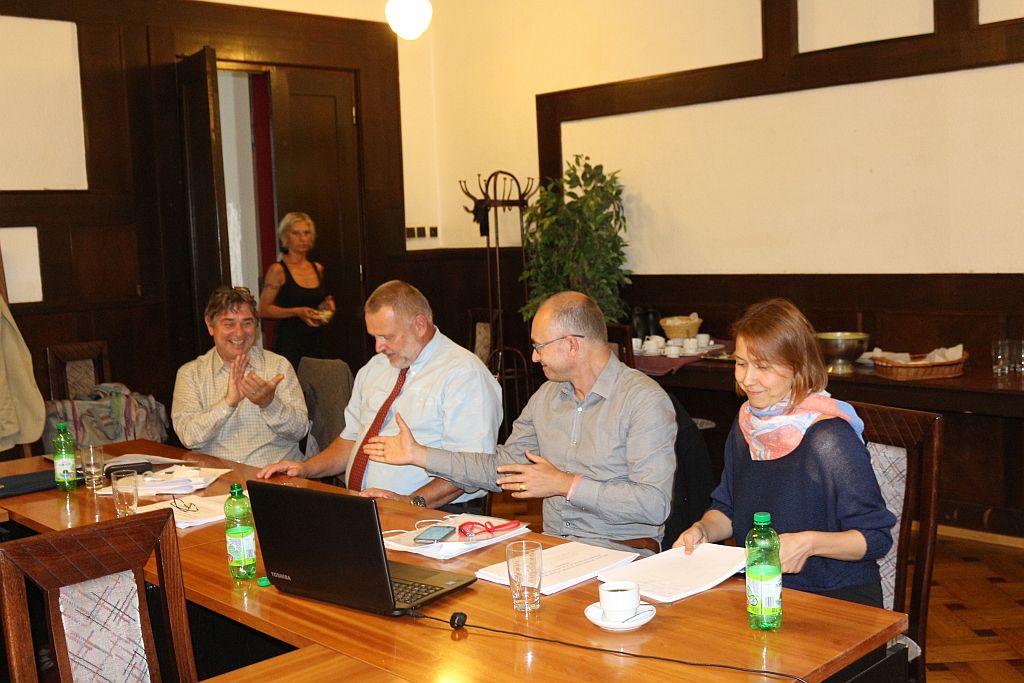
The online survey was launched on 19 May 2015. Around 2,500 journalists and media workers were invited to participate to the survey. The EFJ, OSNPM and GPA-djp analysed together the main outcomes of the survey during a round table conference, on 19 August 2015, in Prague.

The questionnaire focus mainly on labour rights. “This area is underestimated by the Czech media, journalists themselves and their employers as well,” explains Zdeněk Kučera, chairman of OSNPM.

“Over the past 25 years, journalists’ attention was focused primarily toward freedom of speech, access to information, relations with media ownership and the development of media houses. These are very serious topics. However, journalists’ status remained grossly underrated. A specific problem is the status of freelance journalists, which are increasingly numerous, particularly in regional media.”

The main findings of the survey are available on the EFJ website, here.
FOCUS EFJ

Side event of our project: a high school magazines national competition (Nejinspirativnější středoškolský časopis 2015). Here are the winners (picture credit: F. Cakl):

Czech

Contact details: OSNPM, e-mail: odborovy-svaz-novinaru@seznam.cz, website: http://www.odborovysvaznovinaru.cz


Slovakia

The European Federation of Journalists (EFJ), its Austrian union GPA-djp and the Slovak Union of Journalists (Slovenský syndikát novinárov) organized a meeting in Vienna, on 30 October 2014. Trade unionists and media students from both countries met in GPA-djp offices, in Vienna. The discussion on media convergence was launched by Dr. Roman Hummel, from the university of Salzburg.

Contact details: Judith Reitstaetter, judith.reitstaetter (at) gpa-djp.at


Estonia

The European Federation of Journalists (EFJ), the Estonian Union of Journalists (Eesti Ajakirjanike Liit, EAL) and the Union of Journalists in Finland (Suomen Journalistiliitto, UJF) agreed on 6 February 2015 to jointly implement the project “Workshops to Strengthen Journalists’ organisation in Estonia”.

The main objective of the project is to strengthen journalists’ organisation in Estonia, through three activities:

  • a freelance workshop in Helsinki,
  • a radio & TV negotiators workshop in Helsinki,
  • an authors’ rights seminar in Tallinn.

An action plan will be proposed for the next period.

Contact details: Juha Rekola, Juha.Rekola (at) journalistiliitto.fi, and Helle Tiikmaa, helle (at) eal.ee


Actions

IFJ/EFJ urge Russian authorities to stop persecuting Ukrainian journalists

Ukrainian journalists Mykola Semena and Roman Sushchenko are facing jail following charges by the Russian authorities of separatism and espionage, respectively. The International and European Federations of Journalists (IFJ and EFJ), together with other human rights groups, are asking for these charges to be dropped immediately. The IFJ and EFJ have joined calls from their Ukrainian affiliates, the Independent Media Trade Union of Ukraine (IMTUU) and the National Union of Journalists of Ukraine (NUJU), to condemn the persecution of independent media and journalists critical of the Russian authorities, especially in the Russia-annexed Crimea. Both Semena and Sushchenko are NUJU members.…

#SpreadNoHate: how to tackle hate speech against migrants and refugees?

The European Federation of Journalists (EFJ) was invited on 26 January to participate in the high-level debate “#SpreadNoHate: Hate Speech Against Migrants and Refugees in the Media” organised in Brussels by the United Nations Alliance of Civilizations (UNAOC) and the European External Action Service (EEAS). This event was aimed to better understand the mechanisms of hate speech against migrants and refugees as well as exploring new ways to improve the quality of media coverage, by promoting ethical journalism and fostering dialogue between journalists, institutions and organisations. EFJ General secretary Ricardo Gutiérrez moderated the panel on “Strengthening Partnerships between Media and Civil…

Closure of Swiss magazine L’Hebdo: Another blow to media pluralism

Ringier Axel Springer announced on January 23 their plans to close French-speaking magazine L’Hebdo.  Impressum,   the largest journalists’ organisation and the Trade Union of Media and Communications Syndicom  are both deeply concerned about the potential negative impact of the decision on media pluralism, investigative journalism and the future of the media in French-speaking Switzerland. The EFJ expressed its solidarity with their Swiss affiliates and offer full support. A petition was also launched and supported by both EFJ affliates  to demand alternative financial plans to continue or return the title. @EFJEUROPE @lhebdo @IFJGlobal signez la pétition pour @lhebdo https://t.co/zhle3ihJtF — syndicom…

The CoE adopted resolution on attacks against journalists

The Parliamentary Assembly of the Council of Europe on Tuesday discussed the rising levels of violence against journalists, particularly in Turkey, Russia and Azerbaijan. Ukrainian MP Volodymyr Ariev (EPP/CD), pictured above, presented the report, where he drew attention to the death of 16 journalists and the arrest of 150 media employees since January 2015 in member States. Mr. Ariev spoke about the deterioration of media freedom in Turkey and called for “release from detention all journalists who have not been indicted for actively participating in terrorist acts”. He also raised concerns on the media situation in Crimea and eastern parts of Ukraine.…

OSCE Representative condemns deterioration of media freedom in conflict-affected parts of Ukraine

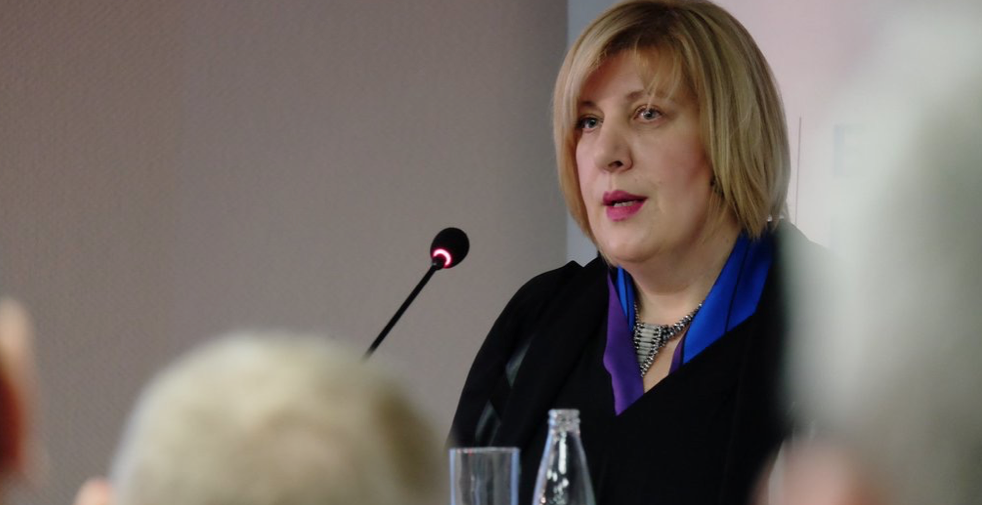
The Representative on Freedom of the Media Dunja Mijatović condemned today the worsening situation with media freedom and safety of journalists in areas not controlled by the Ukrainian government. This comment followed the recent report by OSCE Chief Monitor, Ambassador Ertugrul Apakan, where among others he spoke about the limitation of freedom of expression in the region. The OSCE Chief Monitor mentioned ban of over 350 websites and restrictions against Ukrainian media outlets. Mijatović noted that threats and intimidation of media workers along with the arrest of bloggers Eduard Nedelyaev and Gennadiy Benitskiy are particular worrying cases. She added: Access…

Republika Srpska President’s office limits access for selected media

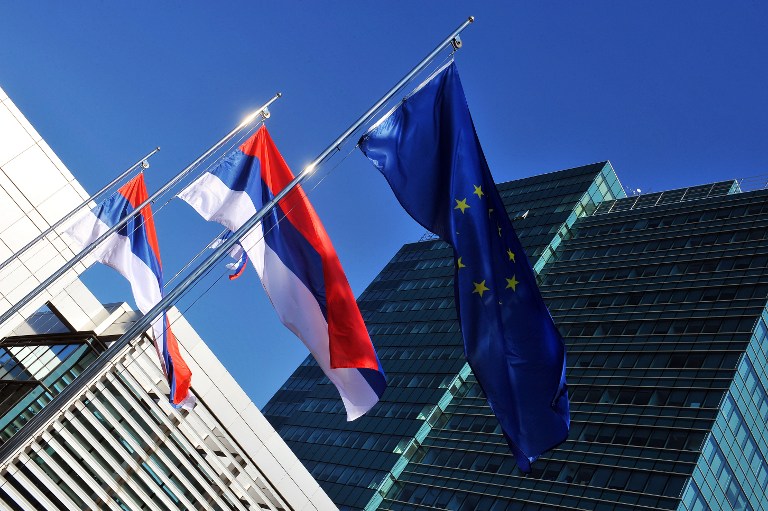
The European Federation of Journalists backs the Bosnia-Herzegovina Journalists Association (BHJA) in condemning the discriminatory actions by Republika Srpska (RS) President Milorad Dodik against selected media. On January 18 a news crew from N1 Television was denied access to a press conference in Banjaluka on the grounds that they didn’t have accreditation to enter the venue. The TV channel was also removed from the mailing list of the President’s office, which meant no further access to official newsletters or accreditation information that are necessary for the news coverage. BHJA  called these actions unreasonable discrimination against the well-known critical media outlet.…