European Federation of Journalists

openMedia, investigating press freedom

Title of the project : openMedia, investigating press freedom
Lead Applicant
: openDemocracy

Partner organisations : EFJ, Index on censorship, King’s College London

The recently launched openMedia project aims to investigate and expose commercial interference in editorial decisions. The project is run by openDemocracy with the European Federation of Journalists (EFJ) as a partner alongside the Index on Censorship and King’s College London.

The project believes that there has not been enough of a concerted, ongoing spotlight on the extent and effects of commercial influence over the media, despite the dangerous consequences it poses for press freedom. For now, the project focuses on 47 countries across Europe but also has ambitions to expand.

Despite the recent launch, the project is adamant that it is not a response to the “fake news” hype of the past year or so. Rather, the project responds to scandals of commercial sponsors influencing media content; for example the Daily Telegraph’s suppression of investigations into its advertiser HSBC; and allegations that Buzzfeed deleted articles which advertisers found unfavourable.

According to the project, this power dynamic can suppress investigations of banks, pharmaceuticals, agriculture, fossil fuel giants, energy companies and other big businesses.

In addition, the project recognizes how for many readers, “sponsored content” is difficult to distinguish from genuine news content. The project therefore aims to clarify the commercial interests apparent in media to readers, and as part of the project, King’s College London will develop digital tools to help readers be better informed about news sources.

The findings of the project will be used to campaign for greater transparency and press freedom in news organisations and to empower journalists to advocate for transparency.

In order to do this, openMedia is currently conducting a confidential and anonymous survey of journalists across Europe, asking about their own working practices and experiences of commercial pressure inside newsrooms. The survey is available in English here and in many other languages here.

Actions

Digital Services Act: EU agreement reached

On 23 April, European Union co-legislators (European Commission, European Parliament and the Council of Ministers – national governments) reached a provisional agreement on the Digital Services Act (DSA), a new set of rules for online platforms, search engines, online marketplaces and other significant providers of digital services. The DSA will fully enter into force in the first quarter of 2024, and for very large online platforms already four months after the publication of the final text in the EU official journal. The European Federation of Journalists (EFJ) welcomed this agreement as an indeed overdue set of regulation to nail down…

WPFD: a message from our affiliates in Ukraine

On the occasion of World Press Freedom Day, the President of the National Union of Journalists of Ukraine (NUJU), Sergiy Tomilenko, asked the EFJ to share the following message on behalf of Ukrainian journalists. Journalists are important! It is our responsibility to support colleagues who are dedicated to their profession and who are examples of courage for us! “We are hidden underground and we don’t want to draw attention to ourselves. I send information to the national TV station, without ever naming myself. It’s too dangerous.” These are the words of a professional journalist from Kherson, a regional correspondent for…

Barys Haretski: “This award is another opportunity to remind the world of the situation of journalists in Belarus”

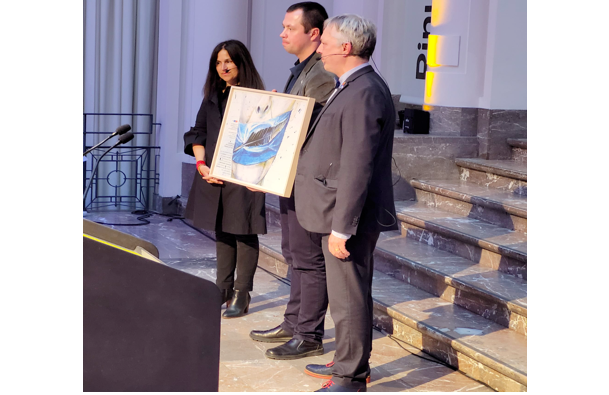
To mark World Press Freedom Day on May 3, the Belarusian Association of Journalists (BAJ) has been awarded the Difference Day Honorary Title for its vital work in Belarus in times of repression. BAJ was established in 1995 as a non-governmental association of media workers with the aim of promoting freedom of expression and independent journalism in Belarus. It brings together more than 1300 journalists and media workers. As part of the crackdown following Lukashenko’s fraudulent election, the Supreme Court ordered the dissolution of the association in August 2021, forcing it to cease its activities in the country and relocate…

WPFD: EFJ calls on European governments to protect journalism

On World Press Freedom Day (WPFD) on Tuesday 3 May, the European Federation of Journalists (EFJ) has stressed the need for concrete actions from European governments to defend and protect media freedom. 85 journalists are currently in prison in Europe, just for doing their job. And 44 journalists have been killed in Europe since 2015. The EFJ calls on states to fulfil their commitments and obligations to protect journalists and media independence and pluralism. The EFJ also joined the International Federation of Journalists (IFJ) to combat journalists’ surveillance. Cases of spying on journalists and media workers using sophisticated spyware programs…

EU Anti-SLAPP Initiative Encouraging: all eyes on Member States

On Thursday 28 April, a press briefing was organised to present the Proposal for a Directive on strategic lawsuits against public participation (SLAPP) at the presence of Vice-President of the European Commission for Values and Transparency, Vera Jourova and the representatives of the Coalition Against SLAPPs in Europe (CASE). The proposal, first of its kind announced on 27 April, is meant to tackle the growing problem of abusive litigation targeting journalists, activists and other public watchdogs across Europe. Commenting on the need of the directive Vera Jourova, Vice-President of the European Commission for Values and Transparency said: “It is a David…

European Commission proposed legislation to protect journalists from SLAPPs

The European Commission today published two texts aimed at curbing the rise of strategic lawsuits against public participation (SLAPPs) in Europe. The European Federation of Journalists (EFJ) joined the partners of the Coalition Against SLAPPs in Europe (CASE) in welcoming a landmark step in the right direction. The EFJ urges the Member States to implement the recommendation without delay. As part of the European Democracy Action Plan, the European Commission presented on 27 April 2022 a package including a proposal for a directive (binding) and a recommendation (non-binding) to the Member States to urge them to take action against the…