European Federation of Journalists

openMedia, investigating press freedom

Title of the project : openMedia, investigating press freedom
Lead Applicant
: openDemocracy

Partner organisations : EFJ, Index on censorship, King’s College London

The recently launched openMedia project aims to investigate and expose commercial interference in editorial decisions. The project is run by openDemocracy with the European Federation of Journalists (EFJ) as a partner alongside the Index on Censorship and King’s College London.

The project believes that there has not been enough of a concerted, ongoing spotlight on the extent and effects of commercial influence over the media, despite the dangerous consequences it poses for press freedom. For now, the project focuses on 47 countries across Europe but also has ambitions to expand.

Despite the recent launch, the project is adamant that it is not a response to the “fake news” hype of the past year or so. Rather, the project responds to scandals of commercial sponsors influencing media content; for example the Daily Telegraph’s suppression of investigations into its advertiser HSBC; and allegations that Buzzfeed deleted articles which advertisers found unfavourable.

According to the project, this power dynamic can suppress investigations of banks, pharmaceuticals, agriculture, fossil fuel giants, energy companies and other big businesses.

In addition, the project recognizes how for many readers, “sponsored content” is difficult to distinguish from genuine news content. The project therefore aims to clarify the commercial interests apparent in media to readers, and as part of the project, King’s College London will develop digital tools to help readers be better informed about news sources.

The findings of the project will be used to campaign for greater transparency and press freedom in news organisations and to empower journalists to advocate for transparency.

In order to do this, openMedia is currently conducting a confidential and anonymous survey of journalists across Europe, asking about their own working practices and experiences of commercial pressure inside newsrooms. The survey is available in English here and in many other languages here.

Actions

MFRR to hold press freedom mission to Greece

The Media Freedom Rapid Response (MFRR) will hold an online fact-finding mission to Greece in the first half of December to assess increasing concerns about media freedom and the safety of journalists in the country. The online mission will be led by the European Centre for Press and Media Freedom (ECPMF) and implemented together with its partners in the MFRR, including the European Federation of Journalists (EFJ), and representatives from other international press freedom groups. The delegation will meet with a range of domestic stakeholders, including journalists and editors, journalists’ unions and associations, civil society and academics, and representatives of…

Switzerland: concerns over Le Courrier and journalism in the Gandur’s case

The International and European Federations of Journalists (IFJ/EFJ) joined its affiliate in Switzerland Syndicom in calling the Court’s decision to disavowed Swiss’s newspaper Le Courrier. The decision, not only heavy with consequences for the editorial staff of the independent Geneva newspaper, shows there is a real threat when it comes to the future of investigative journalism.  Following a first victory at the criminal level and in the first instance at the civil level in Switzerland, Le Courrier was disavowed on 23 November 2021 by the judges in the case that opposing it to the billionaire Jean Claude Gandur that started six…

Poland: Journalist must not be jailed for refusing to disclose source

The European Federation of Journalists (EFJ) today joined the partners of the Media Freedom Rapid Response (MFRR) in calling on the District Prosecutor’s Office in the Polish city of Gdansk to drop its legal case against Gazeta Wyborcza reporter Katarzyna Włodkowska and to respect the journalist’s right of source confidentiality protected under the European Convention of Human Rights. If the prosecutor issues a second demand for Włodkowska to reveal the identity of her source for a report on the investigation into the assassination of the city’s mayor, and she refuses to comply, she could face a prison sentence of up…

France: Four journalists shot at in Martinique, no injuries

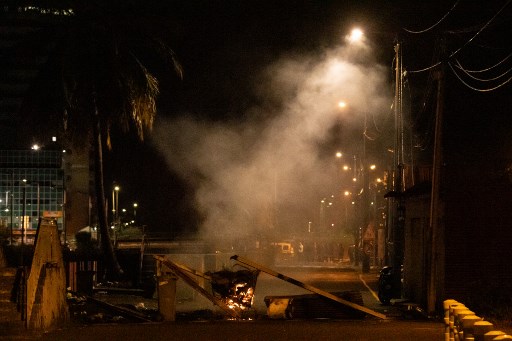
Four French journalists covering the protests against the Covid-19 rules and civil unrest in Martinique have been fired upon three times. The European Federation of Journalists (EFJ) joined its affiliates in France (SNJ, SNJ-CGT, CFDT-Journalistes) in expressing full support to the targeted journalists and strongly condemning a new attack on press freedom, which must be promptly investigated by the French authorities. On the night of the 25 and 26 November 2021, photographer Loïc Venance from Agence France-Presse (AFP), journalists Maureen Lehoux and cameraman Julien Taureau from BFMTV/RMC Sport and journalist Raphaël Lafargue from Abaca Press were filming and taking pictures…

Slovenia: Concerns over controversial changes to RTV programming

The European Federation of Journalists (EFJ) joined the partners of the Media Freedom Rapid Response (MFRR) today to express concern over proposed modifications to news programming at the Slovenian public television RTV, which would reduce the broadcaster’s ability to inform the public and scrutinise power. We therefore urge the broadcaster’s management to enter into dialogue with its editorial board to ensure adjustments are proportionate and in the best interest of public interest reporting. Under the draft Program-Production Plan (PPN) for 2022, shows such as the flagship foreign policy programme, Globus, and many news talk shows would be cancelled. Daily news…

OSCE Report: Legal Harassment and abuse of the judicial system against the media

On 23 November 2021, the OSCE (Organization for Security and Co-operation) Europe Office of the Representative on Freedom of the Media (RfoM) launched a report titled “Legal Harassment and abuse of the judicial system against the media”. The report’s aim is to underline the risks associated with the journalistic profession, and discusses the effects of legal procedures, underlining the problematic nature of the abuse of the judicial system against media workers. It shares examples of cases where the law was being misused to prevent media workers, including journalists, from doing their work or as “a means of retaliation for their…