European Federation of Journalists

openMedia, investigating press freedom

Title of the project : openMedia, investigating press freedom
Lead Applicant
: openDemocracy

Partner organisations : EFJ, Index on censorship, King’s College London

The recently launched openMedia project aims to investigate and expose commercial interference in editorial decisions. The project is run by openDemocracy with the European Federation of Journalists (EFJ) as a partner alongside the Index on Censorship and King’s College London.

The project believes that there has not been enough of a concerted, ongoing spotlight on the extent and effects of commercial influence over the media, despite the dangerous consequences it poses for press freedom. For now, the project focuses on 47 countries across Europe but also has ambitions to expand.

Despite the recent launch, the project is adamant that it is not a response to the “fake news” hype of the past year or so. Rather, the project responds to scandals of commercial sponsors influencing media content; for example the Daily Telegraph’s suppression of investigations into its advertiser HSBC; and allegations that Buzzfeed deleted articles which advertisers found unfavourable.

According to the project, this power dynamic can suppress investigations of banks, pharmaceuticals, agriculture, fossil fuel giants, energy companies and other big businesses.

In addition, the project recognizes how for many readers, “sponsored content” is difficult to distinguish from genuine news content. The project therefore aims to clarify the commercial interests apparent in media to readers, and as part of the project, King’s College London will develop digital tools to help readers be better informed about news sources.

The findings of the project will be used to campaign for greater transparency and press freedom in news organisations and to empower journalists to advocate for transparency.

In order to do this, openMedia is currently conducting a confidential and anonymous survey of journalists across Europe, asking about their own working practices and experiences of commercial pressure inside newsrooms. The survey is available in English here and in many other languages here.

Actions

Netherlands: Journalists’ safety increasingly under attack

Riots have taken place in several cities in the Netherlands following the the government’s decision to impose a 9pm curfew to curb the circulation of the coronavirus, on Saturday 23 January. Several journalists were physically attacked in a context of growing hostility towards the press. The European and International Federations of Journalists (EFJ/IFJ) join their affiliates in the Netherlands, the NVJ, in condemning the attacks and expressing alarm over the escalation of violence against media professionals since last year. The unrest has started last weekend in protest against the curfew which came into force on Saturday. At least seven cases…

EFJ joins call for urgent police protection for Montenegrin journalist Olivera Lakić

The European Federation of Journalists (EFJ) joins the Media Freedom Rapid Response (MFRR) in calling on Montenegrin authorities to follow up on verbal commitments and immediately provide Lakić and her family with adequate police protection. These new assassination plots must also be swiftly and thoroughly investigated to ensure that both the perpetrators and those ultimately responsible for ordering Lakić’s death are brought to justice. Olivera Lakić is an investigative journalist who covers organised crime and corruption. On 25 December 2020, the special state prosecutor announced two suspects’ arrest for planning her assassination, with other suspects who are already in prison. They are…

Russia: EFJ condemns the use of violence against journalists on Saturday

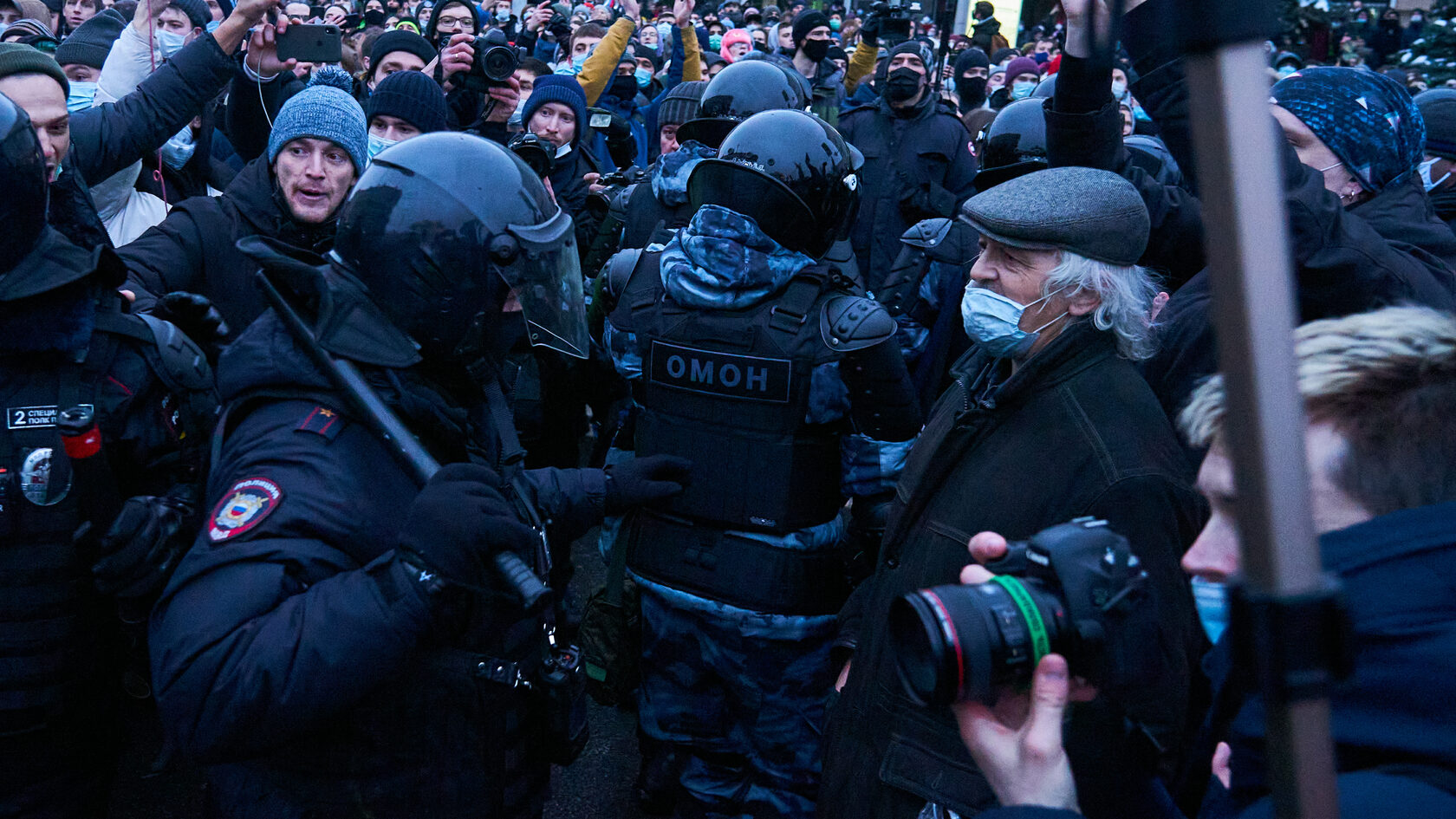
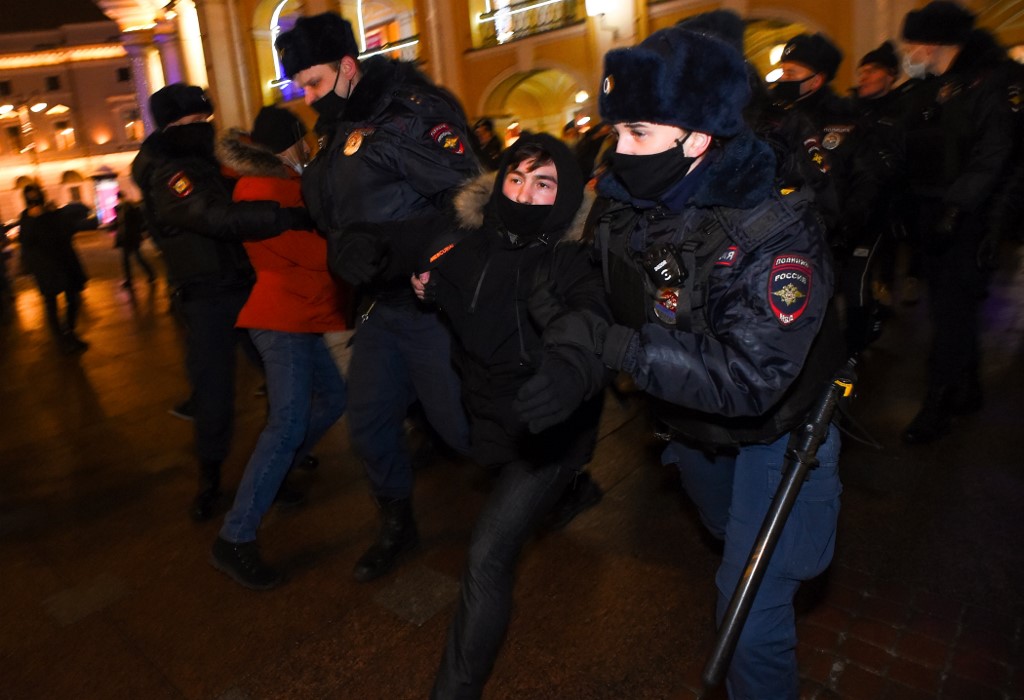
The Russian Journalists’ and Media Workers’ Union (JMWU) and the Russian Union of Journalists (RUJ) recorded on 23 January at least 52 cases of detention and violence against journalists while covering protests in support of jailed opposition leader Alexei Navalny, in Russia. The European Federation of Journalists (EFJ) condemns the use of violence against journalists. On Saturday, across Russia, tens of thousands of people defied a heavy police presence to join some of the largest rallies against President Vladimir Putin in years. OVD Info, an independent NGO that monitors rallies, said about 3,100 people had been detained, more than 1,200 of…

Russia: intimidation of journalists ahead of pro-Navalny protests

The European Federation of Journalists (EFJ) calls on the Russian authorities to respect press freedom and allow journalists to operate freely as they cover the mass demonstrations in support of jailed opposition leader Alexei Navalny, scheduled for Saturday 23 January. Since 20 January, Russian police and the Russian media regulator have issued warnings to several journalists, as well as to news outlets and social media platforms, discouraging them from covering protests in support of Navalny. The Russian Prosecutor’s Office announced on 21 January that police will be “focused on taking preventive measures, and if there are grounds – bringing the…

What to expect for journalism and media in 2021, according to Reuters Institute

The Reuters Institute for the Study of Journalism has released a report titled “Journalism, Media, and Technology Trends and Predictions 2021”, which draws from the major events of 2020 and their disruptive effect on journalism. This outlines what to expect as a result of rapid digital change following the Covid-19 pandemic in a new world “where the physical and virtual coexist in new ways.” A key finding is that the pandemic has forced us to rethink where the limits of free speech should lie for giant tech platforms. According to the report, we should expect a more interventionist approach on…

Germany: 252 attacks against media workers in 2020

In 2020, attacks against journalists in Germany more than doubled compared to previous years, according to the latest figure of the federal government. Demonstrations are considered as high-risk sites for journalists, and police officers were often unable to protect media professionals. The European Federation of Journalists and its German affiliates, the DJV and dju in ver.di, call for increased support and protection for media workers.  At the request of the Green parliamentary group, the federal government published official figures for the attacks on media workers in 2020. It recorded 252 incidents, among which 22 were physical injuries, 33 were damages…