European Federation of Journalists

openMedia, investigating press freedom

Title of the project : openMedia, investigating press freedom
Lead Applicant
: openDemocracy

Partner organisations : EFJ, Index on censorship, King’s College London

The recently launched openMedia project aims to investigate and expose commercial interference in editorial decisions. The project is run by openDemocracy with the European Federation of Journalists (EFJ) as a partner alongside the Index on Censorship and King’s College London.

The project believes that there has not been enough of a concerted, ongoing spotlight on the extent and effects of commercial influence over the media, despite the dangerous consequences it poses for press freedom. For now, the project focuses on 47 countries across Europe but also has ambitions to expand.

Despite the recent launch, the project is adamant that it is not a response to the “fake news” hype of the past year or so. Rather, the project responds to scandals of commercial sponsors influencing media content; for example the Daily Telegraph’s suppression of investigations into its advertiser HSBC; and allegations that Buzzfeed deleted articles which advertisers found unfavourable.

According to the project, this power dynamic can suppress investigations of banks, pharmaceuticals, agriculture, fossil fuel giants, energy companies and other big businesses.

In addition, the project recognizes how for many readers, “sponsored content” is difficult to distinguish from genuine news content. The project therefore aims to clarify the commercial interests apparent in media to readers, and as part of the project, King’s College London will develop digital tools to help readers be better informed about news sources.

The findings of the project will be used to campaign for greater transparency and press freedom in news organisations and to empower journalists to advocate for transparency.

In order to do this, openMedia is currently conducting a confidential and anonymous survey of journalists across Europe, asking about their own working practices and experiences of commercial pressure inside newsrooms. The survey is available in English here and in many other languages here.
Actions

Poland: Media pluralism greatly endangered by oil firm’s Polska Press takeover

A long-awaited drive by Poland’s ruling Law and Justice party to bring independent media to heel has started with the planned purchase by Orlen, a state-controlled petro chemical giant, of Polska Press, owned by Germany’s Passauer capital group which has dominated regional newspapers and magazines for over a quarter of a century. The deal announced on December 7 still has to be approved by Poland’s competition authority which is beholden to the government and the deal whose value has yet to be announced is expected to be completed early next year. Polska Press owns 20 out of 24 regional newspapers,…

Turkish court sentenced journalist Ayşegül Doğan to over 6 years in prison

Ayşegül Doğan has become the latest journalist in Turkey who was sentenced to prison by a court in a controversial case condemned by human rights groups. The European Federation of Journalists (EFJ) has condemned the court’s decision. The 9th Penal Court in the southeastern province of Diyarbakır convicted Doğan on 7 December for “establishing and managing an armed organisation”, sentencing her to six years and three months in prison. The prosecutor had initially requested the court to sentence Doğan to 22.5 years in prison. “This decision shows that the court still sees journalists as terrorists,” said Mustafa Kuleli, EFJ Steering Committee…

Montenegro: The new government must prioritise and uphold press and media freedom

As Montenegro’s new coalition government under the leadership of Prime Minister Zdravko Krivokapić was formally approved by the Montenegrin Parliament on 4 December, the Media Freedom Rapid Response (MFRR), the South East Europe Media Organisation (SEEMO) and key partners, urge it to put press and media freedom high on its agenda. The detailed report from their virtual fact-finding mission raises a number of concerns. To advance media freedom and, ultimately, the country’s accession bid to the European Union (EU), the new administration must commit to the necessary reforms for building and maintaining a free and pluralist media landscape. This is a…

Albania: Police attack and arrest journalists covering protests

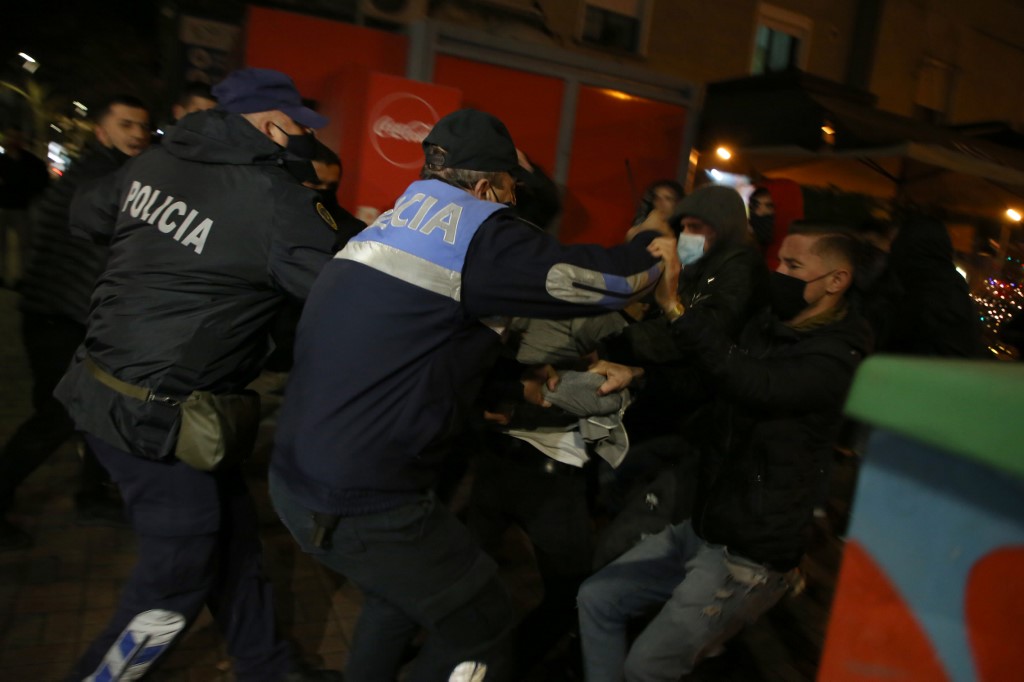
Four journalists were arrested on 11 and 12 December while covering protests against the murder of Klodian Rasha in Tirana. The European Federation of Journalists (EFJ), the International Federation of Journalists (IFJ) and its affiliate, the Association of Professional Journalists of Albania (APJA) strongly condemn the harassment and arbitrary arrest of media workers who were reporting on a public event. The protests erupted after Klodian Rasha, a 25 years-old Albanian citizen, was killed by a police officer on 8 December. He had been out after curfew and ran away from the police. Rasha was shot twice in the back and the officer alleged he had carried a firearm, which Rasha’s…

Malta: Threats to independence of public inquiry into assassination of Daphne Caruana Galizia must stop

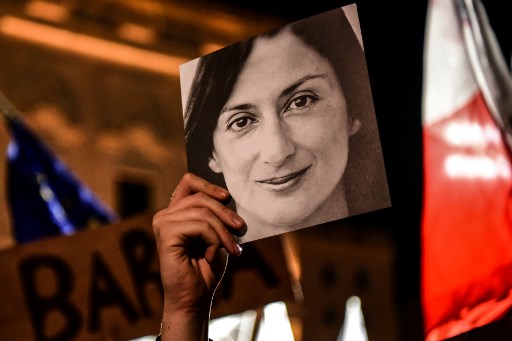
16 December 2020 marks 38 months since Daphne Caruana Galizia was assassinated in Malta, yet barriers to justice remain. The European Federation of Journalists (EFJ) together with the undersigned organisations condemns the continued threats made by the Maltese Government against the independent public inquiry into the circumstances of the assassination of Daphne Caruana Galizia, and its three board members. The independence of the inquiry is vital and we call on the Government to uphold its commitments under the European Convention on Human Rights and ensure the inquiry is supported to fulfil its Terms of Reference free from all political threats…

Campaign: Journalists are #EssentialWorkers

During the health crisis, journalists have been playing a crucial role. When most of us are required to stay home, they act as our eyes and ears on the ground bringing trustworthy and reliable information to us. Yet, in some European countries journalists are still not considered as essential workers impeding their ability to work. The European Federation of Journalists (EFJ) launched, in partnership with its affiliates in Albania, Kosovo, Montenegro, North Macedonia, Serbia and Turkey, a social media campaign to raise awareness about the need to regard journalists as essential workers.  In the region, the COVID-19 pandemic meant for…