European Federation of Journalists

openMedia, investigating press freedom

Title of the project : openMedia, investigating press freedom
Lead Applicant
: openDemocracy

Partner organisations : EFJ, Index on censorship, King’s College London

The recently launched openMedia project aims to investigate and expose commercial interference in editorial decisions. The project is run by openDemocracy with the European Federation of Journalists (EFJ) as a partner alongside the Index on Censorship and King’s College London.

The project believes that there has not been enough of a concerted, ongoing spotlight on the extent and effects of commercial influence over the media, despite the dangerous consequences it poses for press freedom. For now, the project focuses on 47 countries across Europe but also has ambitions to expand.

Despite the recent launch, the project is adamant that it is not a response to the “fake news” hype of the past year or so. Rather, the project responds to scandals of commercial sponsors influencing media content; for example the Daily Telegraph’s suppression of investigations into its advertiser HSBC; and allegations that Buzzfeed deleted articles which advertisers found unfavourable.

According to the project, this power dynamic can suppress investigations of banks, pharmaceuticals, agriculture, fossil fuel giants, energy companies and other big businesses.

In addition, the project recognizes how for many readers, “sponsored content” is difficult to distinguish from genuine news content. The project therefore aims to clarify the commercial interests apparent in media to readers, and as part of the project, King’s College London will develop digital tools to help readers be better informed about news sources.

The findings of the project will be used to campaign for greater transparency and press freedom in news organisations and to empower journalists to advocate for transparency.

In order to do this, openMedia is currently conducting a confidential and anonymous survey of journalists across Europe, asking about their own working practices and experiences of commercial pressure inside newsrooms. The survey is available in English here and in many other languages here.

Actions

EFJ welcomes OSCE mission to Belarus

The European Federation of Journalists (EFJ) welcomes the agreement reached on Thursday at the Organization for Security and Co-operation in Europe (OSCE) to send an international expert mission to Belarus. As requested by the EFJ and Human Rights Watch on 26 August, finally 17 governments of OSCE participating states agreed on Thursday evening to activate the so-called “Moscow Mechanism”, which allows the OSCE to send an international expert mission to a state suspected of human rights violations. Belgium, Czech Republic, Denmark, Estonia, Finland, France, Iceland, Latvia, Lithuania, Norway, The Netherlands, Poland, Romania, Slovakia, the United Kingdom, Canada and the United…

Joint letter: ‘e-evidence’ regulation must protect journalists

Together with a coalition of 25 organisations and companies, the European Federation of Journalists (EFJ) urged members of the European Parliament’s Civil Liberties, Justice and Home Affairs Committee (LIBE) to include strong procedural safeguards to protect journalists in the so called “e-evidence regulation”. The EFJ had expressed concern several times in the past about the Commission’s proposal for a regulation on European Production and Preservation Orders for electronic evidence in criminal matters (known as ‘e-evidence regulation’) as it could pose a serious threat for freedom of the media, freedom of expression and freedom of information without robust safeguards.  The signatories…

Ukraine: Call for action on 20th anniversary of murder of journalist Georgiy Gongadze

On September 17, 2000, Georgiy Gongadze, well-known Ukrainian journalist and founder of popular Ukrainian online newspaper Ukrayinska Pravda, was murdered. His decapitated body was found on November 2, 2000, about 100 km from Ukraine’s capital, Kyiv. Georgiy’s murder is considered by many to be the most important crime against a journalist in the history of independent Ukraine because the state’s highest leaders were involved in it. Concretely, the leadership of the Ministry of Internal Affairs. The perpetrator, Oleksiy Pukach, a former general and high-ranking official of the Ministry of Internal Affairs of Ukraine, is currently serving a jail sentence for…

Report It: Everyone can highlight threats against journalists, speak up and speak out

To protect press and media freedom, we need an accurate picture of the forces that threaten it. To do this, we must collect and verify as much information as possible. That is why the Media Freedom Rapid Response (MFRR) has launched the ‘Report It’ campaign to create awareness and encourage everyone to play a role in documenting and reporting the many violations committed against journalists and media workers across Europe. It is wrong that such violations, abuses and aggressions have become so frequent as to be almost accepted as “situation:normal”. Through this campaign, the MFRR insists that this behaviour should…

Journalists and media workers restricted from reporting from the Moria camp

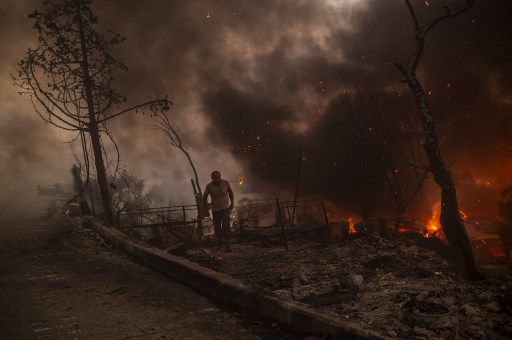
Since 9 September 2020, a number of journalists and photographers on the island of Lesbos have been intermittently restricted from reporting from an area where thousands of refugees and asylum seekers are being held without accommodation or sanitation after fires destroyed large areas of the Moria Registration and Identification Centre. The European Federation of Journalists (EFJ) together with the Media Freedom Rapid Response (MFRR) partners wrote to Minister for Civil Protection, Michalis Chrisochoidis and Police Lieutenant General Karamalakis calling for all journalists to safely access the relevant sites on Lesbos, in line with Greece’s obligations under international law. Dear Minister…

Belarusian journalist wounded at the knee: “I demand Justice”

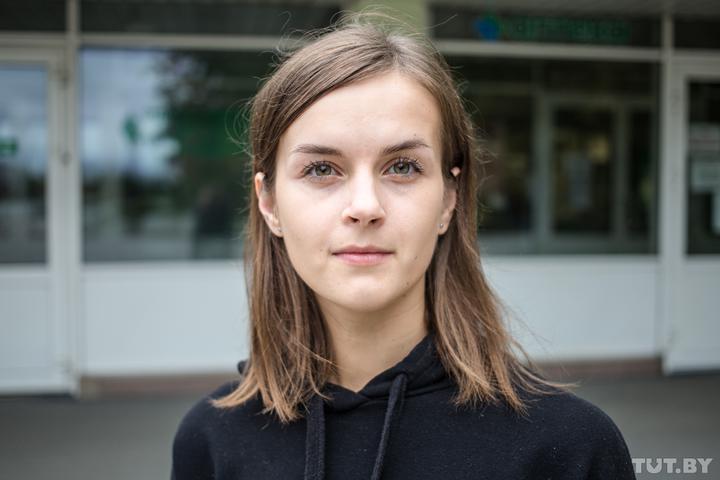
On 10 August, the day after the fraudulent elections in Belarus, journalist Natalya Lubnevskaya was injured in the leg by a rubber bullet fired by security forces. She was covering demonstrations in Minsk for the newspaper “Nasha Niva”. She has just been released from hospital and is demanding justice. Natalya, 27 years old, graduated from the Institute of Journalism of the Belarusian State University five years ago. She covers news related to women and the status of women for the daily newspaper Nasha Niva. Today she gave an interview to the online media TUT.BY. “No one forced me to work…