European Federation of Journalists

openMedia, investigating press freedom

Title of the project : openMedia, investigating press freedom
Lead Applicant
: openDemocracy

Partner organisations : EFJ, Index on censorship, King’s College London

The recently launched openMedia project aims to investigate and expose commercial interference in editorial decisions. The project is run by openDemocracy with the European Federation of Journalists (EFJ) as a partner alongside the Index on Censorship and King’s College London.

The project believes that there has not been enough of a concerted, ongoing spotlight on the extent and effects of commercial influence over the media, despite the dangerous consequences it poses for press freedom. For now, the project focuses on 47 countries across Europe but also has ambitions to expand.

Despite the recent launch, the project is adamant that it is not a response to the “fake news” hype of the past year or so. Rather, the project responds to scandals of commercial sponsors influencing media content; for example the Daily Telegraph’s suppression of investigations into its advertiser HSBC; and allegations that Buzzfeed deleted articles which advertisers found unfavourable.

According to the project, this power dynamic can suppress investigations of banks, pharmaceuticals, agriculture, fossil fuel giants, energy companies and other big businesses.

In addition, the project recognizes how for many readers, “sponsored content” is difficult to distinguish from genuine news content. The project therefore aims to clarify the commercial interests apparent in media to readers, and as part of the project, King’s College London will develop digital tools to help readers be better informed about news sources.

The findings of the project will be used to campaign for greater transparency and press freedom in news organisations and to empower journalists to advocate for transparency.

In order to do this, openMedia is currently conducting a confidential and anonymous survey of journalists across Europe, asking about their own working practices and experiences of commercial pressure inside newsrooms. The survey is available in English here and in many other languages here.

Actions

COVID-19: restrictions on access to information in Romania

The president of Romania Klaus Werner Iohannis signed on 16 March an emergency decree which, among other measures, allows the National Authority for Administration and Regulation in Communications (ANCOM) to order take-down notices for websites and news reports containing “fake news”. The European Federation of Journalists (EFJ) believes that governments are right to tackle misinformation . However, these measures could lead to self-censorship. Public authorities may be tempted to abuse the powers to suppress coverage that deviates from the official line and tries to hold them accountable. The Romanian emergency decree includes an article on countering the spread of pandemic…

COVID-19: Ukrainian journalist attacked while investigating sale of protective masks

TV channel NewsOne journalist Tetiana Sivokon was physically attacked by a shop owner, in the Khmelnitsky region, while shooting a story about the sale of protective medical masks, on 24 March. Ukraine is experiencing masks shortage during the coronavirus pandemic. While preparing a report on this topic, NewsOne TV crew was informed by locals that the owner of a drug store had several large boxes with medical masks. The targeted journalist Tetiana Sivokon explained: “We went to this shop, saw the announcement that masks are in stock. I politely introduced myself and asked if I could buy masks. Seeing the…

COVID-19: Europe’s leaders must protect free flow of information

The European Federation of Journalists (EFJ), the major network of journalists’ organisations in Europe, today called on European leaders to protect free flow of information and ensure that media freedom will be guaranteed as states strive to tackle the COVID-19 pandemic. The EFJ joined together with eight other press freedom bodies and journalists’ organisations to express its profound concerns about the dangers of governments taking advantage of the COVID-19 pandemic to punish independent and critical media and to introduce restrictions on the access of media to government decision making and action. While recognizing that certain emergency measures are needed to…

COVID-19: EFJ and IFJ urge Turkish government not to discriminate against political prisoners

Sixteen human rigths and professional organisations urged Turkish Government not to discriminate against political prisoners in its forthcoming early parole bill. The Arrested Lawyers Initiative, European Federation of Journalists (EFJ), European Centre for Press and Media Freedom (ECPMF), Foundation of Day of the Endangered Lawyers, Freemuse Association, International Association of People’s Lawyers, International Observatory of Human Rights, International Federation of Journalists (IFJ), Italian Federation for Human Rights, Lawyers for Lawyers, Lawyers’ Rights Watch Canada, Liga voor de Rechten van de Mens, Platform for Peace and Justice, Social Justice Advocacy Campaign, Open Dialogue Foundation, Media and Law Studies Association made a…

Italy: Chief Editor under police protection after receiving death threats from neo-Nazi group

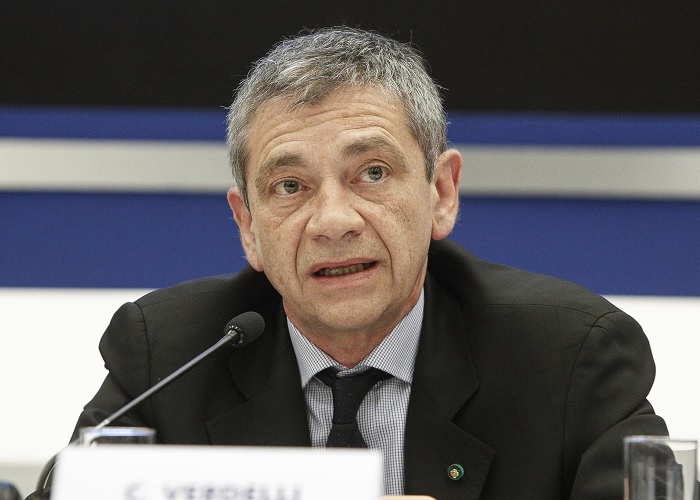
Carlo Verdelli, Chief Editor of “La Repubblica”, a left wing and well-respected Italian newspaper, has been put under police protection after receiving death threats from neo-Nazi groups. The International Federation of Journalists (IFJ) together with the European Federation of Journalists (EFJ) join their Italian affiliate, Federazione Nazionale Stampa Italiana (FNSI), in expressing solidarity towards Carlo Verdelli and strongly condemning this appalling intimidation. The police protection measure was ordered by the Interior Ministry on 12 March, following several threats including a death threat coming from a so-called “Neo-Nazi’” silent cells. The FNSI Main Boarding said: “The police protection of Carlo Verdelli…

COVID-19: journalists threatened with imprisonment in Hungary

UPDATE (30/03/2020): The Hungarian Parliament on Monday voted to allow the government of Prime Minister Viktor Orbán to rule by decree without a set time limit. Under new law, people who spread what are viewed as untrue or distorted facts now face several years in jail. —————————— The Hungarian government demanded today an indefinite extension of the state of emergency. The bill would give prime minister Viktor Orbán sweeping powers to rule by decree, and the power to impose prison sentences of up to five years for promoting false information. The government has portrayed its request as a necessary response to…