European Federation of Journalists

openMedia, investigating press freedom

Title of the project : openMedia, investigating press freedom
Lead Applicant
: openDemocracy

Partner organisations : EFJ, Index on censorship, King’s College London

The recently launched openMedia project aims to investigate and expose commercial interference in editorial decisions. The project is run by openDemocracy with the European Federation of Journalists (EFJ) as a partner alongside the Index on Censorship and King’s College London.

The project believes that there has not been enough of a concerted, ongoing spotlight on the extent and effects of commercial influence over the media, despite the dangerous consequences it poses for press freedom. For now, the project focuses on 47 countries across Europe but also has ambitions to expand.

Despite the recent launch, the project is adamant that it is not a response to the “fake news” hype of the past year or so. Rather, the project responds to scandals of commercial sponsors influencing media content; for example the Daily Telegraph’s suppression of investigations into its advertiser HSBC; and allegations that Buzzfeed deleted articles which advertisers found unfavourable.

According to the project, this power dynamic can suppress investigations of banks, pharmaceuticals, agriculture, fossil fuel giants, energy companies and other big businesses.

In addition, the project recognizes how for many readers, “sponsored content” is difficult to distinguish from genuine news content. The project therefore aims to clarify the commercial interests apparent in media to readers, and as part of the project, King’s College London will develop digital tools to help readers be better informed about news sources.

The findings of the project will be used to campaign for greater transparency and press freedom in news organisations and to empower journalists to advocate for transparency.

In order to do this, openMedia is currently conducting a confidential and anonymous survey of journalists across Europe, asking about their own working practices and experiences of commercial pressure inside newsrooms. The survey is available in English here and in many other languages here.
Actions

Cartooning for Peace published a practical guide for the protection of editorial cartoonists

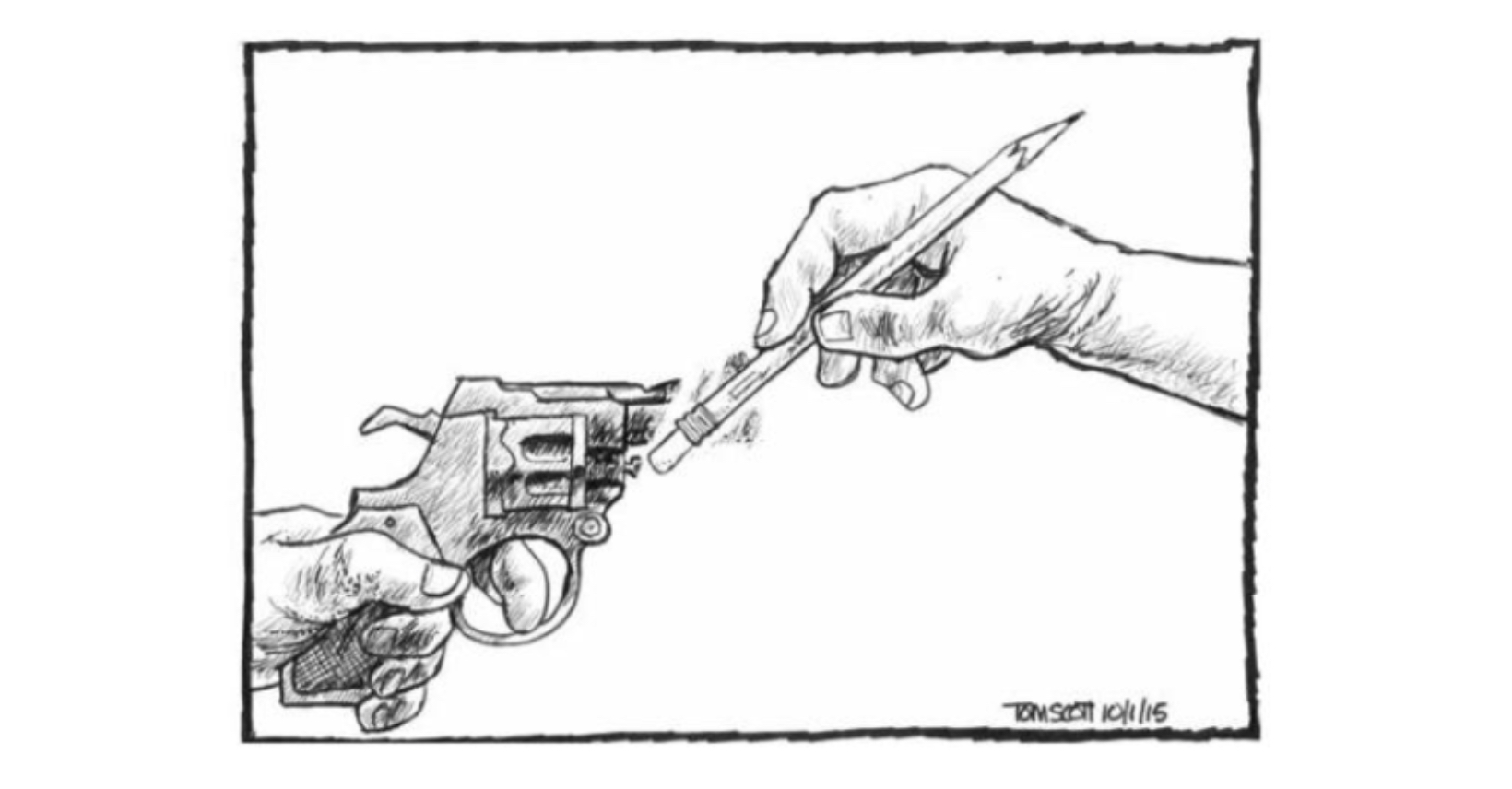
2019 was a terrible year for press cartoons, according to Courrier International. The ‘New York Times affair’, the numerous trials against cartoonists and the greater precariousness of the profession showed that their working conditions are deteriorating. As we marked the fifth anniversary of the attack on Charlie Hebdo, Cartooning for Peace, an international network of press cartoonists, has published a guide intended to cartoonists facing specific or persistent threats. The publication is meant to be very practical as it includes advices, testimonies and useful resources to help cartoonists around the world 1) to assess the risks and 2) to identify…

North Macedonia: online media Vidi Vaka endorsed the European Charter on journalists’ working conditions

The Trade Union of Macedonian Journalists and Media Workers (SSNM) hold a press conference today in Skopje to announce their new collaboration with Association of Journalists of Macedonia (AJM), the Council of Media Ethics of Macedonia, NGO Onlimit Media and Vidi Vaka portal, on two major texts for journalists’ labour rights. The four parties signed the Charter on journalists’ working conditions and the draft Fair Working Contract for journalists and media workers in digital media. By doing so, they commit to respect all journalists’ and media workers’ labour rights, their freedom of expression as well as ethical and professional standards.…

Gender equality is lagging behind in the croatian audiovisual sector

There is no gender equality in the Croatian audiovisual sector. This was the conclusion of a European event hosted by EFJ affiliates the Union of Croatian Journalists’ Union and the Association of Croatian Journalists in Zagreb on 30 January. Croatian film producers, performers, broadcasters, film directors, journalists and researchers convened to share experiences and key findings and pointed at the lack of female presence in audiovisual content as well as in leading roles. According to a recent ILO report published in March 2019 women represent 39% of the global workforce, but make only 27% in management positions. Despite the feminisation…

“Assange, Snowden, Manning and Harrison are the resistance fighters of the 21st century”

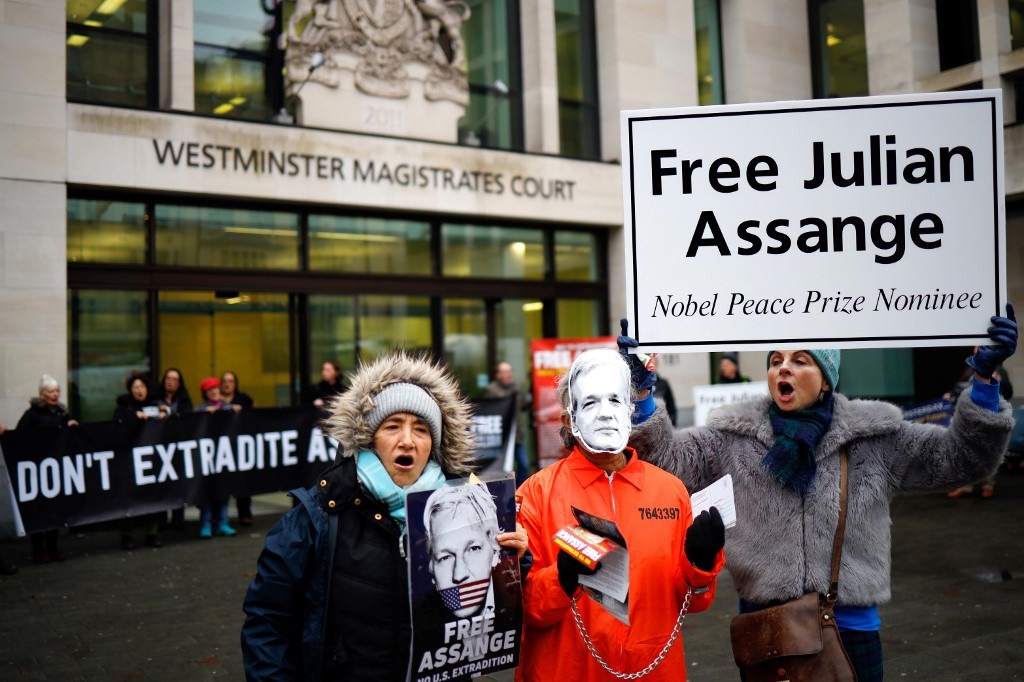
Citizens, journalists, artists, human rights organisations and journalists’ unions gathered on January 29th in Brussels to call on the Belgian government to do its utmost to protect Julian Assange and impede his extradition to the United States. The International and European Federations of Journalists (IFJ and EFJ) joined the two Belgian civil society organisations, Carta Academica and Belgium4Assange, in two public actions organised in Brussels to defend freedom of expression, freedom of the press and our right to know in general, and Julian Assange, Chelsea Manning, Sarah Harrison and Edward Snowden in particular. Over 120 personalities, artists, activists and journalists…

“The coverage of violence against women fluctuates between silence and sensationalism”

The UNESCO launched a handbook for journalists on reporting violence against women and girls to help radio, television, press and social media professionals determine which channels of investigation and information is relevant and ethical when reporting on gender violence. This guide includes examples of good practices and tips on how to frame the topic, how to conduct an interview, how to avoid sensationalism, the terminology to use, etc. DOWNLOAD THE FULL REPORT Anne-Marie Impe is the author of the handbook and her professional career is at the crossroads of journalism and lifelong education, writing and action. She started in Dakar, Senegal,…

Turkey: Pro government daily targets Journalists’ Union over press freedom campaign

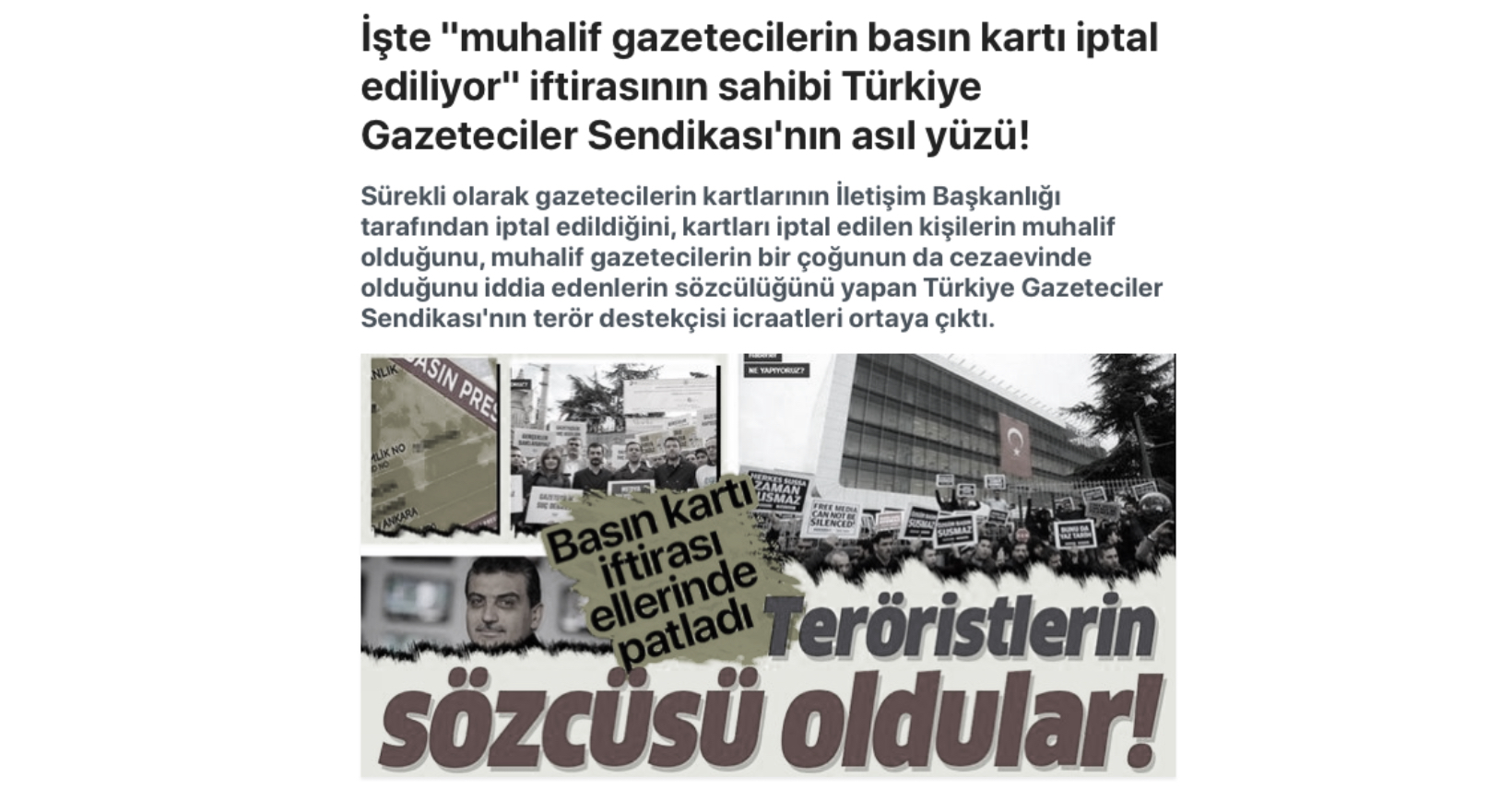
A pro-government newspaper based in Istanbul has blasted the Journalists’ Union of Turkey (TGS), gearing up the official narrative that labels jailed journalists as “terrorists.” “Here is the real face of the Journalists’ Union of Turkey, which flung dirt by alleging that the press cards of opposition journalists were canceled [by the government],” the Takvim daily said on its headline on January 27. Several journalists, including those that work at opposition dailies Evrensel and BirGün, had noticed last week that their pending applications for press cards renewals were rejected by the Presidency’s Communication Directorate when they checked the official body’s…