European Federation of Journalists

openMedia, investigating press freedom

Title of the project : openMedia, investigating press freedom
Lead Applicant
: openDemocracy

Partner organisations : EFJ, Index on censorship, King’s College London

The recently launched openMedia project aims to investigate and expose commercial interference in editorial decisions. The project is run by openDemocracy with the European Federation of Journalists (EFJ) as a partner alongside the Index on Censorship and King’s College London.

The project believes that there has not been enough of a concerted, ongoing spotlight on the extent and effects of commercial influence over the media, despite the dangerous consequences it poses for press freedom. For now, the project focuses on 47 countries across Europe but also has ambitions to expand.

Despite the recent launch, the project is adamant that it is not a response to the “fake news” hype of the past year or so. Rather, the project responds to scandals of commercial sponsors influencing media content; for example the Daily Telegraph’s suppression of investigations into its advertiser HSBC; and allegations that Buzzfeed deleted articles which advertisers found unfavourable.

According to the project, this power dynamic can suppress investigations of banks, pharmaceuticals, agriculture, fossil fuel giants, energy companies and other big businesses.

In addition, the project recognizes how for many readers, “sponsored content” is difficult to distinguish from genuine news content. The project therefore aims to clarify the commercial interests apparent in media to readers, and as part of the project, King’s College London will develop digital tools to help readers be better informed about news sources.

The findings of the project will be used to campaign for greater transparency and press freedom in news organisations and to empower journalists to advocate for transparency.

In order to do this, openMedia is currently conducting a confidential and anonymous survey of journalists across Europe, asking about their own working practices and experiences of commercial pressure inside newsrooms. The survey is available in English here and in many other languages here.
Actions

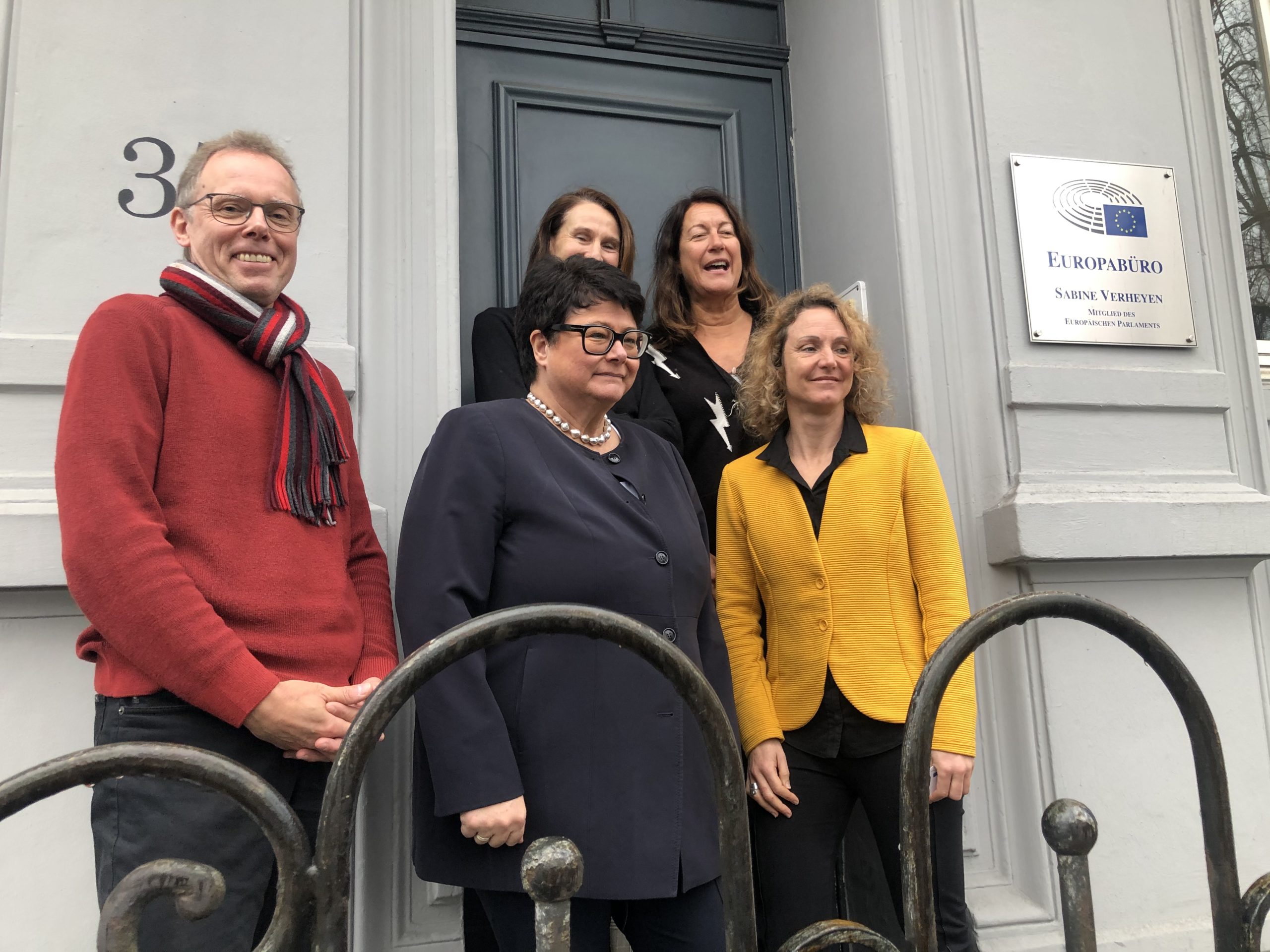
Journalists meet with European Parliament’s Culture Chair Sabine Verheyen

On 27 January, a delegation of journalists from the Europa Commission of the Deutscher Journalisten-Verband (DJV) together with EFJ Director Renate Schroeder met with German MEP Sabine Verheyen (EPP) the chair of the European Parliament’s Committee on Culture and Education in her national office in Aachen (Germany). Headed by its chair Steffen Heinze (Deutsche Welle), the meeting discussed many issues of importance to journalists. Verheyen addressed the increasingly precarious situation of journalists in Europe and expressed great concern about the increased violations against media freedom, the problem of disinformation and in particular the phenomenon of “deep fake”. The issue of…

Turkish press authority cancels press cards of hundreds of journalists

The Turkish press authority cancelled press cards of hundreds of journalists, but did not give any reason for the measure. The International and European Federations of Journalists (IFJ and EFJ), along with their national affiliates, the Journalists’ Union of Turkey (TGS) and DİSK Basın-Is, urge the authorities to revoke this decision and reissue immediately new press cards to their holders. The decision concerned hundreds of journalists who found out that the Directorate General of Press and Information in Prime Ministry’s Office had cancelled their press cards, when they received their press cards with a “cancelled” stamp inside the back cover.…

European press councils stand out as key players to face political interference, disinformation and confidence crisis in media

Are press councils the last defences against the falling confidence in journalism? On the occasion of its 10th anniversary, the Belgian French press council (Conseil de déontologie journalistique – CDJ) organised a European forum in Brussels, on 21-22 January, to raise awareness about the role of press councils. The event addressed in particular, on a panel, the stakes of ethics dealing with political interference and pressure on journalists. Threats on journalists are increasing in Europe under various forms while greatly impacting media freedom, reminded Ernest Sagaga, Head of Human Rights at the International Federation of Journalists. The Council of Europe…

Ukraine: journalists’ union rejects new draft law on disinformation

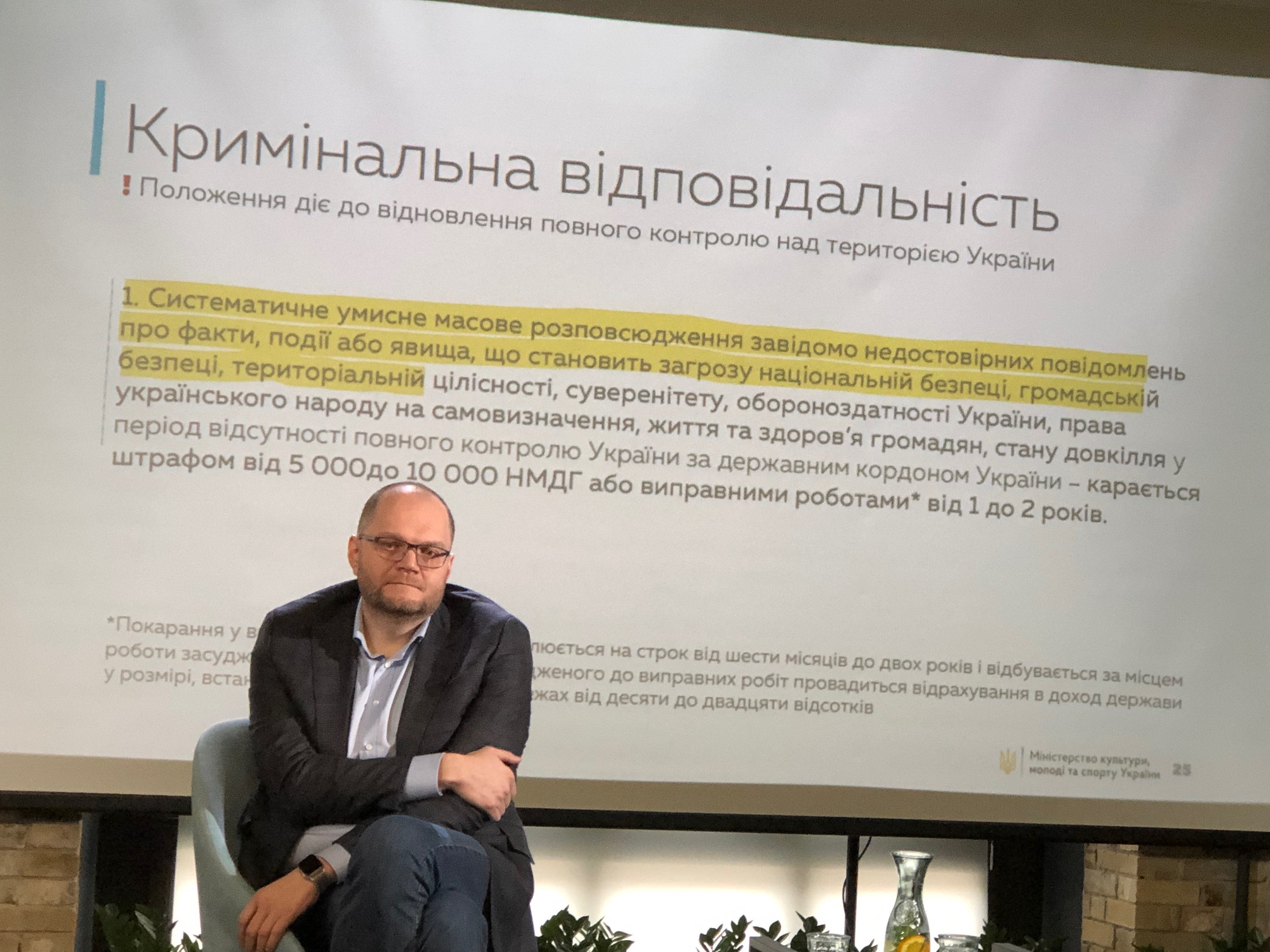
On January 20, the Ukrainian Ministry of Culture, Youth and Sports has unveiled a draft law on combating disinformation and regulating media activity.  According to the minister of Culture, Volodymyr Borodyansky, the text aims to respond to Russian disinformation. However, the journalistic community believes that this initiative is likely to be used as a tool for harassing Ukrainian journalists. In particular, the Nation Union of Journalists of Ukraine (NUJU) warns that the law would legalise state interference in the journalistic profession and restrict media workers’ rights. The document outlines new rules on media regulation and journalistic activity. It foresees criminal…

The Press Freedom Police Codex launches in France

In recent weeks, there has been an escalation in the incidences of violence by police against journalists, especially in France. There could not be a better time to establish a dialogue between the groups and to work towards stopping the violence. This is why the European Centre for Press and Media Freedom (ECPMF) has joined the French Union of Journalists of the Confédération générale du travail (SNJ-CGT), to launch its Press Freedom Police Codex in Paris. The codex was developed by ECPMF and partner organisations based on research conducted across Europe on the situation of journalists. ECPMF teamed up with…

Journalists’ and press freedom organisations welcome start of trial in Kuciak murder

The undersigned international and regional press freedom and journalism groups welcome the start of the murder trial this week against the suspected killers of Slovak journalist Ján Kuciak and his fiancée, Martina Kušnírova. The suspects on trial at the Specialized Criminal Court in Pezinok, Slovakia, include the alleged mastermind, Slovak businessman Marian Kočner, who prosecutors say ordered Kuciak’s murder in retaliation for his journalistic work. A confidante of Kočner’s, Alena Zsuzsová, is charged with having arranged the murder via a middleman, Zoltán Andruskó, who in turn contracted two alleged hitmen, cousins Tomáš Szabó and Miroslav Marček. Andruskó previously admitted guilt…