European Federation of Journalists

openMedia, investigating press freedom

Title of the project : openMedia, investigating press freedom
Lead Applicant
: openDemocracy

Partner organisations : EFJ, Index on censorship, King’s College London

The recently launched openMedia project aims to investigate and expose commercial interference in editorial decisions. The project is run by openDemocracy with the European Federation of Journalists (EFJ) as a partner alongside the Index on Censorship and King’s College London.

The project believes that there has not been enough of a concerted, ongoing spotlight on the extent and effects of commercial influence over the media, despite the dangerous consequences it poses for press freedom. For now, the project focuses on 47 countries across Europe but also has ambitions to expand.

Despite the recent launch, the project is adamant that it is not a response to the “fake news” hype of the past year or so. Rather, the project responds to scandals of commercial sponsors influencing media content; for example the Daily Telegraph’s suppression of investigations into its advertiser HSBC; and allegations that Buzzfeed deleted articles which advertisers found unfavourable.

According to the project, this power dynamic can suppress investigations of banks, pharmaceuticals, agriculture, fossil fuel giants, energy companies and other big businesses.

In addition, the project recognizes how for many readers, “sponsored content” is difficult to distinguish from genuine news content. The project therefore aims to clarify the commercial interests apparent in media to readers, and as part of the project, King’s College London will develop digital tools to help readers be better informed about news sources.

The findings of the project will be used to campaign for greater transparency and press freedom in news organisations and to empower journalists to advocate for transparency.

In order to do this, openMedia is currently conducting a confidential and anonymous survey of journalists across Europe, asking about their own working practices and experiences of commercial pressure inside newsrooms. The survey is available in English here and in many other languages here.
Actions

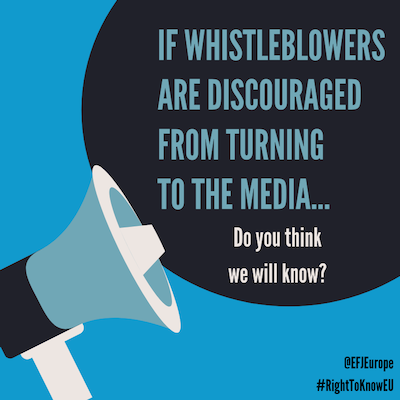
UN and OSCE media freedom watchdogs raised concerns over the EU whistleblowing directive

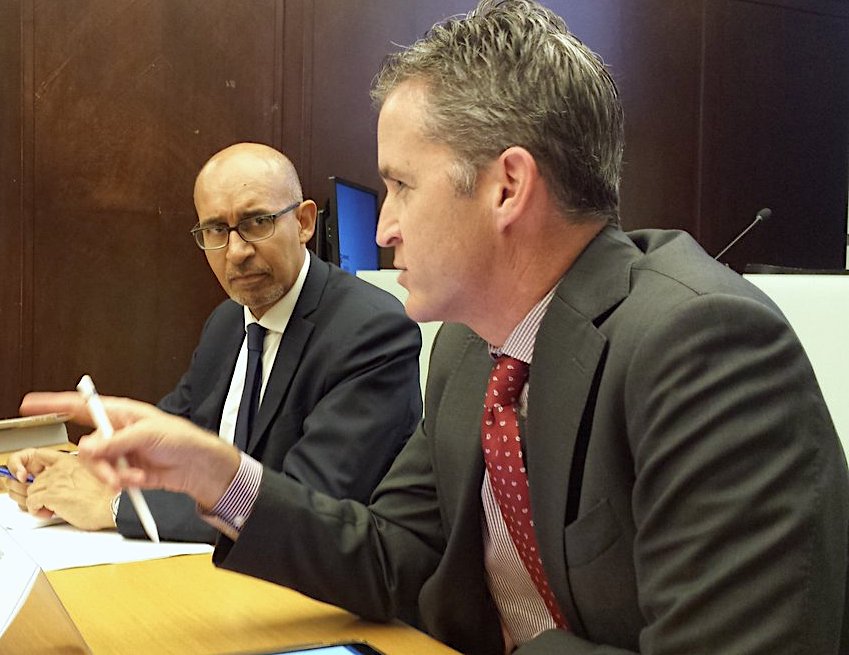
In a letter sent on 5 March to the European institutions, the UN Special Rapporteur on the promotion and the protection of the right to freedom of opinion and expression, David Kaye, and the OSCE Representative on Freedom of the Media, Harlem Désir, raised concerns about three aspects of the draft directive on the protection of whistleblowers. This letter is published as the negotiations between the European Parliament, the Council of the EU and the European Commission are in the final stretch. The last trilogue meeting will be on Monday 11 March. The tiered reporting system This is the main…

Croatian journalists stage protest against abusive lawsuits

Several hundred journalists rallied in Zagreb on Saturday to protest against a wave of lawsuits targeting the media. According to the Croatian Journalists’ Association (HND), an EFJ affiliate, which organized the march, politicians, public figures and corporations had filed over 1,100 lawsuits against journalists and news outlets. HND says these court cases are part of an attempt to censor the media and put pressure on journalists. The protest was called after Croatian public broadcaster HRT itself filed 36 lawsuits against its own journalists and others, including HND head Hrvoje Zovko and HND branch in Public Service Media, who complained of…

EU Whistleblowing Directive: protection for companies or for whistleblowers?

As the EU’s flagship whistleblowing Directive reaches the final stage of negotiations between national Governments and the European Parliament, the European Federation of Journalists (EFJ) joins the European Trade Union Confederation (ETUC) to warn that the EU risks ending up with a Directive that protects companies more than it protects whistleblowers! “Some member states are insisting that whistleblowers must first go through an internal reporting procedure,” said Esther Lynch, Confederal Secretary of the ETUC. “This is not in the interests of those exposing wrong-doing or the public. It would give companies every opportunity to cover up their wrong-doing and to…

New online platform to change “pale and male” media content

Building bridges among journalists, students and media educators to improve gender equality in newsrooms and media content. This is what the Advancing Gender and Equality in Media Industries (AGEMI) project stands for. On 26th February, the EU-funded project launched its online platform on gender and media at the Press Club in Brussels. The web platform provides a resource bank of over 100 best practices on gender equity in media as well as free learning resources to support journalism trainers and educators in their curricula. The project itself also included a summer school and internships for 30 students across the EU.…

European whistleblowers call for a better directive

In an open letter to the European Council, Commission and Parliament, five well-known European whistleblowers speak out for changing the directive and removing barriers for safe reporting. This letter is published as the negotiations between the European institutions are entering the final stretch. The European Council, Commission and Parliament have started the trilogue phase since the end of January and one main point of discord remains: what procedure whistleblowers should follow to be granted protection against retaliation? The draft directive indicates three reporting channels: internal within the company, external to an authority, and public including through the press. In the…

AGEMI is launching new platform on gender and media

The Advancing Gender Equality in the Media Industries (AGEMI), an EU funded project, is launching its web platform to build bridges between educators, media and media students to improve gender equality in media content and in the newsrooms. The launch is taking place during a seminar organised by AGEMI at the Brussels’ Press Club in Belgium today. The AGEMI consortium is composed of the Universities of Newcastle, Padova and Gothenbörg, as well as the European Federation of Journalists (EFJ) and the Permanent Conference of the Mediterranean Audiovisual Operators (COPEAM). The AGEMI platform provides a resource bank of over 100 best…