European Federation of Journalists

openMedia, investigating press freedom

Title of the project : openMedia, investigating press freedom
Lead Applicant
: openDemocracy

Partner organisations : EFJ, Index on censorship, King’s College London

The recently launched openMedia project aims to investigate and expose commercial interference in editorial decisions. The project is run by openDemocracy with the European Federation of Journalists (EFJ) as a partner alongside the Index on Censorship and King’s College London.

The project believes that there has not been enough of a concerted, ongoing spotlight on the extent and effects of commercial influence over the media, despite the dangerous consequences it poses for press freedom. For now, the project focuses on 47 countries across Europe but also has ambitions to expand.

Despite the recent launch, the project is adamant that it is not a response to the “fake news” hype of the past year or so. Rather, the project responds to scandals of commercial sponsors influencing media content; for example the Daily Telegraph’s suppression of investigations into its advertiser HSBC; and allegations that Buzzfeed deleted articles which advertisers found unfavourable.

According to the project, this power dynamic can suppress investigations of banks, pharmaceuticals, agriculture, fossil fuel giants, energy companies and other big businesses.

In addition, the project recognizes how for many readers, “sponsored content” is difficult to distinguish from genuine news content. The project therefore aims to clarify the commercial interests apparent in media to readers, and as part of the project, King’s College London will develop digital tools to help readers be better informed about news sources.

The findings of the project will be used to campaign for greater transparency and press freedom in news organisations and to empower journalists to advocate for transparency.

In order to do this, openMedia is currently conducting a confidential and anonymous survey of journalists across Europe, asking about their own working practices and experiences of commercial pressure inside newsrooms. The survey is available in English here and in many other languages here.
Actions

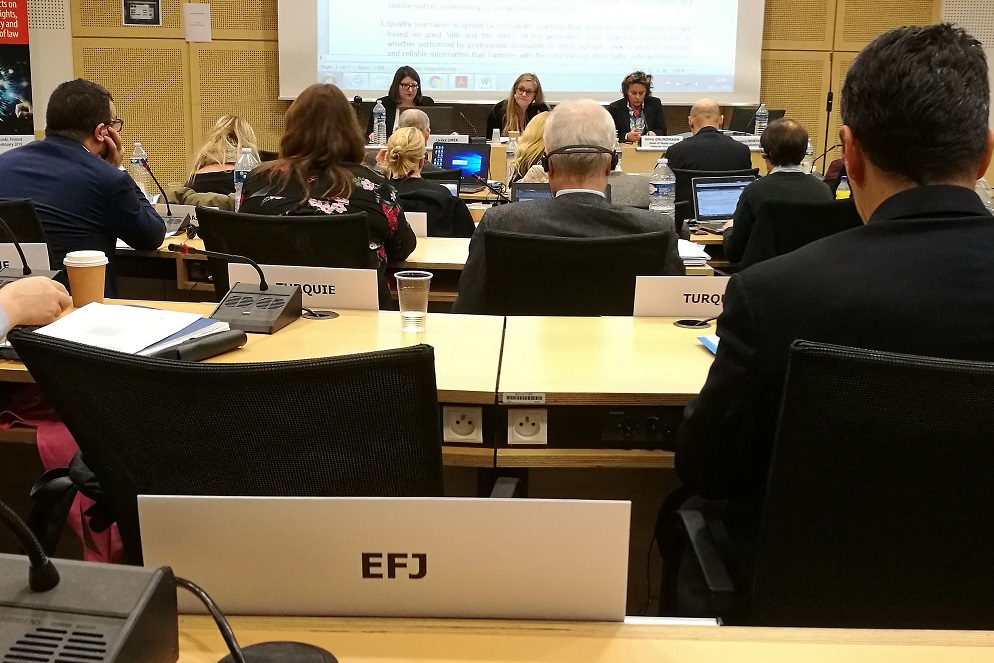
Council of Europe debates “quality journalism” and safety of journalists

Meeting in Strasbourg on 27-30 November, the Council of Europe Steering Committee on Media and Information Society (CDMSI) went through the details of a draft “Declaration on the financial sustainability of quality journalism in the digital age”. The text proposes for example to create “redistribution mechanisms between online platforms and media companies” and to “support measures to counter the progressive deterioration of the working conditions of journalists”. Most of the discussion was dedicated to the preamble of the draft Declaration: whereas most delegations agreed that “quality journalism extends the range of diverse, credible, interesting and timely information available to the…

Finnish trade union coalition demands more bargaining power for self-employed workers

On 20th November,  a trade union coalition called Itset, representing self-employed workers, has published a list of goals to improve the situation of self-employed workers ahead of the Finish parliamentary elections in April 2019. Many unions, NGOs and other interest groups are now drafting and publishing their manifestos. Itset, who represents all three Finish trade union confederations including the Union of Journalists in Finland (UJF) , recognizes lack of fair compensation and contracts for freelancers, as well as the fact that the current legal definition of employment is too narrow. The European Federation of Journalists (EFJ) joins its affiliate, the UJF, in…

Italy: increasing attacks against status of journalists

On 27 November, Italian MEP Isabella De Monte (S&D) organised the event “The challenges of European Journalism”, taking as an example the recent problems of Italian journalism, such as politicians’ attempts to undermine public media credibility and the difficult economic situation of Italian journalists and media, to discuss about the more widespread attacks to free press throughout Europe. An issue that has to be addressed right now before the European elections with disinformation on the rise said De Monte. The European Federation of Journalists (EFJ) was represented by its director Renate Schroeder, participating together with Raffaele Lorusso, general secretary of the affiliate Federazione Nazionale della Stampa…

Hungary: new pro-government media conglomerate threatens pluralism

The European and International Federations of Journalists (EFJ-IFJ) join their affiliates in Hungary, HPU and MUOSZ, in calling on Hungarian authorities to obstruct the formation of a huge media conglomerate that questions media pluralism. The owners of a majority of Hungary’s pro-government media outlets said Wednesday they are donating their companies to a foundation, the “Central European Press and Media Foundation”. This new right-wing media conglomerate will include cable news channels, online news portals, tabloid and sports newspapers and all of Hungary’s county newspapers, several radio stations and numerous magazines. Among the media companies to be under its control are Echo Penisola Ltd.…

Risks for media pluralism and safety of journalists are increasing across Europe

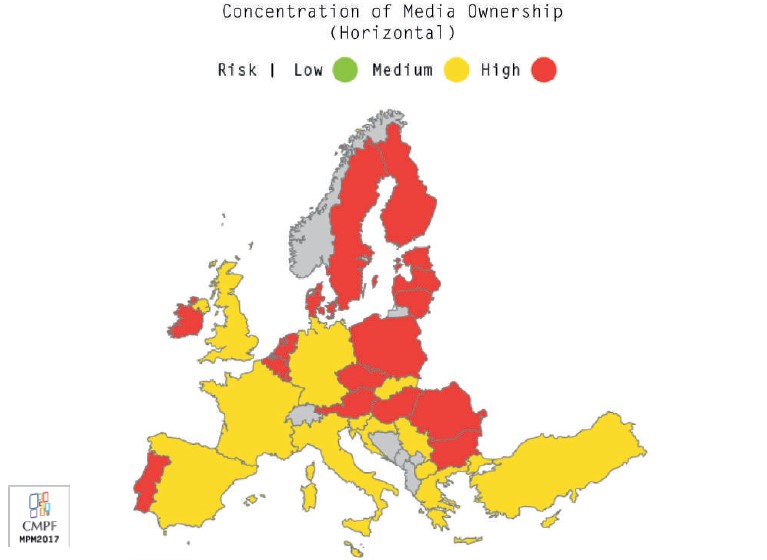
The Media Pluralism Monitor (MPM) has examined 28 European Union Member States as well as three candidate countries: Turkey, Serbia and Macedonia. The results of this second EU-wide implementation of the MPM show either general stagnation or deterioration in all of the major areas encompassed by the MPM and confirm that no country analysed is free from risks to media pluralism. The Centre for Media Pluralism and Media Freedom (CMPF), based in Florence, has just published its 2017 Media Pluralism Monitor reports (#MPM2017). Year 2017 was marked by events that have had a significant impact on media freedom and media…

Sweden: Freelance fees recommendation will be increased in 2019

On November 12, the Swedish Union of Journalists (SJ) announced an increase of the recommended fees for freelances by 1.8 percent starting January 2019. The increase will concern also fixed freelance fees. This is to adjust the increased salaries by 1.8 percent accomplished through the recent collective agreement. The European Federation of Journalists (EFJ) supports its Swedish affiliate in this decision, recognizing that recommendations play a crucial role for many freelancers. Since the 1970s, the SUJ has issued recommended freelance rates per hour, equivalent to the average monthly wage of an employed journalist. This “freelance recommendation” consists partly in a recommended…