European Federation of Journalists

openMedia, investigating press freedom

Title of the project : openMedia, investigating press freedom
Lead Applicant
: openDemocracy

Partner organisations : EFJ, Index on censorship, King’s College London

The recently launched openMedia project aims to investigate and expose commercial interference in editorial decisions. The project is run by openDemocracy with the European Federation of Journalists (EFJ) as a partner alongside the Index on Censorship and King’s College London.

The project believes that there has not been enough of a concerted, ongoing spotlight on the extent and effects of commercial influence over the media, despite the dangerous consequences it poses for press freedom. For now, the project focuses on 47 countries across Europe but also has ambitions to expand.

Despite the recent launch, the project is adamant that it is not a response to the “fake news” hype of the past year or so. Rather, the project responds to scandals of commercial sponsors influencing media content; for example the Daily Telegraph’s suppression of investigations into its advertiser HSBC; and allegations that Buzzfeed deleted articles which advertisers found unfavourable.

According to the project, this power dynamic can suppress investigations of banks, pharmaceuticals, agriculture, fossil fuel giants, energy companies and other big businesses.

In addition, the project recognizes how for many readers, “sponsored content” is difficult to distinguish from genuine news content. The project therefore aims to clarify the commercial interests apparent in media to readers, and as part of the project, King’s College London will develop digital tools to help readers be better informed about news sources.

The findings of the project will be used to campaign for greater transparency and press freedom in news organisations and to empower journalists to advocate for transparency.

In order to do this, openMedia is currently conducting a confidential and anonymous survey of journalists across Europe, asking about their own working practices and experiences of commercial pressure inside newsrooms. The survey is available in English here and in many other languages here.
Actions

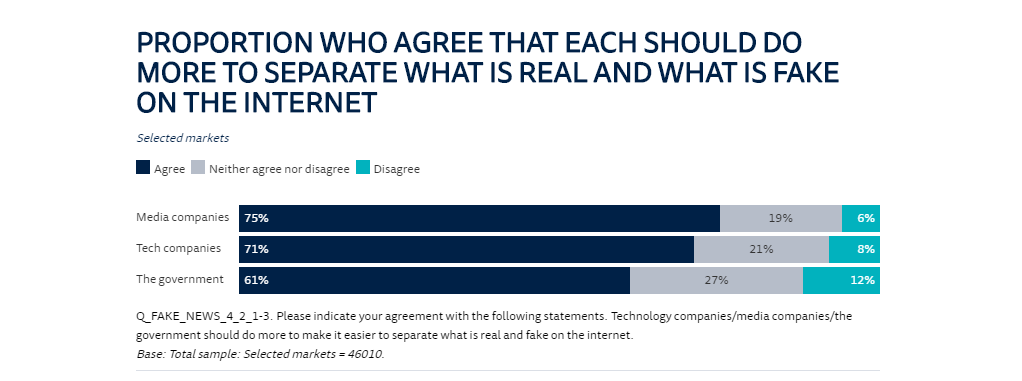
Publishers and tech companies should take responsibility for fixing misinformation, says 2018 Digital News Report

Concerns on the quality and reliability of news has grown globally during the year 2017-2018, and consumers are expecting the media companies and technology companies to take action against the misinformation, while the opinions are much more mixed when it comes to government intervention in these cases. The 2018 Digital News Report, published on 14 June by the Reuters Institute for the study of journalism, reveals more interesting patterns and changes in the behaviour of news consumption globally. Growing concerns on misinformation The research shows that 54% of respondents globally are concerned about what is real or fake on internet.…

EFJ and IFJ concerned by disappearance of Serbian journalist Stefan Cvetković

UPDATE 15.06.2018 Stefan Cvetković, the Serbian journalists reported missing on the night between 13-14 of June, has been found unhurt by the local authorities in the northern town of Bela Crkva and has been taken to the local police station, the President of Serbia Aleksandar Vucic told in a news conference. The further information on the situation is yet to be released. ———————- European and International Federations of Journalists (EFJ and IFJ) expressed a deep concern regarding the disappearance of a Serbian journalist Stefan Cvetković on the night between 13th and 14th of June 2018, as reported by the local authorities. Stefan Cvetković has been…

Photo exhibition: Journalists’ working conditions in Western Balkans and Turkey is not only about the danger

The life threatening conditions of journalists working in Western Balkans and Turkey is a part of everyday reporting, however, the struggle is not always about the danger, as noted by Renate Schroeder, director of the European Federation of Journalists (EFJ). The opening remarks were made at the preview of the photo exhibition “Journalists’ working conditions in Western Balkans and Turkey” on the 12th of June 2018, at the Press Club Brussels. The photographs from local photographers and photojournalists depict the reality which tends to be kept behind the lenses of reporting – ranging from being on guard on the field…

Young, freelance and female journalists should be the priorities for trade unions

How to renew and modernise journalists’ unions in order to face tomorrow and manage change in the media? More than 40 leaders of journalists’ organisations across Europe gathered in Lisbon, Portugal, on 4-5 June 2018, to discuss the above-mentioned issues in a workshop organised by the European Federation of Journalists (EFJ), together with its affiliate in Portugal, Sindicatos dos jornalistas (SJ). Reach out to the young and freelance journalists The participants strongly agreed on the importance to address the needs of the new generation of journalists, particularly affected by job insecurity. Studies shows that their salaries are lower and their labour rights…

Resolutions 2018 EFJ AM Lisbon

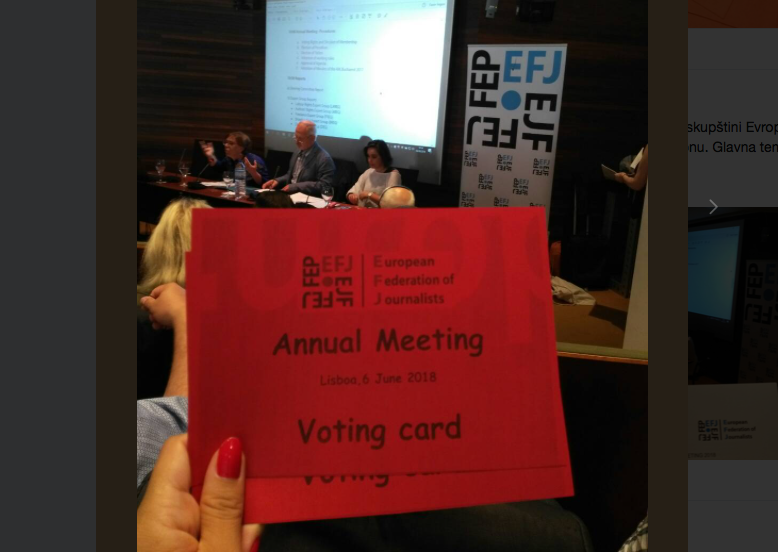
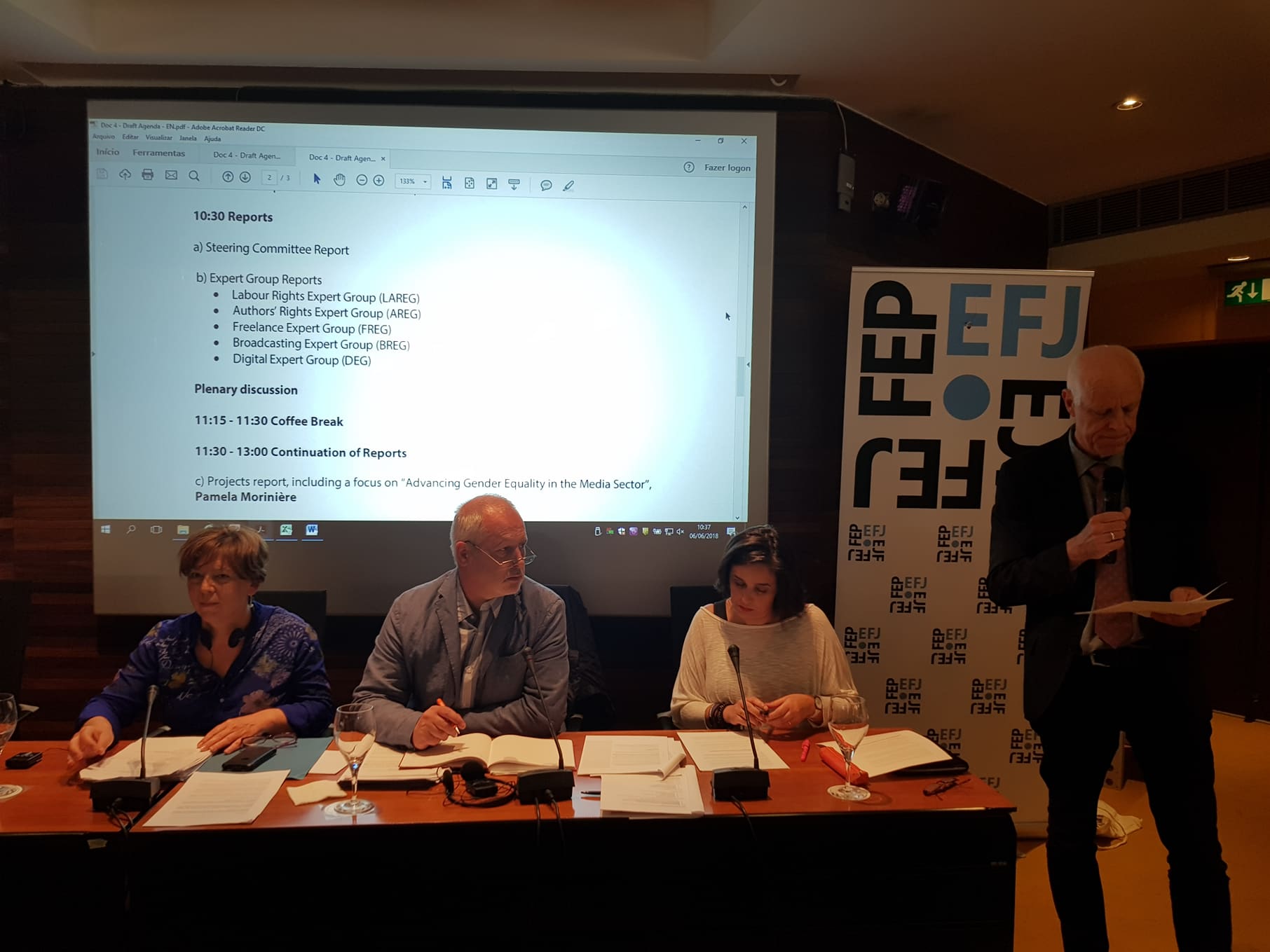
The Annual Meeting of the European Federation of Journalists (EFJ) on 6 June, 2018 adopted a series of resolutions and declarations.   Resolutions & Declarations – 2018 (EN) Résolutions et déclarations – 2018 (FR) Welcome speech by EFJ President Mogens Blicher Bjerregard President speech – Steering Committee report   Photo Credit :  @sindikatmedija

President’s speech at the EFJ Annual Meeting 2018 Lisbon

Speech by Mogens Blicher Bjerregård (EFJ President) Welcome to the EFJ Annual meeting 2018. For the first time we have our annual meeting in Portugal and it is great to be here, thanks to our Portuguese colleagues to host us. Being host during difficult times is admirable. You know better than most of us how difficult the time is for our profession regarding precarious work, low payment and dismissals. I also want to emphasize that it is amazing how your union has been able – not least en terms of relevance – to develop and to meet new demands in very difficult…