European Federation of Journalists

openMedia, investigating press freedom

Title of the project : openMedia, investigating press freedom
Lead Applicant
: openDemocracy

Partner organisations : EFJ, Index on censorship, King’s College London

The recently launched openMedia project aims to investigate and expose commercial interference in editorial decisions. The project is run by openDemocracy with the European Federation of Journalists (EFJ) as a partner alongside the Index on Censorship and King’s College London.

The project believes that there has not been enough of a concerted, ongoing spotlight on the extent and effects of commercial influence over the media, despite the dangerous consequences it poses for press freedom. For now, the project focuses on 47 countries across Europe but also has ambitions to expand.

Despite the recent launch, the project is adamant that it is not a response to the “fake news” hype of the past year or so. Rather, the project responds to scandals of commercial sponsors influencing media content; for example the Daily Telegraph’s suppression of investigations into its advertiser HSBC; and allegations that Buzzfeed deleted articles which advertisers found unfavourable.

According to the project, this power dynamic can suppress investigations of banks, pharmaceuticals, agriculture, fossil fuel giants, energy companies and other big businesses.

In addition, the project recognizes how for many readers, “sponsored content” is difficult to distinguish from genuine news content. The project therefore aims to clarify the commercial interests apparent in media to readers, and as part of the project, King’s College London will develop digital tools to help readers be better informed about news sources.

The findings of the project will be used to campaign for greater transparency and press freedom in news organisations and to empower journalists to advocate for transparency.

In order to do this, openMedia is currently conducting a confidential and anonymous survey of journalists across Europe, asking about their own working practices and experiences of commercial pressure inside newsrooms. The survey is available in English here and in many other languages here.
Actions

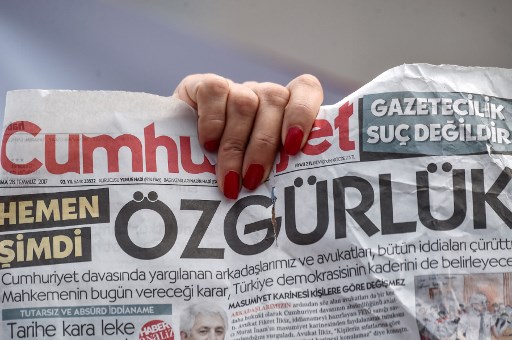
Turkey: Four Cumhuriyet journalists ordered to remain in prison

At a hearing on 25 December 2017, a Turkish judge ordered four journalists and senior staff from the newspaper Cumhuriyet to remain in prison for at least two more months during their trial. The newspaper’s editor-in-chief Murat Sabuncu, attorney Akin Atalay, correspondent Ahmet Şık and accountant Emre Iper, are charged with supporting through their coverage three outlawed groups: The Kurdistan Workers’ Party (PKK), the Revolutionary People’s Liberation Party-Front (DHKP-C), and the Gülen network. They face up to 43 years in prison if convicted. The newspaper and staff have denied the charges, and argue that they are being targeted to silence…

“Information Disorders”: Council of Europe committee discusses recommendations to tackle fake news

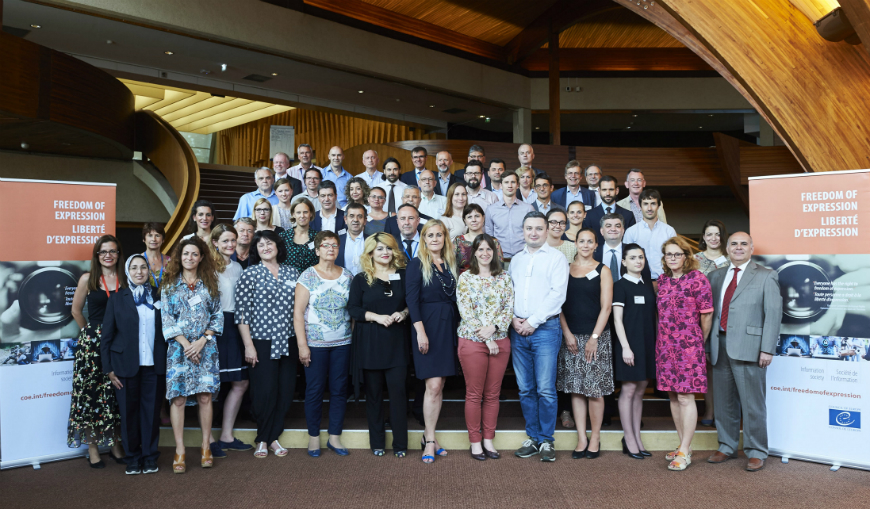
At the meeting of the Council of Europe Steering Committee on Media and Information Society (CDMSI), from 5 to 8 December 2017, participants discussed a series of documents and recommendations currently relevant for journalists and media workers. A study by Claire Wardle and Hossein Derakhshan, commissioned by the Council of Europe, highlighted the various aspects of what the authors call “Information Disorders” (not “fake news”). These information disorders come in three forms: misinformation, disinformation and malinformation. Information disorders can be organised or unorganised, and are emotional, visual and repetitive. To counter information disorders, the authors recommend action by content providers…

Republic of Macedonia: High time to protect Media Freedom

Report on the April 2017 Joint International Mission In a joint mission, the European Centre for Press and Media Freedom (ECPMF), the European Federation of Journalists (EFJ), the South East Europe Media Organisation (SEEMO), and the Osservatorio Balcani e Caucaso Transeuropa (OBCT) observed the situation of journalists and media workers in the Republic of Macedonia. The on-site research in Macedonia in April 2017 was motivated by the deterioration of the safety of journalists through the increasing number in verbal and physical attacks. This report indicates that through complex set of mechanism the previous government, as well as authorities, gave their…

Greece: journalists’ union ESIEMTH and two municipal media attacked in Thessaloniki

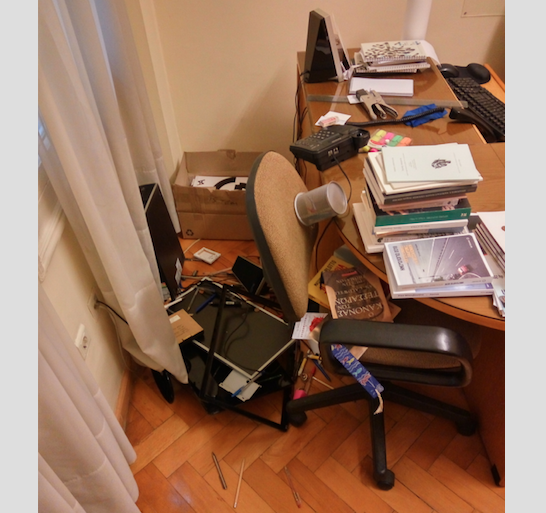
The European and International Federation of Journalists (EFJ/IFJ) condemn the attacks that took place in Thessaloniki (Greece) on 20 and 21 December 2017, against the Journalists’ Union of Macedonia and Thrace Daily Newspapers (ESIEMTH) and two municipal media. Today at noon, the ESIEMTH headquarters were attacked by around ten hooded assailants. The staff were threatened and asked not to move as the intruders said that “an intervention (was) about to take place”. They destroyed two PCs, a TV set and other material such as chairs and a printer before leaving the office. ESIEMTH told the EFJ that the police has launched an investigation. Yesterday, what…

EU directive on transparent and predictable working conditions

Responding today to the European Commission’s proposal for a Directive on Transparent and Predictable Working Conditions, Esther Lynch, ETUC Confederal Secretary, welcomed some important improvements, although this reform is not the game-changer unions needed or expected. “Many of the provisions in this new measure, replacing the Written Statement Directive, represent a significant improvement. For example, all workers will be entitled to a written statement from the first day of employment. This means seasonal agriculture, domestic, on-demand, intermittent, voucher-based and platform workers will be effectively covered. And the Directive goes further in proposing very helpful provisions to ensure that online platforms…

Eurobarometer survey shows whistleblowing is seen as difficult and dangerous

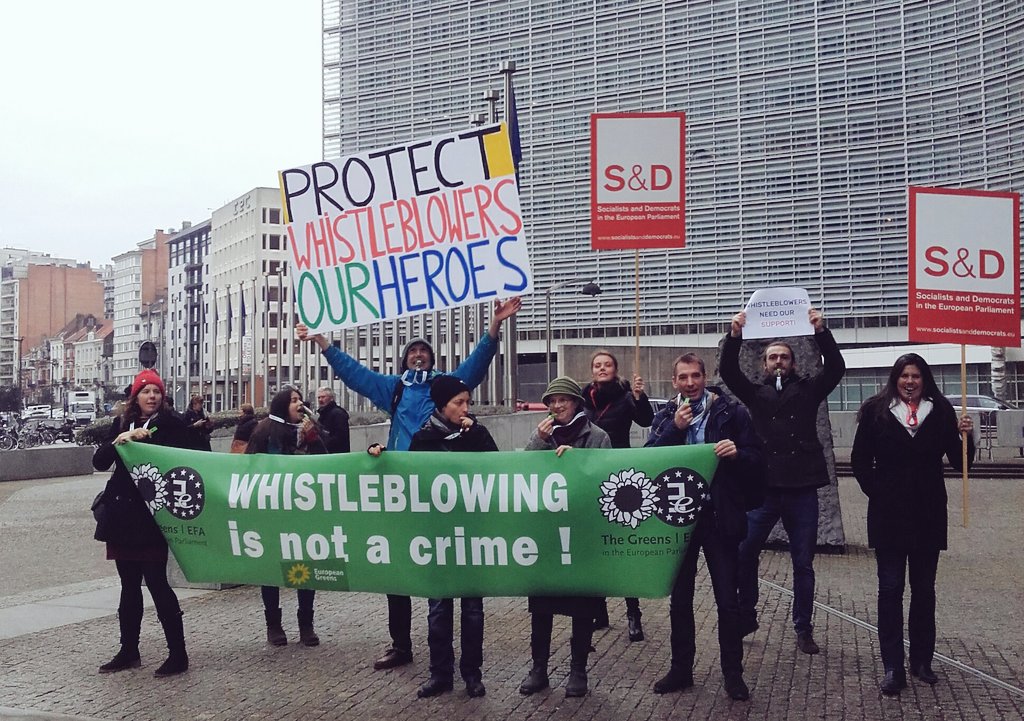
The latest Special Eurobarometer on Corruption, published on 19 December 2017, shows a widespread perception that whistleblowers across Europe face a difficult and dangerous situation. This collection of surveys across 28 European Union member states, conducted by the European Commission, focuses on corruption, giving a clear overview of the state of corruption in Europe. According to the results, more than two thirds (68%) of Europeans think that corruption is widespread in their country. This number has fallen by 8% since 2013, however the majority of Europeans (73%) still believe that there is corruption in national public institutions, and that the…