European Federation of Journalists

openMedia, investigating press freedom

Title of the project : openMedia, investigating press freedom
Lead Applicant
: openDemocracy

Partner organisations : EFJ, Index on censorship, King’s College London

The recently launched openMedia project aims to investigate and expose commercial interference in editorial decisions. The project is run by openDemocracy with the European Federation of Journalists (EFJ) as a partner alongside the Index on Censorship and King’s College London.

The project believes that there has not been enough of a concerted, ongoing spotlight on the extent and effects of commercial influence over the media, despite the dangerous consequences it poses for press freedom. For now, the project focuses on 47 countries across Europe but also has ambitions to expand.

Despite the recent launch, the project is adamant that it is not a response to the “fake news” hype of the past year or so. Rather, the project responds to scandals of commercial sponsors influencing media content; for example the Daily Telegraph’s suppression of investigations into its advertiser HSBC; and allegations that Buzzfeed deleted articles which advertisers found unfavourable.

According to the project, this power dynamic can suppress investigations of banks, pharmaceuticals, agriculture, fossil fuel giants, energy companies and other big businesses.

In addition, the project recognizes how for many readers, “sponsored content” is difficult to distinguish from genuine news content. The project therefore aims to clarify the commercial interests apparent in media to readers, and as part of the project, King’s College London will develop digital tools to help readers be better informed about news sources.

The findings of the project will be used to campaign for greater transparency and press freedom in news organisations and to empower journalists to advocate for transparency.

In order to do this, openMedia is currently conducting a confidential and anonymous survey of journalists across Europe, asking about their own working practices and experiences of commercial pressure inside newsrooms. The survey is available in English here and in many other languages here.

Actions

Romania: FAIR-MediaSind signed a collective agreement with Agerpres

The Romanian affiliate of the European Federation of Journalists (EFJ), the Federation Culture and Media FAIR-MediaSind, negotiated and signed a collective agreement on 2 March 2017 with the national news agency Agerpres for the period 2017-2019. The collective agreement contains new clauses as well as new dispositions regarding holidays, pension and the Ethics and Discipline Committee. The article 22 introduces three days off on June 1 (for all employees), March 8 (for women) and November 19 (for men). The article 80 introduces the payment of seven months’ severance in case of redundancies and three in case of retirement. The article…

Russia: Sexist of the year 2016

Sexist of the year award ceremony took place in Moscow on March 10. The annual ceremony was initiated six years ago by Russian feminist group “Pro Feminism”. Blogger Natalia Bitten, the founder of the award, said that the aim of the ceremony is to combat hate speech and humiliation of women. Dozens of news-makers, politicians, religious leaders, journalists and academics have been nominated for five different awards this year. The news-portal Gazeta.ru and biologist Alexander Markov won the ‘Sexist in the Media” award for the article “It is beneficial for women to be illiterate”, where the scientist claimed that from…

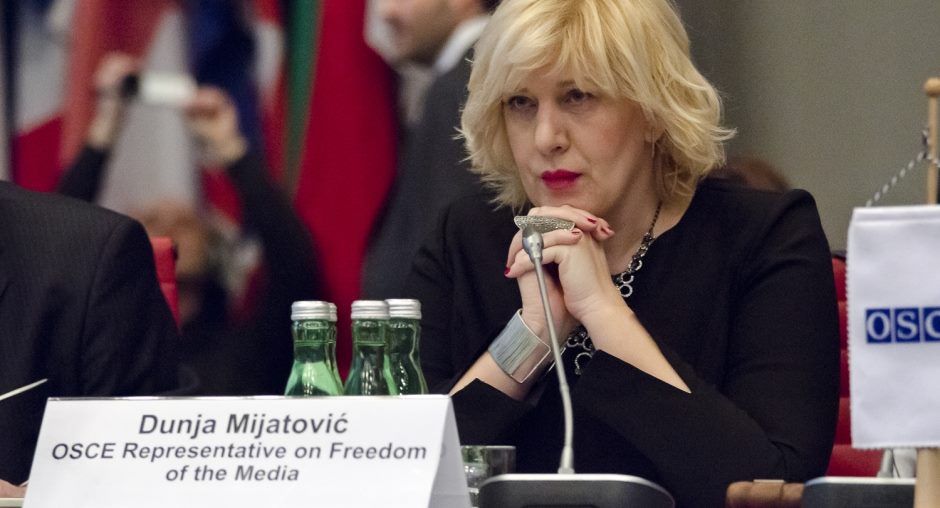
Dunja Mijatović to journalists: “Never give in; never give up”

Dunja Mijatović, OSCE representative on Freedom of the Media, will leave office on Friday 10 March. The European Federation of Journalists (EFJ) would like to reiterate its call – defended in a letter on 16 February 2017 – to ensure continuity of the Office of OSCE Representative on Freedom of the Media. The EFJ, as many media organisations, strongly believe in the high value and importance of this Office. Dunja Mijatović gave her final speech today during the presentation of her final report to the OSCE Permanent Council. She reflected on her seven years in office and highlighted the need…

Kosovo: towards a better protection of the press for legislative proceedings

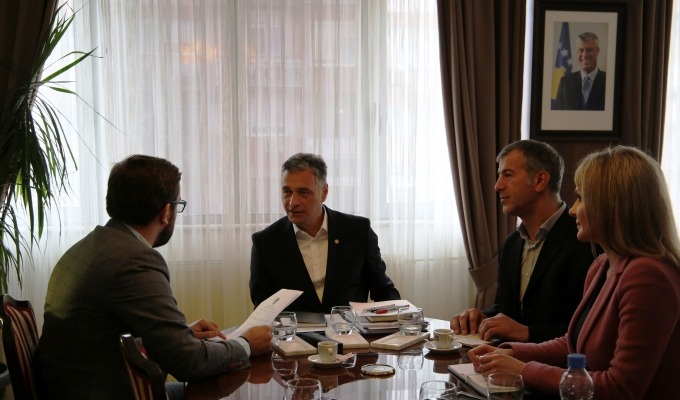
Shkelqim Hysenaj, the president of the Association of Journalists of Kosovo (AJK), and researcher Petrit Collaku met on Wednesday 8 March with Aleksander Lumezi, the Kosovo’s State prosecutor, to discuss better protection for the journalists in the country. During the discussion, the AJK president shared his concerns regarding the inefficient justice system and the unsafe environment Kosovo represents for journalists. Shkelqim Hysenaj also presented to the state prosecutor the recommendations of the AJK report “The indicators of the level of media and journalists safety” published in December 2016. It recommends to improve the effectiveness of the justice system when dealing…

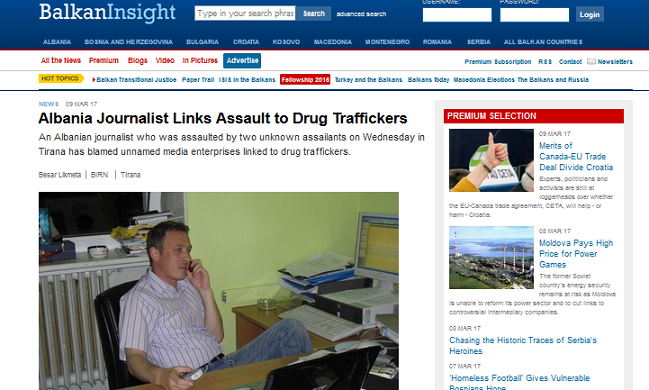
Albanian journalist Elvi Fundo attacked in Tirana

The European Federation of Journalists (EFJ) strongly condemns the attack perpetrated against Elvi Fundo, director of Citynews.al online portal and Radio Best, on Wednesday 8 March 2017 in Tirana, Albania. According to media reports, Elvi Fundo was beaten up by unidentified assailants near the train station. He was later sent to the hospital. He declared to Balkan Insight, the news portal of Balkan Investigative Reporting Network: “Two individuals attacked me near my office at 10.30 am, causing injuries (…) I don’t believe it’s a political attack but the work of criminals financed by corrupt media clans tied to drug-trafficking.” Albanian…

The ethical aspect of “robot” journalism

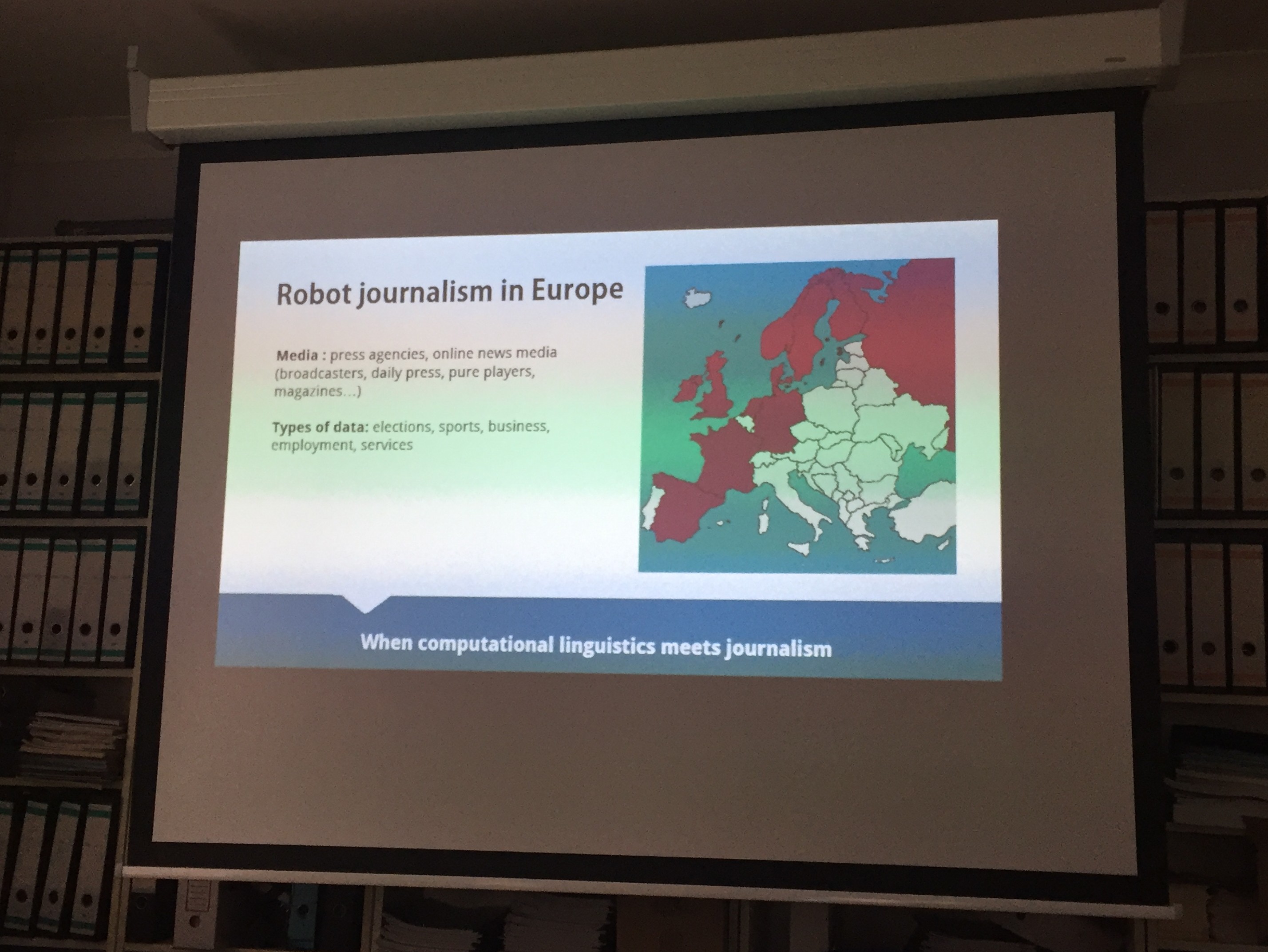
“Any human being, who is involved in a natural language generation (NLG) process, such as programmers or linguists, must take into account the ethical dimensions governing journalism” concluded Laurence Dierickx, a specialist in Computational Journalism, who was invited to the EFJ Digital Expert Group meeting, that took place on March 8 in Brussels. She explained that the computer scientists and start-up companies, who are heavily involved in the NLG, are not hold under the same ethical standards as journalists. Also in cases with automatically generated content, there is not always a mention that the article is written by a computer, which…