European Federation of Journalists

openMedia, investigating press freedom

Title of the project : openMedia, investigating press freedom
Lead Applicant
: openDemocracy

Partner organisations : EFJ, Index on censorship, King’s College London

The recently launched openMedia project aims to investigate and expose commercial interference in editorial decisions. The project is run by openDemocracy with the European Federation of Journalists (EFJ) as a partner alongside the Index on Censorship and King’s College London.

The project believes that there has not been enough of a concerted, ongoing spotlight on the extent and effects of commercial influence over the media, despite the dangerous consequences it poses for press freedom. For now, the project focuses on 47 countries across Europe but also has ambitions to expand.

Despite the recent launch, the project is adamant that it is not a response to the “fake news” hype of the past year or so. Rather, the project responds to scandals of commercial sponsors influencing media content; for example the Daily Telegraph’s suppression of investigations into its advertiser HSBC; and allegations that Buzzfeed deleted articles which advertisers found unfavourable.

According to the project, this power dynamic can suppress investigations of banks, pharmaceuticals, agriculture, fossil fuel giants, energy companies and other big businesses.

In addition, the project recognizes how for many readers, “sponsored content” is difficult to distinguish from genuine news content. The project therefore aims to clarify the commercial interests apparent in media to readers, and as part of the project, King’s College London will develop digital tools to help readers be better informed about news sources.

The findings of the project will be used to campaign for greater transparency and press freedom in news organisations and to empower journalists to advocate for transparency.

In order to do this, openMedia is currently conducting a confidential and anonymous survey of journalists across Europe, asking about their own working practices and experiences of commercial pressure inside newsrooms. The survey is available in English here and in many other languages here.

Actions

Closure of Swiss magazine L’Hebdo: Another blow to media pluralism

Ringier Axel Springer announced on January 23 their plans to close French-speaking magazine L’Hebdo.  Impressum,   the largest journalists’ organisation and the Trade Union of Media and Communications Syndicom  are both deeply concerned about the potential negative impact of the decision on media pluralism, investigative journalism and the future of the media in French-speaking Switzerland. The EFJ expressed its solidarity with their Swiss affiliates and offer full support. A petition was also launched and supported by both EFJ affliates  to demand alternative financial plans to continue or return the title. @EFJEUROPE @lhebdo @IFJGlobal signez la pétition pour @lhebdo https://t.co/zhle3ihJtF — syndicom…

The CoE adopted resolution on attacks against journalists

The Parliamentary Assembly of the Council of Europe on Tuesday discussed the rising levels of violence against journalists, particularly in Turkey, Russia and Azerbaijan. Ukrainian MP Volodymyr Ariev (EPP/CD), pictured above, presented the report, where he drew attention to the death of 16 journalists and the arrest of 150 media employees since January 2015 in member States. Mr. Ariev spoke about the deterioration of media freedom in Turkey and called for “release from detention all journalists who have not been indicted for actively participating in terrorist acts”. He also raised concerns on the media situation in Crimea and eastern parts of Ukraine.…

OSCE Representative condemns deterioration of media freedom in conflict-affected parts of Ukraine

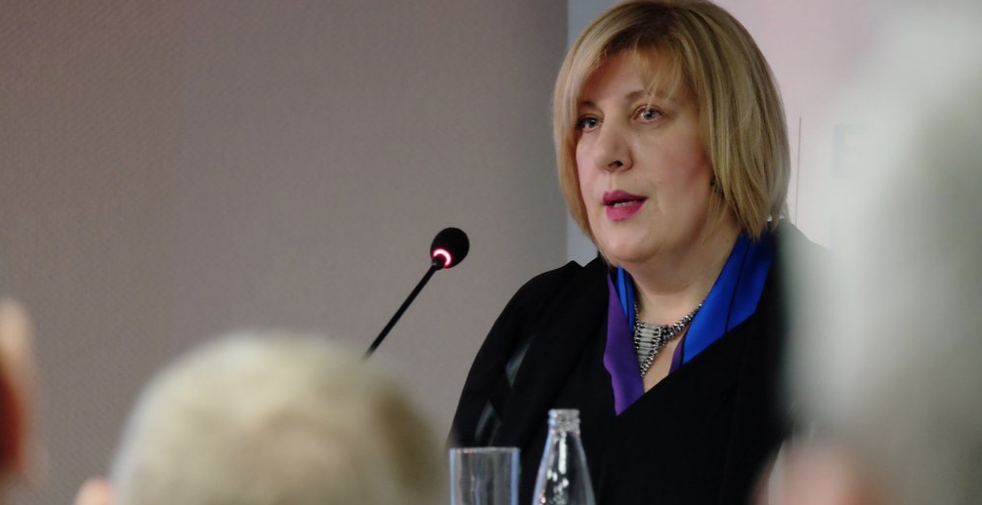
The Representative on Freedom of the Media Dunja Mijatović condemned today the worsening situation with media freedom and safety of journalists in areas not controlled by the Ukrainian government. This comment followed the recent report by OSCE Chief Monitor, Ambassador Ertugrul Apakan, where among others he spoke about the limitation of freedom of expression in the region. The OSCE Chief Monitor mentioned ban of over 350 websites and restrictions against Ukrainian media outlets. Mijatović noted that threats and intimidation of media workers along with the arrest of bloggers Eduard Nedelyaev and Gennadiy Benitskiy are particular worrying cases. She added: Access…

Republika Srpska President’s office limits access for selected media

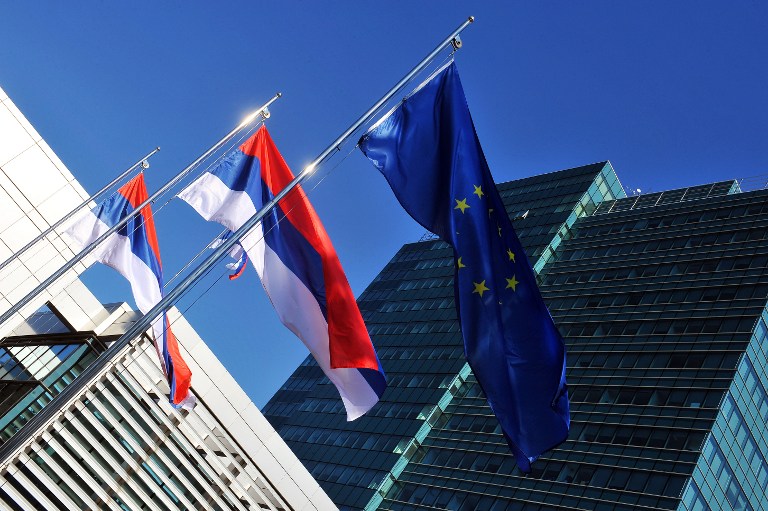
The European Federation of Journalists backs the Bosnia-Herzegovina Journalists Association (BHJA) in condemning the discriminatory actions by Republika Srpska (RS) President Milorad Dodik against selected media. On January 18 a news crew from N1 Television was denied access to a press conference in Banjaluka on the grounds that they didn’t have accreditation to enter the venue. The TV channel was also removed from the mailing list of the President’s office, which meant no further access to official newsletters or accreditation information that are necessary for the news coverage. BHJA  called these actions unreasonable discrimination against the well-known critical media outlet.…

Greece: stop threats against media pluralism!

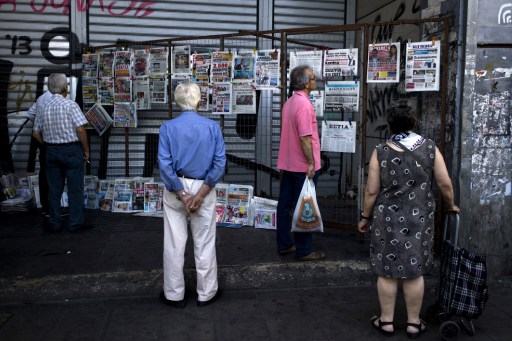
The International and European Federations of Journalists (IFJ and EFJ) have strongly backed calls by Greek journalists to prevent banks forcing the closure of the country’s oldest newspapers and threatening up to 500 jobs. The IFJ and EFJ have backed demands from their Greek affiliate, the Journalists’ Union of Athens Daily Newspapers (JUADN), to stop the banks foreclosing on the Lambriakis Press Group (DOL) loans.  The group, which owns the oldest national newspapers To Vima and Ta Nea, is facing serious trouble after the banks threatened to call in their loans. Over 500 media workers, including 250 journalists, most of…

EFJ welcomes European Parliament’s resolution on #Socialpillar

By adopting the draft report on “A European Pillar of Social rights” by Rapporteur Maria João Rodrigues (S&D, PT), the European Parliament adopted the principle of equal treatment saying that  “All workers should have their basic rights guaranteed, whatever their form of employment and contract”. This is one of the main demands the EFJ puts in the response to the Social pillar consultation, which had been initiated by the European Commission, see We thank the rapporteur and the European Parliament for extending the notion of social rights including the right for collective bargaining and joining a union to all workers…