European Federation of Journalists

openMedia, investigating press freedom

Title of the project : openMedia, investigating press freedom
Lead Applicant
: openDemocracy

Partner organisations : EFJ, Index on censorship, King’s College London

The recently launched openMedia project aims to investigate and expose commercial interference in editorial decisions. The project is run by openDemocracy with the European Federation of Journalists (EFJ) as a partner alongside the Index on Censorship and King’s College London.

The project believes that there has not been enough of a concerted, ongoing spotlight on the extent and effects of commercial influence over the media, despite the dangerous consequences it poses for press freedom. For now, the project focuses on 47 countries across Europe but also has ambitions to expand.

Despite the recent launch, the project is adamant that it is not a response to the “fake news” hype of the past year or so. Rather, the project responds to scandals of commercial sponsors influencing media content; for example the Daily Telegraph’s suppression of investigations into its advertiser HSBC; and allegations that Buzzfeed deleted articles which advertisers found unfavourable.

According to the project, this power dynamic can suppress investigations of banks, pharmaceuticals, agriculture, fossil fuel giants, energy companies and other big businesses.

In addition, the project recognizes how for many readers, “sponsored content” is difficult to distinguish from genuine news content. The project therefore aims to clarify the commercial interests apparent in media to readers, and as part of the project, King’s College London will develop digital tools to help readers be better informed about news sources.

The findings of the project will be used to campaign for greater transparency and press freedom in news organisations and to empower journalists to advocate for transparency.

In order to do this, openMedia is currently conducting a confidential and anonymous survey of journalists across Europe, asking about their own working practices and experiences of commercial pressure inside newsrooms. The survey is available in English here and in many other languages here.
Actions

The future of news is linked to journalists’ working conditions

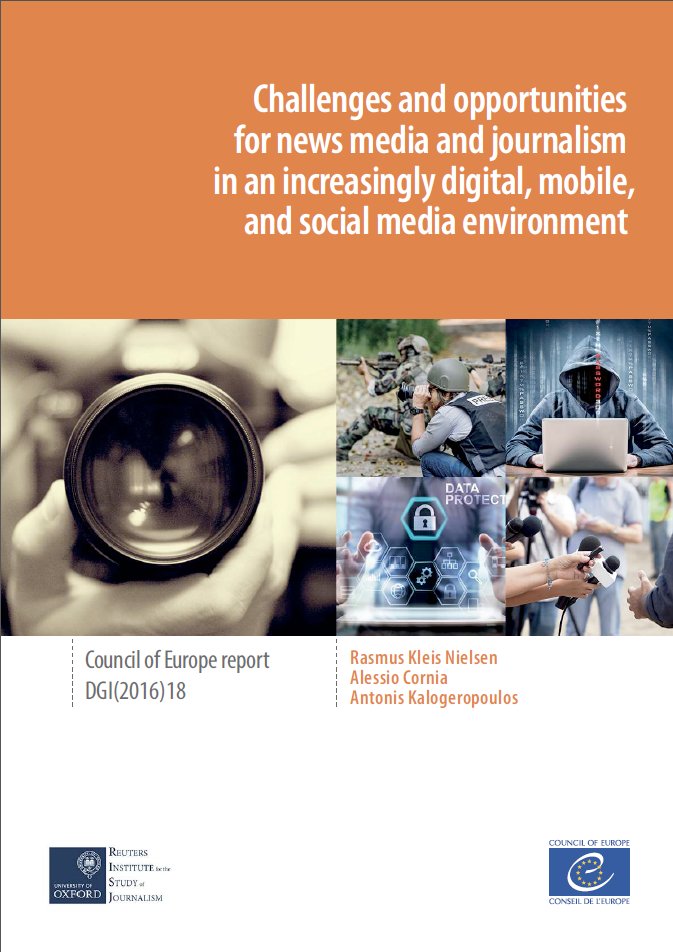
On 1st December, the Council of Europe’s Steering Committee on Media and Information Society (CDMSI) invited the EFJ, digital start-ups and media groups to discuss  “Media adaptation strategies and expectations” together with representatives of the Council of Europe government representatives. Rasmus Kleis Nielsen, Director of Research at the Reuters Institute for the Study of Journalism of Oxford University, presented at the outset the results of a recent study on Challenges and opportunities for news media and journalism in an increasingly digital, mobile and social media environment –   prepared for the Council of Europe on this topic. “The move to an…

Two journalists and a local politician killed in Finland shooting

Two journalists and a local politician were shot dead with a rifle outside a restaurant in the small Finnish town of Imatra at around midnight on Saturday night. The European Federation of Journalists (EFJ) today called on the authorities in Finland to conduct a swift investigation of the killings. The chairwoman of Imatra Town Council and two local reporters were gunned down in a pedestrian area outside a restaurant in the town just before a police patrol car arrived to the scene around midnight Saturday. A 23-year-old local man with a criminal record was detained at the scene, but the motive for the…

Social media need “self-regulation, education and literacy, not new restrictions”, says Dunja Mijatović in a report

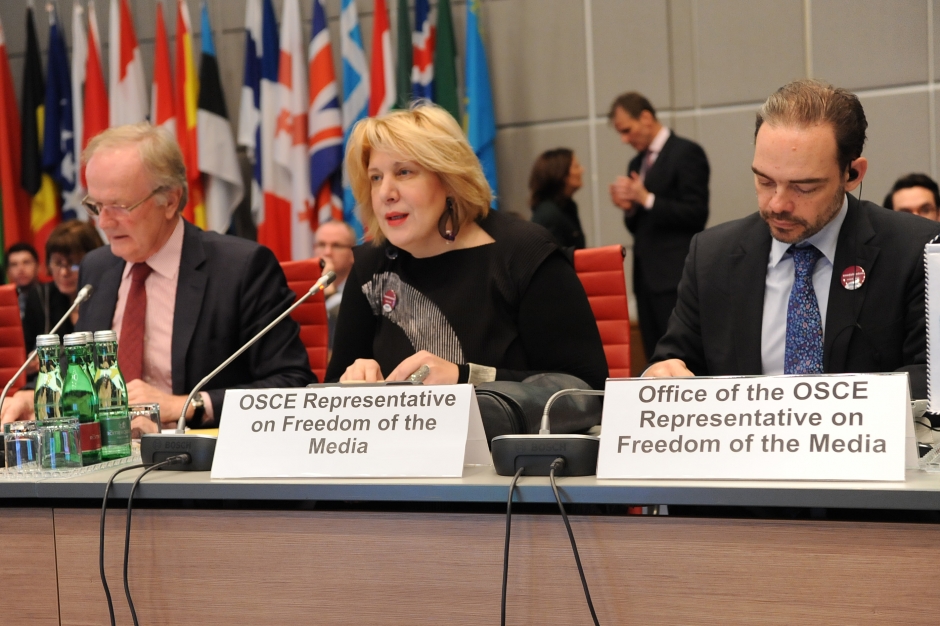
The Representative on Freedom of the Media of the Organization for Security and Co-operation in Europe (OSCE), Dunja Mijatović, published today her regular report to the Permanent Council from March 2016. She expressed great concerns about the safety of journalists and fake news on social media. Here are some excerpts. On the safety of journalists: As you all know, unfortunately safety of journalists continues to dominate my agenda. Impunity for killings, attacks and threats prevails. This must stop. In order to assist the participating States in monitoring progress on fighting impunity for killings of journalists my Office has prepared a…

Turkey: Organising journalists under the state of emergency

The regional meeting of EFJ-IFJ affiliates from the Balkans and Eastern Europe successfully took place in Istanbul on 29-30 November 2016. The meeting was hosted by the Journalists Union of Turkey (TGS) and the Istanbul office of the Friedrich Ebert Stiftung (FES) who are financially supporting the event with the Swedish Union To Union global trade union programme. The gathering of more than 10 international journalists representatives showing solidarity under the state of emergency with so many journalists in jail (over 120), under prosecution (thousands), without job (over 10.000) was warmly welcomed by the colleagues and local media.   The event has primarily focused on…

The Russian Union of Journalists committed to stop gender-based violence in Russia

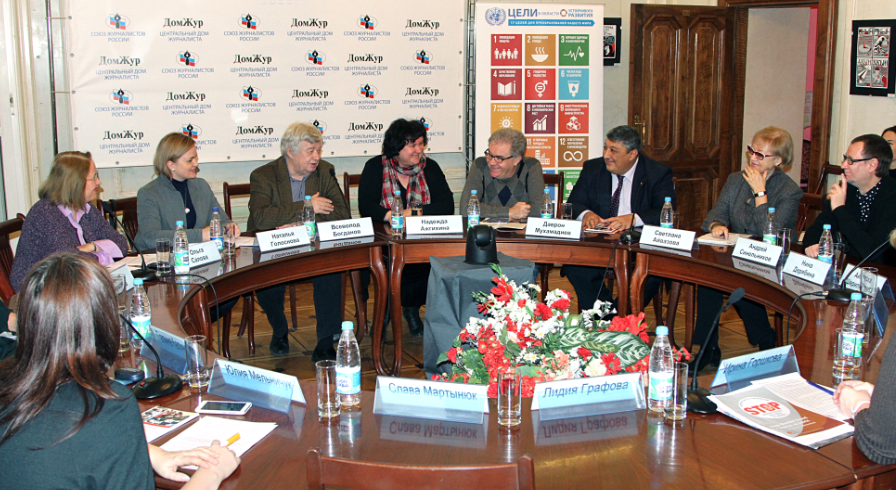
On November 28, the Russian Union of Journalists (RUJ), together with the United Nations agencies in Russia and the Centre for gender and media studies of Moscow State University, organised a round table focused on “Russian journalists in UN: Combating gender-based violence”. This event took place in the Moscow Journalist Club and gathered experts, journalists and human rights activists. It followed the International Federation of Journalists action to mark UN Day for the Elimination of Violence Against Women and Girls on 25 November. Nadezda Azhgikhina, vice-president of the European Federation of Journalists (EFJ) and member of the IFJ Gender council, presented a…

8 tips for migration coverage

The European Federation of Journalists (EFJ) has been invited by the European Economic and Social Committee (EESC) to attend the 10th edition of the Civil society media seminar held at the Diplomatic Academy on 24-25 November 2016 in Vienna. The seminar gathered over 190 experts (policy makers, journalists, social workers, law enforcement officers, refugees, professors) and was dedicated this year to the topic “Communicating Migration”.  EESC President Georges Dassis said :”Europe’s reconstruction is greatly due to migrants’ contributions. Over the past two years, media have played a big role in our perception of the migration flows. It is thus necessary to mention the benefits…