European Federation of Journalists

openMedia, investigating press freedom

Title of the project : openMedia, investigating press freedom
Lead Applicant
: openDemocracy

Partner organisations : EFJ, Index on censorship, King’s College London

The recently launched openMedia project aims to investigate and expose commercial interference in editorial decisions. The project is run by openDemocracy with the European Federation of Journalists (EFJ) as a partner alongside the Index on Censorship and King’s College London.

The project believes that there has not been enough of a concerted, ongoing spotlight on the extent and effects of commercial influence over the media, despite the dangerous consequences it poses for press freedom. For now, the project focuses on 47 countries across Europe but also has ambitions to expand.

Despite the recent launch, the project is adamant that it is not a response to the “fake news” hype of the past year or so. Rather, the project responds to scandals of commercial sponsors influencing media content; for example the Daily Telegraph’s suppression of investigations into its advertiser HSBC; and allegations that Buzzfeed deleted articles which advertisers found unfavourable.

According to the project, this power dynamic can suppress investigations of banks, pharmaceuticals, agriculture, fossil fuel giants, energy companies and other big businesses.

In addition, the project recognizes how for many readers, “sponsored content” is difficult to distinguish from genuine news content. The project therefore aims to clarify the commercial interests apparent in media to readers, and as part of the project, King’s College London will develop digital tools to help readers be better informed about news sources.

The findings of the project will be used to campaign for greater transparency and press freedom in news organisations and to empower journalists to advocate for transparency.

In order to do this, openMedia is currently conducting a confidential and anonymous survey of journalists across Europe, asking about their own working practices and experiences of commercial pressure inside newsrooms. The survey is available in English here and in many other languages here.
Actions

Internet freedom around the world declined in 2016

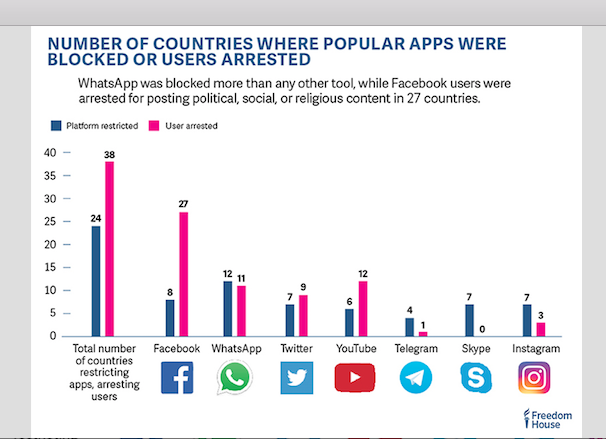
Freedom on the Net 2016 report published by Freedom House : Key Findings •Internet freedom around the world declined in 2016 for the sixth consecutive year. •Two-thirds of all internet users – 67 percent – live in countries where criticism of the government, military, or ruling family are subject to censorship. •Social media users face unprecedented penalties, as authorities in 38 countries made arrests based on social media posts over the past year. Globally, 27 percent of all internet users live in countries where people have been arrested for publishing, sharing, or merely “liking” content on Facebook. •Governments are increasingly…

UK Investigatory Powers Bill threatens journalistic sources and whistleblowers

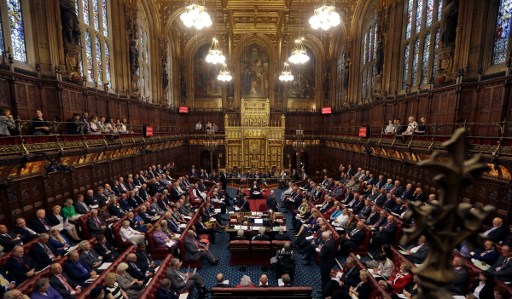
The International and European Federation of Journalists, (IFJ) and (EFJ), joined their UK affiliate, The National Union of Journalists (NUJ), in strongly condemning the Investigatory Powers Bill, which threatens the right to privacy, freedom of expression and investigative journalism, giving the Government sweeping spying powers. The new law gives the UK one of the most extreme spying powers in the developed world whose impact will be felt around the world. Under the “national security” pretext, the bill, which was passed by the House of Lords on 17 November will force internet and phone companies to store their users’ browsing data…

Majority of EU citizens think media lack independence

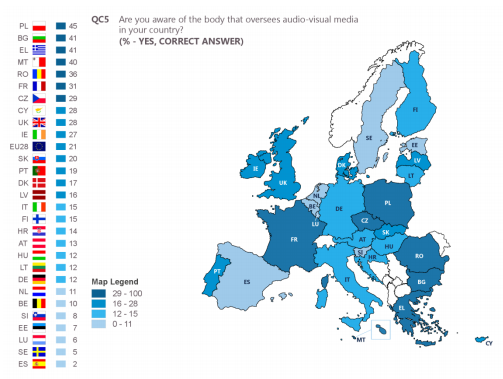
The results of the 2016 Eurobarometer survey on “Media pluralism and independence” published today (17/11/16) – just in time with the EU Annual Colloqium on Fundamental rights on “Media pluralism and democracy” – show two worrying trends: a majority of EU citizens believe that the media in their countries lack independence ; and 75% of the respondents have experienced hate speech on social media. This survey aims at representing the state of media pluralism and independence across the European Union. The results highlight that, according to the Europeans, there is much work to be done in ensuring the independence of national media – a vital cornerstone of…

EBU Conference urges Parliaments to protect PSM independence

Over 100 delegates from 19 countries in Central & Eastern Europe (CEE) and beyond came together in Prague last week to discuss the need to protect the independence and sustainability of public service media (PSM) in the face of numerous challenges. The conference was hosted by the Czech Parliament in Prague, and organized by the Council of Europe, the Parliamentary Assembly of the Council of Europe, Czech Television and the European Broadcasting Union (EBU). Public service broadcasters, Parliamentarians, regulators, diplomats, academics and experts from a range of organisations including the Council of Europe, Venice Commission, OSCE and the European Federation of…

Commissioner for Human Rights Nils Muižnieks reiterates his commitment on media freedom

The European Federation of Journalists (EFJ) held a meeting on 9 November with the Council of Europe’s Commissioner for Human Rights Nils Muižnieks and his team at the EFJ headquarters in Brussels. The two teams discussed current threats to media freedoms in Europe especially the situation in Turkey and abuses of defamation laws against journalists in EU countries. EFJ General Secretary Ricardo Gutiérrez presented the main challenges and projects the EFJ is currently working on, namely the independence and the strengthening of public service broadcasting in Eastern Europe and the Balkans, the oppressive emergency situation in Turkey and the increase of self-censorship and hate speech in the…

Manifesto towards media policy in the service of the public

The European Federation of Journalists (EFJ) endorsed the manifesto initiated by the South East European Media Observatory towards media policy in the service of the public, which was presented on November 10, 2016. The aim of the manifesto is to find solutions to deal with current media crisis that is seriously affecting countries of South East Europe. Among the main demands of the manifesto are the initiation of the reforms, accountability of the politicians, the protection of the public service media and the uncompromising transparency of media ownership. The full report can be found here.