EU Court of Justice ruling confirms platforms must pay for use of press content

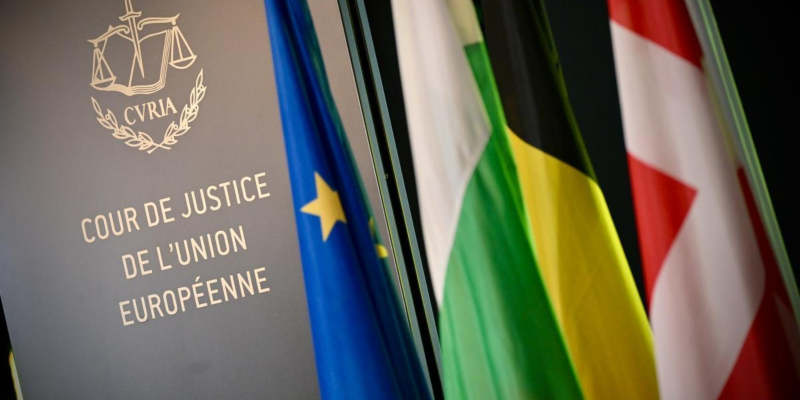
The Court of Justice of the European Union (CJEU) yesterday ordered Meta to compensate Italian publishers for the use of their content. The European Federation of Journalists (EFJ) welcomes an important ruling which upholds the right of Member States to require fair remuneration for the online use of press publications by service providers. The judgement, issued in a case between Meta and Italy’s media regulator AGCOM, concerns the transposition into Italian law of EU rules on press publishers’ rights. The Court confirmed that EU copyright law allows Member States to establish mechanisms ensuring fair remuneration for the use of press…
EFJ meets Slovak journalists in aftermath of Ján Kuciak’s murder

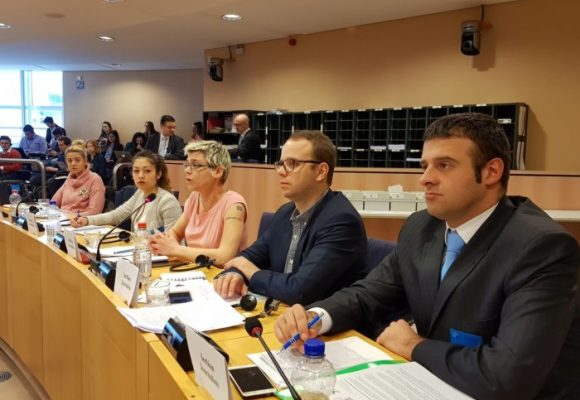
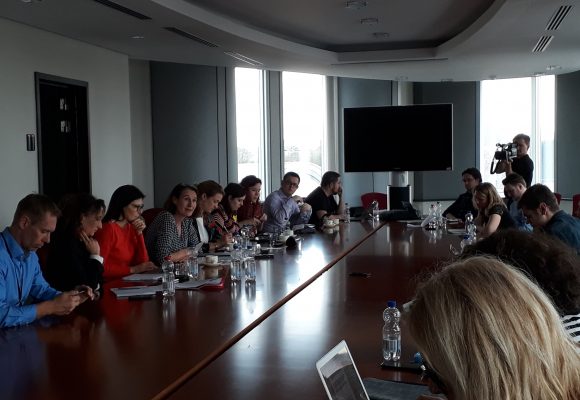
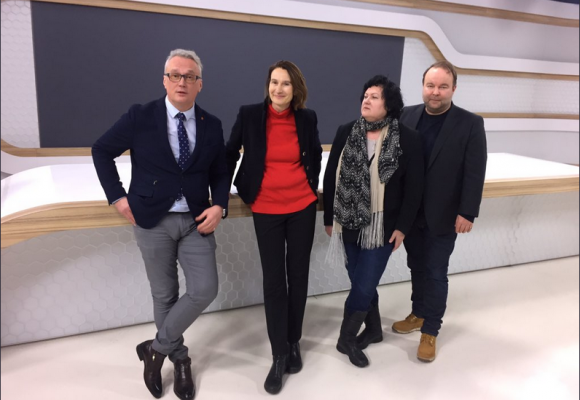
The director of the European Federation of Journalists (EFJ), Renate Schroeder met with a group of Slovak journalists from various Slovak media on 11 April in the European Parliament to discuss the current situation of journalists in Slovakia and what must be done to better protect (investigative) journalists. The meeting “Slovakia and Malta: killed journalists. What is changing in Europe?” organised by the Information Office of the European Parliament in Slovakia brought together 15 Slovak journalists from  TV Markiza, TV TA3. RTVS- public TV and radio, TV JOJ, Daily SME , Daily DennikN, daily PRAVDA and press agency TASR. Nora Wehofsits, advocacy…

Fact-finding mission report to the Baltics published

A new report about the fact-finding mission conducted by the European Federation of Journalists (EFJ) and the European Centre for Press and Media Freedom (ECPMF), which investigated the media situation in Estonia and Lithuania from 22 to 24 January, was published on 9 April 2018. Members of the mission interviewed almost 30 experts: representatives of the government, academia, press councils, public service media, journalists‘ organisations, investigative journalists, editors-in-chief and CEOs of major media companies. The two Baltic states were chosen in the wake of a wave of disinformation spread by Russian specialists during the US election campaign. The question, whether the comparatively small societies…

Serbian journalists attacked by police in Kosovo

The European Federation of Journalists (EFJ) joined its Serbian affiliate, the Journalists’ Union of Serbia (SINOS), the Journalists’ Association of Serbia (UNS) and the Independent Journalists’ Association of Serbia (NUNS) in condemning the attacks on Serbian cameraman Vladimir Milic as well as journalists Dragana Zecevic and Radmila Komazec on 26 March 2018 in Kosovska Mitrovica, Kosovo. They were covering a meeting of the local community about the Kosovo dialogue in the Mitrovica Community Centre. The level of violence was very high as shown in this reportage. Milic, who works for the public television Radio Television of Serbia (RTS), was reportedly attacked by Kosovar policemen who…

EFJ and press freedom groups condemn Turkey’s seizure of pro-Kurdish daily

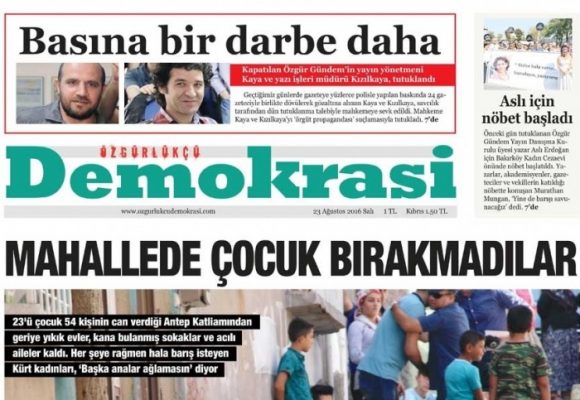
The undersigned international press freedom groups and journalists’ organisations, including the European Federation of Journalists (EFJ), call on Turkish authorities to immediately release the 12 printworkers and staff arrested on March 28 at the premises and print works of the newspaper Özgürlükçü Demokrasi and the further 15 staff taken into custody after home raids on the morning of March 29, 2018. Authorities must also restore control over the paper and its premises to the rightful owners. The EFJ and the below-named organizations also denounce the fact that lawyers acting for those arrested have been denied contact with prosecutors or access…

Workshop: Robot Journalism – Should we be afraid?

Registration opens for the upcoming MediaRoad event Robot “journalism” is already the reality in many newsrooms churning out content faster than we can consume. News organisations are increasingly experimenting with robot journalism using computer programmes to analyse data and produce news stories because robots are more productive. But how much do we know about these robots behind the news? Are they friends or foes of journalists? Should journalists be afraid or take advantage of the technology to improve their working conditions and quality of journalism? This workshop will focus on these questions and explore the pros and cons of robot…

Western Balkans: media freedoms and safety of journalists still at risk

A delegation of the Western Balkans’ Regional Platform project for advocating media freedom and journalists’ safety visited Brussels on March 21st and 22nd and held meetings and consultations with the members of the European Parliament and representatives of the European Commission from the Directorate General for Neighbourhood and Enlargement negotiations (DG NEAR). Representatives of journalists’ associations and a trade union from Bosnia and Herzegovina, Macedonia, Montenegro and Serbia presented the journalists’ safety and the media situation in their countries. They emphasised joint problems their members and other journalists face, including poor working conditions, fear for personal safety due to work,…

Italian public TV: new agreement including commitment to tackle hate speech

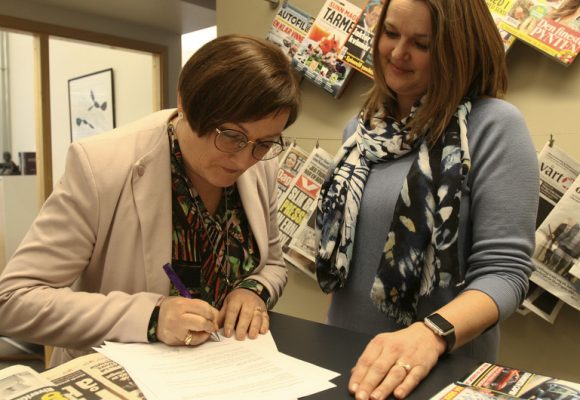
The Italian public television RAI, Rai Journalists Trade Union (Usigrai) and the Italian EFJ affiliate, FNSI (Federazione Nazionale della Stampa Italiana), signed a new collective agreement to extend the national labour contract to journalists working in public media. For the first time, the agreement includes an ethical commitment to combat hate speech, discrimination and racism, as well as a commitment to promote gender equality and the rights of minors. This 2018-2022 agreement, signed on the 13th of March, aims to reverse the trend among media organisations to use right-grabbing contracts and provide unfair remuneration to journalists. It will include: a reduction…

Norwegian Union of Journalists signs freelance framework agreement

The Norwegian Media Businesses’ Association (MBL) signed an unprecedented  framework agreement for freelance journalists with the Norwegian affiliate of the European Federation of Journalists, the Norwegian Union of Journalists (NJ), concerning purchase, sale and copyrights of freelance materials on Wednesday, 21 March 2018.  The NJ had been in negotiations with the MBL to establish this framework agreement since April 2016. The purpose of the agreement is to ensure predictable frameworks for freelance jobs. The framework agreement will take effect on 1 April 2018. It requires an individual agreement to be concluded between the freelancer and the employer. The NJ and the MBL will prepare templates for  agreements which…

New project to promote human rights based journalism in Turkey

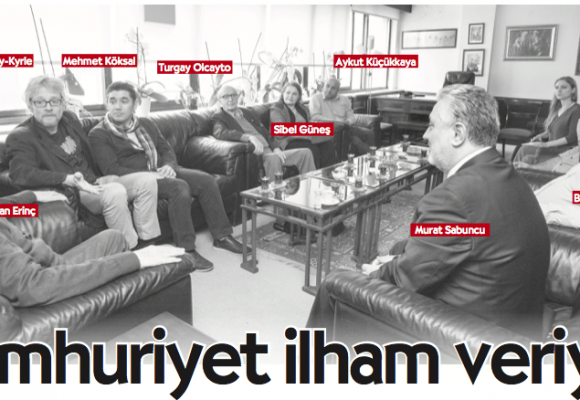
“Cumhuriyet, as one of the most important daily newspaper in Turkey, is playing a great inspirational role for all journalists in the world and by putting your own life at risk to tell the truth in the country, you attract more respect and become an example for many of our colleagues and we would like to thank you for that”, said Oliver Money-Kyrle, IFJ Assistant General Secretary during a joint solidarity visit in Istanbul to the former imprisoned journalist Murat Sabuncu (editor in chief of Cumhuriyet). The joint delegation for the solidarity visit included representatives from the International Federation of Journalists…

EFJ Workshop: Digital journalism and new business models

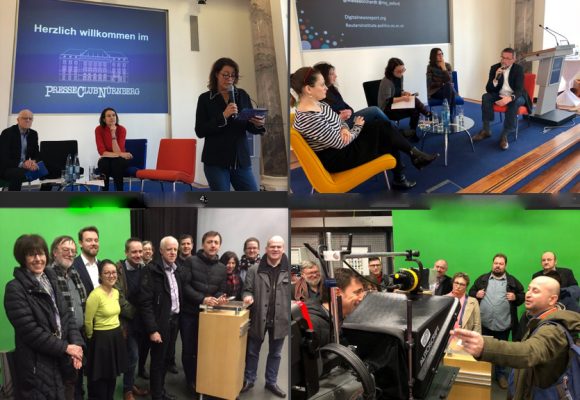
36 journalists, union leaders and media experts from 20 European countries discussed issues around new business models and trends in (digital) journalism from 15-16 March 2018 in Nuremberg, Germany. With great enthusiasm participants explored recent trends in journalism,  successful new models in financing journalism and the role of unions and associations to best serve their members in this process of change. The first panel “What is trending in journalism” included academics, publishers and an editor in chief from a local newspaper, all giving interesting insights in changes in the media eco-system,  its impact on the work of journalists, use of…

Open letter to diplomats in Malta regarding Daphne’s murder investigation

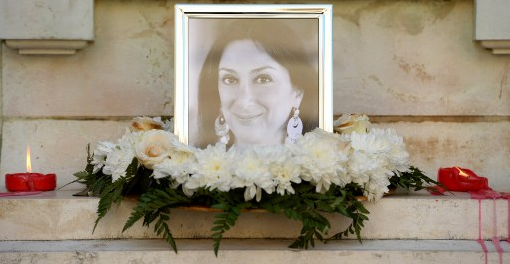
The European Federation of Journalists (EFJ) co-signed an open letter by seven international freedom of expression organisations on 23 March 2018, urging diplomats in Malta to make their presence felt concerning the investigation of the Daphne Caruana Galizia murder. “Your engagement in this case is setting a standard and precedent for what is permissible in the European Union”: We, the undersigning international organisations are closely monitoring the investigation of the murder of Maltese journalist Daphne Caruana Galizia and the related court proceedings in Malta. Daphne Caruana Galizia was a journalist, a blogger, a mother of three. For years, she reported…

Turkey should immediately release Mehmet Altan and Şahin Alpay

Turkey should immediately implement the judgments of the European Court of Human Rights (ECtHR) and release the veteran journalists Mehmet Altan and Şahin Alpay without delay, a coalition of nongovernmental groups said today. Furthermore, Turkey must ensure that domestic remedies for human rights violations are effective, in particular by ensuring the urgent review of all cases of journalists and writers currently pending before its Constitutional Court. The organizations, which had intervened as third parties in the cases before the court, included PEN International, ARTICLE 19, Committee to Protect Journalists, European Centre for Press and Media Freedom, European Federation of Journalists,…

Turkey violated rights of journalists Şahin Alpay and Mehmet Altan

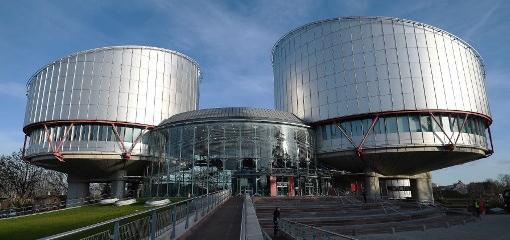
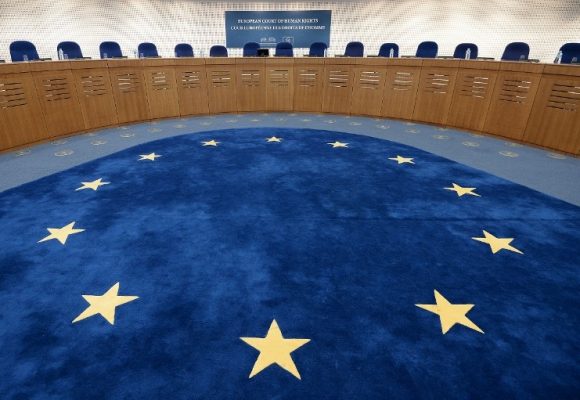
The European Federation of Journalists (EFJ) calls on Turkish authorities to release without any delay all journalists wrongfully imprisoned in Turkey after the European Court of Human Rights ruled today against Turkey on applications filed on behalf of Turkish journalists Şahin Alpay and Mehmet Altan, who were imprisoned following the failed coup attempt in July 2016. The Strasbourg court issued today a decision on the provisional detention of Mehmet Altan and Şahin Alpay for more than a year and a half. The decision stated that “the investigating authorities had been unable to demonstrate any factual basis” that indicate that both journalists…

Danish government to cut 20% funding for public service media

The European Federation of Journalists (EFJ), representing 320.000 journalists across Europe, is shocked to learn that the Danish government intends to cut 20 percent of funding for Danish public service media (DR). The EFJ urges the government in Denmark to withdraw its proposal. The Danish government has agreed on a new media agreement that is expected to come into effect on January 1, 2019. The new measures include a cut in DR’s budget of 20%. It will also scrap the licence fee for public broadcasting. The measures were taken by the VLAK government with the support of the Dansk Folkeparti party. Free and…

New fund to support EU investigative journalism launched

A fund of up to €450,000 to support cross-border investigative journalism in the European Union is being launched today by the European Centre for Press and Media Freedom (ECPMF) and the International Press Institute (IPI). The Investigative Journalism for Europe (#IJ4EU) fund is intended to foster and strengthen collaboration among European Union-based journalists and newsrooms on revelations in the public interest and of cross-border significance. The fund aims to support investigations that reflect the media’s watchdog role and that assist the public in holding those in power accountable for their actions and to their obligations. In so doing, it seeks…

Dragan Bursac wins European Press Prize

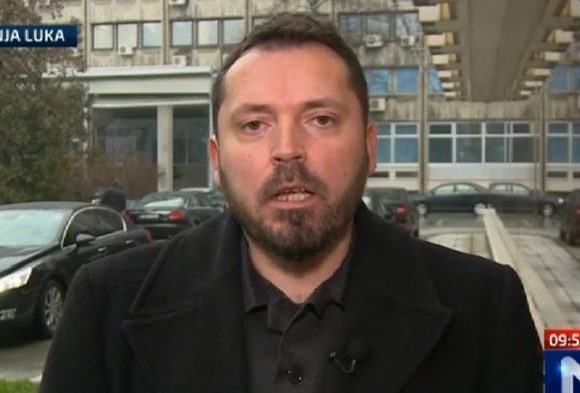
The European Federation of Journalists (EFJ) congratulates Dragan Bursać for receiving the European Press Prize 2018 on 15 March 2018 in the category ‘Opinion’ for his column “The Third Shooting of the Boy Petar from Konjic”, in Budapest, Hungary. Bursać works as a columnist for Al Jazeera Balkans. He lives in Banja Luka, a Bosnian city dominated by a Serbian population. Bursać became known for his critical writing about nationalism. The story for which he was awarded describes the tragic fate of the seven-year-old Bosnian Serb boy Petar who was killed during the Bosnian War. Because of his journalistic work, Bursać received multiple threats,…