European Federation of Journalists

Building Trust in Media in South East Europe and Turkey

With financial support from the EU and UNESCO, the European Federation of Journalists (EFJ) is promoting freedom of expression and press freedom in South East Europe and Turkey. The project, entitled Building Trust in media in South East Europe and Turkey, seeks to strengthen freedom of expression, access to information, free, independent and pluralistic media, ensuring that journalists and media are key drivers for democratic, sustainable and peaceful development in the region.

The project is being implemented in Albania, Bosnia and Herzegovina, the Former Yugoslav Republic of Macedonia, Montenegro, Serbia and Turkey, as well as in Kosovo (administered by the UN Interim Administration Mission in Kosovo in the context of UN Security Council Resolution 1244) since 2016.

The focus of the project Building Trust in Media in South East Europe and Turkey is on improving media accountability mechanisms, media internal governance and information literacy among citizens to strengthen civil society support for the media and demand for quality media.

The European Federation of Journalists (EFJ) is working towards the objective to develop national social dialogues and ensure the implementation of labour rights in the field of media, in partnership with its affiliates in the region.
Promote and share our activities on online social networking services (Facebook, Twitter,…) using the hashtag #TrustInMediaSEE

Actions

New report analyses journalism education in South East Europe

A new report “Back to the Drawing Board: Crafting the Ideal Journalism Education Curricula for South East Europe”, published in November 2017, analysed the current state of journalistic education in Albania, Bosnia and Herzegovina, Kosovo, Macedonia, Montenegro and Serbia. The main goal of the research is to create a set of indicators to evaluate study curricula in journalism across the SEE region. These indicators are to assist journalism faculties in ascertaining whether their curricula in journalism correspond to the overall state of the media in their countries and whether they enable students to acquire adequate journalism skills to help them maintain high professional…

New report highlights the poor working conditions of BiH journalists

A Special report on the status and cases of threats against journalists in Bosnia and Herzegovina (BiH) was published on Monday 28 August 2017 by the Institution of Human Rights Ombudsman of BiH. The publication highlights the very bad employment status of journalists in the country, as well as the increase of violence, harassment and attacks against them. Some of the key findings highlighted in the report are: According to the BiH Journalists’ Association research, between 34% and 40% of journalists work in Bosnia and Herzegovina without adequate employment agreements, while those working with agreements are not sufficiently protected. Journalists…

UNESCO launches a handbook for journalists covering terrorism

The UNESCO launched on Thursday (02.02.2017) at the Press Club Brussels Europe its new publication “Terrorism in the Media: A Handbook for Journalists” written by Jean-Paul Marthoz, Belgian journalist and longtime press freedom and human rights activist. Guy Berger, Director for Freedom of Expression and Media Development at UNESCO, presented the handbook together with the author. What to do in a hostage situation? Should journalists help the victims first? Should they refrain from disseminating some information at authorities’ request? The handbook provides key advices and reflection to media and journalists in the situation of covering a terrorist attack. It also…

15 points to improve working conditions for journalists in Western Balkans and Turkey

Bosnian / Türkçe / Shqiptar / Montenegro The European Federation of Journalists (EFJ) together with its affiliate the Association of Professional Journalists in Albania (APJA) have successfully organised on 19/12/2016 in Tirana (Albania) the training of trainers’ workshop for Labour Rights Expert Group (LAREG+) in the framework of its Unesco supported project called Building Trust in media in South East Europe and Turkey (#TrustinMediaSEE). Tim Dawson (NUJ President, UK) acted as expert during this event and gave the course based on his long serving experience as trade unionist in the United Kingdom to trainers from Albania, Bosnia and Herzegovina, Kosovo, Montenegro…

Stop impunity, nobody should be free to kill journalists

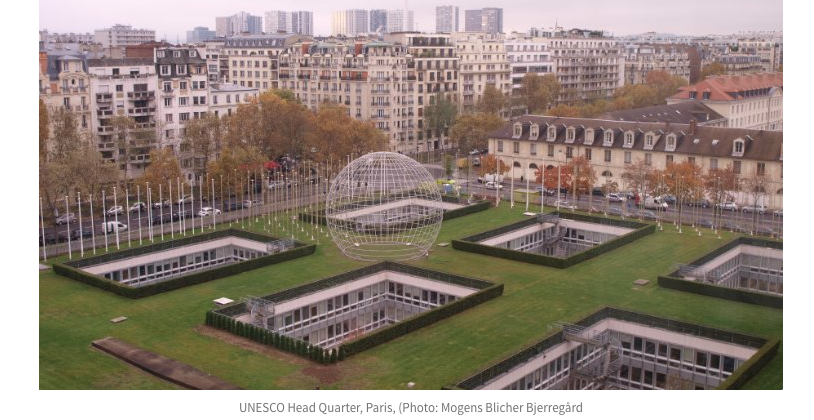
by Mogens Blicher Bjerregård, EFJ President 827 journalists were killed during the last decade and paid the ultimate price for exercising their job. An appalling and worrying fact documented by the biannual report from the Director General at UNESCO. The safety of journalists and fighting impunity was on top of the agenda during the UNESCO IPDC Council meeting, 17th-18th November 2016 in Paris. IPDC is an UNESCO program for safety of journalists, press freedom and media development. As the representative of Denmark, I delivered the following speech: Eight hundred and twenty seven, 827 journalists, have been killed since 2006. This is…

Enforcing labour rights for journalists in South East Europe and Turkey

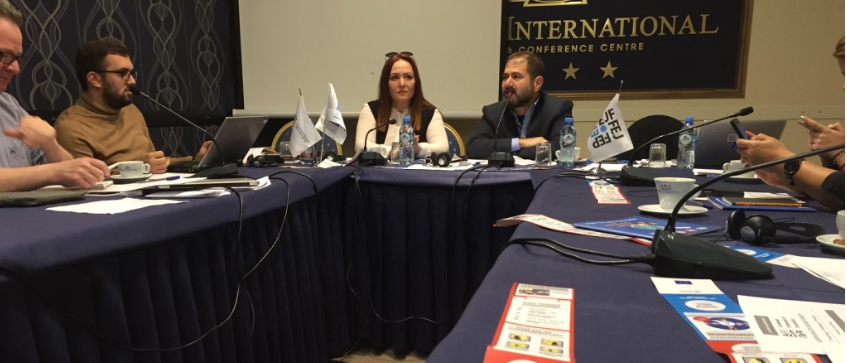
Enforcing labour rights and improving working conditions for journalists remain challenging in South East Europe and Turkey, as concluded in the Labour Rights Expert Group meeting of the European Federation of Journalists (EFJ) on 26 October in Zagreb. The meeting is partly funded by the UNESCO as part of the project “Building trust in the media in South East Europe and Turkey” that enables labour rights experts from the region to exchange views with their colleagues. Erisa Zykaj, journalist and representative from the Association of Professional Journalists of Albania (APJA) said that the enforcement of labour rights is yet to…