European Federation of Journalists

IFJ-EFJ Regional Development Fund

Czech Republic


The European Federation of Journalists (EFJ) signed an agreement on 18 December 2014 with the Union of Journalists and Media Workers of Czech Republic (OSNPM) in order to investigate the working conditions of Czech journalists and media workers. The project is implemented with the cooperation of Judith Reitstatter, from the Austrian union GPA-djp.

The online survey was launched on 19 May 2015. Around 2,500 journalists and media workers were invited to participate to the survey. The EFJ, OSNPM and GPA-djp analysed together the main outcomes of the survey during a round table conference, on 19 August 2015, in Prague.

The questionnaire focus mainly on labour rights. “This area is underestimated by the Czech media, journalists themselves and their employers as well,” explains Zdeněk Kučera, chairman of OSNPM.

“Over the past 25 years, journalists’ attention was focused primarily toward freedom of speech, access to information, relations with media ownership and the development of media houses. These are very serious topics. However, journalists’ status remained grossly underrated. A specific problem is the status of freelance journalists, which are increasingly numerous, particularly in regional media.”

The main findings of the survey are available on the EFJ website, here.
FOCUS EFJ

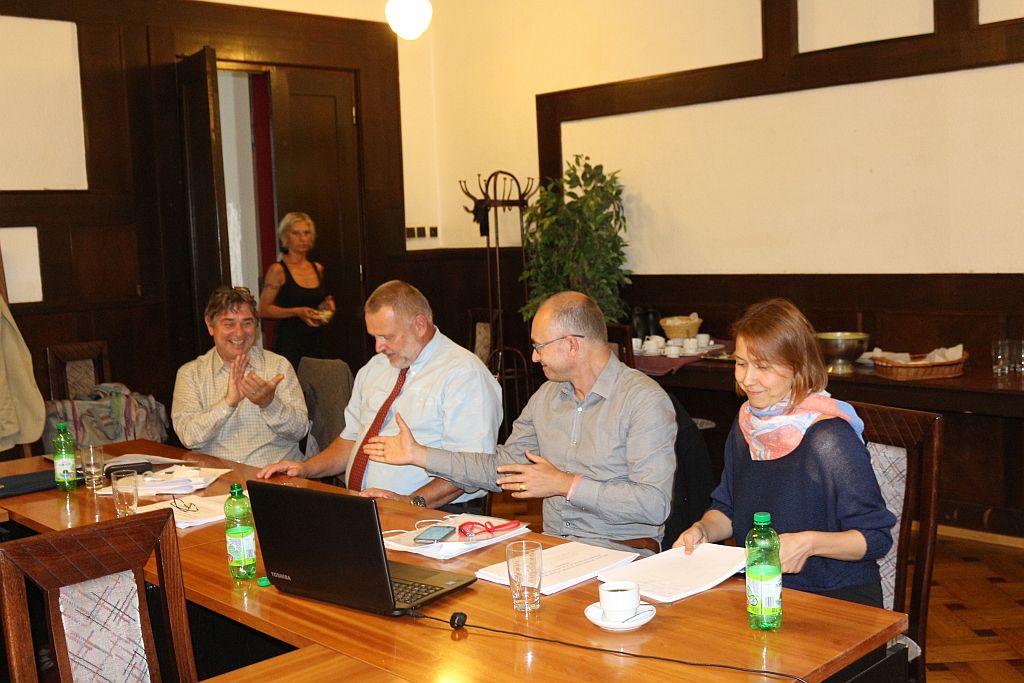
Side event of our project: a high school magazines national competition (Nejinspirativnější středoškolský časopis 2015). Here are the winners (picture credit: F. Cakl):

Czech

Contact details: OSNPM, e-mail: odborovy-svaz-novinaru@seznam.cz, website: http://www.odborovysvaznovinaru.cz


Slovakia

The European Federation of Journalists (EFJ), its Austrian union GPA-djp and the Slovak Union of Journalists (Slovenský syndikát novinárov) organized a meeting in Vienna, on 30 October 2014. Trade unionists and media students from both countries met in GPA-djp offices, in Vienna. The discussion on media convergence was launched by Dr. Roman Hummel, from the university of Salzburg.

Contact details: Judith Reitstaetter, judith.reitstaetter (at) gpa-djp.at


Estonia

The European Federation of Journalists (EFJ), the Estonian Union of Journalists (Eesti Ajakirjanike Liit, EAL) and the Union of Journalists in Finland (Suomen Journalistiliitto, UJF) agreed on 6 February 2015 to jointly implement the project “Workshops to Strengthen Journalists’ organisation in Estonia”.

The main objective of the project is to strengthen journalists’ organisation in Estonia, through three activities:

  • a freelance workshop in Helsinki,
  • a radio & TV negotiators workshop in Helsinki,
  • an authors’ rights seminar in Tallinn.

An action plan will be proposed for the next period.

Contact details: Juha Rekola, Juha.Rekola (at) journalistiliitto.fi, and Helle Tiikmaa, helle (at) eal.ee
 

Actions

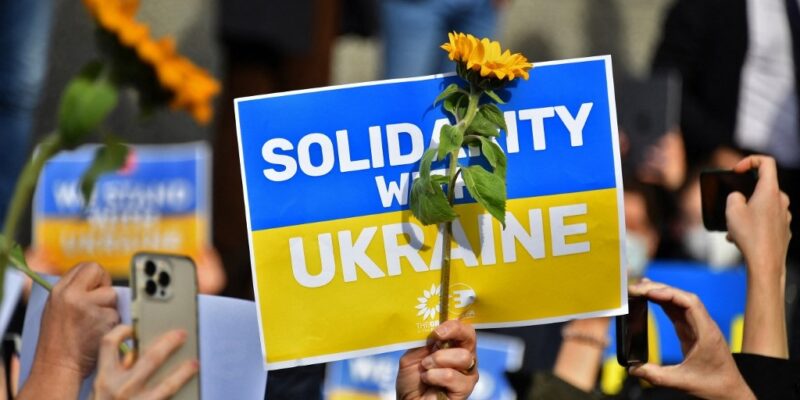
Kosovo to shelter 20 Ukrainian journalists: which state will be next?

Today, 01 March 2022, the Government of the Republic of Kosovo signed a decree to shelter 20 journalists from Ukraine, in coordination with the European Centre for Press and Media Freedom (ECPMF) and the European Federation of Journalists (EFJ). The decision is in line with Kosovo’s position of solidarity with the right of Ukraine to protect its territorial integrity and sovereignty, and in the spirit of protecting universal human rights. The EFJ and ECPMF hope that other states will follow Kosovo’s example. The decree, which will see the allocation of €150,000 from State reserves, was initiated by Member of Parliament…

Fighting disinformation with censorship is a mistake

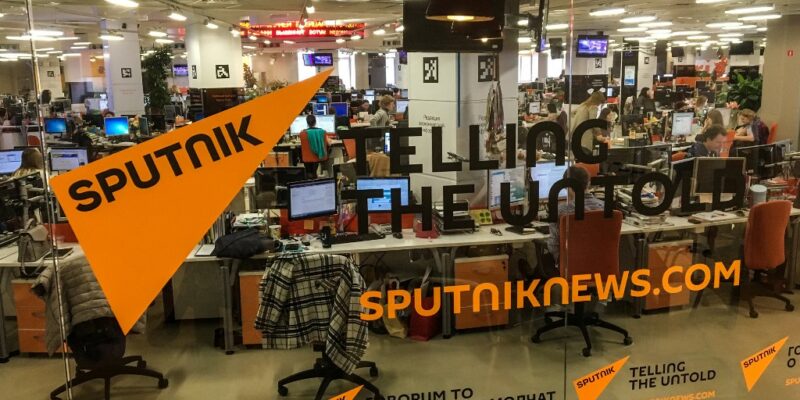
European Commission President Ursula von der Leyen announced, on Sunday, that Kremlin-backed RT, formerly known as Russia Today, and Sputnik, would be banned in the EU. The European Federation of Journalists (EFJ) fears the effects of this spiral of censorship on freedom of expression in Europe. “We will ban the Kremlin’s media machine in the EU. The state-owned Russia Today and Sputnik, and their subsidiaries, will no longer be able to spread their lies to justify Putin’s war,” said Ursula von der Leyen. “We are developing tools to ban their toxic and harmful disinformation in Europe,” she added, without providing more…

Ukraine: CoE platform partners demand protection of journalist safety

The European Federation of Journalists (EFJ), the International Federation of Journalists (IFJ) and other members of the Council of Europe’s Platform to Promote the Protection of Journalism and Safety of Journalists today published a joint statement calling for the protection of journalists covering Russia’s invasion of Ukraine and for the provision of urgent and practical assistance to reporters on the ground. Read the full statement below. The undersigned journalists’ and civil society organisations, which are partner organisations of the Council of Europe’s Platform to Promote the Protection of Journalism and Safety of Journalists, utterly condemn the threats to the lives and safety…

Russian troops leave Ukraine! EU increase pressure on Putin!

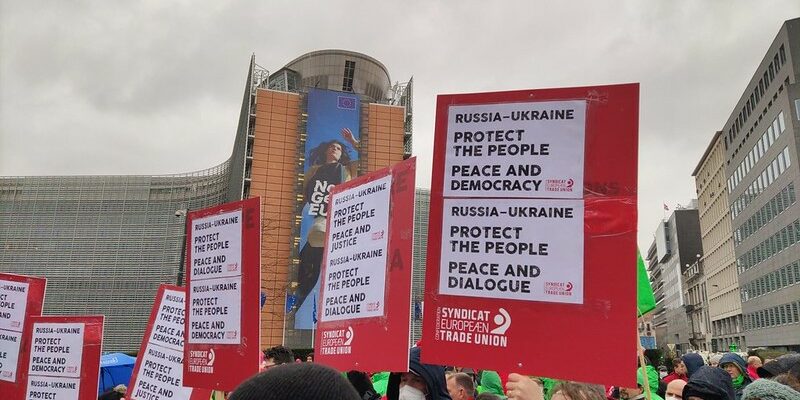
The European Federation of Journalists (EFJ) today joined a new call by the European trade union movement to the European Union and its Member States following the armed aggression by Russia against Ukraine. The EFJ joins the European Trade Union Confederation (ETUC) in reiterating its condemnation of the attack, demanding the immediate stop of military operations, Russian troops to leave the country, and dialogue and talks for peace to be started. Here is the press release published on 27 February by the ETUC, which is the voice of workers and represents 45 million members from 92 trade union organisations in…

War in Ukraine: Russia steps up censorship

On 26 February, the Russian media regulator Roskomnadzor (RKN) announced the opening of an administrative investigation against a number of Russian media outlets for allegedly “spreading false information of public interest”. The European Federation of Journalists (EFJ) joins the Russian Journalists’ and Media Workers’ Union (JMWU) in denouncing a new step in state censorship: RKN not only dictates to journalists what sources they can quote (only official Russian sources), but also what words they can use. RKN criticises the targeted media for publishing “information about the shelling of Ukrainian cities and the death of civilians in Ukraine as a result…

EFJ appeals for a strong European Media Freedom Act

On 23 February 2022, the European Audiovisual Observatory hosted an online conference to discuss public service media in light of the European Media Freedom Act (EMFA) launched by the Commission on 10 January 2022.  The new legislation is supposed to pave the way for greater support to recover the media sector from the pandemic, to offer larger support and regulations in favor of freedom of speech among journalists working within the European Union, and to empower pluralism of ideas across the Union. In her opening speech Executive Director of the European Audiovisual Observatory Susanne Nikoltchev stressed the importance to adapt…