European Federation of Journalists

IFJ-EFJ Regional Development Fund

Czech Republic


The European Federation of Journalists (EFJ) signed an agreement on 18 December 2014 with the Union of Journalists and Media Workers of Czech Republic (OSNPM) in order to investigate the working conditions of Czech journalists and media workers. The project is implemented with the cooperation of Judith Reitstatter, from the Austrian union GPA-djp.

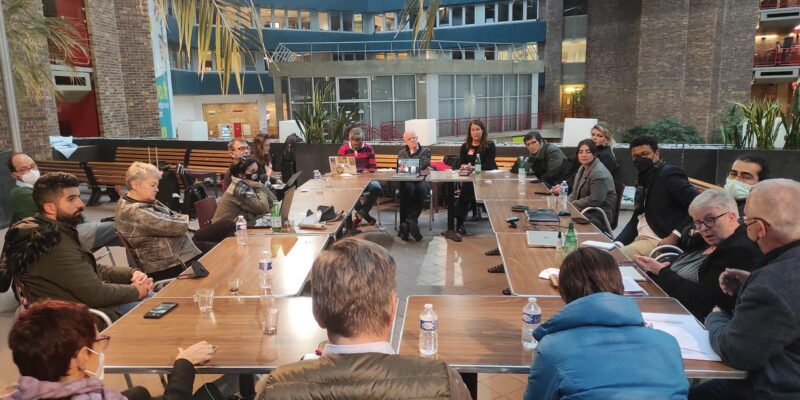
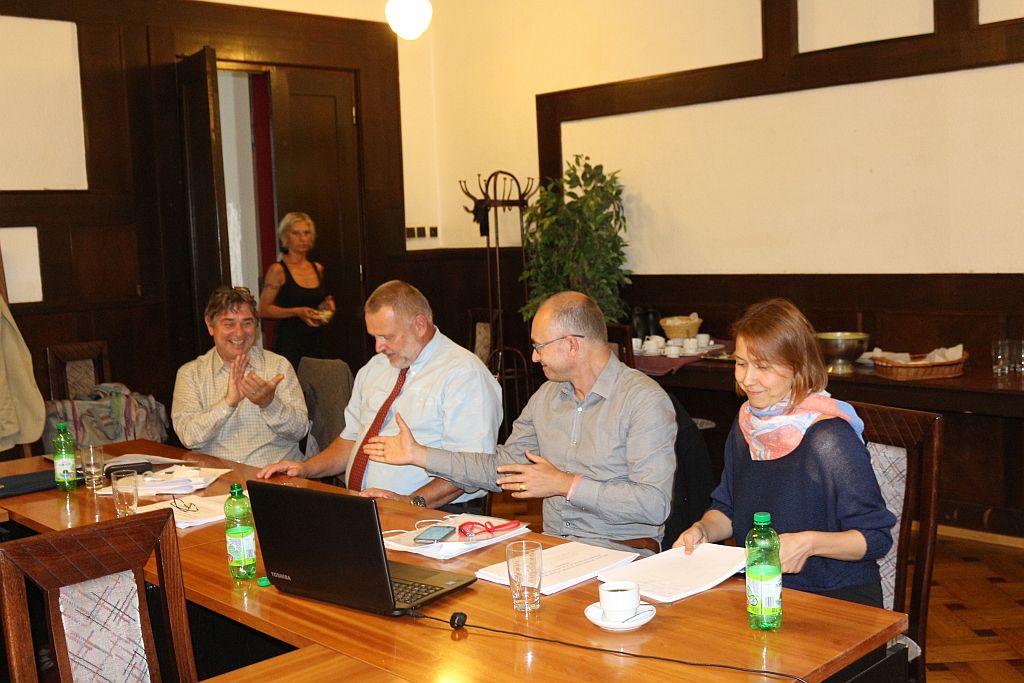
The online survey was launched on 19 May 2015. Around 2,500 journalists and media workers were invited to participate to the survey. The EFJ, OSNPM and GPA-djp analysed together the main outcomes of the survey during a round table conference, on 19 August 2015, in Prague.

The questionnaire focus mainly on labour rights. “This area is underestimated by the Czech media, journalists themselves and their employers as well,” explains Zdeněk Kučera, chairman of OSNPM.

“Over the past 25 years, journalists’ attention was focused primarily toward freedom of speech, access to information, relations with media ownership and the development of media houses. These are very serious topics. However, journalists’ status remained grossly underrated. A specific problem is the status of freelance journalists, which are increasingly numerous, particularly in regional media.”

The main findings of the survey are available on the EFJ website, here.
FOCUS EFJ

Side event of our project: a high school magazines national competition (Nejinspirativnější středoškolský časopis 2015). Here are the winners (picture credit: F. Cakl):

Czech

Contact details: OSNPM, e-mail: odborovy-svaz-novinaru@seznam.cz, website: http://www.odborovysvaznovinaru.cz


Slovakia

The European Federation of Journalists (EFJ), its Austrian union GPA-djp and the Slovak Union of Journalists (Slovenský syndikát novinárov) organized a meeting in Vienna, on 30 October 2014. Trade unionists and media students from both countries met in GPA-djp offices, in Vienna. The discussion on media convergence was launched by Dr. Roman Hummel, from the university of Salzburg.

Contact details: Judith Reitstaetter, judith.reitstaetter (at) gpa-djp.at


Estonia

The European Federation of Journalists (EFJ), the Estonian Union of Journalists (Eesti Ajakirjanike Liit, EAL) and the Union of Journalists in Finland (Suomen Journalistiliitto, UJF) agreed on 6 February 2015 to jointly implement the project “Workshops to Strengthen Journalists’ organisation in Estonia”.

The main objective of the project is to strengthen journalists’ organisation in Estonia, through three activities:

  • a freelance workshop in Helsinki,
  • a radio & TV negotiators workshop in Helsinki,
  • an authors’ rights seminar in Tallinn.

An action plan will be proposed for the next period.

Contact details: Juha Rekola, Juha.Rekola (at) journalistiliitto.fi, and Helle Tiikmaa, helle (at) eal.ee
 

Actions

France: Four journalists shot at in Martinique, no injuries

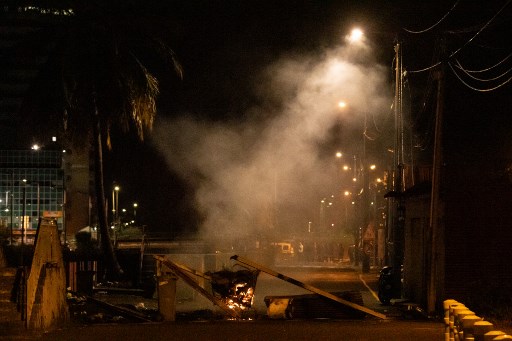
Four French journalists covering the protests against the Covid-19 rules and civil unrest in Martinique have been fired upon three times. The European Federation of Journalists (EFJ) joined its affiliates in France (SNJ, SNJ-CGT, CFDT-Journalistes) in expressing full support to the targeted journalists and strongly condemning a new attack on press freedom, which must be promptly investigated by the French authorities. On the night of the 25 and 26 November 2021, photographer Loïc Venance from Agence France-Presse (AFP), journalists Maureen Lehoux and cameraman Julien Taureau from BFMTV/RMC Sport and journalist Raphaël Lafargue from Abaca Press were filming and taking pictures…

Slovenia: Concerns over controversial changes to RTV programming

The European Federation of Journalists (EFJ) joined the partners of the Media Freedom Rapid Response (MFRR) today to express concern over proposed modifications to news programming at the Slovenian public television RTV, which would reduce the broadcaster’s ability to inform the public and scrutinise power. We therefore urge the broadcaster’s management to enter into dialogue with its editorial board to ensure adjustments are proportionate and in the best interest of public interest reporting. Under the draft Program-Production Plan (PPN) for 2022, shows such as the flagship foreign policy programme, Globus, and many news talk shows would be cancelled. Daily news…

OSCE Report: Legal Harassment and abuse of the judicial system against the media

On 23 November 2021, the OSCE (Organization for Security and Co-operation) Europe Office of the Representative on Freedom of the Media (RfoM) launched a report titled “Legal Harassment and abuse of the judicial system against the media”. The report’s aim is to underline the risks associated with the journalistic profession, and discusses the effects of legal procedures, underlining the problematic nature of the abuse of the judicial system against media workers. It shares examples of cases where the law was being misused to prevent media workers, including journalists, from doing their work or as “a means of retaliation for their…

Qatar: Two Norwegian journalists covering working conditions temporarily detained

Two Norwegian journalists working for the Norwegian Broadcasting Corporation (NRK) were arrested by Qatari authorities for 36 hours. They had been covering the poor working conditions for migrant workers in preparation for the 2022 FIFA World Cup. The European and International Federation of Journalists (EFJ-IFJ) and their Norwegian affiliate, the Norwegian Union of Journalists (NJ), strongly condemn this detention and call on the Qatari authorities to provide full explanations for the arrests and to enable free journalism. On Sunday, 21 November, journalist Halvor Ekeland and photographer Lokman Ghorbani were detained outside their hotel in Doha before their flight back to Norway. They were released…

LAREG Meeting in Paris: on the media situation in the Balkans countries

European Federation of Journalists Labour Rights Expert Group (LAREG+) and Freelance Expert Group (FREG) met in Paris on 15 November invited by the SNJ-CGT with the objective to make bridges and coordinate better their action and work. Representatives of 20 European journalists’ organisations exchanged good practices and knowledge about collective bargaining, social dialogue as well as freelancers’ rights. The implementation of the Copyright directive and the expected new guidelines on EU competition rules for freelancers were also discussed. Read below a summary of the situation in the Balkan region, by LAREG co-chair and President of the Croatian Union of Journalists…

Poland: Journalists must be allowed access to Belarus border

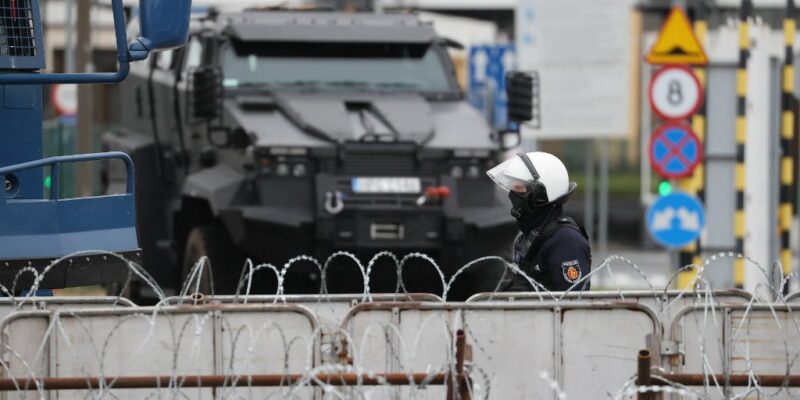
The European Federation of Journalists (EFJ) joined partners of the Media Freedom Rapid Response (MFRR) today to call on the Polish government to respect and facilitate the free flow of information by allowing journalists access to the border with Belarus to report on the humanitarian situation. We also urge Polish police and military personnel to refrain from arbitrary detentions and intimidation of media workers working in the area around the restricted zone. Since early September, journalists have been unable to report from inside a three-kilometre-wide stretch of land along the Belarusian border placed under a state of emergency. The measure limits…