European Federation of Journalists

IFJ-EFJ Regional Development Fund

Czech Republic


The European Federation of Journalists (EFJ) signed an agreement on 18 December 2014 with the Union of Journalists and Media Workers of Czech Republic (OSNPM) in order to investigate the working conditions of Czech journalists and media workers. The project is implemented with the cooperation of Judith Reitstatter, from the Austrian union GPA-djp.

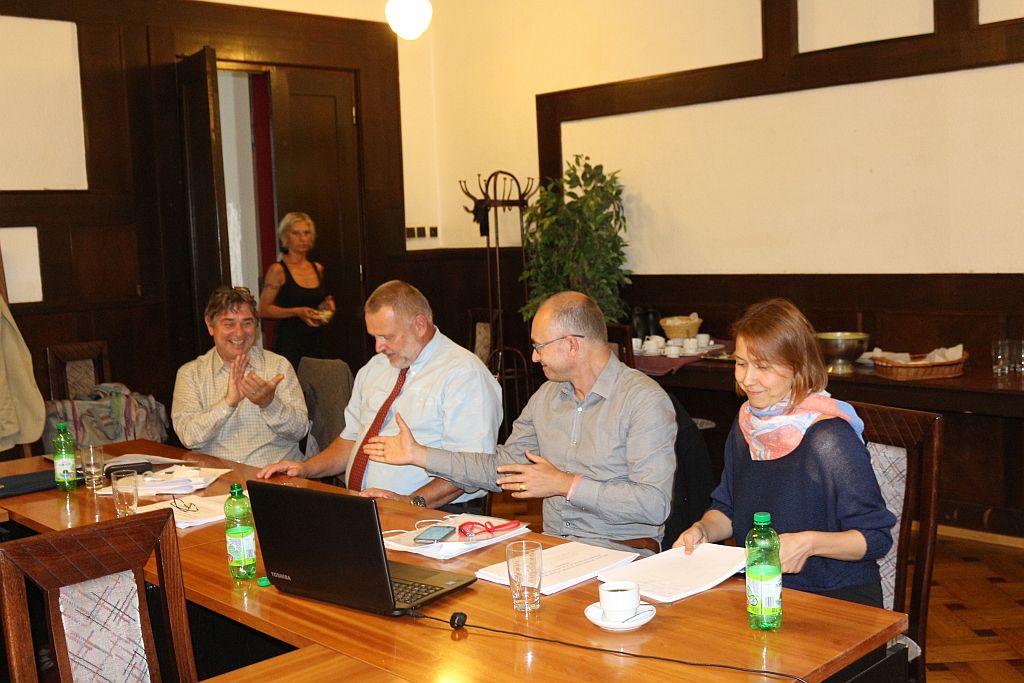
The online survey was launched on 19 May 2015. Around 2,500 journalists and media workers were invited to participate to the survey. The EFJ, OSNPM and GPA-djp analysed together the main outcomes of the survey during a round table conference, on 19 August 2015, in Prague.

The questionnaire focus mainly on labour rights. “This area is underestimated by the Czech media, journalists themselves and their employers as well,” explains Zdeněk Kučera, chairman of OSNPM.

“Over the past 25 years, journalists’ attention was focused primarily toward freedom of speech, access to information, relations with media ownership and the development of media houses. These are very serious topics. However, journalists’ status remained grossly underrated. A specific problem is the status of freelance journalists, which are increasingly numerous, particularly in regional media.”

The main findings of the survey are available on the EFJ website, here.
FOCUS EFJ

Side event of our project: a high school magazines national competition (Nejinspirativnější středoškolský časopis 2015). Here are the winners (picture credit: F. Cakl):

Czech

Contact details: OSNPM, e-mail: odborovy-svaz-novinaru@seznam.cz, website: http://www.odborovysvaznovinaru.cz


Slovakia

The European Federation of Journalists (EFJ), its Austrian union GPA-djp and the Slovak Union of Journalists (Slovenský syndikát novinárov) organized a meeting in Vienna, on 30 October 2014. Trade unionists and media students from both countries met in GPA-djp offices, in Vienna. The discussion on media convergence was launched by Dr. Roman Hummel, from the university of Salzburg.

Contact details: Judith Reitstaetter, judith.reitstaetter (at) gpa-djp.at


Estonia

The European Federation of Journalists (EFJ), the Estonian Union of Journalists (Eesti Ajakirjanike Liit, EAL) and the Union of Journalists in Finland (Suomen Journalistiliitto, UJF) agreed on 6 February 2015 to jointly implement the project “Workshops to Strengthen Journalists’ organisation in Estonia”.

The main objective of the project is to strengthen journalists’ organisation in Estonia, through three activities:

  • a freelance workshop in Helsinki,
  • a radio & TV negotiators workshop in Helsinki,
  • an authors’ rights seminar in Tallinn.

An action plan will be proposed for the next period.

Contact details: Juha Rekola, Juha.Rekola (at) journalistiliitto.fi, and Helle Tiikmaa, helle (at) eal.ee
 

Actions

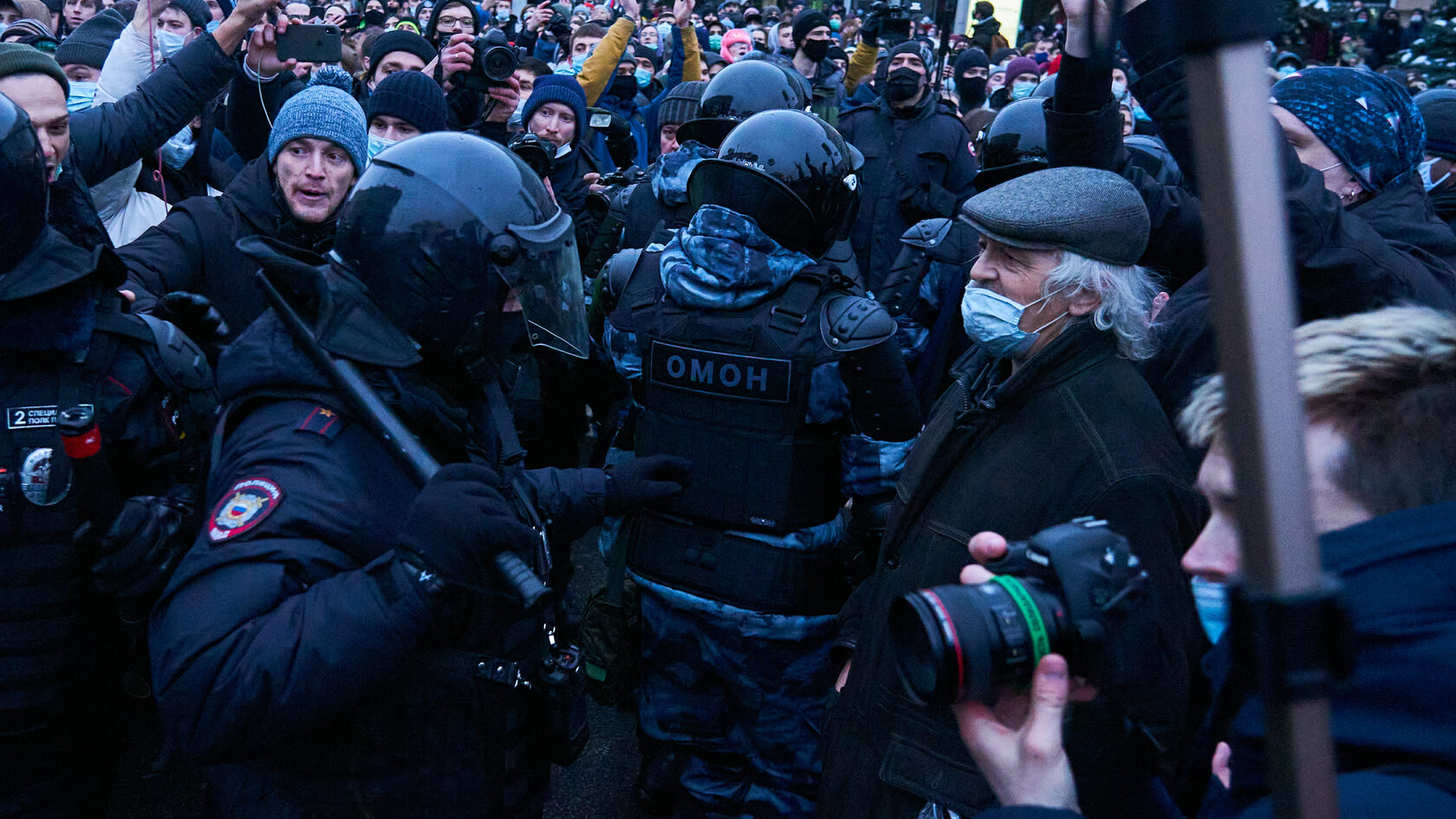
Russia: EFJ condemns the use of violence against journalists on Saturday

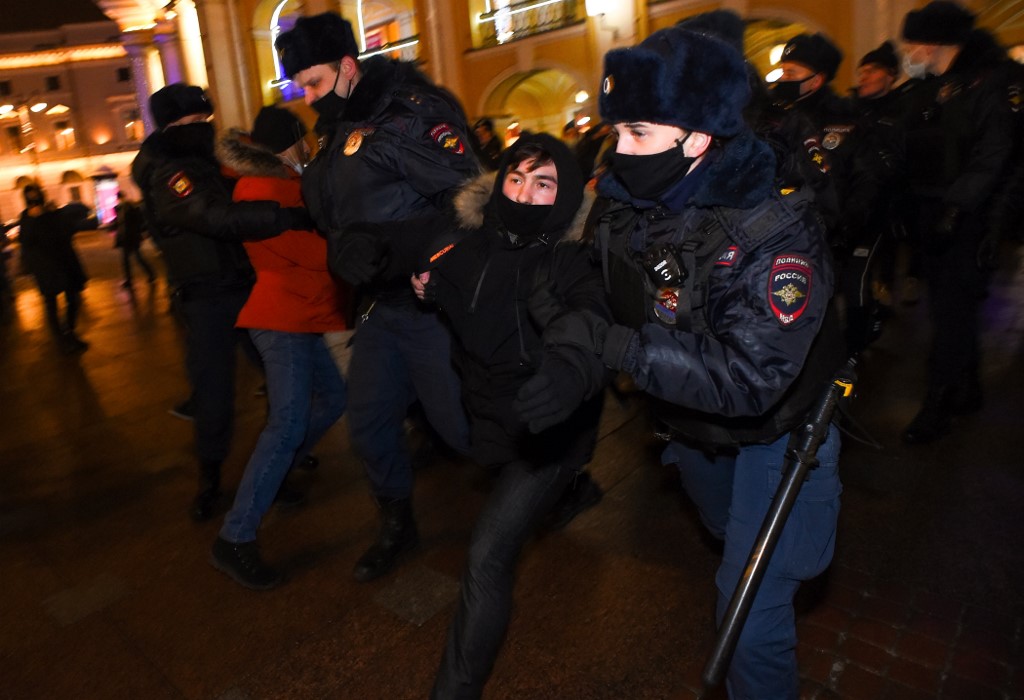
The Russian Journalists’ and Media Workers’ Union (JMWU) and the Russian Union of Journalists (RUJ) recorded on 23 January at least 52 cases of detention and violence against journalists while covering protests in support of jailed opposition leader Alexei Navalny, in Russia. The European Federation of Journalists (EFJ) condemns the use of violence against journalists. On Saturday, across Russia, tens of thousands of people defied a heavy police presence to join some of the largest rallies against President Vladimir Putin in years. OVD Info, an independent NGO that monitors rallies, said about 3,100 people had been detained, more than 1,200 of…

Russia: intimidation of journalists ahead of pro-Navalny protests

The European Federation of Journalists (EFJ) calls on the Russian authorities to respect press freedom and allow journalists to operate freely as they cover the mass demonstrations in support of jailed opposition leader Alexei Navalny, scheduled for Saturday 23 January. Since 20 January, Russian police and the Russian media regulator have issued warnings to several journalists, as well as to news outlets and social media platforms, discouraging them from covering protests in support of Navalny. The Russian Prosecutor’s Office announced on 21 January that police will be “focused on taking preventive measures, and if there are grounds – bringing the…

What to expect for journalism and media in 2021, according to Reuters Institute

The Reuters Institute for the Study of Journalism has released a report titled “Journalism, Media, and Technology Trends and Predictions 2021”, which draws from the major events of 2020 and their disruptive effect on journalism. This outlines what to expect as a result of rapid digital change following the Covid-19 pandemic in a new world “where the physical and virtual coexist in new ways.” A key finding is that the pandemic has forced us to rethink where the limits of free speech should lie for giant tech platforms. According to the report, we should expect a more interventionist approach on…

Germany: 252 attacks against media workers in 2020

In 2020, attacks against journalists in Germany more than doubled compared to previous years, according to the latest figure of the federal government. Demonstrations are considered as high-risk sites for journalists, and police officers were often unable to protect media professionals. The European Federation of Journalists and its German affiliates, the DJV and dju in ver.di, call for increased support and protection for media workers.  At the request of the Green parliamentary group, the federal government published official figures for the attacks on media workers in 2020. It recorded 252 incidents, among which 22 were physical injuries, 33 were damages…

Unions must change and cannot return to ‘business as usual’ after pandemic, report says

According to a recently published trade unions’ report by Unions 21 on the impact of the Covid-19 pandemic on unions and responses to these new challenges, trade unions are stronger than before the pandemic. Despite the difficult conditions, trade unions improved in membership recruitment, activism, engagement, and collective bargaining outcomes. However, the report warns that unions should not return to the pre-pandemic ‘business as usual’ mode in the future, but rather work toward building on changes made in 2020. The report made a series of recommendations for trade unions moving forward. They include the need to identify effective ways for…

EU report on the right to disconnect: EFJ co-signed ETUC letter to MEPs

The European Federation of Journalists (EFJ) co-signed, together with the European Trade Union Confederation (ETUC) and the European Trade Union Federations (ETUFs), the letter to MEPs asking them to reject the amendment being debated on the proposal for an EU directive on the right to disconnect. Here is our joint letter: Brussels, 19 January 2021 Dear MEPs, Workers experience a lot difficulties securing the right to disconnect in reality and the ETUC and the ETUFs urge the Commission to come forth with a proposal for a Directive quickly. Tomorrow, Wednesday the 20th January, amendments to the report on the right…