European Federation of Journalists

IFJ-EFJ Regional Development Fund

Czech Republic


The European Federation of Journalists (EFJ) signed an agreement on 18 December 2014 with the Union of Journalists and Media Workers of Czech Republic (OSNPM) in order to investigate the working conditions of Czech journalists and media workers. The project is implemented with the cooperation of Judith Reitstatter, from the Austrian union GPA-djp.

The online survey was launched on 19 May 2015. Around 2,500 journalists and media workers were invited to participate to the survey. The EFJ, OSNPM and GPA-djp analysed together the main outcomes of the survey during a round table conference, on 19 August 2015, in Prague.

The questionnaire focus mainly on labour rights. “This area is underestimated by the Czech media, journalists themselves and their employers as well,” explains Zdeněk Kučera, chairman of OSNPM.

“Over the past 25 years, journalists’ attention was focused primarily toward freedom of speech, access to information, relations with media ownership and the development of media houses. These are very serious topics. However, journalists’ status remained grossly underrated. A specific problem is the status of freelance journalists, which are increasingly numerous, particularly in regional media.”

The main findings of the survey are available on the EFJ website, here.
FOCUS EFJ

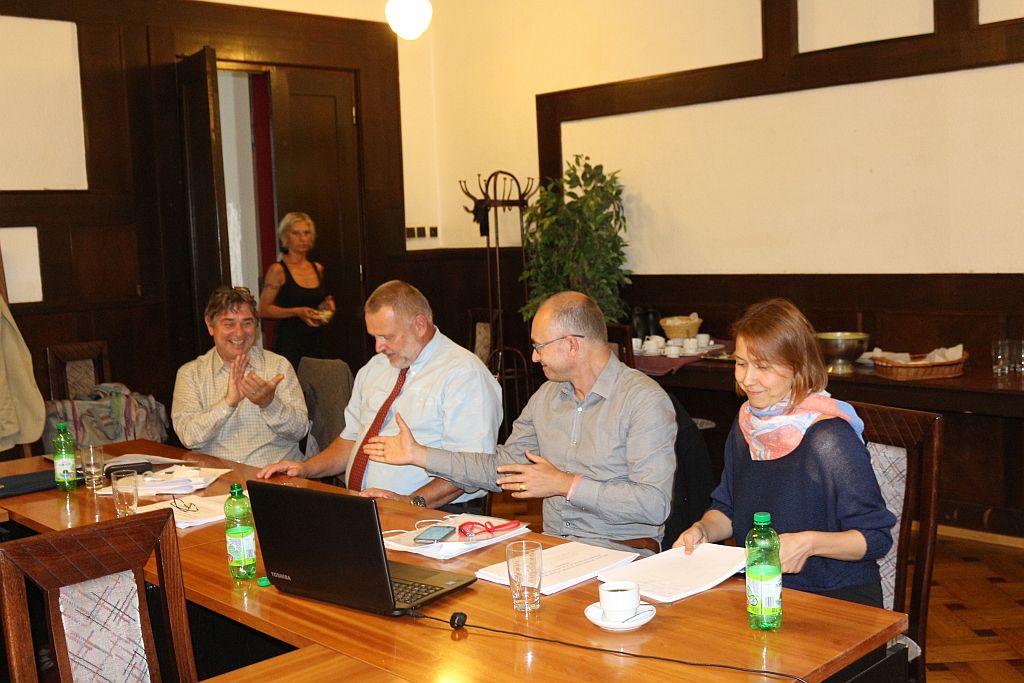
Side event of our project: a high school magazines national competition (Nejinspirativnější středoškolský časopis 2015). Here are the winners (picture credit: F. Cakl):

Czech

Contact details: OSNPM, e-mail: odborovy-svaz-novinaru@seznam.cz, website: http://www.odborovysvaznovinaru.cz


Slovakia

The European Federation of Journalists (EFJ), its Austrian union GPA-djp and the Slovak Union of Journalists (Slovenský syndikát novinárov) organized a meeting in Vienna, on 30 October 2014. Trade unionists and media students from both countries met in GPA-djp offices, in Vienna. The discussion on media convergence was launched by Dr. Roman Hummel, from the university of Salzburg.

Contact details: Judith Reitstaetter, judith.reitstaetter (at) gpa-djp.at


Estonia

The European Federation of Journalists (EFJ), the Estonian Union of Journalists (Eesti Ajakirjanike Liit, EAL) and the Union of Journalists in Finland (Suomen Journalistiliitto, UJF) agreed on 6 February 2015 to jointly implement the project “Workshops to Strengthen Journalists’ organisation in Estonia”.

The main objective of the project is to strengthen journalists’ organisation in Estonia, through three activities:

  • a freelance workshop in Helsinki,
  • a radio & TV negotiators workshop in Helsinki,
  • an authors’ rights seminar in Tallinn.

An action plan will be proposed for the next period.

Contact details: Juha Rekola, Juha.Rekola (at) journalistiliitto.fi, and Helle Tiikmaa, helle (at) eal.ee
 

Actions

Danish court acquits photojournalist charged with refusing to obey police order

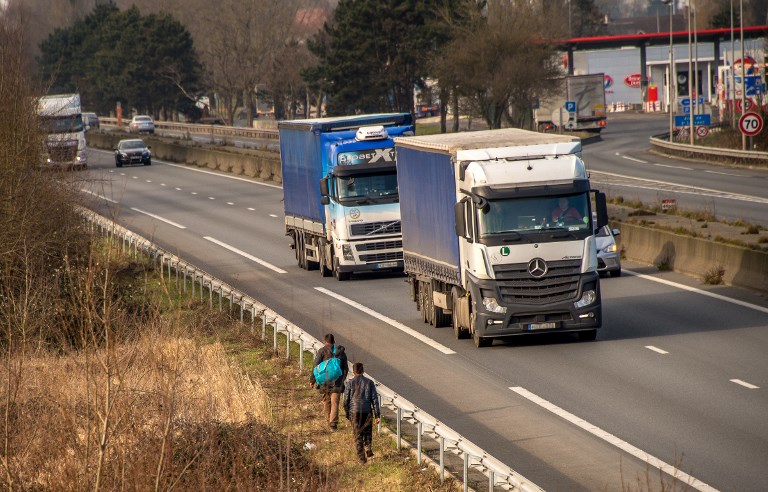
By Joshua Hollingdale, Dansk Journalistforbund The photojournalist from Danish daily Politiken, Martin Lehmann, was acquitted on the 22 January 2018 in a case concerning the legality of refusing a command by the police to remove himself from a Danish motorway, where a large group of refugees were travelling by foot. The acquittal was viewed as a matter of principle, largely based on a regard to public interest and freedom of the press. Lehmann was arrested by Danish police on 9 September 2015 for refusing a command by officers to leave the motorway where the group of refugees were walking, and…

Fact-finding mission to Estonia highlights negative impact of a deregulated media

The European Federation of Journalists (EFJ) and the European Centre for Press and Media Freedom (ECPMF) concluded their Fact-Finding Mission to Estonia, 22-23rd January 2018, by noting that in comparison with many other Eastern European countries,  media freedom in Estonia is rather high. However, the complete deregulation of the media has led to  high media concentration and a negative impact on quality of the media. Many journalists are, as in other countries, replaced by  ”media content providers” who are only valued for their speed and quantity to churn out content in order to reach profit goals. Managing director of ECPMF,…

Gender inequalities in media content and production persist, new study says

The European Parliament has just published its latest study on ‘Gender Equality in the Media Sector’. The study, requested by the Committee on Women’s Rights and Gender Equality and undertaken by the Department of Citizens’ Rights and Constitutional affairs, examines representation and conditions in the media and key elements of European policy towards gender equality in the sector. It also presents case studies in Austria, Malta, Sweden, and the UK. Many women who were interviewed reported widespread discrimination and inequality of opportunities in pay, recruitment, allocation of work, and promotion. Working structures, norms and practices were also seen as advantaging…

Joint mission to Serbia: our recommendations

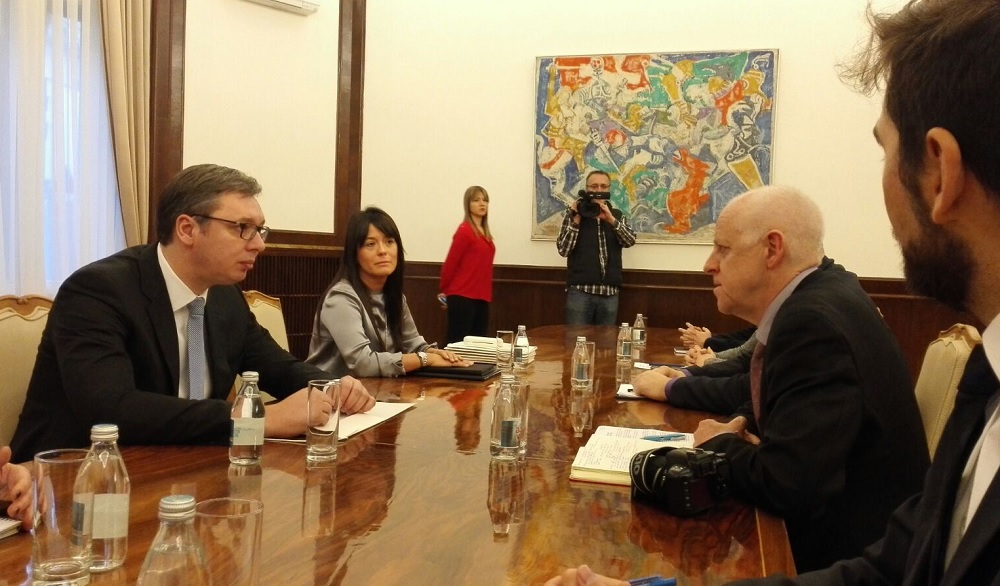
Following concerns about the state of media freedom in Serbia expressed by both Serbian journalists and media organisations as well as international organisations and institutions, an international joint fact-finding mission comprised of representatives from the European Federation of Journalists (EFJ), the International Press Institute (IPI) and the South East Europe Media Organisation (SEEMO) visited Serbia from 18th-19th January 2018. “It was encouraging to follow the big interest in Serbia on our fact finding mission. Without any doubt our mission shows that there are a huge need of creating an environment where all journalist by decent working conditions can do their…

In the front line to raise trust in journalism in South East Europe

On Monday (22/01/2018), the European Federation of Journalists (EFJ) organised a training of trainers workshop for the Labour Rights Expert Group Plus (LAREG+) at the EU InfoCentre in Podgorica (Montenegro) in the framework of its project Building Trust in Media in South East Europe and Turkey, financially supported by the UNESCO and the European Union. Trade union or professional association representatives from Albania, Bosnia and Herzegovina, Macedonia, Montenegro, Serbia and Kosovo followed the training given by Croatian journalist and trade unionist Gabrijela Galic on how to build trust in media in the Western Balkans. The Turkish participant was not allowed to leave…

Council of Europe: 114 MPs demand further investigation of Daphne Caruana Galizia case

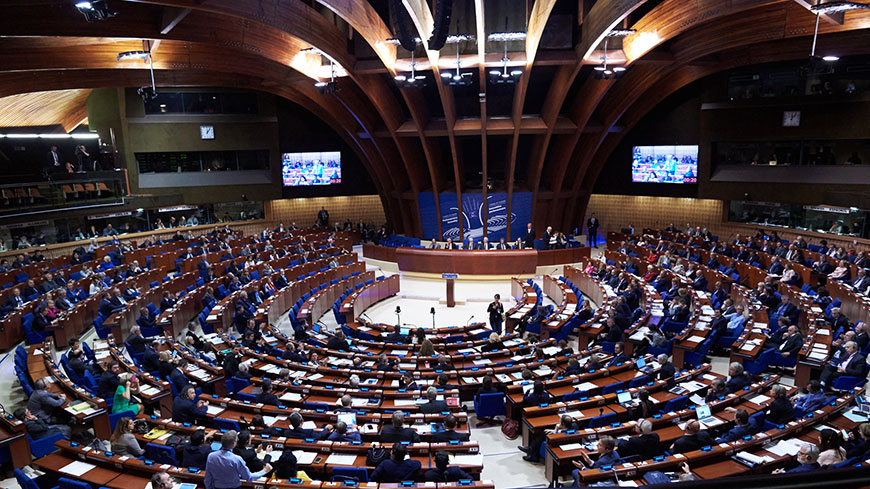
114 MPs from the Parliamentary Assembly of the Council of Europe (PACE) have signed a motion demanding an international monitoring on the investigation of the murder of Maltese journalist Daphne Caruana Galizia. The motion was signed at Strasbourg but has not yet been discussed in the Assembly. The signatures were collected in a single day, well surpassing the 20 signatures needed to submit a motion, with representation from all political groups. The motion was proposed by Dutch politician Pieter Omtzigt, and calls for an international approach to investigating the case of the murdered journalist. “The Parliamentary Assembly believes that the international community…