European Federation of Journalists

IFJ-EFJ Regional Development Fund

Czech Republic


The European Federation of Journalists (EFJ) signed an agreement on 18 December 2014 with the Union of Journalists and Media Workers of Czech Republic (OSNPM) in order to investigate the working conditions of Czech journalists and media workers. The project is implemented with the cooperation of Judith Reitstatter, from the Austrian union GPA-djp.

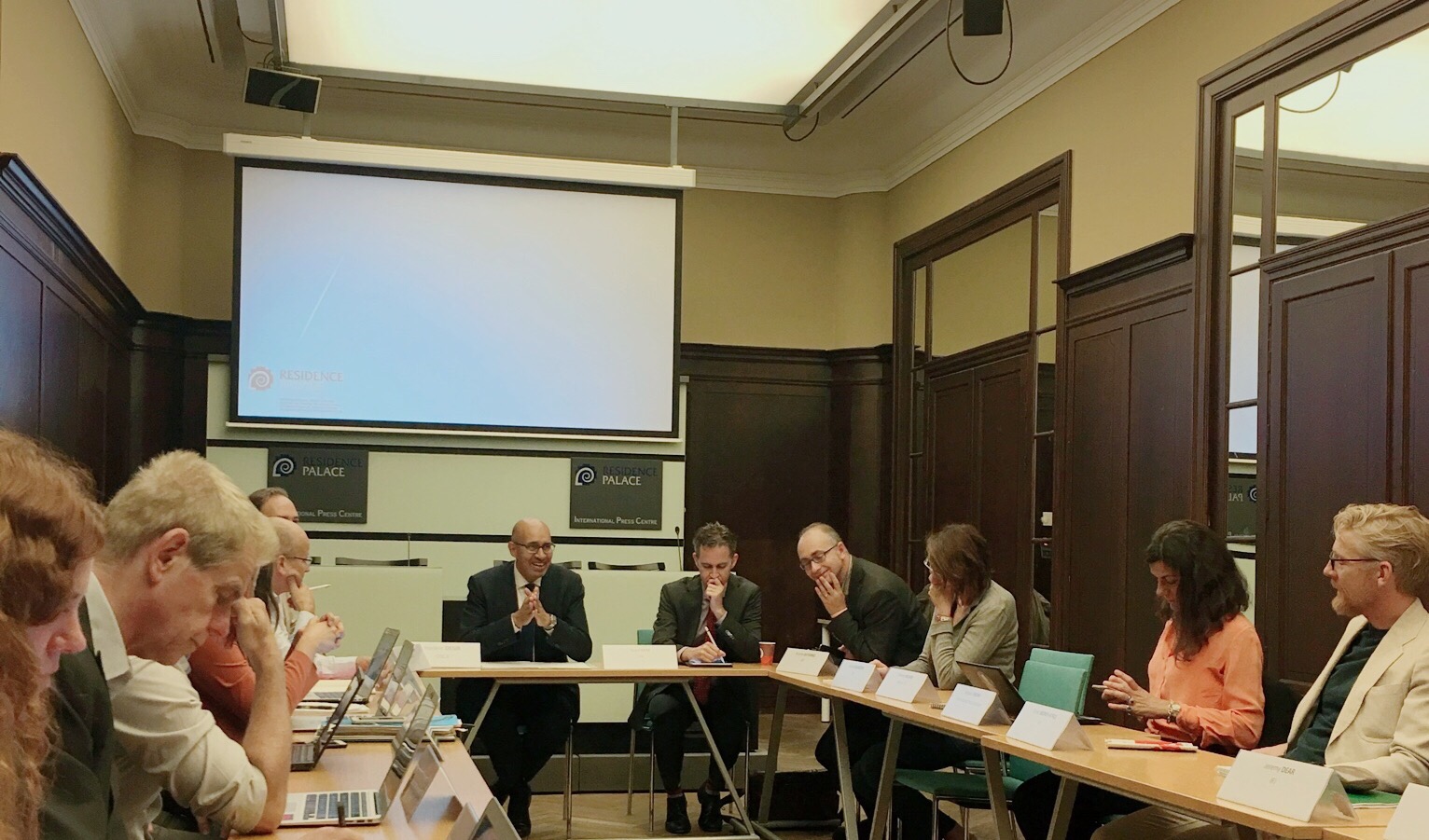
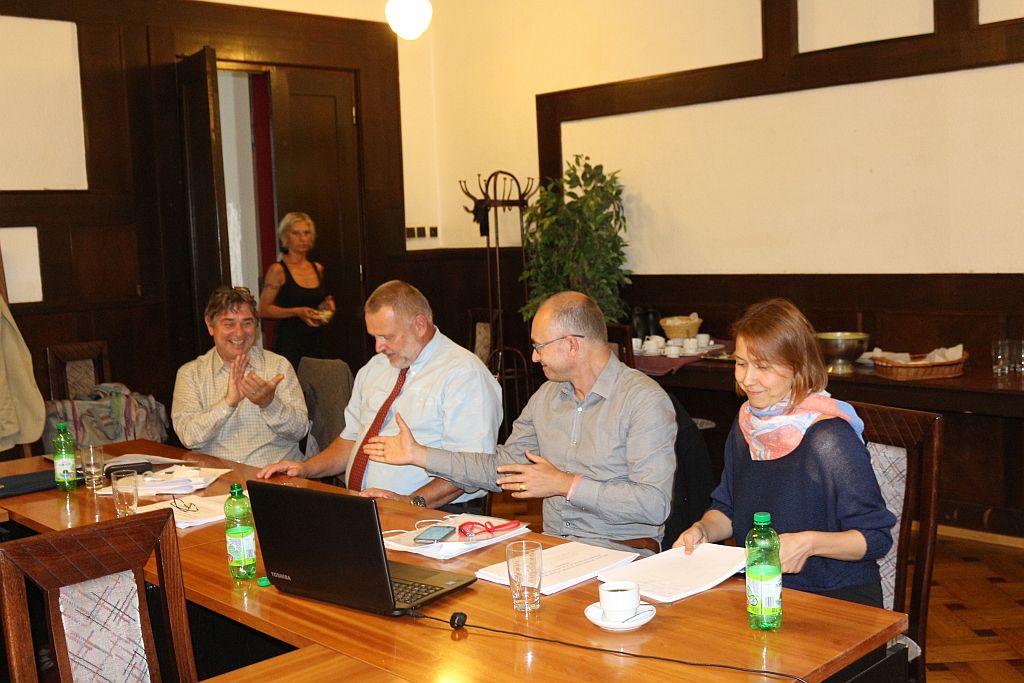
The online survey was launched on 19 May 2015. Around 2,500 journalists and media workers were invited to participate to the survey. The EFJ, OSNPM and GPA-djp analysed together the main outcomes of the survey during a round table conference, on 19 August 2015, in Prague.

The questionnaire focus mainly on labour rights. “This area is underestimated by the Czech media, journalists themselves and their employers as well,” explains Zdeněk Kučera, chairman of OSNPM.

“Over the past 25 years, journalists’ attention was focused primarily toward freedom of speech, access to information, relations with media ownership and the development of media houses. These are very serious topics. However, journalists’ status remained grossly underrated. A specific problem is the status of freelance journalists, which are increasingly numerous, particularly in regional media.”

The main findings of the survey are available on the EFJ website, here.
FOCUS EFJ

Side event of our project: a high school magazines national competition (Nejinspirativnější středoškolský časopis 2015). Here are the winners (picture credit: F. Cakl):

Czech

Contact details: OSNPM, e-mail: odborovy-svaz-novinaru@seznam.cz, website: http://www.odborovysvaznovinaru.cz


Slovakia

The European Federation of Journalists (EFJ), its Austrian union GPA-djp and the Slovak Union of Journalists (Slovenský syndikát novinárov) organized a meeting in Vienna, on 30 October 2014. Trade unionists and media students from both countries met in GPA-djp offices, in Vienna. The discussion on media convergence was launched by Dr. Roman Hummel, from the university of Salzburg.

Contact details: Judith Reitstaetter, judith.reitstaetter (at) gpa-djp.at


Estonia

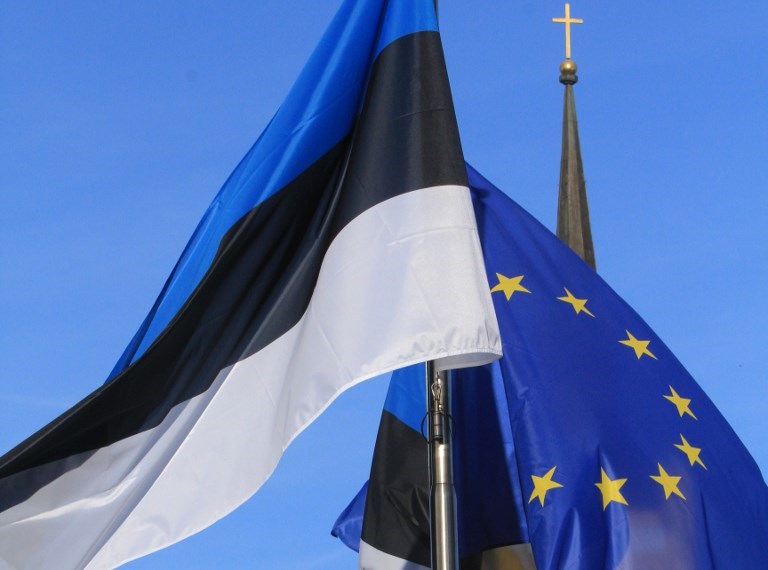
The European Federation of Journalists (EFJ), the Estonian Union of Journalists (Eesti Ajakirjanike Liit, EAL) and the Union of Journalists in Finland (Suomen Journalistiliitto, UJF) agreed on 6 February 2015 to jointly implement the project “Workshops to Strengthen Journalists’ organisation in Estonia”.

The main objective of the project is to strengthen journalists’ organisation in Estonia, through three activities:

  • a freelance workshop in Helsinki,
  • a radio & TV negotiators workshop in Helsinki,
  • an authors’ rights seminar in Tallinn.

An action plan will be proposed for the next period.

Contact details: Juha Rekola, Juha.Rekola (at) journalistiliitto.fi, and Helle Tiikmaa, helle (at) eal.ee
 

Actions

European parliament discusses the political and legal challenges for fake news

Fake news have become an unavoidable term when talking about (digital) media. They are seen as an effective tool of manipulating political discourse, a way for content creators to generate revenue from advertising and are easily widespread on the social media. The parliamentary group of social democrats in the European Parliament organised on Wednesday (06/09/2017) a conference to tackle the political and legal challenges linked to fake news and invited Ricardo Gutiérrez, General Secretary of the European Federation of Journalists, as an expert to the panel. Arnaud Mercier, professor of political communication at Panthéon-Assas University in Paris, said that fake…

OSCE Media Freedom Representative building new coalition defending media freedom

A coalition of international journalist and media freedom organisations, as well as intergovernmental institutions have gathered in Brussels on 5 September under the initiative of Harlem Désir, the newly appointed OSCE Media Freedom Representative, and the European Federation of Journalists (EFJ) to discuss challenges and develop new ideas for cooperation to defend media freedom across Europe. The attended organisations included Access Now, Article 19, Association of European Journalists, Committee to Protect Journalists, European Federation of Journalists, European Digital Rights, IFEX, International Federation of Journalists, Index on Censorship, International News Safety Institute, International Press Institute, PEN International, Reporters Without Borders as well as David Kaye the UN Special Rapporteur on the promotion and protection of…

The EFJ urges Estonia to reconsider denied accreditation to Russian journalists

The EFJ urges the Estonian Presidency of the Council of the European Union to reconsider denied accreditation to three Russian journalists for the EU informal meeting of the EU ministers of Foreign Affairs in Tallinn (Estonia) to take place on 7-8 September 2017. The Estonian Presidency refused three requests for accreditation from Russian state owned news agency Rossiya Segodnya to cover the EU informal meeting. The requests were filed by the Brussels based correspondent Vladimir Dobrovolskiy, and by Moscow based journalists Maria Kiseleva and Anastasia Sedelnikova. No explanations were provided by the Estonian authorities for their refusal. Sergey Kochetkov, first…

How to ensure editorial independence in the newsroom?

Journalists are facing increasing economic and political pressure hampering editorial independence in the newsrooms, concluded 20 journalists who attended the two-day workshop on Promoting editorial independence in the newsrooms. It was co-organised by the European Federation of Journalists (EFJ) together with the European Trade Union Institute (ETUI) on 29 & 30 August with the financial support of the European Union. The workshop was also supported by the Association des journalistes Professionnels (AJP, Belgium) alongside their yearly Summer School for young journalists in Belgium. Journalists coming from 13 European countries (including Austria, Belgium, Croatia, Estonia, France, Finland, Macedonia, Montenegro, Lithuania, Russia,…

New report highlights the poor working conditions of BiH journalists

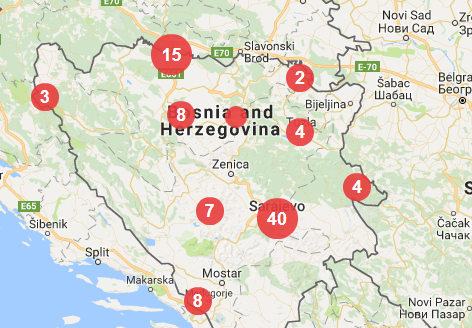
A Special report on the status and cases of threats against journalists in Bosnia and Herzegovina (BiH) was published on Monday 28 August 2017 by the Institution of Human Rights Ombudsman of BiH. The publication highlights the very bad employment status of journalists in the country, as well as the increase of violence, harassment and attacks against them. Some of the key findings highlighted in the report are: According to the BiH Journalists’ Association research, between 34% and 40% of journalists work in Bosnia and Herzegovina without adequate employment agreements, while those working with agreements are not sufficiently protected. Journalists…

Russian journalist deported and banned from Ukraine

Russian journalist Anna Kurbatova was deported from Ukraine to Russia on Wednesday 30 August and barred from returning for 3 years, accused of spreading anti-Ukrainian propaganda. The EFJ and IFJ join their affiliate the Russian Union of Journalists (RUJ) in condemning the deportation of Kurbatova and call on the Ukrainian authorities to lift the ban. “Russian propagandist Anna Kurbatova, whose forcible expulsion has been decided, has crossed the Ukrainian-Russian border”, said Ukrainian Secret Service (SBU) spokesperson Olena Hitlayanska. “She has been banned from entering our state for three years”. According to Russian news agencies, Kurbatova has been given an official…