European Federation of Journalists

IFJ-EFJ Regional Development Fund

Czech Republic


The European Federation of Journalists (EFJ) signed an agreement on 18 December 2014 with the Union of Journalists and Media Workers of Czech Republic (OSNPM) in order to investigate the working conditions of Czech journalists and media workers. The project is implemented with the cooperation of Judith Reitstatter, from the Austrian union GPA-djp.

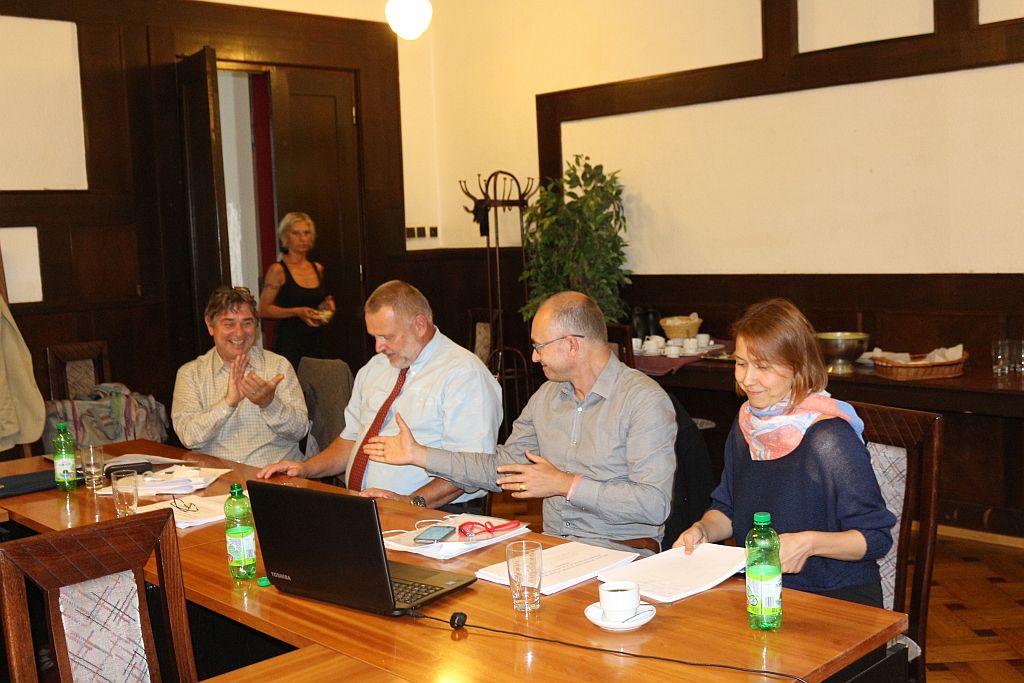
The online survey was launched on 19 May 2015. Around 2,500 journalists and media workers were invited to participate to the survey. The EFJ, OSNPM and GPA-djp analysed together the main outcomes of the survey during a round table conference, on 19 August 2015, in Prague.

The questionnaire focus mainly on labour rights. “This area is underestimated by the Czech media, journalists themselves and their employers as well,” explains Zdeněk Kučera, chairman of OSNPM.

“Over the past 25 years, journalists’ attention was focused primarily toward freedom of speech, access to information, relations with media ownership and the development of media houses. These are very serious topics. However, journalists’ status remained grossly underrated. A specific problem is the status of freelance journalists, which are increasingly numerous, particularly in regional media.”

The main findings of the survey are available on the EFJ website, here.
FOCUS EFJ

Side event of our project: a high school magazines national competition (Nejinspirativnější středoškolský časopis 2015). Here are the winners (picture credit: F. Cakl):

Czech

Contact details: OSNPM, e-mail: odborovy-svaz-novinaru@seznam.cz, website: http://www.odborovysvaznovinaru.cz


Slovakia

The European Federation of Journalists (EFJ), its Austrian union GPA-djp and the Slovak Union of Journalists (Slovenský syndikát novinárov) organized a meeting in Vienna, on 30 October 2014. Trade unionists and media students from both countries met in GPA-djp offices, in Vienna. The discussion on media convergence was launched by Dr. Roman Hummel, from the university of Salzburg.

Contact details: Judith Reitstaetter, judith.reitstaetter (at) gpa-djp.at


Estonia

The European Federation of Journalists (EFJ), the Estonian Union of Journalists (Eesti Ajakirjanike Liit, EAL) and the Union of Journalists in Finland (Suomen Journalistiliitto, UJF) agreed on 6 February 2015 to jointly implement the project “Workshops to Strengthen Journalists’ organisation in Estonia”.

The main objective of the project is to strengthen journalists’ organisation in Estonia, through three activities:

  • a freelance workshop in Helsinki,
  • a radio & TV negotiators workshop in Helsinki,
  • an authors’ rights seminar in Tallinn.

An action plan will be proposed for the next period.

Contact details: Juha Rekola, Juha.Rekola (at) journalistiliitto.fi, and Helle Tiikmaa, helle (at) eal.ee
 

Actions

Urgent need for states to step up efforts to address safety of journalists

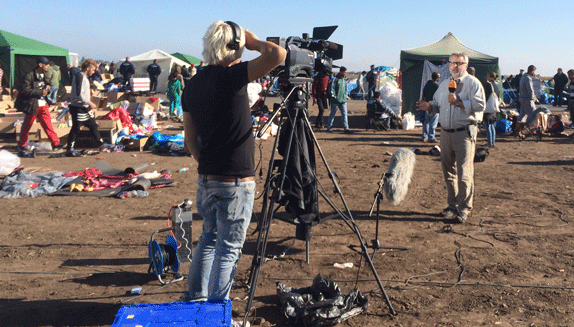
Journalists and human rights defenders, academics and civil society representatives gathered in Vilnius (Lithuania) on Monday to discuss with state officials and decision-makers how to guarantee the safety of journalists. The conference, The Safety of Journalists – New Challenges and Responses, was opened by Lithuania’s Foreign Minister Linas Linkevičius. The European Federation of Journalists (EFJ) was represented by its General Secretary Ricardo Gutiérrez. “We should be far away from any censorship or prohibitions. We have to create conditions and we have to protect journalists because safety is important not only for the journalists themselves, but also for the statehood, for…

Workshop for EU Journalists: Reporting on Migration & Refugees

The Media Diversity Institute (MDI) is inviting applications for a workshop it is organising for journalists from EU countries who are keen to improve their skills related to reporting on migrants, refugees and other vulnerable groups. The event will be held in London between 4 – 8 September 2017. Journalists from EU countries interested in participating at the workshop should contact info(at)media-diversity(dot)org for further information on how to apply. The deadline for submitting applications is end of 24 July 2017. All costs of participation will be covered by the organisers. The workshop, organised as part of the ‘Media Against Hate…

How is gender equality represented in the media in EU?

The Committee for Women’s Rights and Gender Equality (FEMM) organised on Monday (26/06/2017) a hearing on gender equality in the media in the European Union. The main goal was to provide information for the upcoming own-initiative report, which will be written later on in the year. The rapporteur is Czech MEP Michaela Šojdrová. Lenka Vochocová from Media Studies at the Faculty of Social Sciences in Prague, Donatella Martini, the director of DonneinQuota and Martine Simonis, General Secretary at the Belgian Association of Journalists (AJP) talked about the current situation of women at different positions in the media sector and analysed…

The Council of Europe recommends its member states to recognise ‘a right to whistleblowing’

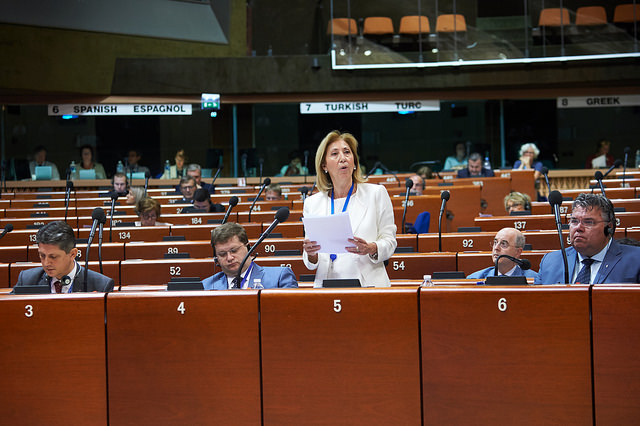
In a resolution, followed by a recommendation adopted on 27 June 2017, the Council of Europe Parliamentary Assembly encourages the Member States to provide “adequate protection to whistleblowers” in order to better fight corruption. The European Federation of Journalists (EFJ) welcomes this resolution which recognises investigative journalism as a “public asset” and push for more recognition and support to ensure the public’s widest possible access to information. “We are glad to see that the EFJ views on the issue were heard. The voting result are impressive: it was almost unanimously voted as only one participant abstained and one voted against,…

Social media trusted twice less than news media, shows the 2017 Digital News Report

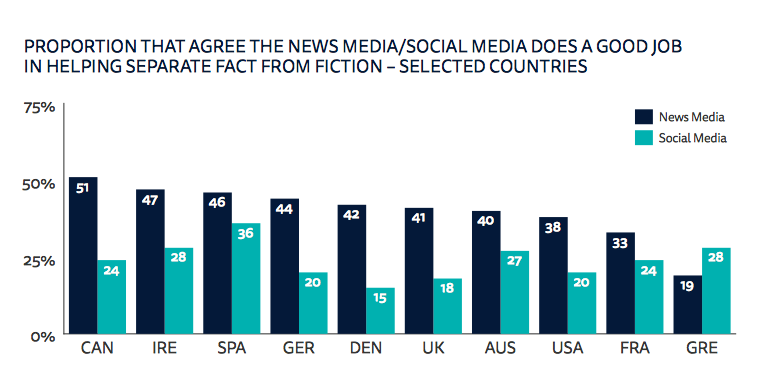
The year 2016-2017 has seen intense debates over fake news, algorithms and distrust towards journalists and journalism. The 2017 Digital News Report, published by the Reuters Institute for the study of journalism, contains interesting findings on some of the prevailing narratives around these issues. Social media are not doing a good job in separating fact from fiction The overall trust in news – 43% all media combined – drops significantly when it comes to social media, as only 24% thinks that social media do a good job in separating fact from fiction, compared to 40% for the news media. Only…

#HesaMag debate: Today’s and the future of journalism is precarious

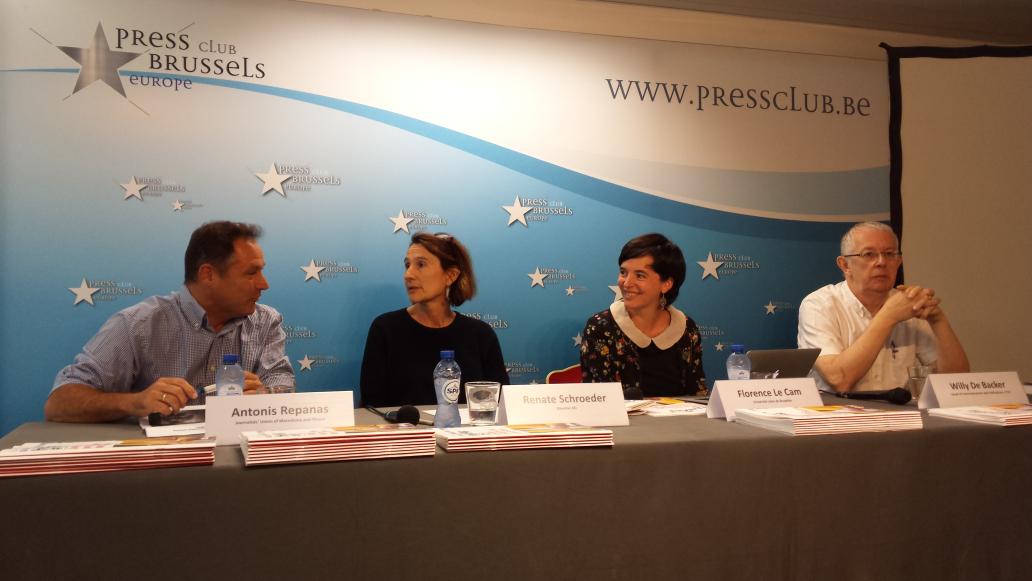
Multitasking in a 24-hour rush, selling articles for five or ten euros and the increase of burnouts is a reality for too many journalists nowadays. This decline in working conditions is also the main topic of the latest issue of HesaMag, titled “Journalism, an increasingly precarious profession”. The European Trade Union Institute (ETUI) organised yesterday (26/07/2017) a debate on the subject and presented the magazine, which was carried out in collaboration with the European Federation of Journalists (EFJ). The debate was moderated by Willy De Backer, Head of Communication and Publications at the ETUI. #HesaMag event with @renatemargot @AntonisRepanas @WillyDebacker…