European Federation of Journalists

Media Freedom Rapid Response

The European Federation of Journalists (EFJ) is a partner of Media Freedom Rapid Response project (MFRR) aiming to promote an independent, pluralistic media landscape, to safeguard media workers, especially harassed female media workers and to protect the rights of journalists. The RRM helps to mitigate the consequences of the recently observed deterioration of media freedom in several European Union, Member States and Candidate Countries.

Overall Objective

The overall objective of this project is to provide practical support for journalists to improve media freedom in Europe.

The Media Freedom Rapid Response (MFRR) is designed to detect, answer and prevent violations of press and media freedom. It consists of three layers: monitoring, categorisation, responses.

Specific objectives

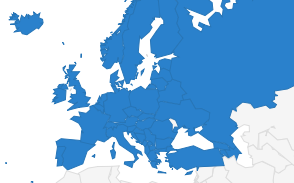
1. Mapping Media Freedom (MMF) in Europe (EU & Candidate Countries): Media violations are on the rise especially under the current coronavirus crisis. One of the key components of the project is to monitor and document a wide range of media violations conducted by any actors, whether individuals, state actors or business, so that actions can be taken rapidly to address the violations.

2. Practical supports: Based on the media violations reported, the project offers a wide range of immediate to long-term, practical support ranging from legal help, safety advice and training, safe house for journalists, advocacy and mission, and online resources. You could find more information about the legal support here and more details about safe house for journalists here.

3. Advocacy & Trial Monitoring: Joint media advocacy will also be carried out by the project including joint statements, national missions (in Czech Republic, Hungry, Spain, Serbia), roundtable advocacy meetings with EU policy-makers. The EFJ will involve the relevant national members when carrying out such national missions. Trial Monitoring especially for Turkey, Malta (for the case of Daphne Caruana Galizia) and Slovakia (for the case of Ján Kuciak) will be carried out and participated by the project partners to help find justice for journalists who are put in jails or murdered.

Anyone can submit and report a media violation to the MMF platform online.
Actions

Netherlands: Journalists’ safety increasingly under attack

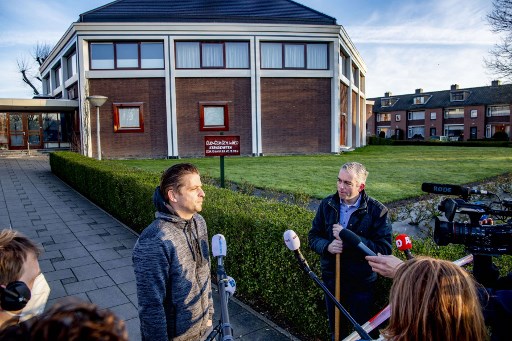
Riots have taken place in several cities in the Netherlands following the the government’s decision to impose a 9pm curfew to curb the circulation of the coronavirus, on Saturday 23 January. Several journalists were physically attacked in a context of growing hostility towards the press. The European and International Federations of Journalists (EFJ/IFJ) join their affiliates in the Netherlands, the NVJ, in condemning the attacks and expressing alarm over the escalation of violence against media professionals since last year. The unrest has started last weekend in protest against the curfew which came into force on Saturday. At least seven cases…

EFJ joins call for urgent police protection for Montenegrin journalist Olivera Lakić

The European Federation of Journalists (EFJ) joins the Media Freedom Rapid Response (MFRR) in calling on Montenegrin authorities to follow up on verbal commitments and immediately provide Lakić and her family with adequate police protection. These new assassination plots must also be swiftly and thoroughly investigated to ensure that both the perpetrators and those ultimately responsible for ordering Lakić’s death are brought to justice. Olivera Lakić is an investigative journalist who covers organised crime and corruption. On 25 December 2020, the special state prosecutor announced two suspects’ arrest for planning her assassination, with other suspects who are already in prison. They are…

Germany: 252 attacks against media workers in 2020

In 2020, attacks against journalists in Germany more than doubled compared to previous years, according to the latest figure of the federal government. Demonstrations are considered as high-risk sites for journalists, and police officers were often unable to protect media professionals. The European Federation of Journalists and its German affiliates, the DJV and dju in ver.di, call for increased support and protection for media workers.  At the request of the Green parliamentary group, the federal government published official figures for the attacks on media workers in 2020. It recorded 252 incidents, among which 22 were physical injuries, 33 were damages…

Croatia: Media accused of conspiring to overthrow the government

N1 Croatia revealed that members of the ruling party (HZD) accused part of the media of conspiring with the opposition to destabilise the government. The European Federation of Journalists (EFJ) joined its affiliate in Croatia, the Croatian Journalists’ Association (CJA), in condemning new serious attempt to discredit the Croatian media. N1 TV channel reported that HZD top figures claimed, during a private online meeting on 11 January 2021, that certain media and journalists had sided with the opposition and the radical right to criticise the slow and inefficient handling of the crisis by the government after the deadly earthquake in…

Portugal: four journalists under illegal police surveillance

UPDATE (14/01/2021): On 14 January, daily newspaper Sabado revealed that Lisbon prosecutor Andrea Marques also tried to identify the sources of two journalists from the Portuguese public broadcaster RTP. One of these journalists was heard as a witness by the prosecutor’s office in August 2020. —————————— Four Portuguese journalists have been placed under police surveillance, at the request of Lisbon public prosecutor Andrea Marques, as part of the investigation into leaks related to the “e-Toupeira” corruption case, launched in March 2018. Without prior authorisation from an investigating judge and in order to identify the sources of the journalists, Prosecutor Marques…

Slovenia: Radio Študent threatened to lose its funding

Radio Študent will lose funding of its founder the Student Organisation of the University of Ljubljana (ŠOU), the radio announced in a press release on 8 January 2021. According to Radio Študent, the reason put forward is the critical reporting on the ŠOU structure and management. Europe’s largest and oldest independent student radio fears for its existence. The European Federation of Journalists (EFJ) joined its affiliates, the Union of Slovenian Journalists and the Slovenian Association of Journalists, in condemning ŠOU’s withdrawal and supports Radio Študent’s calls for the provision of funding at least until 2022. This would enable a two-year…