Fact-finding mission to Estonia highlights negative impact of a deregulated media

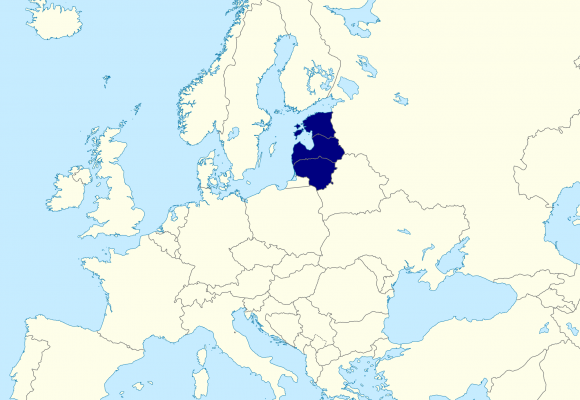
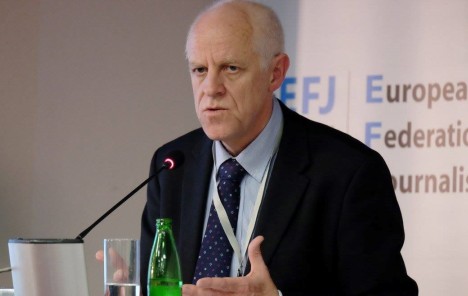
The European Federation of Journalists (EFJ) and the European Centre for Press and Media Freedom (ECPMF) concluded their Fact-Finding Mission to Estonia, 22-23rd January 2018, by noting that in comparison with many other Eastern European countries,  media freedom in Estonia is rather high. However, the complete deregulation of the media has led to  high media concentration and a negative impact on quality of the media. Many journalists are, as in other countries, replaced by  ”media content providers” who are only valued for their speed and quantity to churn out content in order to reach profit goals. Managing director of ECPMF,…
Gender inequalities in media content and production persist, new study says

The European Parliament has just published its latest study on ‘Gender Equality in the Media Sector’. The study, requested by the Committee on Women’s Rights and Gender Equality and undertaken by the Department of Citizens’ Rights and Constitutional affairs, examines representation and conditions in the media and key elements of European policy towards gender equality in the sector. It also presents case studies in Austria, Malta, Sweden, and the UK. Many women who were interviewed reported widespread discrimination and inequality of opportunities in pay, recruitment, allocation of work, and promotion. Working structures, norms and practices were also seen as advantaging…

Council of Europe: 114 MPs demand further investigation of Daphne Caruana Galizia case

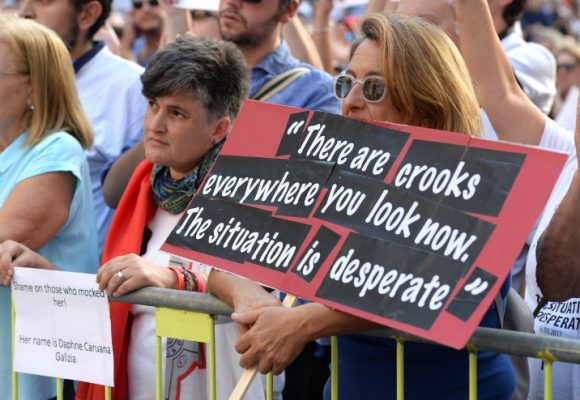
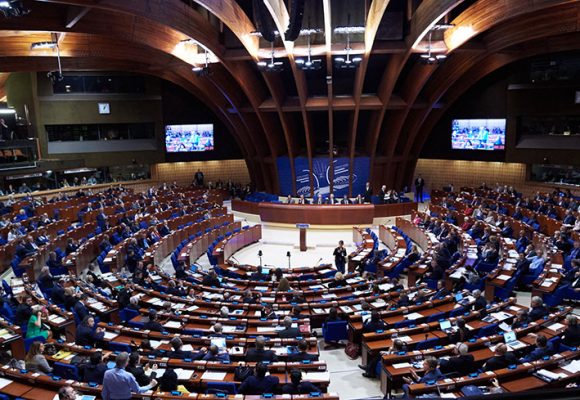
114 MPs from the Parliamentary Assembly of the Council of Europe (PACE) have signed a motion demanding an international monitoring on the investigation of the murder of Maltese journalist Daphne Caruana Galizia. The motion was signed at Strasbourg but has not yet been discussed in the Assembly. The signatures were collected in a single day, well surpassing the 20 signatures needed to submit a motion, with representation from all political groups. The motion was proposed by Dutch politician Pieter Omtzigt, and calls for an international approach to investigating the case of the murdered journalist. “The Parliamentary Assembly believes that the international community…

EFJ and ECPMF embark on fact-finding mission to the Baltics

The European Federation of Journalists (EFJ), along with the European Centre for Press and Media Freedom (ECPMF) will embark on a Fact-Finding Mission to Estonia and Lithuania from 22 to 24 January 2018, in close cooperation with its affiliates, the Estonian Association of Journalists (EAJ), and the Lithuanian Journalists’ Union (LJU). The mission delegation will investigate the state of media freedom and journalists’ rights and working conditions in Estonia and Lithuania, meeting with journalists, government representatives, and public and private media organisations including Russian-speaking media and researchers. The issue of Russian “propaganda” and the need for ethical journalism, but also…

Serbia: Fact-finding mission on media freedom and journalists’ rights

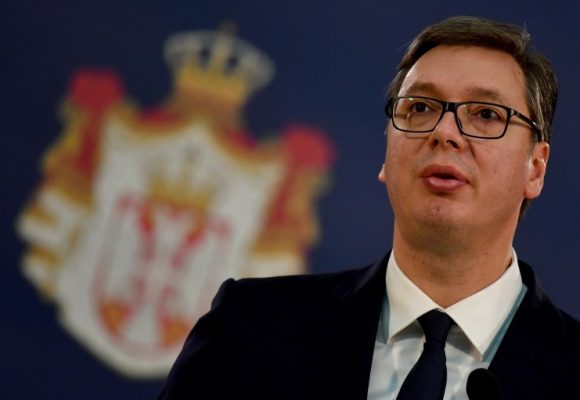
This morning, 18 January 2018, the joint Fact-Finding Mission to Serbia on media freedom and journalists’ rights commences by the European Federation of Journalists (EFJ) in cooperation with the South East Europe Media Organisation (SEEMO) and the International Press Institute (IPI) as well as the EFJ affiliates in Serbia: the Journalists’ Association of Serbia (UNS), the Independent Journalists’ Association of Serbia (NUNS), and the Journalists’ Union of Serbia (SINOS). The two-day mission will meet with government representatives including the President of Serbia Aleksandar Vucic, the Ministry of Culture’s State Secretary, the Assistant Minister for Information and Media and the state…

European Parliament debates the influence of Russian propaganda on EU countries

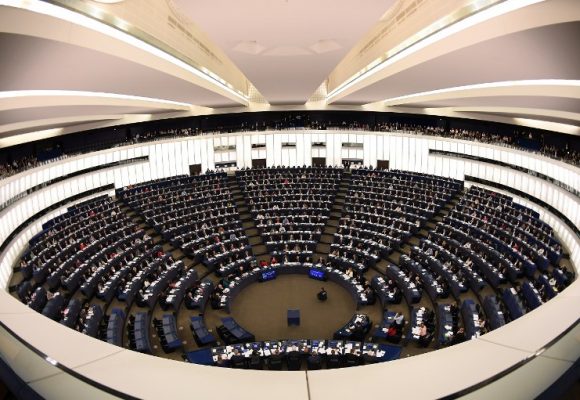
The European Parliament debated on 17 January 2018 the burning issue of the so-called “fake news” and Russian propaganda on EU countries. The debate focused on fake news stories coming from unidentified people and bots, as well as well as politically-driven news from outlets such as state-owned Russia Today and Sputnik. The next European elections to take place in 2019 are likely to be the next big target for Russian propaganda, MEPs have warned. During this plenary session in Strasbourg, Members of the European Parliament (MEPs) highlighted issues including the funding and staffing of actions against misinformation and the resilience of democracies…

European Union pressuring Turkey to release jailed journalists

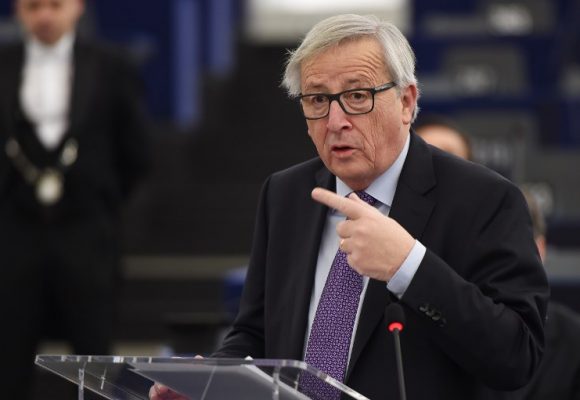
The European Union and Turkey will see no progress in their relations as long as Turkey holds journalists in prison, the president of the European Commission Jean-Claude Juncker said on Friday (12/01/2018) at a news conference in Bulgaria. The president of the European Commission made this comment following the news that a Criminal Court in Istanbul defied the Turkish Constitutional Court’s decision ruling that the journalists’ rights had been violated and subsequently to release imprisoned journalists Mehmet Altan and Sahin Alpay.   “Turkey is moving away from its European ambitions of the past and we are going to have to see…

European delegation investigates rule of law in Malta

A European delegation of representatives from the various political parties of the European Parliament has released on Thursday the report from its mission to Malta, on 30 November and 1 December 2017. The delegation met Maltese journalists, the police commissioner and the attorney general of Malta, to discuss important issues affecting the rule of law in the country – including the state of the media. Maltese journalists from the Times of Malta, the Malta Independent and The Shift News were greeted by the delegation. The journalists highlighted legal challenges facing journalists, including libel cases, which are easy for the accusers but…

What to expect for the media in 2018, according to Reuters

The Reuters Institute for the study of journalism has predicted the year 2018 in journalism with the release of its report, ‘Journalism, Media, and Technology Trends and Predictions 2018’, part of its Digital News Project 2018. Digitisation is a key theme: according to a survey of 194 editors, CEOs and digital leaders in media, almost half of publishers are more worried about the power and influence of platforms – especially Facebook and Snapchat – than this time last year. According to the report, however, platforms will be more wary about the reputational damage that comes with news. Reuters predicts that platforms…

Germany: Repeal NetzDG bill, deletion is not the answer

The German journalists’ association and affiliate of the European Federation of Journalists (EFJ), Deutscher Journalisten-Verband (DJV), has called on the members of the German Bundestag to abolish the Network Enforcement Act (NetzDG) as soon as possible. DJV federal chairman, Frank Uberall, said that “the censorship of the satirical magazine Titanic, by Twitter, has confirmed our fears that we have already put forward in the legislative process. The NetzDG pushes the power over the fundamental right of freedom of the press and freedom of private companies such as Twitter and Facebook. There is no sound legal consideration of the deletion of…

HesaMag #16: working conditions and fake news in the digital era

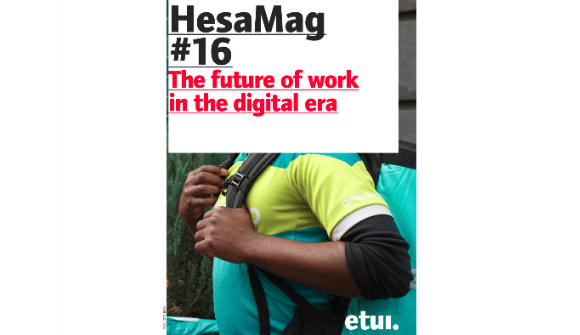
After an issue on the precarious working conditions of journalists, HesaMag, a magazine produced by the European Trade Union Institute (ETUI) about health and safety at work, just released its 16th edition entitled “The future of work in the digital era“. The magazine’s special report investigates the impact of technologies on working conditions and environments in the industry sector, as well as in the intellectual professions. A story on the fake news industry in Macedonia shows how young people, with no prospects of finding a decently paid job, manage to earn a few hundred euros by working around the clock. Working conditions…

Global survey on media ethics highlights fake news, low pay and spin

The Centre for International Media Ethics (CIME) has published the results of its survey on ‘Media Ethics in the Post-Truth Era’. The survey, with responses from Africa, the Americas, Central and South Asia, Europe and Oceania, aimed to learn from media professionals about the state of media ethics in their countries. According to participants, the top issues faced at work for journalists around the world were fake news, low pay, the pressure to attract the largest audience and political or corporate spin. Despite these issues, over half of respondents said that their government’s responses to protecting media ethics rate between…

Let independent journalism thrive

European institutions continuously emphasize that independent journalism and free media are fundamental pillars for our European democracy. Thanks for that, but it is not only words that are needed but also more political will, not only from institutions such as the Council of Europe and the EU, but also firmly and unconditionally from national leaders. We want to hear from the highest authorities that independent journalism must thrive. Strong support from all parties is a prerequisite for the safety of journalists and for fighting impunity, fighting “fake news”, developing mechanisms to defend journalists’ rights, including authors’ rights, and for improving…

5 media professionals killed in Europe in 2017

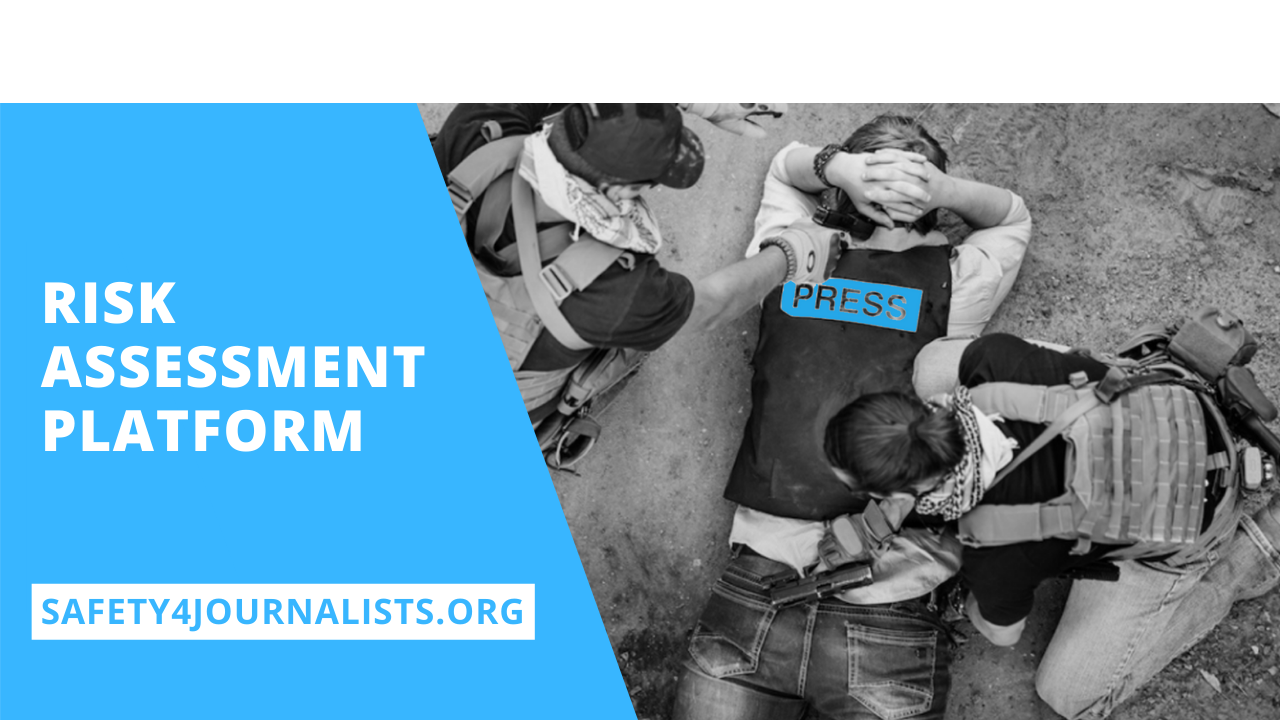
80 journalists have been killed worldwide this year, including 5 in Europe, according to the International Federation of Journalists’ (IFJ) Killed List, published today. The list details the journalists and media staff killed in targeted killings, car bomb attacks and cross fire incidents around the world during 2017. Denmark: Kim Wall The Swedish freelance journalist Kim Wall was killed in Denmark in August this year. The journalist had boarded a civilian submarine with its inventor, Peter Madsen, and was researching for a feature about him and the vessel which he had built from crowdfunding. Kim Wall’s body parts were later found…

Turkey: Four Cumhuriyet journalists ordered to remain in prison

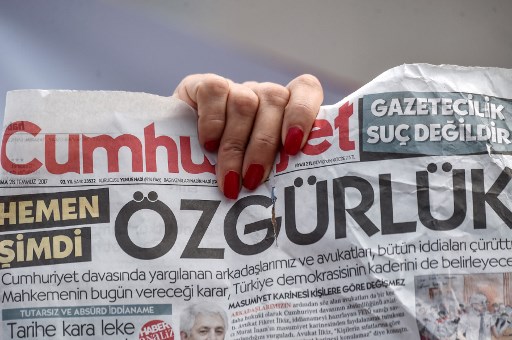
At a hearing on 25 December 2017, a Turkish judge ordered four journalists and senior staff from the newspaper Cumhuriyet to remain in prison for at least two more months during their trial. The newspaper’s editor-in-chief Murat Sabuncu, attorney Akin Atalay, correspondent Ahmet Şık and accountant Emre Iper, are charged with supporting through their coverage three outlawed groups: The Kurdistan Workers’ Party (PKK), the Revolutionary People’s Liberation Party-Front (DHKP-C), and the Gülen network. They face up to 43 years in prison if convicted. The newspaper and staff have denied the charges, and argue that they are being targeted to silence…

Eurobarometer survey shows whistleblowing is seen as difficult and dangerous

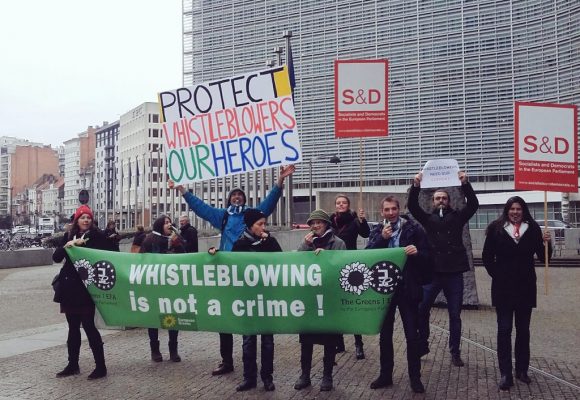
The latest Special Eurobarometer on Corruption, published on 19 December 2017, shows a widespread perception that whistleblowers across Europe face a difficult and dangerous situation. This collection of surveys across 28 European Union member states, conducted by the European Commission, focuses on corruption, giving a clear overview of the state of corruption in Europe. According to the results, more than two thirds (68%) of Europeans think that corruption is widespread in their country. This number has fallen by 8% since 2013, however the majority of Europeans (73%) still believe that there is corruption in national public institutions, and that the…