European Federation of Journalists

openMedia, investigating press freedom

Title of the project : openMedia, investigating press freedom
Lead Applicant
: openDemocracy

Partner organisations : EFJ, Index on censorship, King’s College London

The recently launched openMedia project aims to investigate and expose commercial interference in editorial decisions. The project is run by openDemocracy with the European Federation of Journalists (EFJ) as a partner alongside the Index on Censorship and King’s College London.

The project believes that there has not been enough of a concerted, ongoing spotlight on the extent and effects of commercial influence over the media, despite the dangerous consequences it poses for press freedom. For now, the project focuses on 47 countries across Europe but also has ambitions to expand.

Despite the recent launch, the project is adamant that it is not a response to the “fake news” hype of the past year or so. Rather, the project responds to scandals of commercial sponsors influencing media content; for example the Daily Telegraph’s suppression of investigations into its advertiser HSBC; and allegations that Buzzfeed deleted articles which advertisers found unfavourable.

According to the project, this power dynamic can suppress investigations of banks, pharmaceuticals, agriculture, fossil fuel giants, energy companies and other big businesses.

In addition, the project recognizes how for many readers, “sponsored content” is difficult to distinguish from genuine news content. The project therefore aims to clarify the commercial interests apparent in media to readers, and as part of the project, King’s College London will develop digital tools to help readers be better informed about news sources.

The findings of the project will be used to campaign for greater transparency and press freedom in news organisations and to empower journalists to advocate for transparency.

In order to do this, openMedia is currently conducting a confidential and anonymous survey of journalists across Europe, asking about their own working practices and experiences of commercial pressure inside newsrooms. The survey is available in English here and in many other languages here.
Actions

Turkey: EU-backed project organises digital and trade-union workshops in Istanbul and Bursa

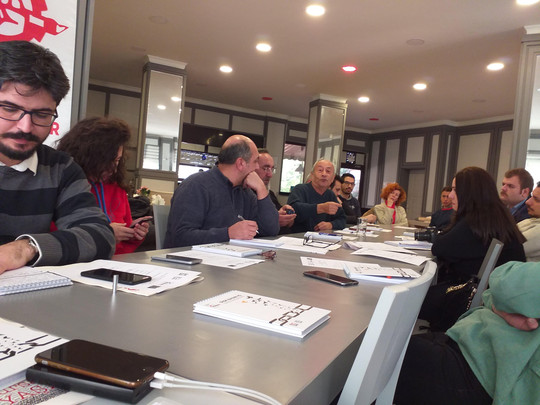
The International and European Federations of Journalists (IFJ/EFJ), in partnership with their Turkish affiliates, organised last week two training workshops in Istanbul and Bursa, Turkey. The events are part of an EU-funded project promoting journalists’ rights and human rights journalism, which the organisations currently implement in Turkey. Organized on 4 December in partnership with the Türkiye Gazeteciler Sendikası (TGS) and Evrensel newspaper, the first workshop focused on countering fake news and fact-checking techniques. Training was delivered in the newsroom to 12 journalists by trainer Gülin Çavuş and Orhan Şener, director of the TGS Akademi. It examined various online fact-checking techniques including KnightLab,…

Albania: EFJ/IFJ urge Parliament to reject online media law

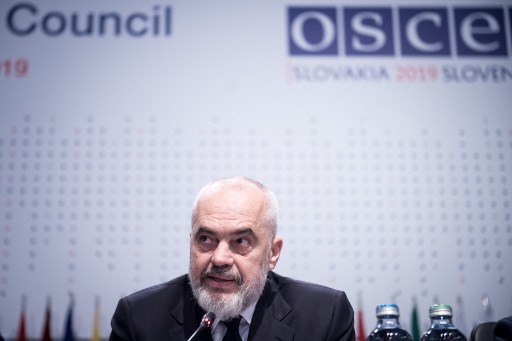
UPDATE (19 December 2019): On 18 December, the Albanian parliament approved two controversial media laws, known as the “anti-defamation package”. 82 MPs voted in favour of the law, 13 against and 5 MPs abstained. We condemn these media law changes, which if they come into force, will result in the replacement of self regulation of online media with state regulation. Cosmetic changes made at the very last minute do not address all the concerns raised by the European Union, the Council of Europe (CoE) and CoE’s Human Rights Commissioner Dunja Mijatovic. We urge the president not to decree these changes as…

Albanian authorities pursue highly problematic media laws despite public outcry

We, the undersigned organisations, reiterate our call on the Albanian parliament not to approve the draft media laws known as the “defamation package.” Should the draft laws enter into force, they would introduce mandatory registration requirements for online media and create an administrative body with the power to fine, shut down online media and block foreign online media – all without a court order. They would also introduce state regulation of online media, which is contrary to international best practice guidelines on self-regulation. We note that the proposals are not in line with best practices on self-regulation and would have an adverse…

Turkey: Journalist found unconscious with brain haemorrhage

Turkish journalist İdris Özyol who had been beaten up in May was found unconscious in the street in Antalya on 2nd December and rushed to hospital where he was diagnosed with a brain haemorrhage. The EFJ and IFJ join the Progressive Journalists’ Association (CGD) and Disk Basın-İş in calling for a full investigation into the case and demanding the government act to ensure journalists’ safety. İdris Özyol, who is known for his criticism of government’s policies, writes for local daily Akdeniz’de Yeni Yüzyıl in the southern province of Antalya. On 15 May 2019, he was attacked by three assailants in front of his…

Call for proposals for Press and Media Councils in the European Union

The European Federation of Journalists together with its partners is seeking project proposals on initiatives to support activities of existing media self-regulation bodies. The objective of this call for financial support is to strengthen the capacities of self-regulatory bodies through support for their initiatives (1) on advocating, promoting and improving media freedom by preventing or avoiding government regulation through self-regulation ; (2) on promoting and improving ethical journalism ; (3) on offering and organising a body or complaint mechanism where citizens and organizations can make a complaint if they believe there is a violation of journalistic ethics. This call for proposals…

Call for respect for press freedom and journalistic independence in Europe

At the conference it is organising in Paris on 6 December, the Association of European Journalists (AEJ) joined forces with other organisations defending press freedom to call on European institutions and governments to adopt effective measures to protect the Fourth estate for the sake of democracy. The European Federation of Journalists (EFJ) joined the call, emphasising the need to avoid any procedure for certification or labelling of the media, on the pretext of combating misinformation, and the importance of supporting the International Convention on the Safety and Independence of Journalists and Other Media Professionals proposed by the International Federation of…