European Federation of Journalists

openMedia, investigating press freedom

Title of the project : openMedia, investigating press freedom
Lead Applicant
: openDemocracy

Partner organisations : EFJ, Index on censorship, King’s College London

The recently launched openMedia project aims to investigate and expose commercial interference in editorial decisions. The project is run by openDemocracy with the European Federation of Journalists (EFJ) as a partner alongside the Index on Censorship and King’s College London.

The project believes that there has not been enough of a concerted, ongoing spotlight on the extent and effects of commercial influence over the media, despite the dangerous consequences it poses for press freedom. For now, the project focuses on 47 countries across Europe but also has ambitions to expand.

Despite the recent launch, the project is adamant that it is not a response to the “fake news” hype of the past year or so. Rather, the project responds to scandals of commercial sponsors influencing media content; for example the Daily Telegraph’s suppression of investigations into its advertiser HSBC; and allegations that Buzzfeed deleted articles which advertisers found unfavourable.

According to the project, this power dynamic can suppress investigations of banks, pharmaceuticals, agriculture, fossil fuel giants, energy companies and other big businesses.

In addition, the project recognizes how for many readers, “sponsored content” is difficult to distinguish from genuine news content. The project therefore aims to clarify the commercial interests apparent in media to readers, and as part of the project, King’s College London will develop digital tools to help readers be better informed about news sources.

The findings of the project will be used to campaign for greater transparency and press freedom in news organisations and to empower journalists to advocate for transparency.

In order to do this, openMedia is currently conducting a confidential and anonymous survey of journalists across Europe, asking about their own working practices and experiences of commercial pressure inside newsrooms. The survey is available in English here and in many other languages here.

Actions

TV channel ‘112 Ukraine’ Kyiv office targeted by a grenade

The European Federation of Journalists (EFJ) joined its affiliate in Ukraine, the National Union of Journalists of Ukraine (NUJU), in condemning the attack on private TV broadcaster 112 Ukraine. On 13 July, two unidentified persons targeted its office on Dehtiarivska street 21G, in Kyiv, using a grenade launcher. The attack happened at 3.27 am and was recorded by three CCTV cameras installed outside the media building. The incident caused damages to the facade and nearby parked cars, but didn’t injure anyone. At 3.40 am local residents alerted the police who found a spent tube used to fire a rocket-propelled grenade.…

Resources ‘Managing change in media’ Final Conference

Around 60 journalists and journalists’ representatives from 20 European countries attended the final conference of the project ‘Managing change in media’ on 10 and 11 October in Thessaloniki, Greece. Programme Business models & trends in journalism training and skills Alexandra Borchardt, ​former Reuters Institute – Are Journalists Today‘s Coal Miners? Andreas Heindl, ​ORF – Mitigating the stress induced by the digital transformation Dr. Dimitris Xenakis​, Inside Story – Inside Story The legal protection and litigation for freelances Renske Heddema​, NVJ – NVJ’s support of Legal Protection for Freelance (Photo) Journalists How can European Commission support media policy? Suzanne ​Vanderzande, ​Policy…

New IPI platform collects best practices to tackle online harassment of journalists

The International Press Institute (IPI) launched a new platform on 9 July called Ontheline Newsrooms providing best practices to counter online harassment against journalists. The platform was designed for newsrooms and journalists in four principal areas: moderation for both on-site comments and social media posts; newsroom structures and mechanisms designed to promote a culture of safety around online abuse; protocols for assessing and responding to attacks; and the roles and responsibilities of newsroom actors involved in these areas. The data were collected through interviews with over 110 editors, journalists and media experts as well as visits to 45 leading newsrooms…

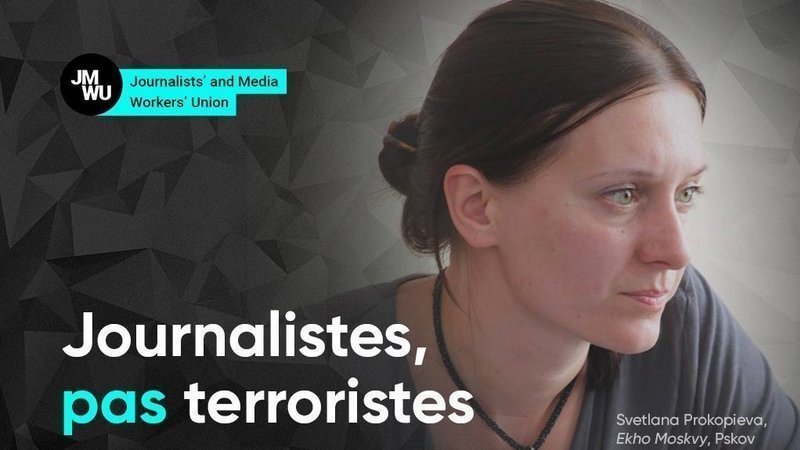
Labelled as “terrorist”, Russian journalist Svetlana Prokopieva had her bank accounts blocked

Russian authorities added journalist Svetlana Prokopieva on the official list of “terrorists and extremists”, on 4 July 2019. As a result, Prokopieva had all her bank accounts frozen and was placed under house arrest. The European Federation of Journalists (EFJ) condemned the Russian authorities’ decision and denounced harassment and intimidation actions against the journalist. Svetlana Prokopieva is a journalist based in the northwestern city of Pskov and working for the local branch of the independent Moscow-based radio station Ekho Moskvy, In November 2018, she was suspected of “justifying terrorism” following a radio commentary, in which she was questioning Russia’s repressive…

Turkish think-tank report escalates harassment of journalists

The European Federation of Journalists (EFJ) and 20 other human rights and freedom of expression organisations condemn a Turkish pro-government think-tank’s report that accuses leading international media of being biased against the government and singles out their correspondents for attack. The organisations regard the report as a dangerous escalation in the harassment of journalists. As mentioned in our prior joint EFJ-IFJ statement the report by the Foundation for Political, Economic and Social Research (SETA), a think-tank created by İbrahim Kalın, who is nowadays an adviser to President Erdoğan,  is billed as an academic study of the news coverage of the…

Greece: newsroom vandalised by anarchist group in Athens

Around 15 members of The Rouvinokas, a Greek anarchist group, ransacked the Athens Voice’s headquarters on 4th July following a publication that the group took offence at. The International and European Federation of Journalists (IFJ – EFJ) joined the Journalists Union of the Athens Daily Newspaper (JUADN) in condemning this violent attack and all attempts to muzzle the media. According to media reports, the assailants used iron bars to smash furniture and equipment and threw black paint on the offices’ walls. No one was injured in the incident. The Rouvinokas, an anarchist and anti-establishment group, claimed responsibility for the attack in a post on the Indymedia…