European Federation of Journalists

openMedia, investigating press freedom

Title of the project : openMedia, investigating press freedom
Lead Applicant
: openDemocracy

Partner organisations : EFJ, Index on censorship, King’s College London

The recently launched openMedia project aims to investigate and expose commercial interference in editorial decisions. The project is run by openDemocracy with the European Federation of Journalists (EFJ) as a partner alongside the Index on Censorship and King’s College London.

The project believes that there has not been enough of a concerted, ongoing spotlight on the extent and effects of commercial influence over the media, despite the dangerous consequences it poses for press freedom. For now, the project focuses on 47 countries across Europe but also has ambitions to expand.

Despite the recent launch, the project is adamant that it is not a response to the “fake news” hype of the past year or so. Rather, the project responds to scandals of commercial sponsors influencing media content; for example the Daily Telegraph’s suppression of investigations into its advertiser HSBC; and allegations that Buzzfeed deleted articles which advertisers found unfavourable.

According to the project, this power dynamic can suppress investigations of banks, pharmaceuticals, agriculture, fossil fuel giants, energy companies and other big businesses.

In addition, the project recognizes how for many readers, “sponsored content” is difficult to distinguish from genuine news content. The project therefore aims to clarify the commercial interests apparent in media to readers, and as part of the project, King’s College London will develop digital tools to help readers be better informed about news sources.

The findings of the project will be used to campaign for greater transparency and press freedom in news organisations and to empower journalists to advocate for transparency.

In order to do this, openMedia is currently conducting a confidential and anonymous survey of journalists across Europe, asking about their own working practices and experiences of commercial pressure inside newsrooms. The survey is available in English here and in many other languages here.
Actions
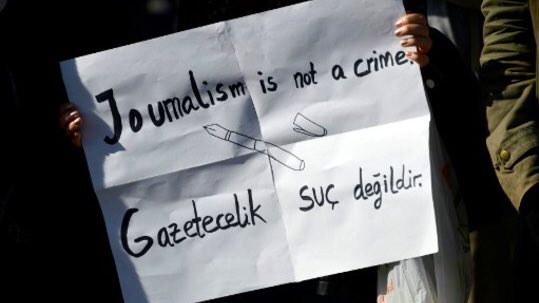
Sign "Journalism is not a crime"

Turkey: Union takes legal action against blacklisting of journalists

The Turkish Journalists’ Union (TGS), member of the European Federation of Journalists (IFJ and EFJ), and the Media and Law Studies Association (MLSA) are taking legal action against a think tank over the publication of a report which allegedly blacklisted journalists working for foreign news media. The IFJ and EFJ condemned the targeting of journalists as the latest attempt by the authorities to silence independent journalism and fully support the actions taken by the TGS. The Foundation for Political Economic and Social Research (SETA), a pro-government organisation, published on July 6 a 202-page report entitled “International Media Outlets’ Extensions in…

Montenegro: historic collective agreement improves employees’ rights at public broadcaster RTCG

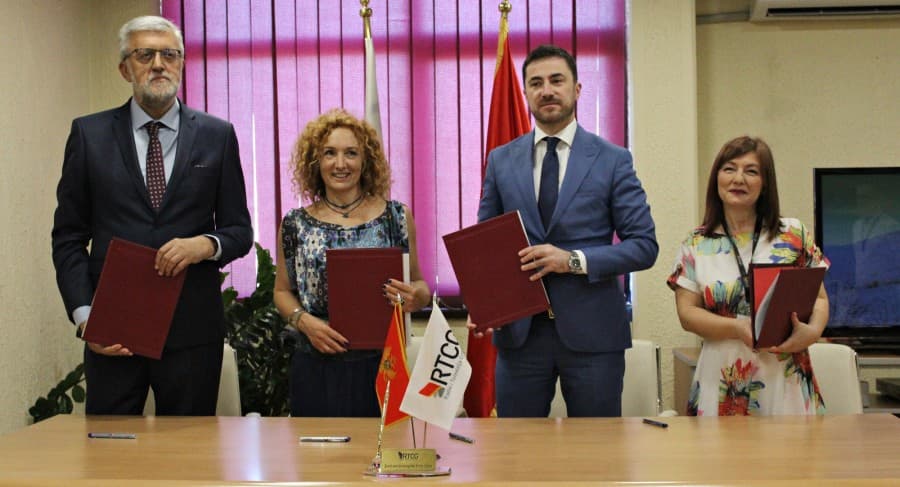
The Trade Union Media of Montenegro (SMCG) signed an historic collective agreement with the public broadcaster Radio Television of Montenegro (RTCG) on 28 June, after three years of collective bargaining. According to SMCG, a valid collective agreement in the public broadcaster has not existed for almost 10 years. The document was signed by the Minister of culture Aleksandar Bogdanovic, the Managing Director of RTCG Bozidar Sundic, and the representatives of the trade unions Jadranka Drobnjak and Slavica Kruscic. It affects the daily work of more than 700 employees, out of which 300 are members of SMCG. The agreement is the…

IFJ launches new Global Charter of Ethics for Journalists

Journalists’ unions around the world endorsed on 12 June, in Tunis, a new Charter of Ethics for Journalists following months of consultations. The document builds on and reinforces the ethical standards laid down by the 1954 IFJ Declaration of Principles on the Conduct of Journalists, the most widely recognised text on journalistic ethics to date. That Declaration was drafted in Bordeaux, France, 65 years ago, and was last updated in 1986, hence the need for a new Charter adapted to current challenges facing the media. Drafted by a working group of 16 people, including representatives of the IFJ leadership, regions and…

DJV campaign “Photographers do have names”: big german newspapers fail to quote

When it comes to crediting photojournalists below their pictures, big german newspapers perform worse than smaller ones. That’s the result of the 2019 ranking by the EFJ German affiliate, Deutscher Journalisten Verband (DJV). The ranking is part of a campaign called “Photographers do have names” with the main goal to raise awareness about photojournalists who are often deprived of their right. DJV investigated 87 nationwide selected newspapers in a random sample and found out that smaller newsrooms performed far better in quoting photographers than bigger ones. This year, the three Bavarian Newspapers Fränkische Landeszeitung, Main Post and Nürnberger Nachrichten were…

The EFJ welcomes crucial PACE resolution on the assassination of Daphne Caruana Galizia

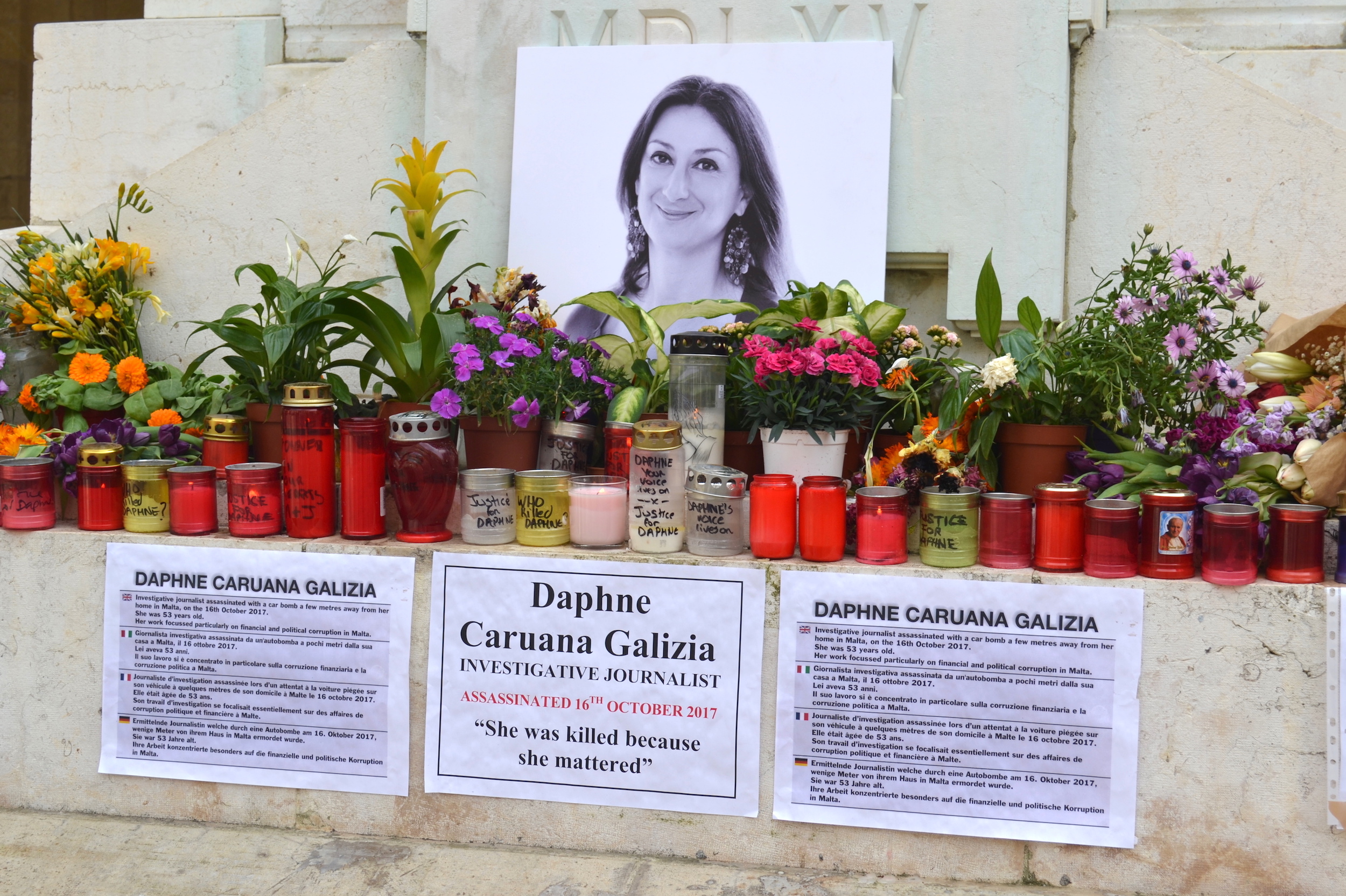
We, the undersigned international freedom of expression and journalists’ organisations, welcome the resolution of the Parliamentary Assembly of the Council of Europe (PACE) adopted on 26 June, condemning the continued impunity for the assassination of journalist Daphne Caruana Galizia and broader systemic rule of law shortcomings in Malta, and inter alia, calling for the launch of an independent public inquiry within three months. Titled Daphne Caruana Galizia’s assassination and the rule of law in Malta and beyond: ensuring that the whole truth emerges, the resolution accompanied a report drafted by Dutch MP Pieter Omtzigt in his capacity as the PACE Special Rapporteur…

Russia: Journalists’ and Media Workers’ Union protested in support of journalists held on fabricated charges

On Sunday 23 June, around 4,000 people gathered in Moscow, Vladivostok, St Petersburg, Perm, Makhachkala to protest against the fabrication of criminal charges to incriminate journalists and human rights activists in Russia. The Journalists’ and Media Workers’ Union (JMWU) was one of the moving forces in this campaign. The Meduza journalist Ivan Golunov was freed on 12 June thanks to the unprecedented campaign of social pressure and solidarity from the journalism community and civil society as a whole. Against this backdrop, journalist Igor Rudnikov, who was threatened with 10 years in prison on absurd charges of extortion, was also freed.…