European Federation of Journalists

openMedia, investigating press freedom

Title of the project : openMedia, investigating press freedom
Lead Applicant
: openDemocracy

Partner organisations : EFJ, Index on censorship, King’s College London

The recently launched openMedia project aims to investigate and expose commercial interference in editorial decisions. The project is run by openDemocracy with the European Federation of Journalists (EFJ) as a partner alongside the Index on Censorship and King’s College London.

The project believes that there has not been enough of a concerted, ongoing spotlight on the extent and effects of commercial influence over the media, despite the dangerous consequences it poses for press freedom. For now, the project focuses on 47 countries across Europe but also has ambitions to expand.

Despite the recent launch, the project is adamant that it is not a response to the “fake news” hype of the past year or so. Rather, the project responds to scandals of commercial sponsors influencing media content; for example the Daily Telegraph’s suppression of investigations into its advertiser HSBC; and allegations that Buzzfeed deleted articles which advertisers found unfavourable.

According to the project, this power dynamic can suppress investigations of banks, pharmaceuticals, agriculture, fossil fuel giants, energy companies and other big businesses.

In addition, the project recognizes how for many readers, “sponsored content” is difficult to distinguish from genuine news content. The project therefore aims to clarify the commercial interests apparent in media to readers, and as part of the project, King’s College London will develop digital tools to help readers be better informed about news sources.

The findings of the project will be used to campaign for greater transparency and press freedom in news organisations and to empower journalists to advocate for transparency.

In order to do this, openMedia is currently conducting a confidential and anonymous survey of journalists across Europe, asking about their own working practices and experiences of commercial pressure inside newsrooms. The survey is available in English here and in many other languages here.
Actions

EFJ calls on MEPs to support TPWC Directive to protect workers’ rights

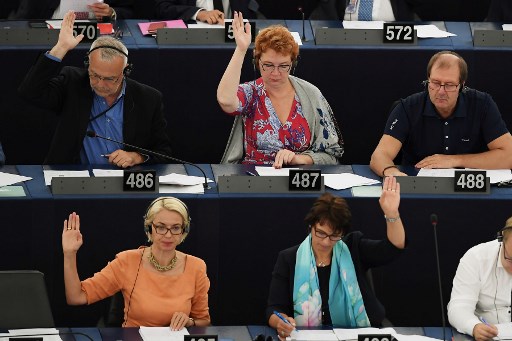
UPDATE (15.11.18): the European Parliament voted in favour of the Directive on Transparent and Predictable Working Conditions. Find more information here. The European Federation of Journalists (EFJ) has today called on Members of the European Parliament to support the draft Directive on Transparent and Predictable Working Conditions to protect the rights of precarious workers across Europe. On 15th November 2018, the Transparent and Predictable Working Conditions Directive will be voted in the European Parliament.  The vote will determine whether the draft Directive can proceed to the next stage of the legislative process giving the European Parliament the mandate to negotiate on the position agreed…

EFJ-IFJ launch a transitional solidarity fund for journalists in Turkey

Journalists in Turkey have in recent years faced unprecedented state crackdown. Despite the lifting in July 2018 of a two-year long state of emergency, the press continues to be stifled and journalists to face trials, job insecurity and abuse. Thousands of journalists have been sacked in recently years, particularly in the last two, with catastrophic impact on the victims and their families. To support journalists in need and their families, the International and European Federations of Journalists (IFJ/EFJ) have established a transitional solidarity fund for journalists in Turkey. This solidarity fund provides financial relief to prosecuted and sacked journalists. It…

Demonising the media: Threats to journalists in Europe

Burned in effigy. Insulted. Menaced. Spat at. Discredited by their nation’s leaders. Assaulted. Sued. Homes strafed with automatic weapons. Rape threats. Death threats. Assassinations. This is the landscape faced by journalists throughout Europe over the past four years. Mapping Media Freedom, managed by Index on Censorship with the support of the EFJ, has documented media freedom incidents across Europe — over 3,000 were surveyed for this report — since May 2014. The information gathered shows journalists and media outlets targeted in a kaleidoscopic array by political leaders, businesses and the general public – but some key trends have emerged from…

Italy: Deputy Prime Minister Di Maio insulted journalists

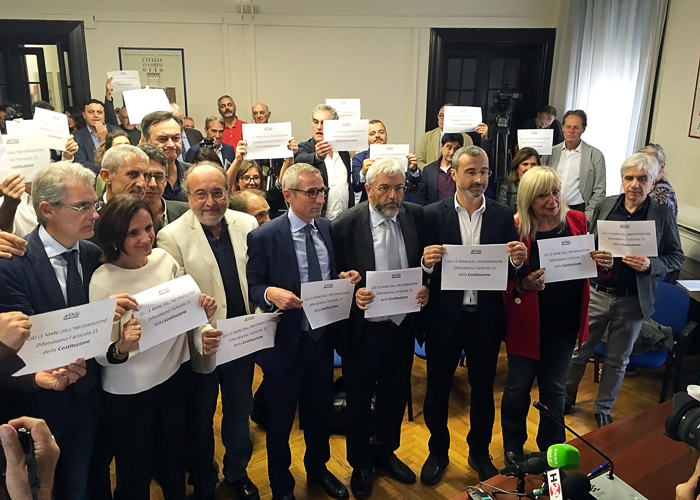
On November 10 2018, in occasion of the acquittal of Virginia Raggi, the mayor of Rome who was charged with forgery in relation to the appointment of Renato Marra as head of the Tourism Department, the Italian Deputy Prime Minister Luigi Di Maio and the Five Stars Movement MP Alessandro Di Battista attacked again Italian journalists. The European Federation of Journalists (EFJ) joins its Italian affiliate, Federazione Nazionale della Stampa Italiana (FNSI), in organising a protest action  on November 13 to speak out against these systematic attacks against the press in Italy with the hashtag #GiùLeManiDallInformazione (Hands off the information).…

Joint Declaration of trade unions and employers’ organisations of the EU Audiovisual Sector on Brexit

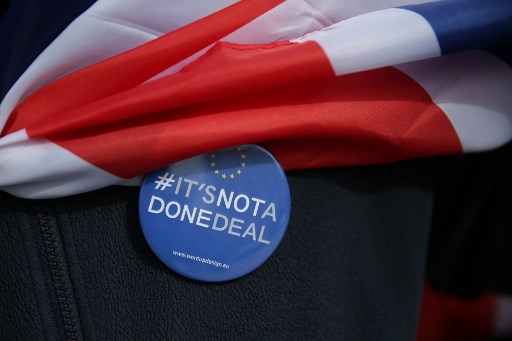
The Signatories in the Audiovisual Sector express their grave concern about the potential threat to the Audiovisual industry posed by Brexit. We call on the negotiators on both sides to ensure that the interests of the Audiovisual industry across the EU and the UK be protected in the current negotiations and in particular to give special consideration to the potentially very severe damage for their business operators and workers if the future framework for the cooperation between the EU and the UK Audiovisual sector are not adapted. More specifically: There are fears that, in the film and sector, important co-production…

EU allows reduced VAT rates for digital press

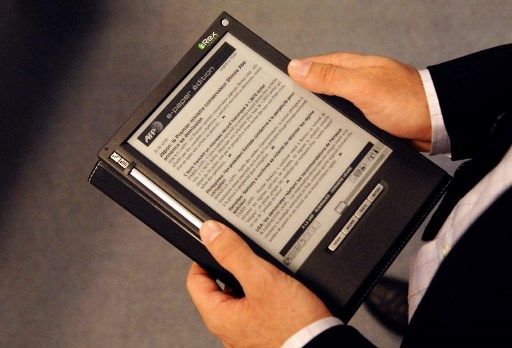
On 6 November 2018, the Council of the European Union formally adopted a directive guaranteeing equal VAT rules for digital and printed publications. Member states will now have the possibility to apply reduced, super-reduced or zero VAT rates to e-newspapers, which were previously subjected to different VAT conditions. The European Federation of Journalists (EFJ) welcomes this proposal aligning digital newspapers’ tax system to the ones of  physical publications. The adoption of the directive gives the possibility to member states to end tax discrimination against e-publication, implementing reduced VAT rates in their national legal systems. However, this is only a temporary…