European Federation of Journalists

openMedia, investigating press freedom

Title of the project : openMedia, investigating press freedom
Lead Applicant
: openDemocracy

Partner organisations : EFJ, Index on censorship, King’s College London

The recently launched openMedia project aims to investigate and expose commercial interference in editorial decisions. The project is run by openDemocracy with the European Federation of Journalists (EFJ) as a partner alongside the Index on Censorship and King’s College London.

The project believes that there has not been enough of a concerted, ongoing spotlight on the extent and effects of commercial influence over the media, despite the dangerous consequences it poses for press freedom. For now, the project focuses on 47 countries across Europe but also has ambitions to expand.

Despite the recent launch, the project is adamant that it is not a response to the “fake news” hype of the past year or so. Rather, the project responds to scandals of commercial sponsors influencing media content; for example the Daily Telegraph’s suppression of investigations into its advertiser HSBC; and allegations that Buzzfeed deleted articles which advertisers found unfavourable.

According to the project, this power dynamic can suppress investigations of banks, pharmaceuticals, agriculture, fossil fuel giants, energy companies and other big businesses.

In addition, the project recognizes how for many readers, “sponsored content” is difficult to distinguish from genuine news content. The project therefore aims to clarify the commercial interests apparent in media to readers, and as part of the project, King’s College London will develop digital tools to help readers be better informed about news sources.

The findings of the project will be used to campaign for greater transparency and press freedom in news organisations and to empower journalists to advocate for transparency.

In order to do this, openMedia is currently conducting a confidential and anonymous survey of journalists across Europe, asking about their own working practices and experiences of commercial pressure inside newsrooms. The survey is available in English here and in many other languages here.
Actions

New study shows that media are under-resourced when covering migration

Media in many countries in the Euro-Mediterranean region don’t have enough resources and are unable to provide time, money and appropriate level of expertise needed to tell the migration story in context. This is the main finding of a recent study “How does the media on both sides of the Mediterranean report on migration?”, conducted by the Ethical Journalism Network (EJN) and implemented by the International Centre for Migration Policy Development (ICMPD). Journalists from 17 countries examined the quality of migration media coverage in 2015/2016 from a national perspective. The study covers nine European countries and eight countries in the…

Sharing practices to organise journalists in Turkey

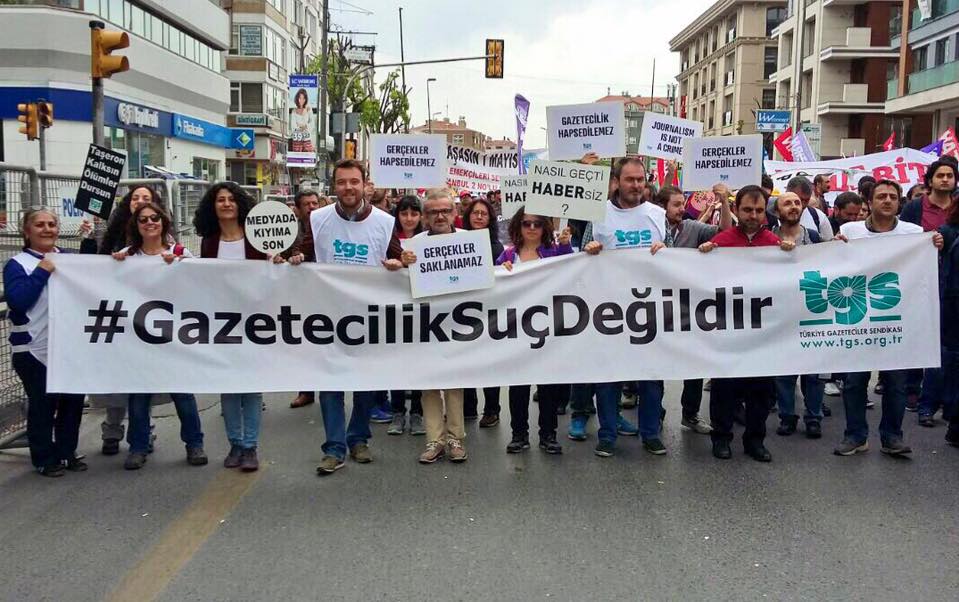
The European and International Federation of Journalists (EFJ-IFJ) organised on 2nd of May 2017 a workshop for TGS trade unionists (Journalists Union of Turkey) in Istanbul with Tim Dawson (NUJ President) as the trainer. In the training, the NUJ example in the UK was discussed and TGS branch and national leaders debated various issues including collective bargaining, signing recognition agreements, recruiting members accross all sectors, the impact of social media, producing stress surveys, distributing flyers, proposing legal services and planning activities in the country. Have a look to the video report (activate subtitles in English by pressing on CC) about…

Pristina media days and protest for media freedom in Kosovo

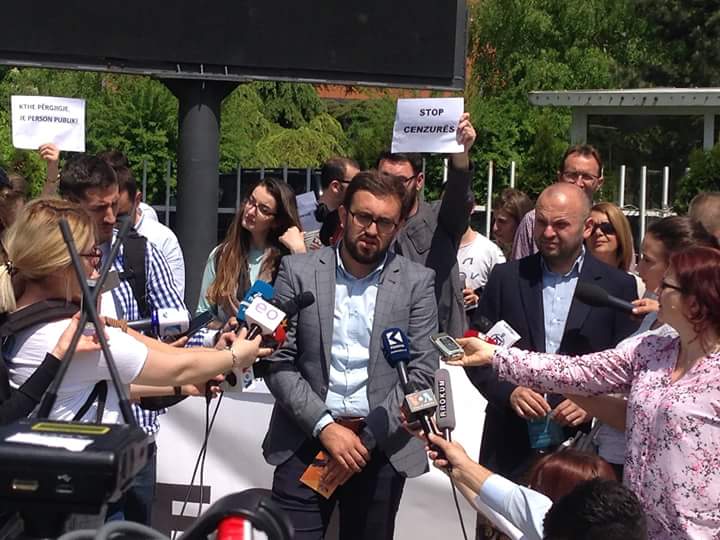
The EFJ was invited to the Prishtina media days organised by the University of Prishtina in cooperation with the University of Vienna and the South East Europe Media Organisation (SEEMO) on 3-5 May. Under the motto of “Truth and wisdom in journalism. Media and social change”, experts on media and journalism discussed with a large group of  students of journalism the main challenges ahead of us: relationship between journalists and audience; role of media in societies of transition including the public service media and its specific challenges when it comes to financial sustainability and political independence. They also discussed how…

Finding the answer to fake news in ‘post-truth’ climate

“A lie can travel halfway around the world while the truth is putting on its shoes,” says the quote by Mark Twain which speakers used as a starting point at the debate on journalism in ‘post-truth’ climate at Difference Day. The event was hosted by the Centre for Fine Art (BOZAR) in Brussels on the occasion of World Press Freedom Day (WPFD), which is celebrated May 3rd every year. One of the five panels on journalism and press freedom talked about the spread of misinformation, which is widely scattered through different platforms and an alarming phenomenon. Experts on the panel emphasized the…

Difference Day 2017: Quality journalism in the ‘post-truth era’ on the agenda

The European Federation of Journalists (EFJ) will join a group of media partners and NGOs to celebrate the World Press Freedom Day in Brussels on May 3 – declared “Difference Day” – at the Centre for Fine Art (BOZAR). Among a series of activities and debates organised throughout the world, BOZAR will host five panels on journalism and press freedom. The EFJ affiliate, the Association of journalists in Macedonia, will participate in the second session “Les Van de Eeuw” to talk about various current themes such as democracy, education, smart cities, World War II, Europe… Programme 9:30 (Terarken): Workshop session…

Workers’ Day: Media Freedom requires decent working conditions for journalists

“There can be no press freedom if journalists exist in conditions of corruption, poverty or fear”… On this Workers’ Day, the European Federation of Journalists (EFJ) strongly encourage journalists to share the motto of the International Federation of Journalists (IFJ). Guaranteeing fair and decent working conditions to journalists is a precondition for media freedom. The study “Journalists under pressure” published on 20th April by the Council of Europe, based on a sample of 940 journalists reporting from 48 countries, shows that journalists in Europe are often exposed to serious pressure in their work, including intimidation and violence. As a consequence, many…