European Federation of Journalists

openMedia, investigating press freedom

Title of the project : openMedia, investigating press freedom
Lead Applicant
: openDemocracy

Partner organisations : EFJ, Index on censorship, King’s College London

The recently launched openMedia project aims to investigate and expose commercial interference in editorial decisions. The project is run by openDemocracy with the European Federation of Journalists (EFJ) as a partner alongside the Index on Censorship and King’s College London.

The project believes that there has not been enough of a concerted, ongoing spotlight on the extent and effects of commercial influence over the media, despite the dangerous consequences it poses for press freedom. For now, the project focuses on 47 countries across Europe but also has ambitions to expand.

Despite the recent launch, the project is adamant that it is not a response to the “fake news” hype of the past year or so. Rather, the project responds to scandals of commercial sponsors influencing media content; for example the Daily Telegraph’s suppression of investigations into its advertiser HSBC; and allegations that Buzzfeed deleted articles which advertisers found unfavourable.

According to the project, this power dynamic can suppress investigations of banks, pharmaceuticals, agriculture, fossil fuel giants, energy companies and other big businesses.

In addition, the project recognizes how for many readers, “sponsored content” is difficult to distinguish from genuine news content. The project therefore aims to clarify the commercial interests apparent in media to readers, and as part of the project, King’s College London will develop digital tools to help readers be better informed about news sources.

The findings of the project will be used to campaign for greater transparency and press freedom in news organisations and to empower journalists to advocate for transparency.

In order to do this, openMedia is currently conducting a confidential and anonymous survey of journalists across Europe, asking about their own working practices and experiences of commercial pressure inside newsrooms. The survey is available in English here and in many other languages here.

Actions

Belgium: Defending journalists’ rights in a federal system

On Saturday (28/02/2015), the Association des journalistes professionnels (AJP, representing the journalists in the French and German speaking part of Belgium) and the Vlaamse vereniging van journalisten (VVJ, representing the journalists in the Dutch speaking part of Belgium), both EFJ affiliates under the federal umbrella organization called AGJPB-AVBB, held their annual congress at the House of Journalists in Brussels. Unlike many other countries in Europe, AJP and VVJ are not classical trade union organisations but they are registered as non-profit professional unions. They are considered by the authorities and other civil society organisations as the legitimate representative of professional journalists and…

The IFJ and the EFJ mourn death of Ukrainian journalist

The International Federation of Journalists (IFJ) and the European Federation of Journalists (EFJ) are deeply saddened by the death of Ukrainian journalist Sergii Nikolaiev, 43, in eastern Ukraine, on Saturday. Sergii Nikolaiev, senior photographer of Segodnya daily Ukrainian newspaper, died of wounds after an artillery attack near the village of Pesky located just 1.5 kilometer from Donetsk airport, in eastern Ukraine, on February 28. He has become the first Ukrainian journalist killed in eastern Ukraine and the seventh one of the entire journalists’ death toll of this war. Five journalists from Russia and one from Italy were killed in this war last…

EFJ and IFJ back Ukraine Russian dialogue to counter harassment and intimidation of journalists

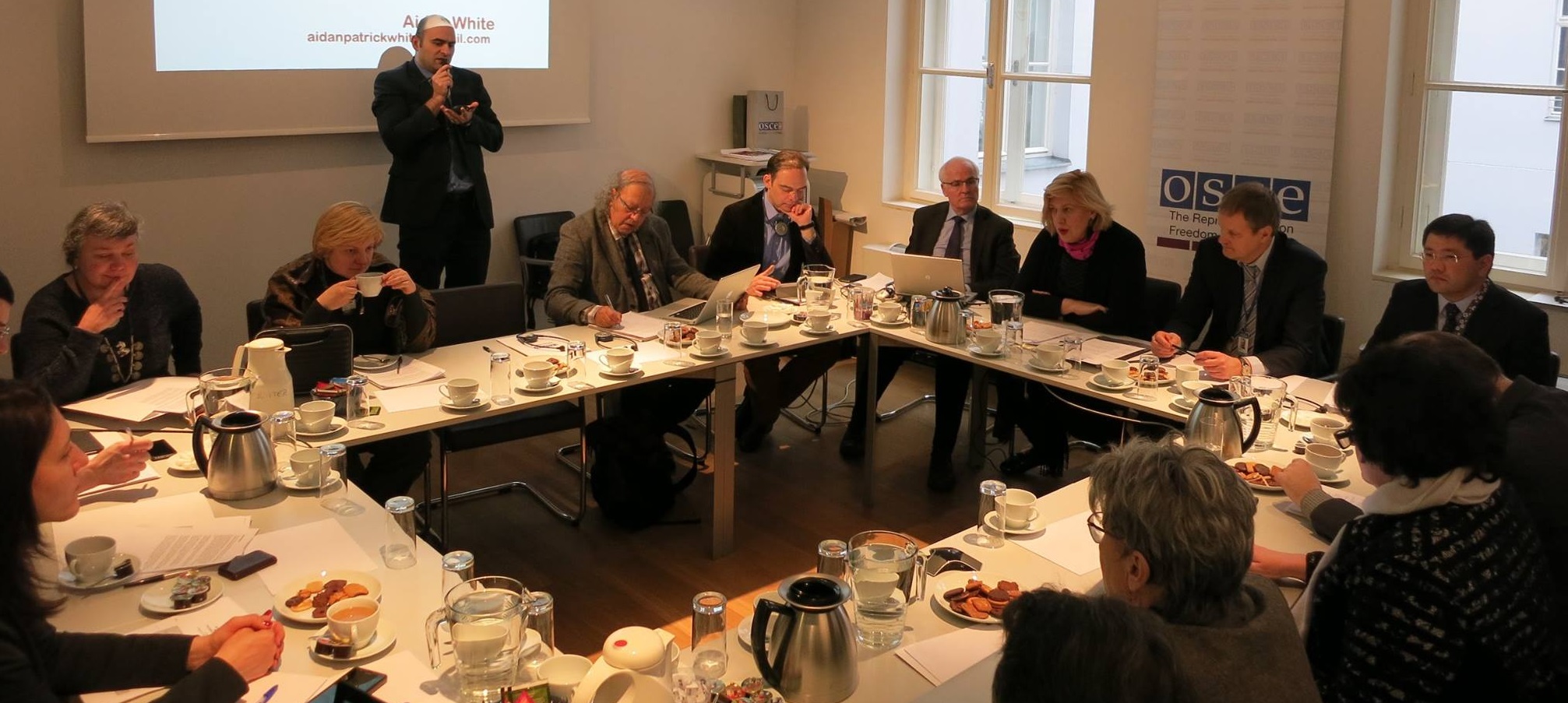
The International Federation of Journalists (IFJ) and the European Federation of Journalists (EFJ) pledged their support to the ongoing dialogue between the Ukraine and Russian journalists unions under the auspices of Dunja Mijatovic, Representative on Freedom of the Media for the OSCE. IFJ President, Jim Boumelha, participated in the fifth Ukraine / Russian dialogue meeting in Vienna 25 February, where the Russian Union of Journalists, the National Union of Journalists of Ukraine and the Independent Media Trade Union of Ukraine met to review the situation facing journalists attempting to report the conflict in Eastern Ukraine. “The conflict, violence and war…

nilsmul

Nils Muižnieks (CoE) ready to strenghten synergies with EFJ-IFJ for media freedom

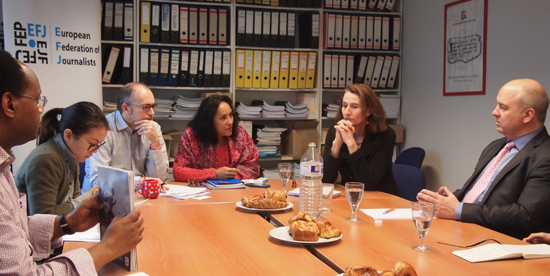
The growing trend of legal restrictions on journalists and media in Europe is an issue of concern raised in a meeting today (26/02/2015) with the Council of Europe Commissioner for Human Rights, Nils Muižnieks, the European Federation of Journalists (EFJ) and the International Federation of Journalists (IFJ). The EFJ presented an exclusive survey on the legal restrictions facing journalists and media. The discussion showed that journalists are most concerned by laws on data retention, protections of sources, anti-terrorism laws, privacy and defamation. The EFJ and its affiliates expressed concerns that such trend of legal restrictions is growing in the climate of fear…

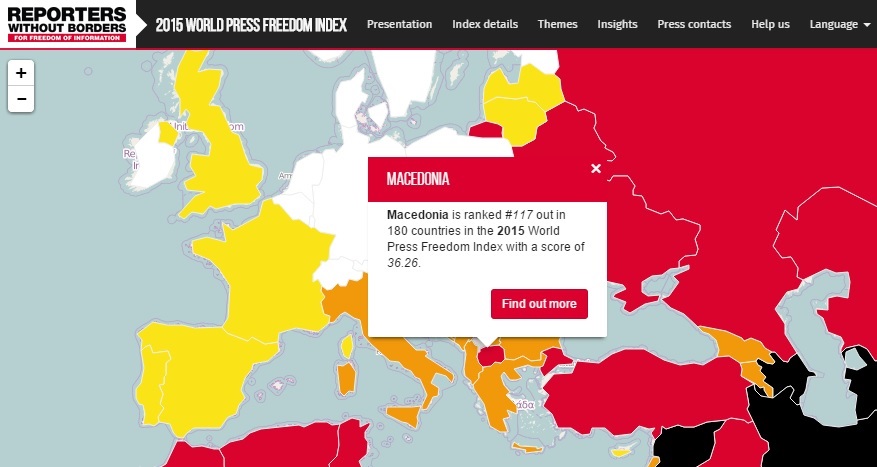
Macedonia: over 100 journalists illegally tapped

Macedonian government stands accused of tapping the phones of over 20,000 citizens, including more than 100 journalists. The European Federation of Journalists (EFJ) and its Macedonian affiliates, the Trade Union of Macedonian Journalists and Media Workers (SSNM) and the Association of Journalists of Macedonia(ZNM), expressed grave concerns about the publicly announced allegations of the unauthorised mass surveillance of journalists and citizens. Zoran Zaev, leader of the center-left opposition party (Social Democratic Union of Macedonia – SDSM), has released yesterday many details on the mass wire-tapping of more than 100 Macedonian journalists for more than three years. “This violation of privacy directly affects…

Why do they leave journalism?

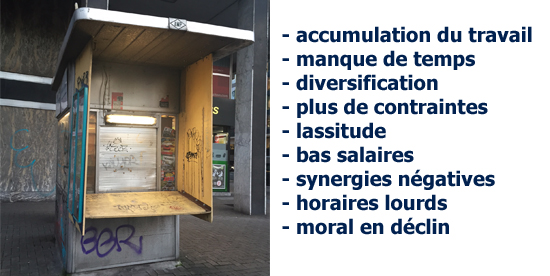
“Why do they leave journalism?” – This is the question asked to 38 former journalists by journalism student Hélène Brédart in a project initiated at the Université de Liège and reproduced by Jean-François Dumont of the Belgian Association of Professional Journalists (AJP, member of EFJ). The results of the project published in the latest edition of the monthly Journalistes by the AJP show that the deteriorating working conditions and practices in journalism make are major reason why journalists left the profession. The most frequently mentioned reasons for journalists to leave their job are: • Increasing workload: The digital development and restructuring measures are putting…