Serbia: Ministers for European Affairs must urgently draw a red line on media freedom

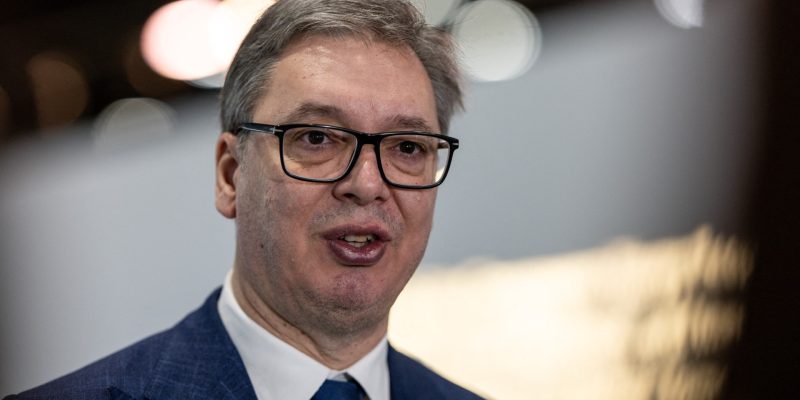
EU Member States must show political leadership and join calls for the suspension of EU funds to Serbia to prevent the spiral of violence against journalists from escalating into deadly attacks, the European Federation of Journalists (EFJ) and nine undersigned organisations said on Friday in a series of letters sent to a group of Ministers for European Affairs across Europe. The organisations highlight the shocking numbers of physical, legal and online attacks against journalists as recorded on international monitoring platforms since November 2024, a level of persistent violence against media that is rare in any EU member state or candidate country. Since the…
New online platform to change “pale and male” media content

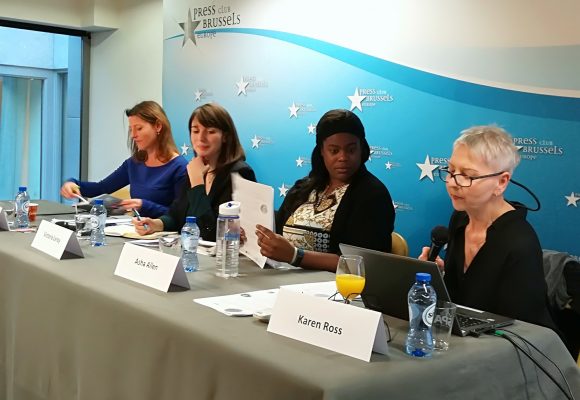
Building bridges among journalists, students and media educators to improve gender equality in newsrooms and media content. This is what the Advancing Gender and Equality in Media Industries (AGEMI) project stands for. On 26th February, the EU-funded project launched its online platform on gender and media at the Press Club in Brussels. The web platform provides a resource bank of over 100 best practices on gender equity in media as well as free learning resources to support journalism trainers and educators in their curricula. The project itself also included a summer school and internships for 30 students across the EU.…

European whistleblowers call for a better directive

In an open letter to the European Council, Commission and Parliament, five well-known European whistleblowers speak out for changing the directive and removing barriers for safe reporting. This letter is published as the negotiations between the European institutions are entering the final stretch. The European Council, Commission and Parliament have started the trilogue phase since the end of January and one main point of discord remains: what procedure whistleblowers should follow to be granted protection against retaliation? The draft directive indicates three reporting channels: internal within the company, external to an authority, and public including through the press. In the…

AGEMI is launching new platform on gender and media

The Advancing Gender Equality in the Media Industries (AGEMI), an EU funded project, is launching its web platform to build bridges between educators, media and media students to improve gender equality in media content and in the newsrooms. The launch is taking place during a seminar organised by AGEMI at the Brussels’ Press Club in Belgium today. The AGEMI consortium is composed of the Universities of Newcastle, Padova and Gothenbörg, as well as the European Federation of Journalists (EFJ) and the Permanent Conference of the Mediterranean Audiovisual Operators (COPEAM). The AGEMI platform provides a resource bank of over 100 best…

EFJ study on new business models to promote journalism

The European Federation of Journalists (EFJ) report “Digital Journalism & New Business Models” underpins the trends in new business models for the digital newsroom: from the British Guardian to the pioneering French Mediapart, from Sweden to Spain, we witness the increase in new funding models, in so-called entrepreneurial journalists who take care of both fundraising and the newsroom and still achieve trusted journalism with the highest editorial standards, values that ground the fourth estate in a democratic society in order to hold the powerful to account. The EFJ Digital Expert Group presents its report on “Digital Journalism & New Business…

EFJ-ETUI delivered first training on union leadership

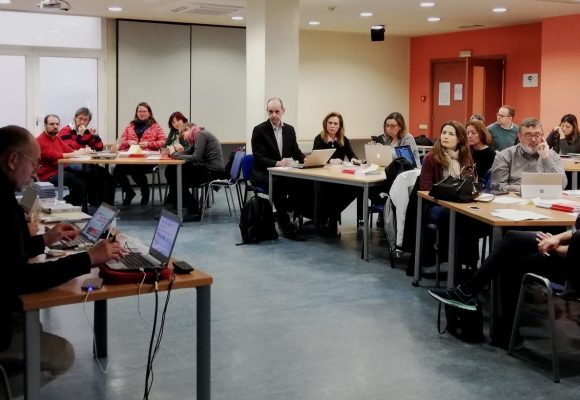
Twenty-five trade union representatives from 20 European countries attended a two-day training organised by the European Federation of Journalists (EFJ) and the European Trade Union Institute (ETUI), on 21-22 February in Barcelona, Spain. The Spanish union FSC-CCOO, one of the EFJ affiliates in Spain, hosted the worshop. Participants – whether they are current, future or potential union leaders – were asked to reflect on how to build and lead a more inclusive and diverse journalists’ trade union. Inclusive meaning diversity in profiles within it, but also innovative ways to support current forms of journalism and mobilise new categories of journalists.…

Public service media in the Western Balkans – Ensuring complaint mechanisms and audience engagement

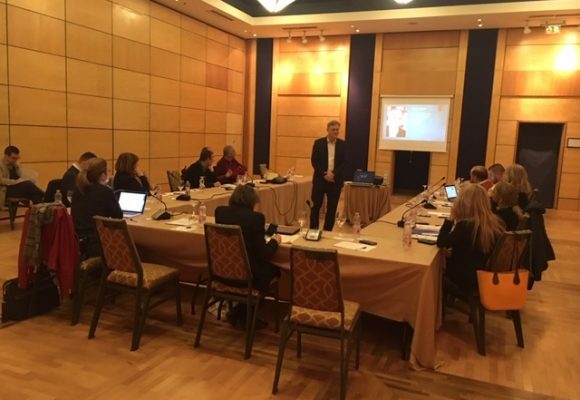
The regional workshop on developing  complaint mechanisms and/or improving existing ones for Public Service Media in Western Balkans has started today, 21 February, in Tirana, Albania. The workshop brings together the program directors and editors-in-chief from the six PSM to discuss, examine and assess the role of complaint mechanisms  with European experts in the field.  What are the conditions for an effective complaint mechanism? How can complaint mechanisms improve relations with the audience and thereby  trust and quality in psm? The importance of media literacy will be highlighted with examples from the region, as it is closely related to audience…

The European Media Literacy Toolkit for Newsrooms – Round 2

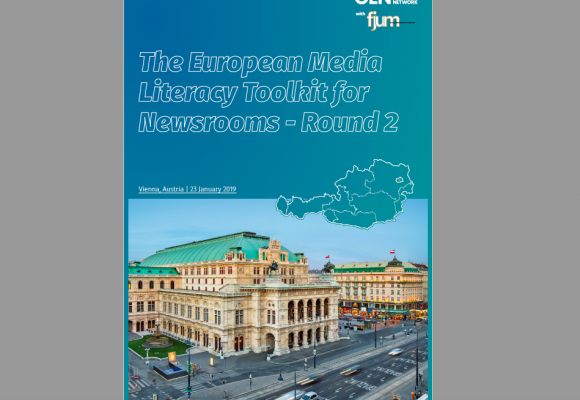
The Vienna-based Forum Journalism and Media (fjum) and the Global Editors Network have published today the second White Paper (PDF) following the Vienna Unconference on Media Literacy organised on 23 January 2019. The European Media Literacy Toolkit for Newsrooms: Combatting misinformation and disintermediation by restoring trust in journalism is supported by the European Federation of Journalists (EFJ). The paper covers quality journalism through innovative advanced training, orientation, and networking on an international level, and the support of participants’ experts to create tools to increase and support media literacy. It also describes the objectives of the intervention, summarises the content of the masterclass, details the dynamic of the…

Call for justice and accountability of state authorities on the anniversary of the murder of Ján Kuciak

On behalf of the undersigned media freedom organisations, representing thousands of journalists and human rights activists across Europe, we urge the Slovak authorities to immediately start examining state responsibility in the failure to prevent the assassination of Ján Kuciak. Tomorrow marks a full year since Kuciak and his fiancée Martina Kušnírová were murdered in Slovakia. Kuciak was investigating cross-border corruption and links between powerful people and various mafia networks. Since February 2018, we have closely monitored press and media freedom in Slovakia. We welcome the arrests of suspects who have now been charged in connection with Kuciak’s and Kušnírová’s murder.…

Turkey: Cumhuriyet convictions a further blow to the rule of law

UPDATE: The Supreme Court  suspended the sentence and released five former employees of Cumhuriyet Newspaper Musa Kart, Güray Öz, Hakan Kara, Önder Çelik and Lawyer Mustafa Kemal Güngör on September 12. The newspaper’s former accountant, Emre Iper, was not expected to be released. ? #Cumhuriyet eski çalışanları #MusaKart, #GürayÖz, #MustafaKemalGüngör, #HakanKara ve #ÖnderÇelik bu akşam Kandıra Cezaevinden tahliye edilecek. Tutuklu tek bir gazeteci kalmayana kadar mücadeleye devam! #GazetecilikSuçDeğildir pic.twitter.com/lhmsNKRTE9 — Gazeteciler Sendikası (@TGS_org_tr) September 12, 2019     Press freedom and the rule of law in Turkey suffered yet another blow yesterday. In a detrimental ruling, an appeals court in…

February 21st – Brussels vigil for Slovak journalist Jan Kuciak – One year on

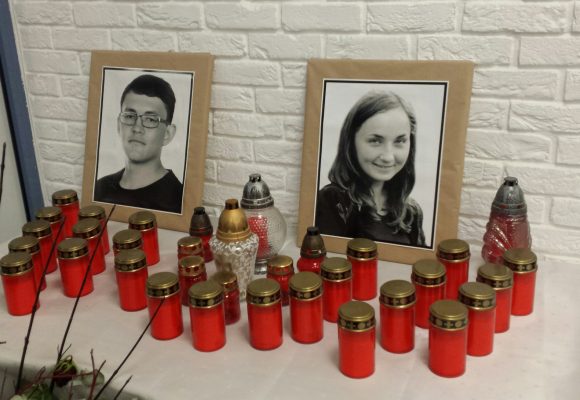
Thursday 21 February marks the one-year anniversary of the brutal assassination of Slovak investigative journalist Jan Kuciak and his fiancée Martina Kusnirova. Yet justice has not been brought for these murders. Reporters Without Borders (RSF), the European Federation of Journalists (EFJ), the Committee to Protect Journalists (CPJ) and Transparency International invite you to join us for a vigil outside the Residence Palace in Brussels at 1 pm to honor the bravery of Jan Kuciak and to make clear that the pressure on Slovak authorities to investigate this double murder will be kept up. Despite undeniable progress in the investigation, the…

EU Copyright Directive is a step in the right direction but still needs to be improved

The first copyright law reform in the EU in almost two decades is designed to give authors, artists, musicians, journalists and publishers a better chance of being paid when their work appears on the internet. A final draft of the new EU Copyright Directive was approved on Wednesday night in Strasbourg. It now needs approval by EU governments at meeting that is likely to be next week and will then be voted on by the European Parliament in March or April. “The Directive offers improved rewards for all authors, including reporters, feature writers and photographers. It is not perfect –…

Open letter: Making whistleblowing work for Europe

The EU is poised to take a momentous step and adopt a new directive to protect whistleblowers across Europe. This could have a dramatic impact on the capacity and ability of whistleblowing to work in all our interests. We know that protecting those who speak up in the public interest saves lives, protects our environment, reveals and stops corruption, and stems the huge financial losses to business and governments that result from failures to address wrongdoing. It is vital that an EU Directive on the protection of whistleblowers protects the free flow of information necessary for responsible exercises of institutional…

New copyright directive makes a mockery of journalists’ authors’ rights

After months of speculation, EU institutions last night agreed the wording of a proposed Directive on Copyright in the Digital Single Market, which risks journalists being deprived of their authors’ rights and denied ‘’proportionate remuneration’’ for the work they do. The new proposal does introduce the principle of an appropriate and proportionate remuneration for all authors, including journalists, place transparency obligations on publishers and open up the possibility of alternative dispute mechanisms which could avoid lengthy and expensive court cases. It also allows authors to be represented by their unions in that process. The International and the European Federations of…

Resolution Turkey: The myth of domestic legal remedy

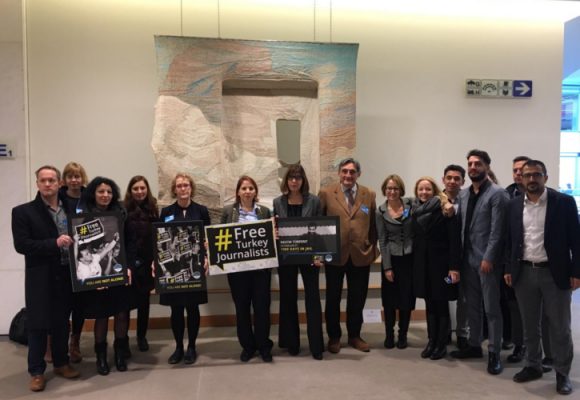
Nearly 50 MEPs join the resolution supported by the EFJ calling for restoration of rule of law and release of Turkey’s journalists. MEP Rebecca Harms (centre) at a roundtable on press freedom in Turkey at the European Parliament in January 2019 A total of 47 MEPs and 14 press freedom and free expression organizations, including the EFJ, and Green MEP Rebecca Harms have joined a resolution underscoring the lack of effective domestic legal remedies for journalists targeted in Turkey’s media crackdown. The resolution follows a roundtable held under Chatham House Rules on January 29, 2019, at the European Parliament on…

Report: Urgent action needed to protect press freedom in Europe

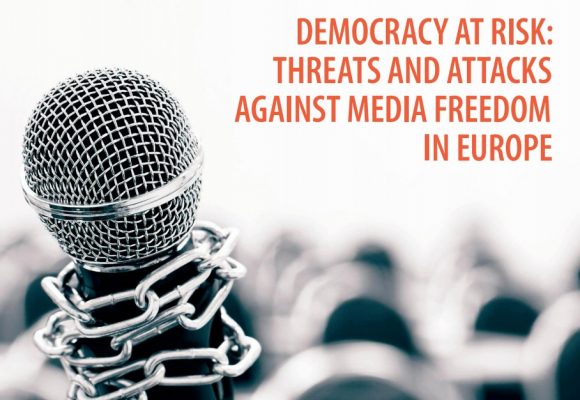
Press freedom in Europe is more fragile now than at any time since the end of the Cold War. That is the alarming conclusion of a report launched today by the 12 partner organizations of the Council of Europe Platform to promote the protection of Journalism and safety of journalists. The report, “Democracy at Risk”, analyses media freedom violations raised to the Platform in 2018. It provides a stark picture of the worsening environment for the media across Europe, in which journalists increasingly face obstruction, hostility and violence as they investigate and report on behalf of the public. The 12 Platform partners…

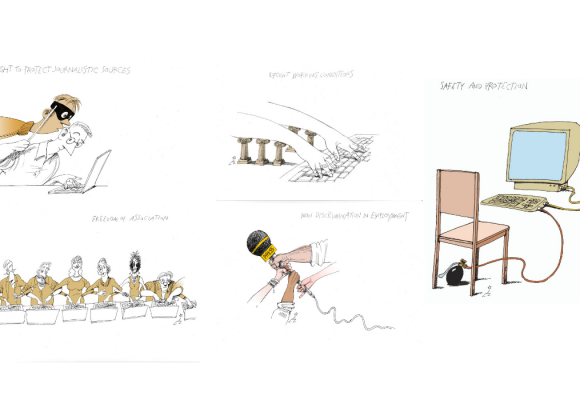
The Charter on journalists working conditions (full document)

The EFJ Charter on Journalists Working Conditions is a guideline on working conditions, signed on 12 February 2019 in Belgrade (Serbia), by 14 journalists’ organisation representatives affiliated to the European Federation of Journalists and leading journalists’ unions from Western Balkans and Turkey. The Charter is open for signature to all journalists organisations, private or public media companies or authorities willing to commit to improve the working conditions and reinforce the labour rights of journalists and media workers in Europe, to fight against censorship and to promote free access to information and sources. The Charter contains 10 articles condensing the main principles affecting the working relationship between journalists,…