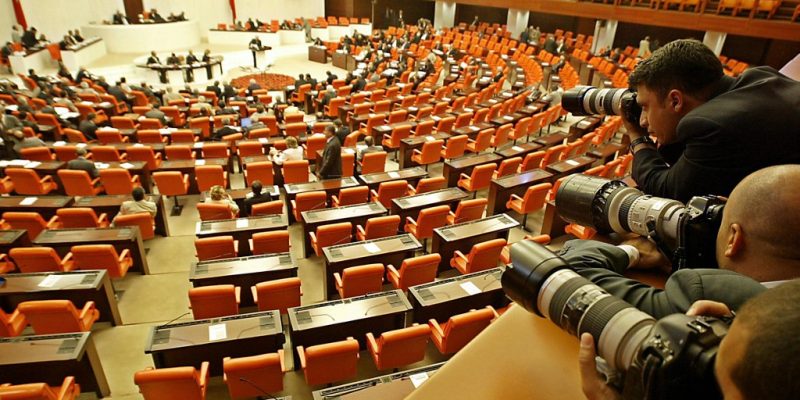
Turkey: EFJ and partner organisations condemn escalating use of “disinformation law” against journalists and call for its repeal

The European Federation of Journalists (EFJ) joins the undersigned organisations in strongly condemning the intensifying use of Article 217/A of the Turkish Penal Code — widely known as the “disinformation law” — to arrest, detain, and prosecute journalists, and calling on the government to repeal the provision immediately and release all journalists imprisoned under it. Since the law entered into force in October 2022, at least 83 journalists have been charged 114 times over disinformation according to news reports. The scale of Article 217/A’s use against journalists has been starkly illustrated in a recent article. The two journalists most frequently…
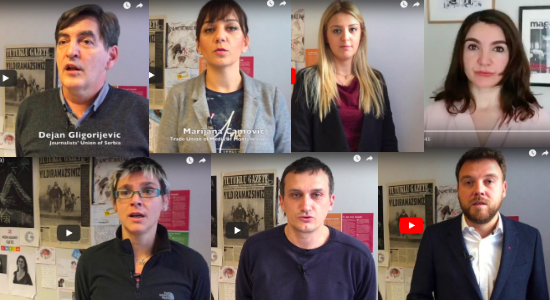

Campaign to improve journalists working conditions in the Western Balkans and Turkey

The European Federation of Journalists (EFJ) is today (08/05/2018) launching a video campaign to raise awareness about the poor working conditions of journalists and media workers in the Western Balkans and Turkey as documented by the European Commission’s Enlargement package 2018 published in April 2018. Together with the support of its affiliates in the region, the EFJ is putting the focus on Albania, Bosnia and Herzegovina, Kosovo, Macedonia, Montenegro, Serbia and Turkey, where working as a journalist too often means job insecurity, low wages and attacks. This campaign aims to push for better working conditions in order to support the production…

Workshop: Robot Journalism – Should we be afraid?

Registration extended until May 28 for the MediaRoad event Robot “journalism” is already the reality in many newsrooms churning out content faster than we can consume. News organisations are increasingly experimenting with robot journalism using computer programmes to analyse data and produce news stories because robots are more productive. But how much do we know about these robots behind the news? Are they friends or foes of journalists? Should journalists be afraid or take advantage of the technology to improve their working conditions and quality of journalism? This workshop will focus on these questions and explore the pros and cons…

WPFD : Statement of solidarity with prosecuted Belarusian journalists

On the eve of the World Press Freedom Day 2018 (WPFD), the European Federation of Journalists expresses its solidarity with prosecuted journalists in Belarus. Unfortunately, the working conditions for journalists in Belarus cannot be regarded as free at all nowadays. Since 2015, the Belarusian official authorities have started a repression campaign against freelance journalists, who cooperate with foreign media. As a result of this campaign, the Belarusian journalists were fined 69 times for the alleged illegal production of mass media products in 2017. The Belarusian Association of Journalists (BAJ), which is a local member of EFJ, has always considered the…

Exploitation of freelance journalists is a threat to our democracy

By Renate Schroeder, Director of the European Federation of Journalists The gap between the incomes of the diminishing number of journalists with stable contracts and the growing band of freelances in Europe is getting bigger. The European Federation of Journalists (EFJ) and its Freelance Expert Group (FREG) are appalled by this worsening situation. Such unfair pay practices cannot continue, since an increasing proportion of editorial content is written and produced by freelance journalists. This has an impact on the quality of journalism and, in the end, on democracy itself. That is why the EFJ has been supporting the ETUC’s PayRise…

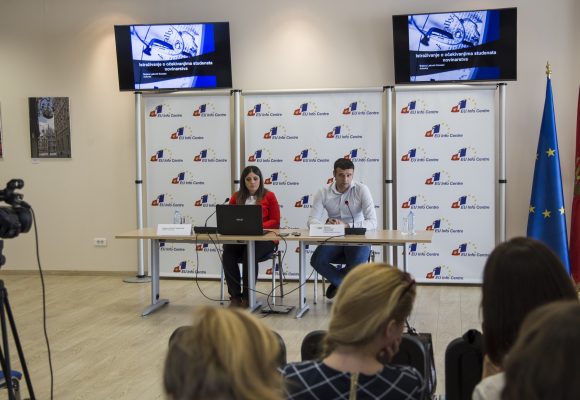
Study reveals one-third of Montenegrin journalism students don’t want to work in the media

A survey carried out by the EFJ affiliate in Montenegro, the Trade Union of Media of Montenegro (SMCG), about the exptectations of journalism students in Montenegro showed that a majority of respondents do not plan to work as a journalist after their studies. Almost 90% of surveyed students believe that getting a job in the profession will not be easy. About a third of Montenegrin journalism students do not see themselves working in this profession in the future – instead they see themselves in public relations (PR) or some other jobs. “Half of the journalism students would love to work at TV stations,…

Freedom of expression deteriorates in EU candidate countries, shows EU progress reports

The European Commission published on 17 April 2018 its annual Enlargement Package, including the country reports (formerly known as “progress reports”), assessing the implementation of the European Union’s enlargement policy regarding the accession process of the Western Balkans and Turkey. These country reports shows alarmingly precarious working conditions of journalists as the level of press freedom deteriorates further. In four countries (Bosnia and Herzegovina, Kosovo, Montenegro and Serbia) no progress has been achieved in the area of press freedom. Issues of attacks on journalists, defamation cases media ownership, lack of funding of the public service broadcasters and self-censorship prevail. Some of…

Turkey: A trial where the ‘crime’ is journalism and the only ‘evidence’ is journalistic activities

Joint Statement on the Cumhuriyet trial: 28 media freedom and freedom of expression organisations call on the institutions of the Council of Europe and its member states to remind Turkey of its international obligation to respect and protect human rights. We, the undersigned freedom of expression and human rights organisations, strongly condemn last night’s guilty verdicts for staff and journalists of Cumhuriyet newspaper and note the harsh sentences for the defendants. The verdict further demonstrates that Turkey’s justice system and the rule of law is failing: this was a trial where the ‘crime’ was journalism and the only ‘evidence’ was…

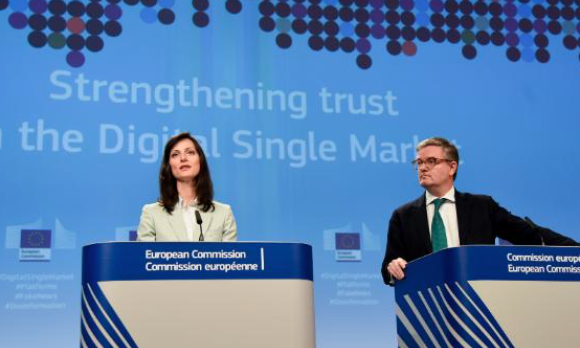
European Commission’s plan to tackle online disinformation

The European Commissioner for Digital Economy and Society, Mariya Gabriel, presented today (26/04/2018) the Communication on “tackling online disinformation”. The European Federation of Journalists (EFJ) welcomes the commitment of the European Union to call on member states for significant financial support for independent news media, fact- and source-checking, and media and information literacy. The European Federation of Journalistes strongly believes that quality journalism and a sustainable media ecosystem are the best antidotes to disinformation. The European Commission recognises the key role played by online platforms in the spread and amplification of online disinformation, deeply affecting journalists and media outlets. It…

Young journalists in Germany demand better pay for better journalism

A delegation of about 20 young German journalists together with the Deutscher Journalisten-Verband (DJV) and Deutsche Journalisten Union (dju in ver.di) met with publishers to demand better working conditions on 25 April 2018 in Berlin. They insisted that publishers have to invest in the future generation of journalists or the “generation Erasmus” will leave and with them the young topics that attract young readers. The European Federation of Journalists (EFJ) strongly supports the demands for investing in young journalists. This happened in the context of very difficult negotiations between the unions, DJV and dju in ver.di and the publishers association…

Turkey: Cumhuriyet journalists and executives heavily convicted for changes in “editorial policy”

On Wednesday (25/05/2018), the court in Silivri (Turkey) severely convicted 13 journalists and executives from the opposition newspaper Cumhuriyet to jail sentences between two to eight years. The court is convinced that editorial policy changes adopted by the newspaper were aimed at helping multiple illegal terrorist organisations in Turkey. All the defendants have been released pending the confirmation of the jail sentences by the upper court. The judge also ordered the release of Cumhuriyet chairman Akin Atalay who had been in jail for 532 days until yesterday. “As we always say they cannot intimidate Cumhuriyet newspaper which will continue to…

EU conference on digital sector: policymakers and citizens join forces to shape digital future

A High Level Conference “Shaping our digital future” brought together around 600 participants including MEPs, ministers and citizens to discuss challenges and opportunities of the digital sector on 25 April in Brussels. The event was jointly organised by the European Parliament and the European Commission in the light of the rapidly changing digital landscape to enter into a dialogue with policy makers and citizens about Europe’s digital future. Four panels discussed the following topics: Investing in connectivity and the data economy infrastructure (5G, High Performance Computing, Artificial Intelligence) and avoiding a digital divide Innovation in the digital age based on…

Whistleblower directive: the European Commission takes “an important step” but improvement on public reporting yet to be made

On 23 April, the European Commission issued a proposal for a directive on the protection of persons reporting on breaches of Union law. This is an important step in acknowledging the crucial importance of the protection of whistleblowers against intimidation and retaliation in European democracies. The proposed directive emphasises the important role of whistleblowers as journalistic sources for investigative journalism, allowing the industry to fulfil its ‘watchdog’ role. It also acknowledges that sufficient whistleblower protection is needed to ensure the freedom of expression as well as the public’s right to access information and media freedom. This is indeed crucial as…

Resolution calls for protection of investigative journalists in the wake of murders of Ján and Daphne

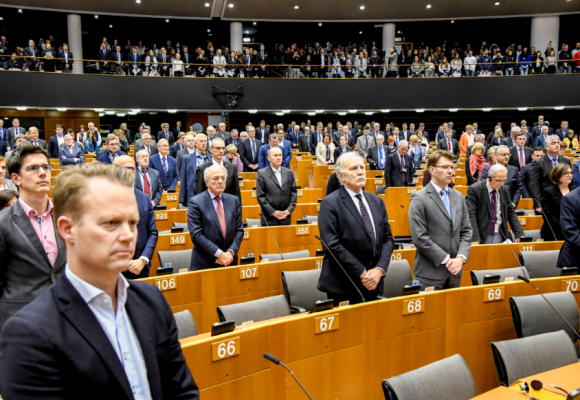
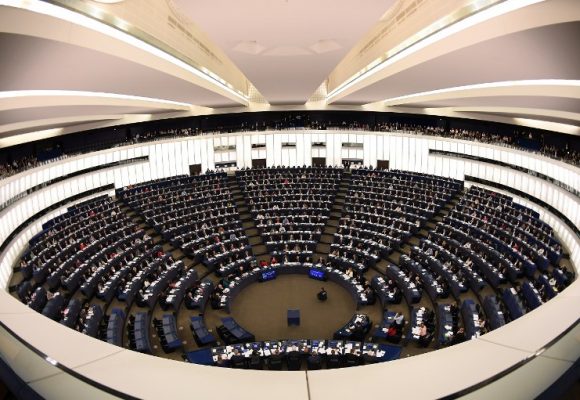
A resolution on the protection of investigative journalists in Europe, passed by Members of the European Parliament (MEPs)  on 19 April 2018 during the plenary session in Strasbourg, calls for better protection of investigative journalists and whistle-blowers. In the wake of the murders of investigative journalists Daphne Caruana Galizia and Ján Kuciak, MEPs demand better protection of journalists who are regularly subject to lawsuits intended to censor their work a permanent financial EU scheme to support independent investigative journalism a draft EU directive to protect whistle-blowers the Commission to address challenges to media freedom and pluralism in the EU better monitoring of media…

Enforce moral rights to fight misinformation

Everyone needs reliable information and ways to fight misinformation – and that requires sound protection of authors’ moral rights, say the International and the European Federation of Journalists (IFJ and EFJ) ahead of World Book and Copyright Day, 23 April. A large part of today’s discussions on the media focus on fighting disinformation and so-called “fake news”. But – so far – there is little discussion of legislation or of improved media practices to enhance and defend the authenticity of journalistic works through the reinforcement of journalists’ moral rights. “In the ‘cut-and-paste’ logic of online news our stories can be…

Report calls on EU states to collaborate with journalists’ unions for gender equality

A report on “Gender Equality in the Media Sector in the EU”, passed by Members of the European Parliament (MEPs) during the plenary session in Strasbourg on 17 April 2018, calls on Member States and the European Commission to collaborate with journalists’ trade unions and media organisations to promote co-regulation in the media sector through codes of conduct. In order to safeguard and ensure gender equality, media companies are urged to draw up codes of conduct and self-regulation systems together with representatives from journalists’ trade unions. This aims to allow preventive action and impose sanctions regarding gender-based discrimination in media productions. The…

Trade secrets: the Danish union secured protection for journalists and whistleblowers

The Danish Union of Journalists (DJ) welcomed the recently adopted law to protect companies from the disclosure of business secrets. An exception clause has been added to ensure that it is not a criminal offence to reveal a business secret that is in the public interest. Denmark has transposed into national law the directive 2016/943/EU ‘on the protection of undisclosed know-how and business information (trade secrets) against their unlawful acquisition, use and disclosure’, adopted by the European Parliament and Council on 8 June 2016. The bill, which aims to protect the confidential information of companies, sets out the remedies that may be applied…