Turkey: EFJ and partner organisations condemn escalating use of “disinformation law” against journalists and call for its repeal

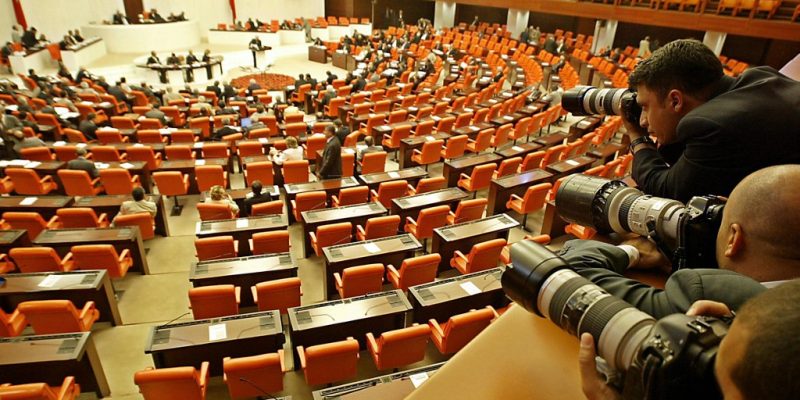
The European Federation of Journalists (EFJ) joins the undersigned organisations in strongly condemning the intensifying use of Article 217/A of the Turkish Penal Code — widely known as the “disinformation law” — to arrest, detain, and prosecute journalists, and calling on the government to repeal the provision immediately and release all journalists imprisoned under it. Since the law entered into force in October 2022, at least 83 journalists have been charged 114 times over disinformation according to news reports. The scale of Article 217/A’s use against journalists has been starkly illustrated in a recent article. The two journalists most frequently…

Workshop for EU Journalists: Reporting on Migration & Refugees

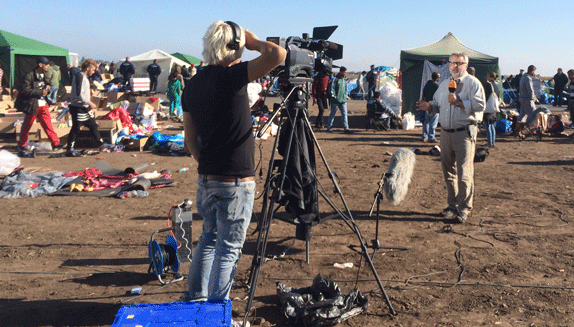
The Media Diversity Institute (MDI) is inviting applications for a workshop it is organising for journalists from EU countries who are keen to improve their skills related to reporting on migrants, refugees and other vulnerable groups. The event will be held in London between 4 – 8 September 2017. Journalists from EU countries interested in participating at the workshop should contact info(at)media-diversity(dot)org for further information on how to apply. The deadline for submitting applications is end of 24 July 2017. All costs of participation will be covered by the organisers. The workshop, organised as part of the ‘Media Against Hate…

How is gender equality represented in the media in EU?

The Committee for Women’s Rights and Gender Equality (FEMM) organised on Monday (26/06/2017) a hearing on gender equality in the media in the European Union. The main goal was to provide information for the upcoming own-initiative report, which will be written later on in the year. The rapporteur is Czech MEP Michaela Šojdrová. Lenka Vochocová from Media Studies at the Faculty of Social Sciences in Prague, Donatella Martini, the director of DonneinQuota and Martine Simonis, General Secretary at the Belgian Association of Journalists (AJP) talked about the current situation of women at different positions in the media sector and analysed…

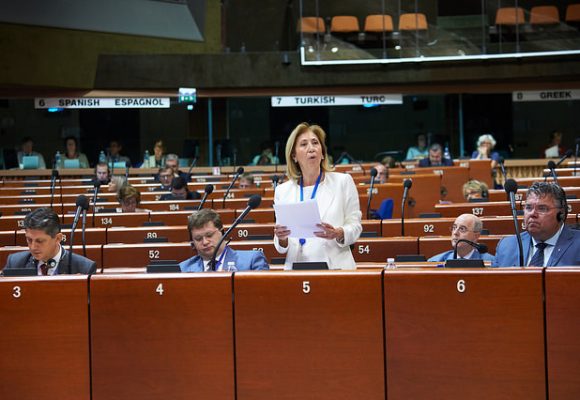
The Council of Europe recommends its member states to recognise ‘a right to whistleblowing’

In a resolution, followed by a recommendation adopted on 27 June 2017, the Council of Europe Parliamentary Assembly encourages the Member States to provide “adequate protection to whistleblowers” in order to better fight corruption. The European Federation of Journalists (EFJ) welcomes this resolution which recognises investigative journalism as a “public asset” and push for more recognition and support to ensure the public’s widest possible access to information. “We are glad to see that the EFJ views on the issue were heard. The voting result are impressive: it was almost unanimously voted as only one participant abstained and one voted against,…

Social media trusted twice less than news media, shows the 2017 Digital News Report

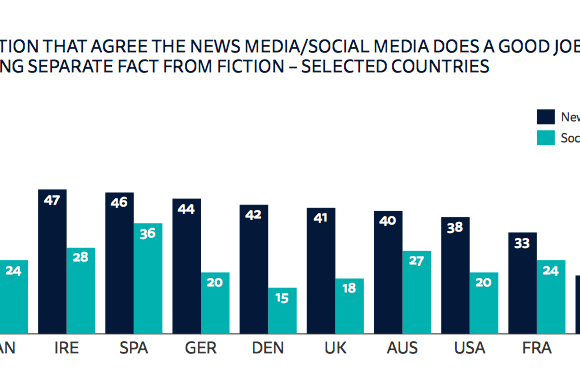
The year 2016-2017 has seen intense debates over fake news, algorithms and distrust towards journalists and journalism. The 2017 Digital News Report, published by the Reuters Institute for the study of journalism, contains interesting findings on some of the prevailing narratives around these issues. Social media are not doing a good job in separating fact from fiction The overall trust in news – 43% all media combined – drops significantly when it comes to social media, as only 24% thinks that social media do a good job in separating fact from fiction, compared to 40% for the news media. Only…

#HesaMag debate: Today’s and the future of journalism is precarious

Multitasking in a 24-hour rush, selling articles for five or ten euros and the increase of burnouts is a reality for too many journalists nowadays. This decline in working conditions is also the main topic of the latest issue of HesaMag, titled “Journalism, an increasingly precarious profession”. The European Trade Union Institute (ETUI) organised yesterday (26/07/2017) a debate on the subject and presented the magazine, which was carried out in collaboration with the European Federation of Journalists (EFJ). The debate was moderated by Willy De Backer, Head of Communication and Publications at the ETUI. #HesaMag event with @renatemargot @AntonisRepanas @WillyDebacker…

Statement regarding the situation of media freedom in Turkey

Following the specific request of the delegates at the Annual Meeting held in Bucharest on 18-19 May 2017 asking for a strong position of the European Federation of Journalists (EFJ), the Steering Committee issued the following statement regarding the situation of media freedom in Turkey : The EFJ, fighting in cooperation with the IFJ and all its affiliates, welcomes the “send a postcard to jailed journalists in Turkey campaign” in the framework of its #JournalismisNOTacrime / #Gazeteciliksuçdegildir project inviting everyone to send written moral support to journalists and media workers in jail. 165 journalists are still in jail according to…

Slovenia to reform labour laws enforcing contractual obligations

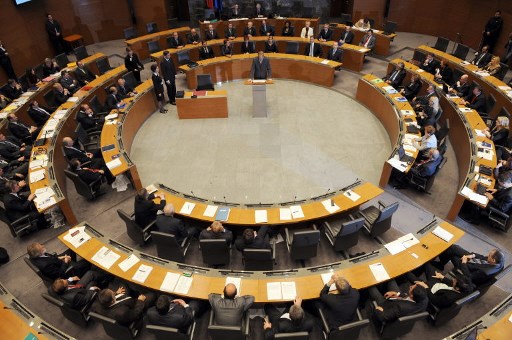
The Slovenian government has recently introduced two draft labour laws on employment and labour inspection. The main changes concern giving the labour inspectors more authority to act, especially when the employer fails to pay the salary of employees, accelerate the process whereby the unemployed take up employment again and make employment contract termination more flexible. “Precarious conditions are becoming more and more common, not just in Slovenia, but also in Europe,” said Anja Kopač Mrak, the Slovenian minister of Labour, Family, Social Affairs and Equal Opportunities at the voting session of the draft labour laws at the beginning of this…

EFJ responds to EU consultation on access to social protection

The European Federation of Journalists (EFJ) has responded to a consultation launched by the European Commission calling for equal access and treatment of freelance and atypical workers in journalism. The consultation on ”a possible action addressing the challenges of access to social protection for people in all forms of employment” has identified a number of issues facing the so-called ”atypical workers”. In journalism, these atypcial workers are characterised by the work of freelance journalists who mostly are precarious due to the existing gap in social protection and wage. The EFJ welcomed the consultation and the challenges identified by the Commission.…

26/06: Debate on the precarious state of journalism at the Press Club Brussels

The EFJ and ETUI invite you to a debate on 26 June at the Press Club Brussels Europe at 10.30 am to 12 noon, rue Froissart 95, 1040 Brussels. There appears to be no end in view to the crisis gripping the mainstream media, the profit statements of the various media groups are far from the only pitiful sight, and information professionals are also feeling the pressure – these are just some of the conclusions to emerge from the analysis of the state of journalism in Europe which appears in the latest issue of HesaMag – the journal published by the European Trade…

EFJ responds to EU consultation on Written Statement Directive

The European Federation of Journalists (EFJ) has responded to the consultation on the Written Statement Directive that obliges employers to inform employees their rights and conditions applicable to the contract or employment relationship. The consultation was launched by the European Commission within the framework of the European Pillar of Social Rights. The EFJ welcomes the consultation looking into improved protection for workers especially the so-called atypical workers who are in precarious working conditions. Here is the EFJ’s response.

A study on the impact of the Panama Papers recommends the EU to protect whistleblowers

A recent study carried out by Blomeyer & Sanz in early 2017 – assessing the impact of the Panama Papers revelations on the economy and finances of eight European Member States – recommends the European Union to introduce measures to guarantee the protection of whistleblowers. “This will improve the availability of the data and act as a driver against the use of tax haven schemes”, the report says. More transparency is also suggested in order to better monitor and prevent the use of such schemes. Study on impact of #PanamaPapers on 8 MS economy recommends more transparency & measures to protect…

Turkey: first criminal trial against journalists over attempted coup

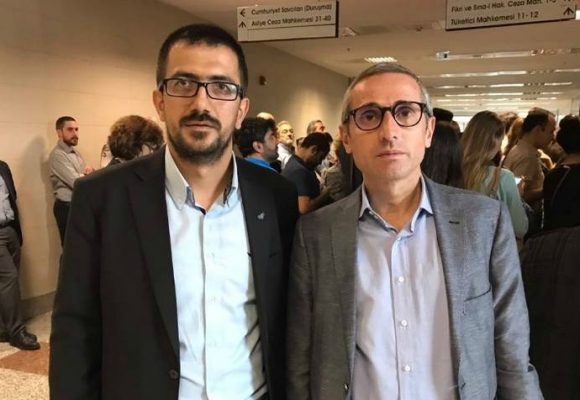
The International and European Federations of Journalists (IFJ and EFJ) yesterday sent an observer to Istanbul to monitor the first trial against journalists accused of participating in the 15 failed coup of last July. The trial, which may shed light on how the courts will approach numerous cases concerning the right to freedom of expression and the right to a fair trial under the state of emergency, has amplified international concerns over press freedom in Turkey. Raffaele Lorusso, General Secretary of the affiliate Federazione Nazionale della Stampa Italiana (FNSI) and an IFJ Executive Committee member, yesterday attended the trial of…

OSCE: States must urgently appoint new Representative on Freedom of the Media

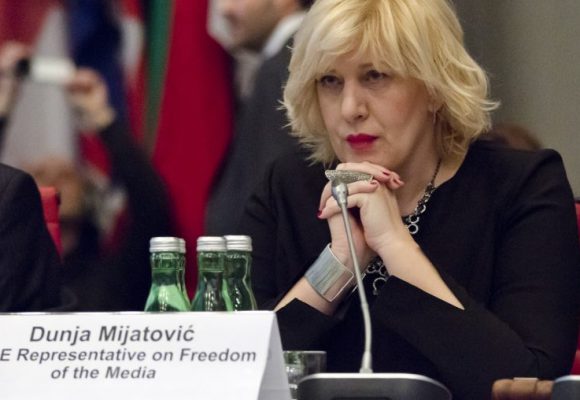
The European Federation of Journalists (EFJ) and the International Federation of Journalists (IFJ) join a coalition of freedom of expression organisations and journalists’ organisations urging OSCE Participating States to urgently appoint a new Representative on Freedom of the Media. The Representative on Freedom of the Media is an independent OSCE Institution, holding a unique mandate to protect and promote media freedom in all 57 OSCE participating States. The former mandate holder, Dunja Mijatović, left Office on 10 March 2017. There has been no announcement of her successor since. Continued failure to appoint a successor will weaken protections for freedom of…

Send a postcard to jailed journalists in Turkey

The European Federation of Journalists (EFJ), the International Federation of Journalists (IFJ) and the Türkiye Gazeteciler Sendikasi (TGS) have printed postcard with the names of the 158 journalists and media workers currently jailed in Turkey forming the letter G for #Gazeteciliksuçdegildir or #Journalismisnotacrime and they invite you to send a moral support to all the journalists and media workers in jail. How to do it? Get in touch with the union or professional association in your country and ask them to send you the specific postcard or simply print a PDF version available here. You can also use the PSD files…

Call for key experts for public broadcast reform in Western Balkans tender

The European Federation of Journalists (EFJ) together with the consortium leader, International Federation of Journalists  (IFJ), is preparing a proposal to the European commission Tender for Technical Assistance to Public Service Media in the Western Balkans. As part of the bid they are looking for two key experts to manage the programme for 30 months starting November 2017. The candidates must be prepared to be located in one of the beneficiary countries. – KE1 : Team leader (550 days) – KE2 : Senior Broadcast Management Expert, Deputy Team Leader (440 days) Interested candidates are asked to send their CV using…

Safe and reform public service media in Bosnia and Herzegovina

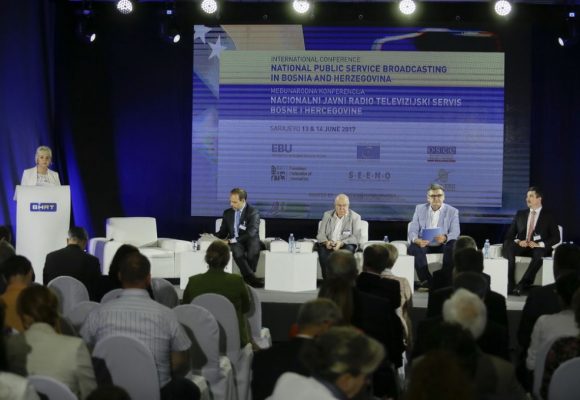
An international conference on public service media (PSM) in Bosnia and Herzegovina has concluded with an agreement that the failure of PSM in the country would be unacceptable. Public service media in Bosnia and Herzegovina (BiH) is under threat of imminent collapse due to insufficient and unsustainable funding and the authorities’ inability to make the necessary reforms to the media law. More than 100 participants from parliament, government, regulatory authorities, the media, the international community and the civil sector met in Sarajevo to discuss the importance of PSM. Organised by the Radio and Television of Bosnia and Herzegovina (BHRT) in…