European Federation of Journalists

IFJ-EFJ Regional Development Fund

Czech Republic


The European Federation of Journalists (EFJ) signed an agreement on 18 December 2014 with the Union of Journalists and Media Workers of Czech Republic (OSNPM) in order to investigate the working conditions of Czech journalists and media workers. The project is implemented with the cooperation of Judith Reitstatter, from the Austrian union GPA-djp.

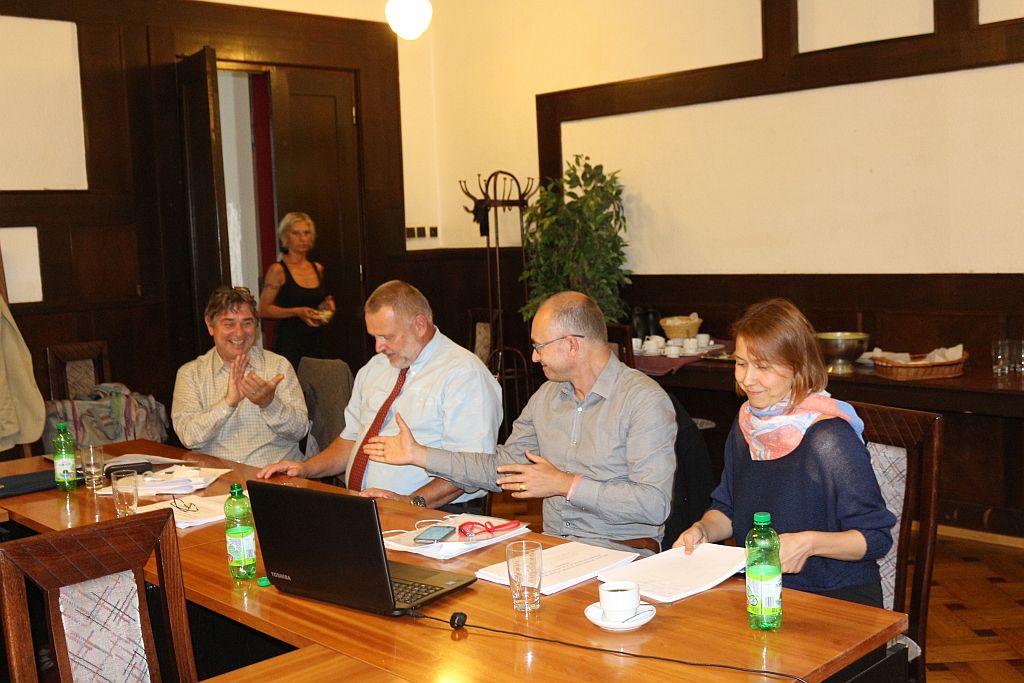
The online survey was launched on 19 May 2015. Around 2,500 journalists and media workers were invited to participate to the survey. The EFJ, OSNPM and GPA-djp analysed together the main outcomes of the survey during a round table conference, on 19 August 2015, in Prague.

The questionnaire focus mainly on labour rights. “This area is underestimated by the Czech media, journalists themselves and their employers as well,” explains Zdeněk Kučera, chairman of OSNPM.

“Over the past 25 years, journalists’ attention was focused primarily toward freedom of speech, access to information, relations with media ownership and the development of media houses. These are very serious topics. However, journalists’ status remained grossly underrated. A specific problem is the status of freelance journalists, which are increasingly numerous, particularly in regional media.”

The main findings of the survey are available on the EFJ website, here.
FOCUS EFJ

Side event of our project: a high school magazines national competition (Nejinspirativnější středoškolský časopis 2015). Here are the winners (picture credit: F. Cakl):

Czech

Contact details: OSNPM, e-mail: odborovy-svaz-novinaru@seznam.cz, website: http://www.odborovysvaznovinaru.cz


Slovakia

The European Federation of Journalists (EFJ), its Austrian union GPA-djp and the Slovak Union of Journalists (Slovenský syndikát novinárov) organized a meeting in Vienna, on 30 October 2014. Trade unionists and media students from both countries met in GPA-djp offices, in Vienna. The discussion on media convergence was launched by Dr. Roman Hummel, from the university of Salzburg.

Contact details: Judith Reitstaetter, judith.reitstaetter (at) gpa-djp.at


Estonia

The European Federation of Journalists (EFJ), the Estonian Union of Journalists (Eesti Ajakirjanike Liit, EAL) and the Union of Journalists in Finland (Suomen Journalistiliitto, UJF) agreed on 6 February 2015 to jointly implement the project “Workshops to Strengthen Journalists’ organisation in Estonia”.

The main objective of the project is to strengthen journalists’ organisation in Estonia, through three activities:

  • a freelance workshop in Helsinki,
  • a radio & TV negotiators workshop in Helsinki,
  • an authors’ rights seminar in Tallinn.

An action plan will be proposed for the next period.

Contact details: Juha Rekola, Juha.Rekola (at) journalistiliitto.fi, and Helle Tiikmaa, helle (at) eal.ee
 

Actions

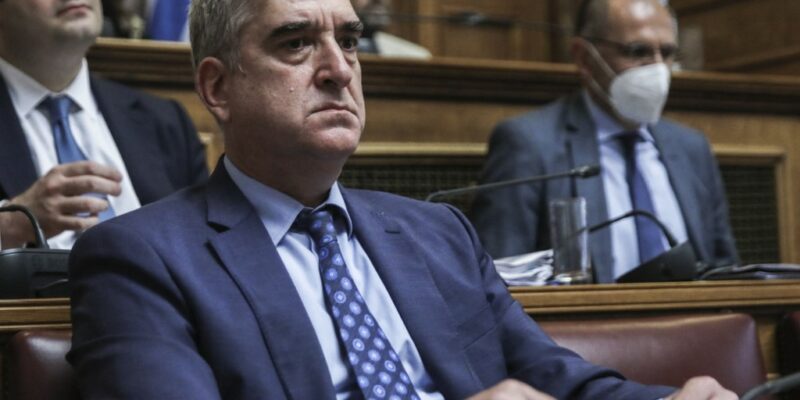
Greece: EFJ demands full disclosure on illegal surveillance of journalists

The European Federation of Journalists (EFJ) condemns the legal actions aimed at muzzling and intimidating the press in the context of the scandal of illegal government practices in Greece, in particular the tapping of journalists and politicians. The EFJ condemns the abusive legal proceedings launched on Friday 5 August by Grigoris Dimitriadis, resigning adviser and nephew of Greek Prime Minister Kyriákos Mitsotákis, against journalists Thanasis Koukakis, Nikolas Leontopoulos and Thodoris Chondrogiannos, as well as against the website Reporters United and the newspaper EfSyn. “We demand the immediate withdrawal of these complaints, which are only intended to intimidate the press and…

Belgium: Everything is going up, except freelance rates

Freelance rates in Belgium have been stagnating for three years, according to a survey conducted in May and June 2022 by the Belgian Association of Professional Journalists (AJP). In a context of rising inflation (8% expected), the gap between employed journalists, who benefit from annual salary indexation, and freelancers is widening. The journalists’ organisation will make the remuneration of freelancers a priority from September. Journalism is one of the few sectors where the clients – the media – set the rates. The different calculation practices (billing per sign, per word, per line, per article, per day) make it difficult, to…

Russia: EFJ and IFJ condemn “stop list” banning European journalists

After a series of British journalists, Russia has banned, on Monday morning, the Danish public television correspondent in Moscow, Matilde Kimer. The European and International Federations of Journalists (EFJ-IFJ) call for the reversal of these decisions. On the morning of 1 August, on arrival at Moscow’s Vnukovo airport, Matilde Kimer had passed through passport control but was arrested after collecting her luggage. At an airport office, she was handed a document stating that she was denied entry to the Russian Federation “for security and defence reasons” and should therefore be deported immediately. After a five-hour wait at the airport in Moscow,…

Russia: first step towards the liquidation of the journalists’ union

This morning, August 3, 2022, the Tagansky District Court of Moscow found the Journalists and Media Workers’ Union (JMWU), an EFJ affiliate in Russia, guilty of allegedly “discrediting the Russian armed forces” (Code of administrative offenses of the Russian Federation). JMWU was ordered to pay the maximum fine of 500,000 rubles (8,000 euros). The European Federation of Journalists (EFJ) denounces this illegitimate trial, which only aims to facilitate the dissolution of the union, during a hearing scheduled for September 14. According to the indictment, JMWU was held responsible for the “spreading of ideas related to a negative attitude towards the…

Belarus: EFJ and BAJ call for the overturn of journalist Iryna Slaunikava’s sentence

On 3 August, the regional court in Homel, Belarus, sentenced journalist Iryna Slaunikava to 5 years in prison in a closed trial. The European Federation of Journalists (EFJ) joins its affiliate the Belarusian Association of Journalists (BAJ) in calling for the annulment of this arbitrary and illegal court decision. The journalist, who is vice-president of BAJ, was found guilty of organising collective actions seriously undermining public order and creating or leading an extremist group. The latter refers to the Belsat TV channel, which the Belarusian dictatorship considers an extremist organisation. The proceedings lasted almost one and a half months. Judge…

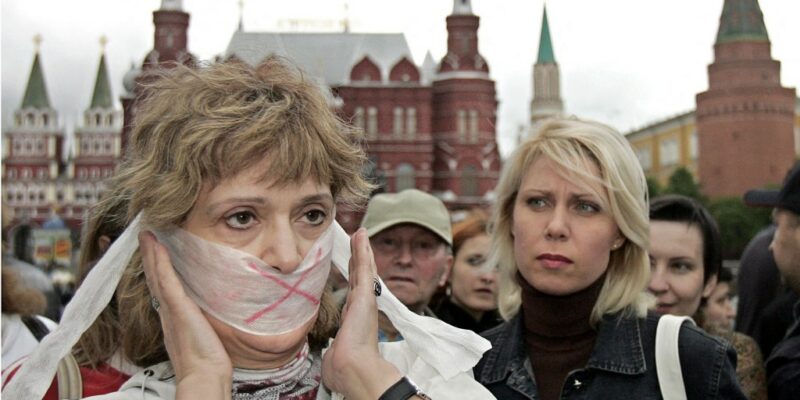
Don’t stigmatise Russian journalists in exile

Latvijas Radio vēstīja, Latvia’s public radio station, reported on Monday that Latvia’s intelligence services, Valsts drošības dienesta (VDD) had informed the country’s senior officials about the risks of the increasing activity of Russian journalists and Russian media companies setting up in Latvia. The European Federation of Journalists (EFJ) and the Russian Journalists and Media Workers’ Union (JMWU) call on the authorities in all European countries not to indiscriminately stigmatise Russian journalists in exile. According to the radio station’s information, since Russia started the war, more than 200 journalists and 23 Russian media outlets have left Russia to settle in Latvia.…